
INDUSTRY NEWS
| August 16, 2026
| EV Charging Software, V2G & Interoperability
Europe’s rules for connecting vehicle-to-grid charging infrastructure to the electricity system are entering an important phase, as industry stakeholders push for harmonised and open communication standards between charging infrastructure and electricity-system operators.
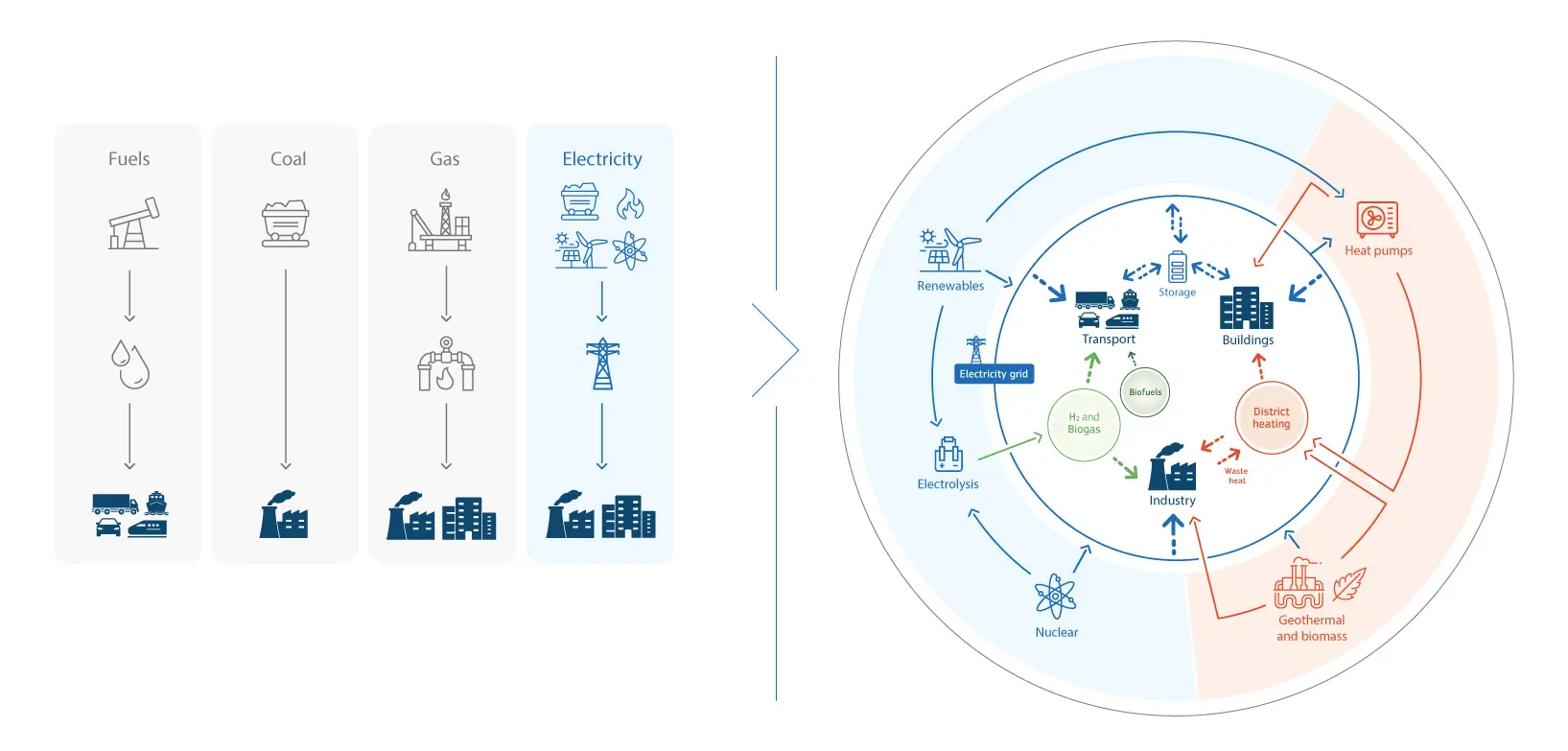
Source: European Commission, Directorate-General for Energy.
© European Union. Reuse under CC BY 4.0 unless otherwise indicated.
View original source.
Key development: The Open Charge Alliance has asked European policymakers to explicitly recognise open communication standards, including IEC 63584, as the European Union updates grid-connection requirements that extend into electricity storage and vehicle-to-grid applications.
Key facts
Consultation deadline: August 25, 2026
Protocol: OCPP 2.1
IEC standard: IEC 63584-210:2025
Industry issue: Communication between V2G EVSE and electricity-system operators
European grid rules are expanding into V2G
On July 30, 2026, the Open Charge Alliance (OCA) announced that it had submitted a contribution to the European Commission’s public consultation on a draft Delegated Regulation establishing a revised Network Code on Requirements for Grid Connection of Generators.
The proposed revision is relevant to the EV charging industry because its scope extends beyond conventional generation to electricity storage and vehicle-to-grid applications.
The consultation is scheduled to remain open until August 25, 2026.
Vehicle-to-grid, or V2G, changes the role of an electric vehicle from a conventional electricity consumer into a potentially flexible energy resource. Depending on the technical configuration, market structure and applicable grid rules, an EV may adjust its charging schedule or return electricity from its battery to a building or electricity system.
That creates a more complex communications environment than conventional EV charging.
OCA identifies a communication gap
According to OCA, the current draft does not sufficiently define the communication interface between V2G electric vehicle supply equipment and the relevant electricity-system operator.
The organisation argues that an undefined interface could result in individual system operators adopting their own technical and cybersecurity requirements.
If that happens, charger manufacturers, charging-network operators and software providers could face different implementations in different European markets, increasing integration complexity and potentially reducing interoperability.
Regulatory status: OCA’s recommendations are an industry contribution to an ongoing European regulatory consultation. They are not final EU legislation and should not be described as mandatory requirements at this stage.
IEC 63584 moves into the policy discussion
OCA recommends explicitly naming IEC 63584 as the communication protocol for relevant system-operator data-exchange interfaces, including interfaces involving V2G charging equipment, electricity storage modules and power-generating modules.
The organisation also proposes referencing the OCPP 2.1 Certification Programme in national compliance schemes.
The objective, according to OCA, is to provide a more harmonised route for manufacturers and charging operators to demonstrate compliance instead of requiring different system-operator-specific approaches.
OCA additionally recommends recognising standardised IEC 63584 security mechanisms in the context of cybersecurity requirements and supporting remote adjustment of relevant grid-code parameters.
Remote adjustment could become important for deployed charging equipment because grid requirements can evolve during the operational lifetime of an EV charging station.
OCPP 2.1 is now an IEC standard
The standards discussion is taking place after another significant development for the EV charging industry.
OCPP 2.1 Edition 1 was officially published by the International Electrotechnical Commission as IEC 63584-210:2025.
OCPP 2.1 builds on OCPP 2.0.1 and introduces functionality designed for more advanced charging environments.
- Support for ISO 15118-20
- Bidirectional charging functionality
- Distributed energy resource control
- Expanded smart-charging capabilities
- Battery-swapping support
- Additional authorisation functionality
Those capabilities matter because future charging infrastructure may need to coordinate not only with vehicles and charging-management backends, but also with energy-management systems and grid-related services.
V2G makes charging software part of the energy system
Conventional charging-management platforms have largely focused on functions such as charger connectivity, authentication, transaction processing, tariff management, remote operations and fault monitoring.
V2G introduces an additional operational layer.
A charging system may need to consider electricity-system constraints, energy prices, local power availability, flexibility requests, distributed energy resources and the state of charge of connected vehicles.
This increases the importance of reliable communications between several technical domains.
Potential software implications
- Secure charger-to-backend communications
- Certificate and cybersecurity management
- Smart-charging scheduling
- Grid and flexibility signal processing
- Remote configuration and parameter management
- Site-level energy management
- Bidirectional charging orchestration
These capabilities are industry implications of increasingly energy-aware charging systems rather than requirements imposed by the current European consultation.
Interoperability is becoming a grid-level issue
Historically, EV charging interoperability often focused on whether a vehicle could connect to a charger, whether a driver could authenticate across charging networks, and whether charging stations could communicate with different backend platforms.
V2G adds another dimension: whether charging infrastructure can exchange information consistently with electricity-system operators and other energy-market participants.
That makes interoperability increasingly relevant not only to electric mobility, but also to grid flexibility and energy-system integration.
The outcome of the European regulatory process will therefore be closely watched by charging-equipment manufacturers, charge-point operators, charging-management software providers, vehicle manufacturers, utilities, aggregators and other energy-service providers.
What happens next
The European consultation remains open until August 25, 2026.
After the consultation process, policymakers will determine how the final framework treats communication interfaces, compliance and cybersecurity for grid-connected technologies including V2G equipment.
Until that process is complete, OCA’s recommendations should be understood as an industry proposal for a harmonised technical approach rather than adopted regulation.
Sources & editorial methodology
TrendPower News distinguishes between official standards, regulatory processes and industry recommendations. Technical implications discussed in this article are editorial analysis and are not presented as final legal requirements.
Primary source:
Open Charge Alliance — OCA Calls for Open Standards in Revised European Grid Connection Network Code
OCPP 2.1 reference:
Open Charge Alliance — OCPP 2.1 published as IEC 63584-210:2025
Energy-system image and context:
European Commission — Energy System Integration
EU reuse policy:
European Commission Legal Notice — CC BY 4.0 reuse policy

 EN
EN  ZH
ZH  AR
AR  DE
DE  ES
ES  KO
KO  JA
JA  IT
IT  FR
FR  VI
VI  MS
MS  ID
ID  FR_CA
FR_CA  NL
NL  SV
SV  EN_GB
EN_GB  TH
TH 