
Intelligent Operations Management for EV Charging Networks
Monitor chargers in real time, detect abnormalities earlier, diagnose issues remotely, coordinate technicians and close service tickets with a digital O&M workflow built for distributed EV charging infrastructure.
What Is Intelligent Operations Management for EV Charging?
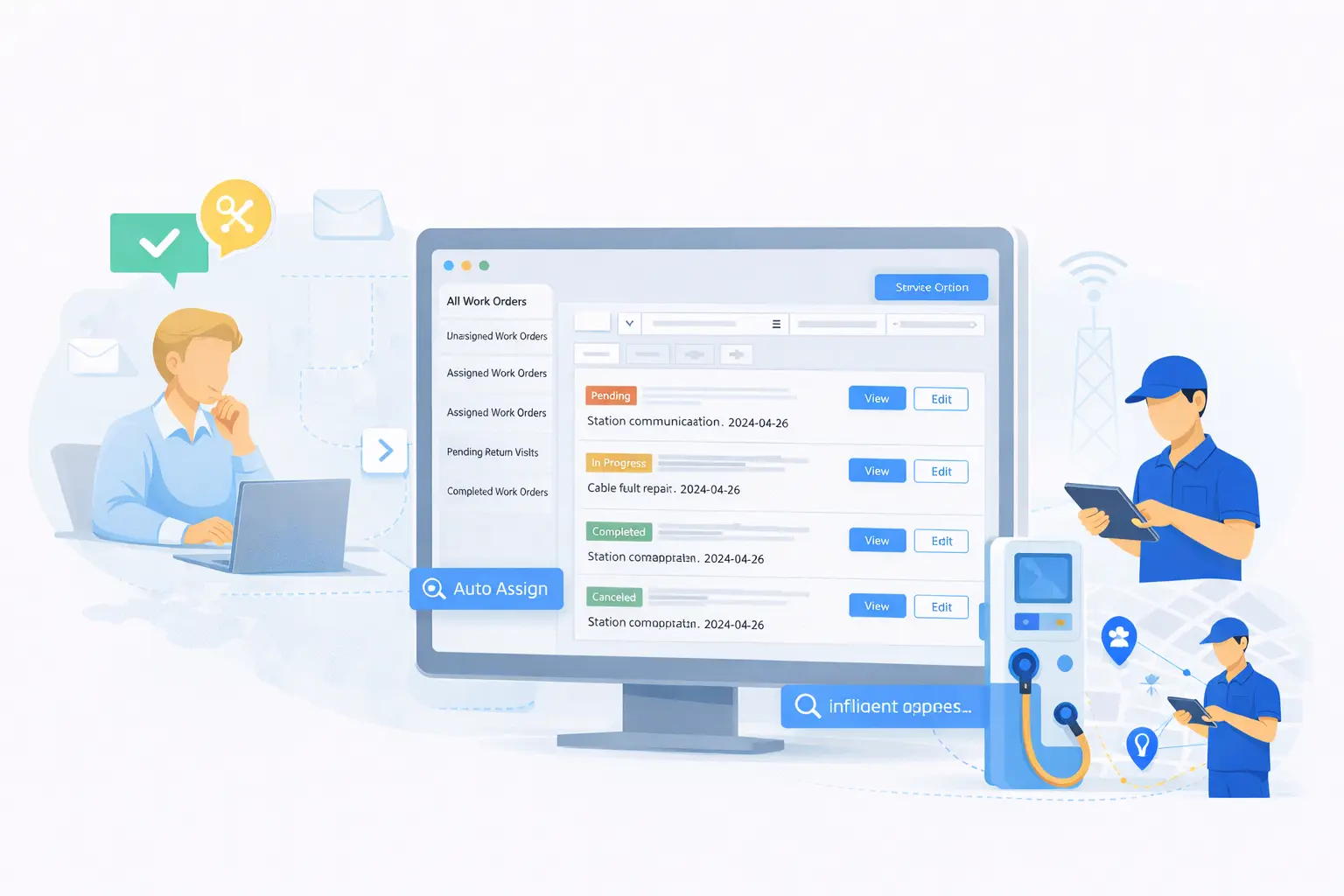
Intelligent Operations Management is a digital O&M platform that connects charger monitoring, alarms, remote diagnostics, remediation and work order management into one operating workflow. Instead of waiting for drivers or site staff to report a problem, operators can use device data and service records to identify abnormalities earlier, investigate the likely cause, decide whether the issue can be handled remotely and dispatch technicians when on-site work is required.
The Maintenance Problem Gets Harder as Charging Networks Grow
More sites and more charger models create more alarms, service requests and coordination work. A digital O&M layer helps operators organize that complexity before it turns into longer downtime and inconsistent service.

High O&M Workload
Manual inspections, dispersed sites and limited device visibility make it expensive to understand what is happening across a charger network. Teams may spend time travelling before they know what the actual fault is.

Fragmented Work Orders
Phone calls, chat messages and spreadsheets make it difficult to see who owns a ticket, how long it has been open, what work was performed and whether the issue was actually resolved.

Slow Fault Response
When alarms are not connected to diagnostic data and service workflows, recurring charger issues can take longer to investigate, which can affect charger availability and the driver experience.
A Clearer O&M Workflow for Every Charger Issue
The platform connects device data and service execution so operators can decide what to do next without switching between disconnected tools.
Monitor
Track charger connectivity, operating status, charging sessions and relevant device data across locations.
Detect
Surface alarms and abnormal conditions so operations teams can prioritize issues that need attention.
Diagnose
Review charging curves, communication messages, fault codes and device logs to narrow down the likely cause.
Resolve or Dispatch
Use supported remote actions when possible; otherwise create and assign a work order to the right service resource.
Verify & Learn
Record the service result, acceptance and feedback so historical cases become a reusable operational knowledge base.
Explore the Six Capabilities Behind a Faster EV Charging O&M Workflow
Instead of presenting every function as a long page of screenshots, this module lets users compare the main operating capabilities one by one. Each tab explains what the feature does, what teams can see and why it matters in daily charging operations.
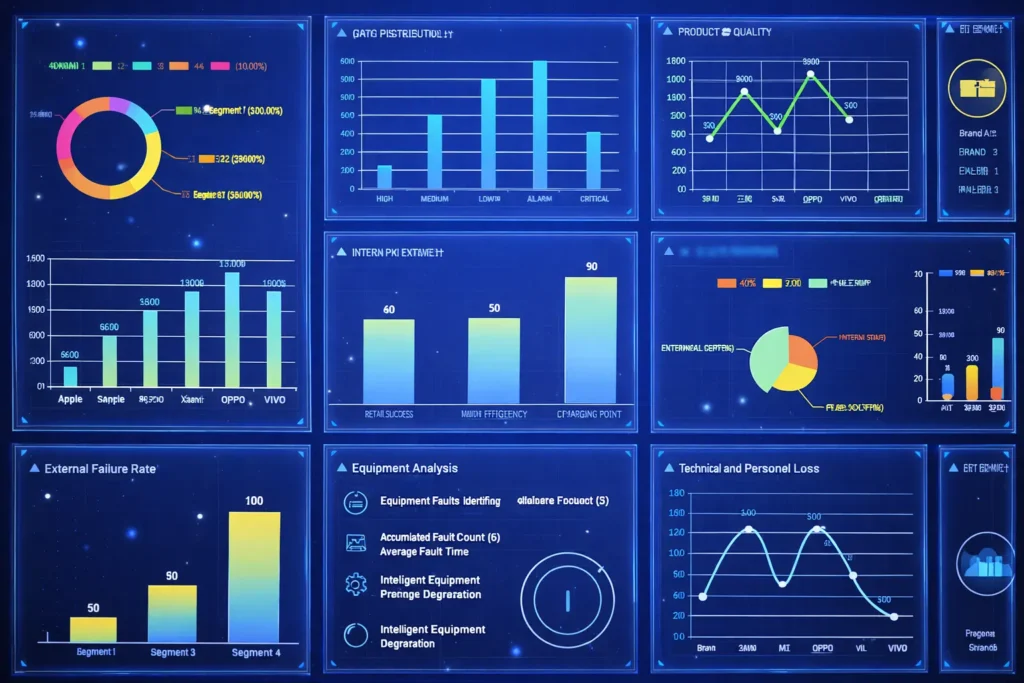
See Network Health Before a Small Issue Becomes a Site Visit
Bring charger status, alarms and operating events into one view so the operations team can identify which device needs attention and when the abnormal behavior started.
- Charger and connector status visibility
- Alarm and abnormal-event monitoring
- Offline / reset record traceability
- Historical operating context for investigation
Use More Than an Online / Offline Status to Understand the Fault
Review fault codes, charging curves, communication messages and device logs to narrow down the likely cause before assigning field service.
- Custom fault-code management
- Charging curve and message analysis
- Remote device log retrieval
- Real-time charging status review
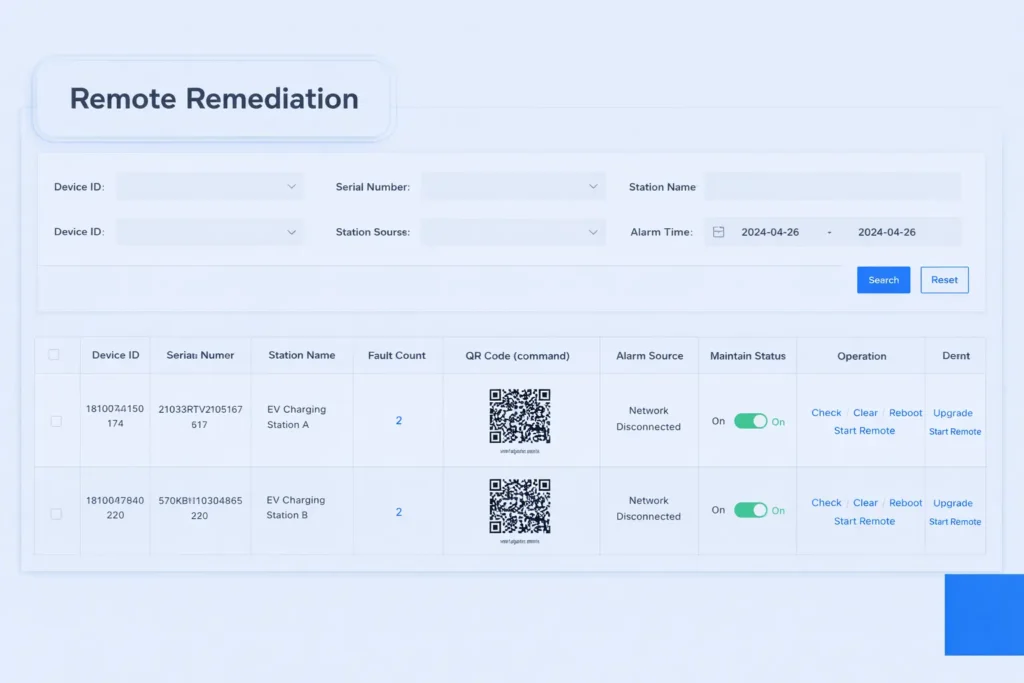
Resolve Supported Software and Communication Issues Without Waiting for Field Service
For compatible chargers, use remote commands and OTA workflows to handle faults that do not require a technician to physically repair hardware.
- Remote reboot workflows
- OTA firmware update support
- Supported remote charger controls
- Maintenance status and operation records
Match the Service Request With the Right Field Resource
Route work based on service area, ticket type, urgency, technician availability or project-defined assignment rules instead of coordinating every task manually.
- Nearest or map-based assignment
- Manual or rule-based dispatch
- Technician skill and profile matching
- Priority and service-area routing
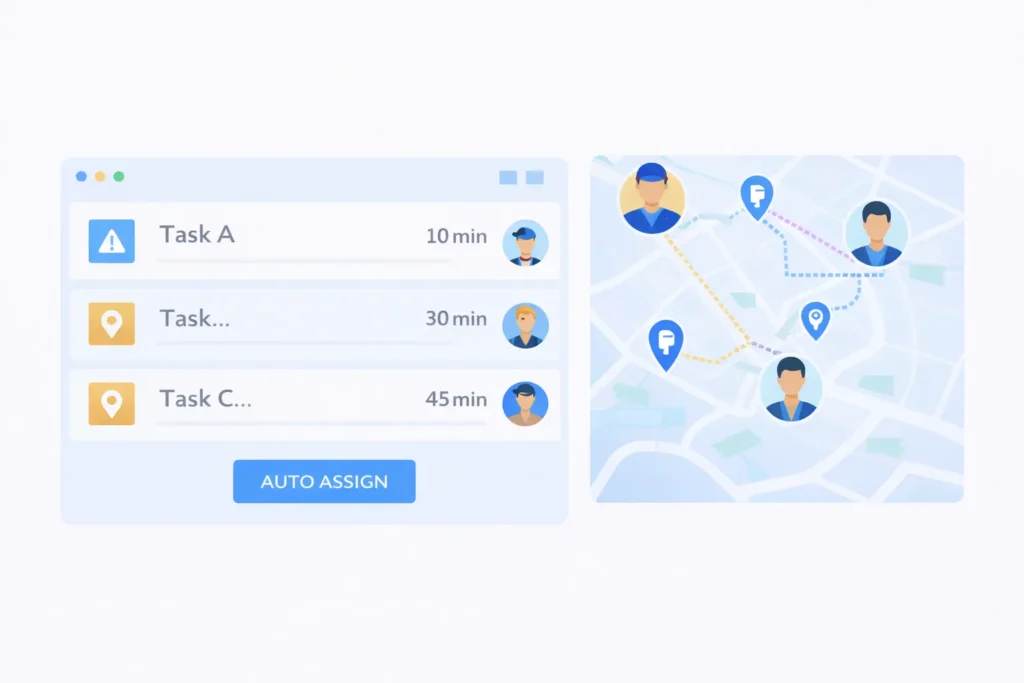
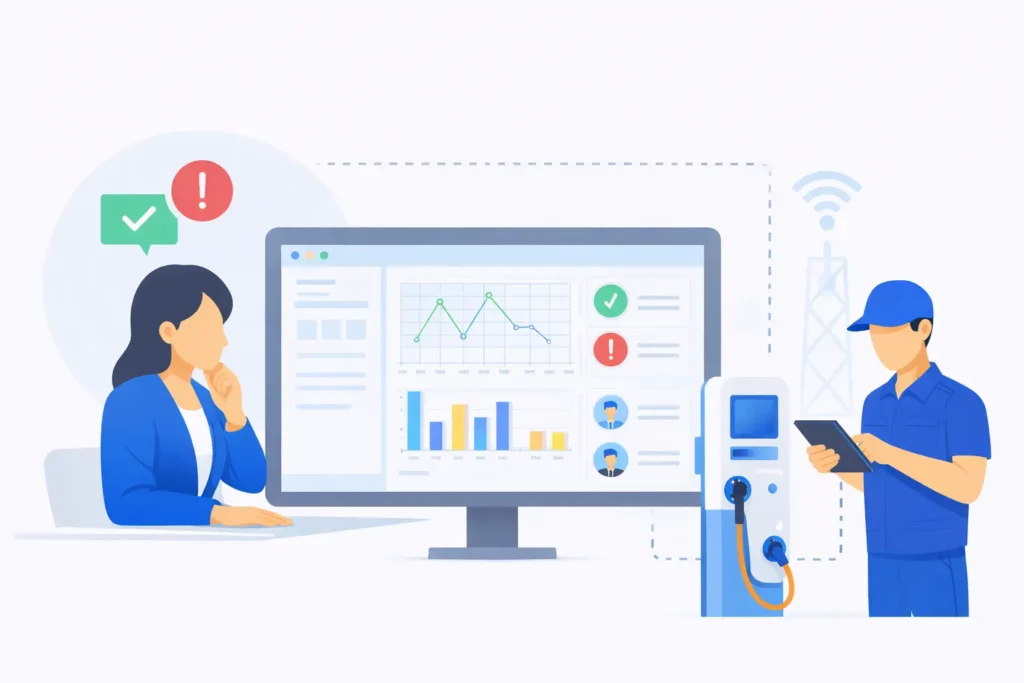
Know What Is Open, Who Is Handling It and What Has Been Completed
Track ticket progress, technician activity and service evidence so after-sales managers do not have to reconstruct the maintenance history from separate messages and files.
- Open and in-progress service visibility
- Technician and task status oversight
- Service evidence and completion records
- Historical service data for review
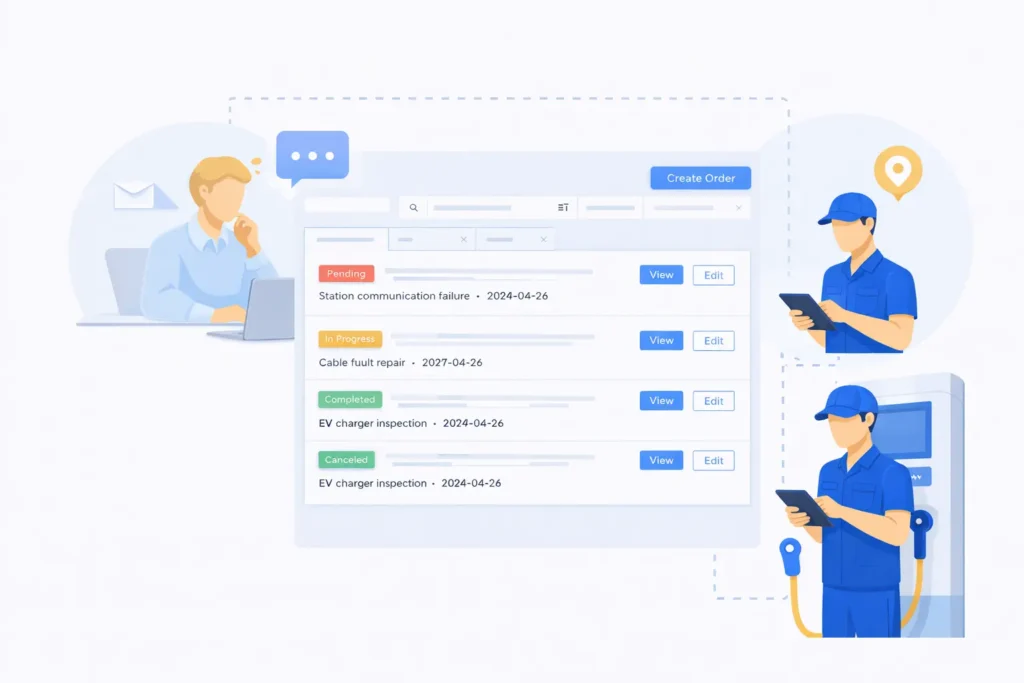
Keep Every Maintenance Case Traceable From Creation to Closure
Turn alarms, user reports and after-sales requests into structured tickets with a visible lifecycle, responsible owner and documented service result.
- Ticket creation and categorization
- Assignment and status tracking
- Service records and supporting evidence
- Completion, acceptance and archive history
Available monitoring, diagnostic and remote-control functions depend on charger capability, protocol implementation and the integration scope defined for the project.
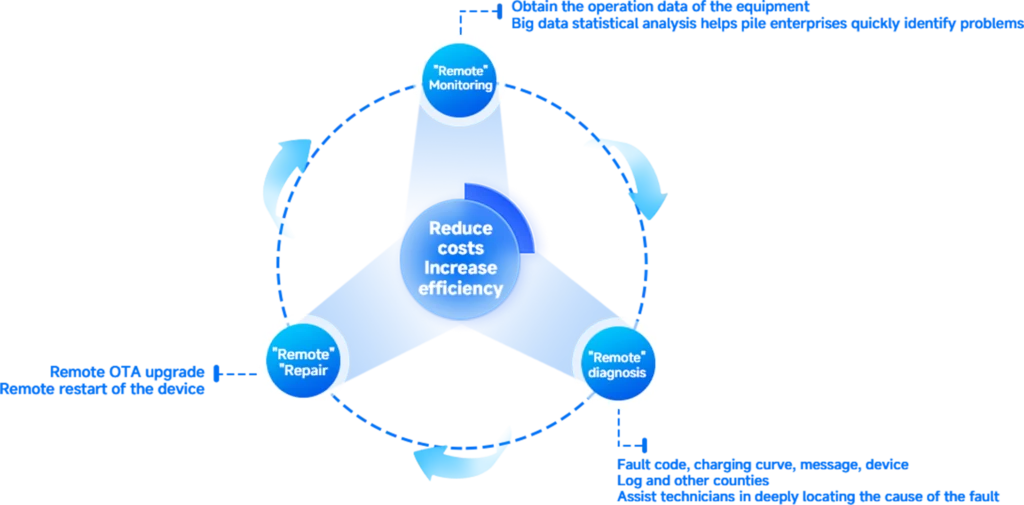
Move From Fault Detection to Diagnosis and Remote Resolution in One Workspace
This detailed three-tab module follows the original product logic: first understand the charger condition, then investigate the likely cause, and finally use supported remote actions when on-site service is not required.
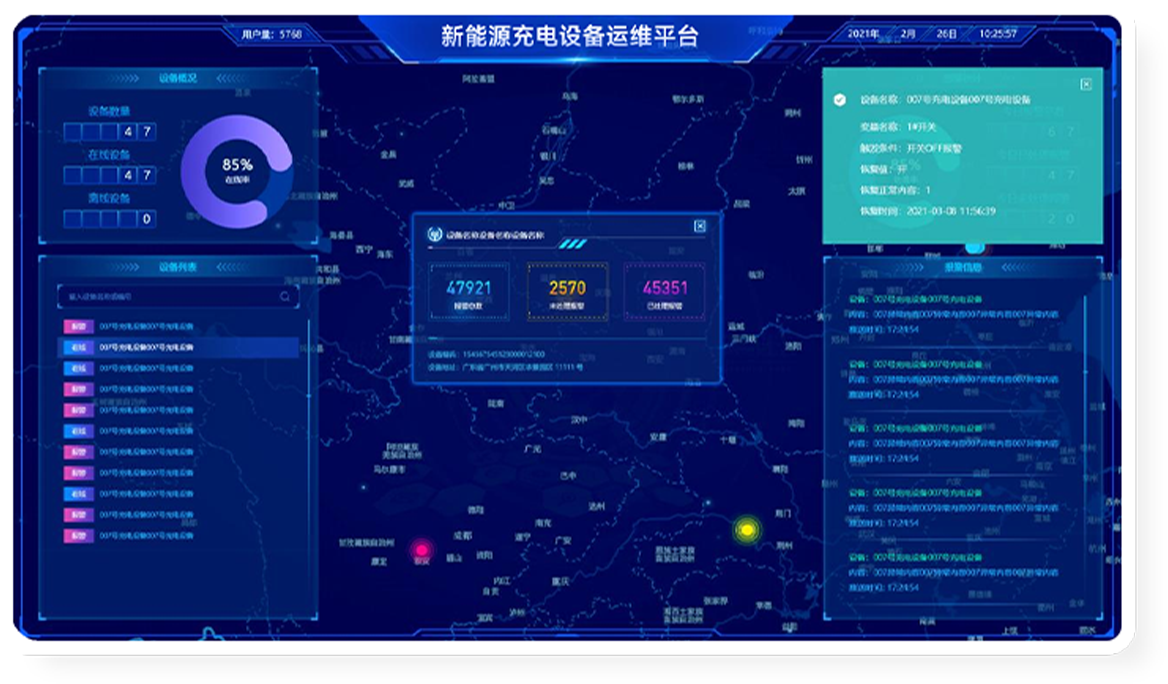
Build a Live Operating Picture Across Distributed Charging Sites
Use a centralized monitoring view to see charger communication status, abnormal events and historical records across locations. This helps the operations team identify which site, charger or event needs investigation without waiting for a manual inspection.
- Platform-to-device connectivity visibility
- Real-time data transmission and status review
- Charging anomaly and fault alarm screening
- Offline / reset record traceability
Use Charging Data and Device Logs to Narrow Down the Root Cause
Manual inspections often provide too little context. The diagnostic workspace adds charging curves, communication messages, fault codes and device logs so the team can investigate the issue before deciding whether a site visit is necessary.
- Flexible fault-code management
- Charging curve and message verification
- On-device log retrieval
- Real-time charging condition analysis
Handle Supported Recovery Actions From the Platform
When the fault is software-, communication- or configuration-related, compatible chargers may support remote recovery actions. This can reduce unnecessary technician travel and help operators restore service more quickly.
- Remote reboot for supported chargers
- OTA firmware upgrade workflows
- Remote command and maintenance status tracking
- Centralized operation history for audit and review
Turn Faults and Service Requests Into Traceable Work Orders
Remote diagnosis does not eliminate field service. It makes field service more informed. When on-site work is required, the work order workflow connects ticket creation, review, dispatch, acceptance, service execution and customer feedback so each case has a clear owner and status.
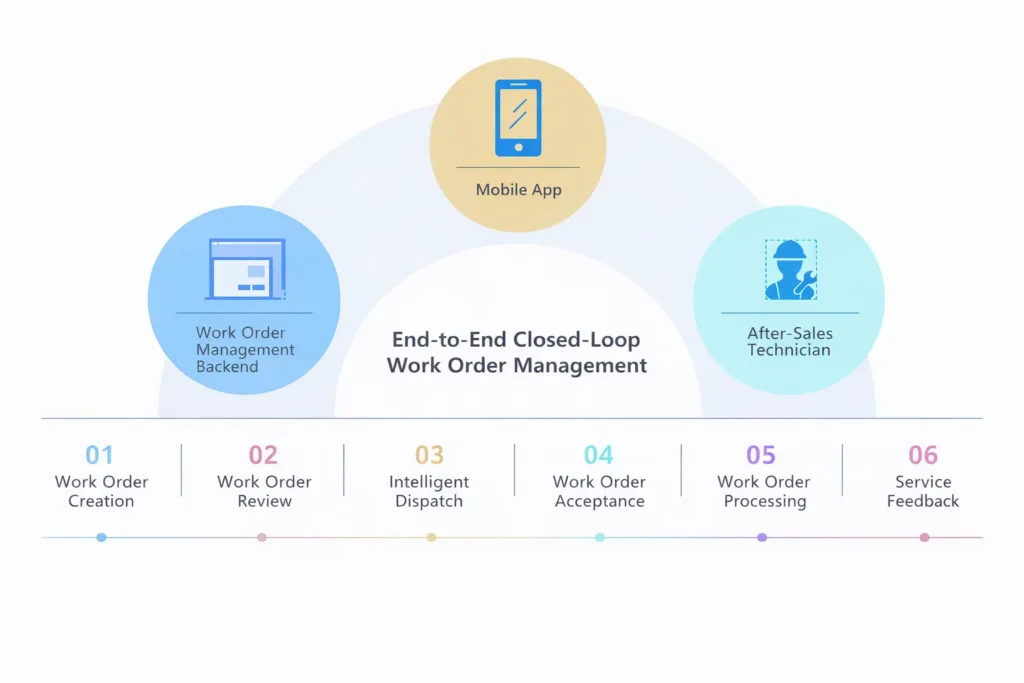
Let Users Submit Better Service Requests and Track What Happens Next
Support repair, installation, inspection, maintenance or other service requests through configured mobile or H5 channels. Better input at the beginning gives the after-sales team more context before the ticket reaches dispatch.
- Multiple service-request types
- Text, image or video fault evidence
- Automatic service notifications
- Ticket progress, acceptance and feedback
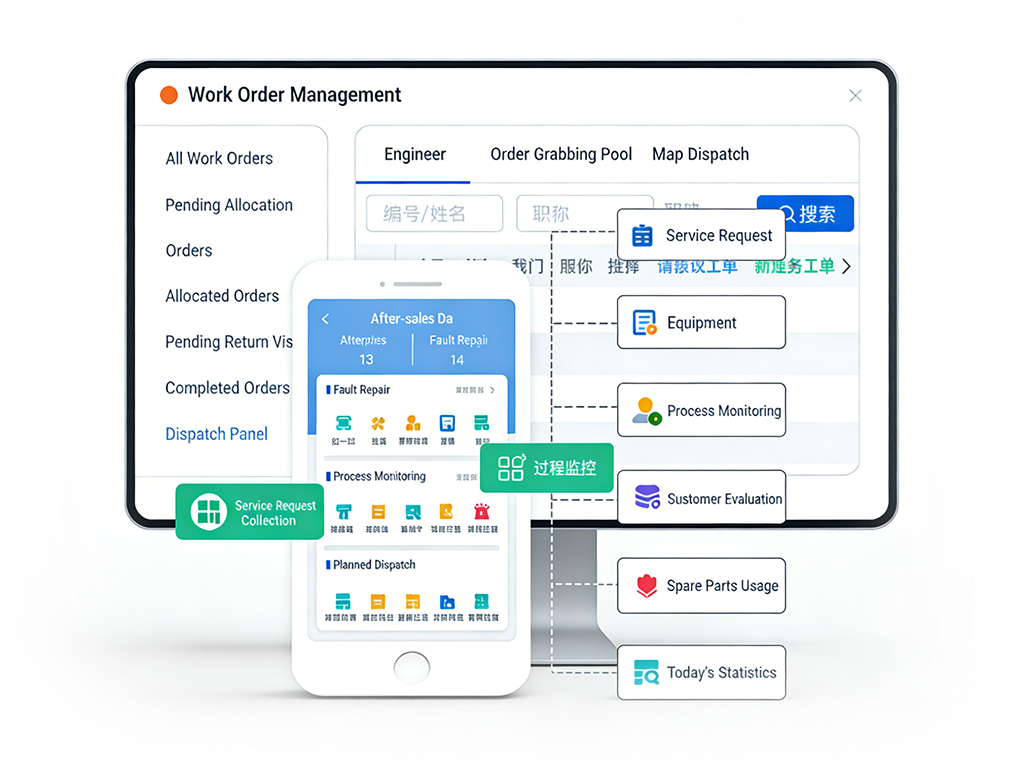
Review, Assign and Supervise Work Orders From One Backend
Bring service intake, technician information, dispatch rules and ticket history into one management workflow so administrators can route tasks more consistently and maintain visibility after assignment.
- Multi-channel work order intake
- Nearest, map-based or manual dispatch
- Technician profile and skill records
- Work order analytics and electronic archives
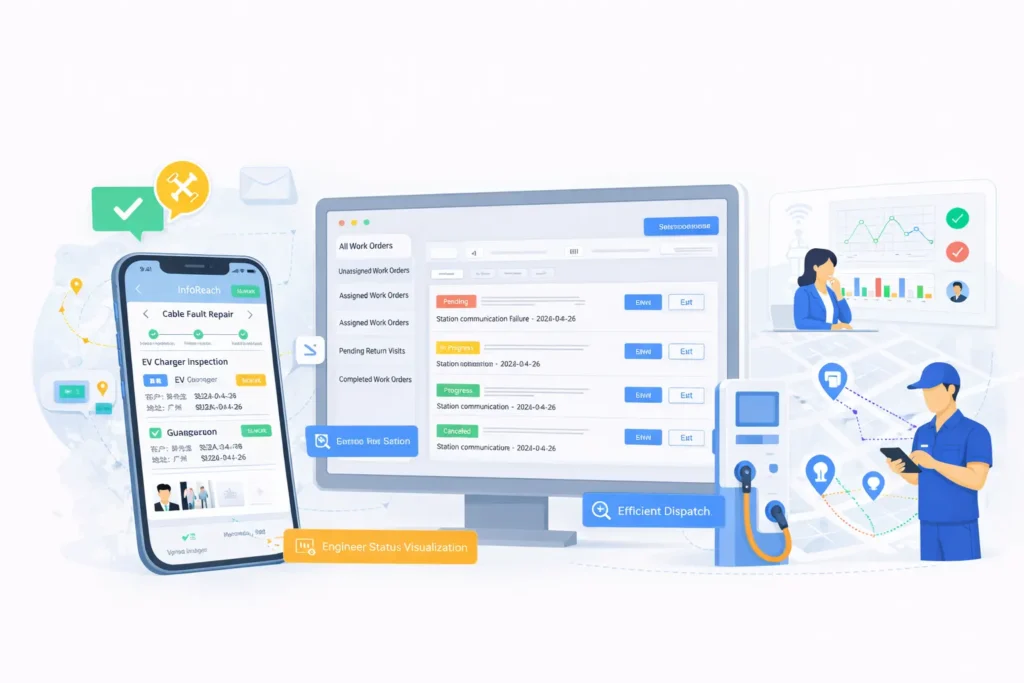
Accept, Process and Document Service Work From the Field
Technicians can receive tasks, update work order status and document service activity from mobile workflows so the office does not lose visibility after the technician leaves for the site.
- Online work order acceptance
- Location-based check-in and status updates
- Before / during / after service photo uploads
- Spare-parts requests and settlement workflows when configured
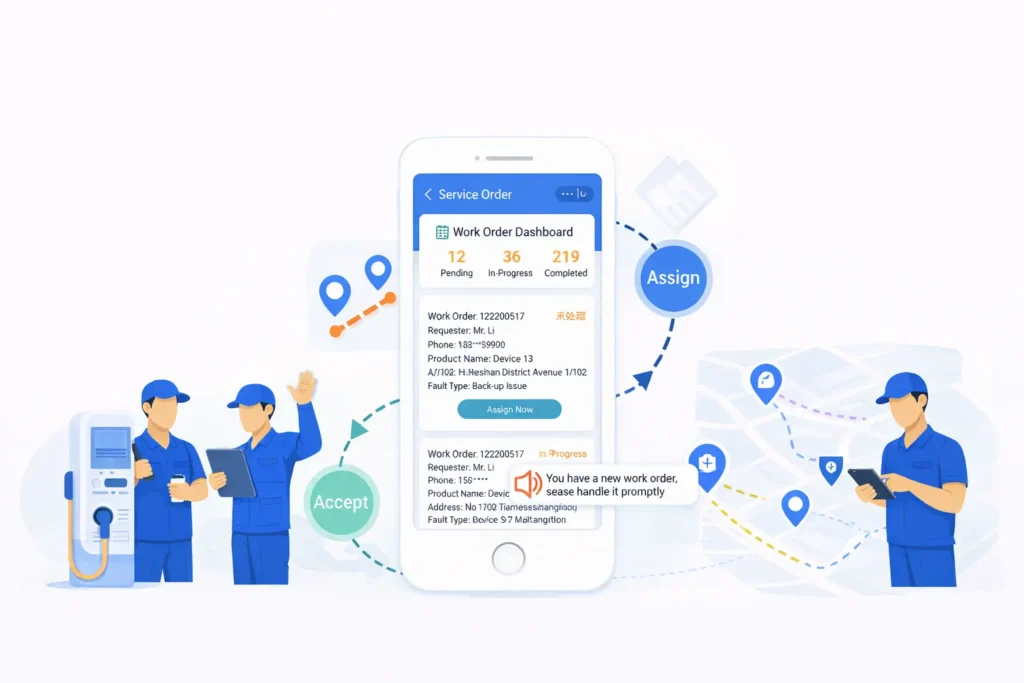
Turn O&M Activity Into Data You Can Actually Review
The value of a digital maintenance workflow is not only faster execution. It also creates a service history that helps managers see where failures repeat, where response slows down and where resources are being used.
Intelligent O&M for Different EV Charging Operating Models
Different networks organize maintenance differently. The common need is a consistent way to see charger health, investigate faults and coordinate people across many locations.
Charging Point Operators
Coordinate alarms, charger diagnostics, service partners and work orders across public charging sites.
EV Charger Manufacturers
Provide after-sales teams with remote diagnostic and service tools for deployed charger fleets.
Fleet & Depot Charging
Keep depot chargers operational by connecting fault visibility with maintenance response and service records.
Property & Parking Networks
Manage charging issues across residential, workplace, parking and destination sites without relying on local staff alone.
Regional Service Providers
Organize technician assignment, acceptance, location tracking and service documentation across a field team.
Multi-Brand Charging Networks
Build a common O&M workflow across compatible charger models and site types, subject to integration scope.
Support the O&M Platform With Integration and Deployment Services
Remote operations depend on charger connectivity, protocol implementation, system architecture and service processes. TRENDPOWER can scope the software and integration work around the target hardware and operating model.

On-Premises Deployment
Evaluate private deployment for organizations with specific data-control, infrastructure or integration requirements.

Third-Party Charger Integration
Coordinate protocol integration and joint debugging for compatible charger models and project-defined interfaces.

Deployment & Maintenance
Support platform configuration, rollout, operational handover and ongoing maintenance requirements.

Service Ecosystem Coordination
Coordinate hardware, service, operations or ecosystem resources when a project needs more than software alone.
What Should You Prepare Before an Intelligent O&M Demo?
A useful demo should reflect how your network actually operates. Sharing a few details in advance helps TRENDPOWER focus on the charger data, fault workflow and service roles that matter to your project.
See the EV Charging O&M Workflow in Action
Watch how the intelligent operations management workflow connects real-time monitoring, fault detection, remote diagnosis, service dispatch and work order management for charging infrastructure.
Build a More Traceable O&M Workflow for Your Charging Network
Tell us how many chargers you operate, which charger brands and protocols are involved, how faults are handled today and how your technicians or service partners are organized. We can help define a practical intelligent O&M scope around your network.

Intelligent Operations Management FAQ
Answers about EV charging O&M software, remote monitoring, diagnostics, work orders, charger maintenance and field service workflows.
What is intelligent operations management for EV charging?
It is a digital O&M platform that connects charger monitoring, alarms, remote diagnostics, remote remediation and work order management so operators can manage faults and service activity through one coordinated workflow.
How does remote monitoring help charging network operators?
Remote monitoring gives operations teams visibility into charger status, connectivity, alarms and operating data across sites, helping them identify abnormal conditions without relying only on manual inspection or driver reports.
What data can be used for remote charger diagnostics?
Depending on charger capability and integration scope, diagnostics can use charging curves, communication messages, fault codes, device logs, online status and other telemetry to support troubleshooting.
Can charger faults be resolved remotely?
Some issues can be handled through supported remote actions such as reboot, start/stop controls or OTA firmware updates. Physical hardware faults still require on-site service. Available actions depend on charger capability and integration.
What is a closed-loop EV charging work order system?
A closed-loop system tracks a service case from ticket creation and review through dispatch, technician acceptance, service execution, verification and feedback, keeping the full service history connected to the issue.
How can intelligent dispatch improve field service?
Dispatch rules can use factors such as service area, ticket type, priority and technician availability or skills to help assign work more consistently and reduce manual coordination.
Can technicians update work orders from a mobile device?
Yes. The original TRENDPOWER workflow includes mobile ticket acceptance, status updates, location-based check-in and service photo uploads so work can be documented while technicians are in the field.
Can users or site staff submit repair requests themselves?
Yes. Service requests can be submitted through supported mobile or H5 channels with details such as service type, text, images or videos, depending on the configured workflow.
Does intelligent O&M replace the CPMS?
No. A CPMS manages charging network operations such as chargers, sessions, users, tariffs and payments. Intelligent O&M focuses on charger health, fault handling, maintenance and after-sales workflows. The two capabilities can work together.
Can the platform support multiple charger brands?
It can support mixed charging equipment when the chargers expose compatible protocols, data and control interfaces. Hardware compatibility should be confirmed during technical assessment.
Is on-premises deployment available?
On-premises deployment is one of TRENDPOWER’s service options. The appropriate architecture depends on data-control, integration, infrastructure and security requirements.
What should I provide before requesting an O&M demo?
Useful information includes charger brands and protocols, charger quantity, current alarm and telemetry data, service team structure, work order process, dispatch rules, target integrations and the main maintenance problems you want to solve.
 EN
EN  ZH
ZH  AR
AR  DE
DE  ES
ES  KO
KO  JA
JA  IT
IT  FR
FR  VI
VI  MS
MS  ID
ID  FR_CA
FR_CA  NL
NL  SV
SV  EN_GB
EN_GB  TH
TH 