
TrendPower Joins Forces with Leading Industry Partners
Supporting Singapore’s First National-Level Autonomous Electric Bus Project
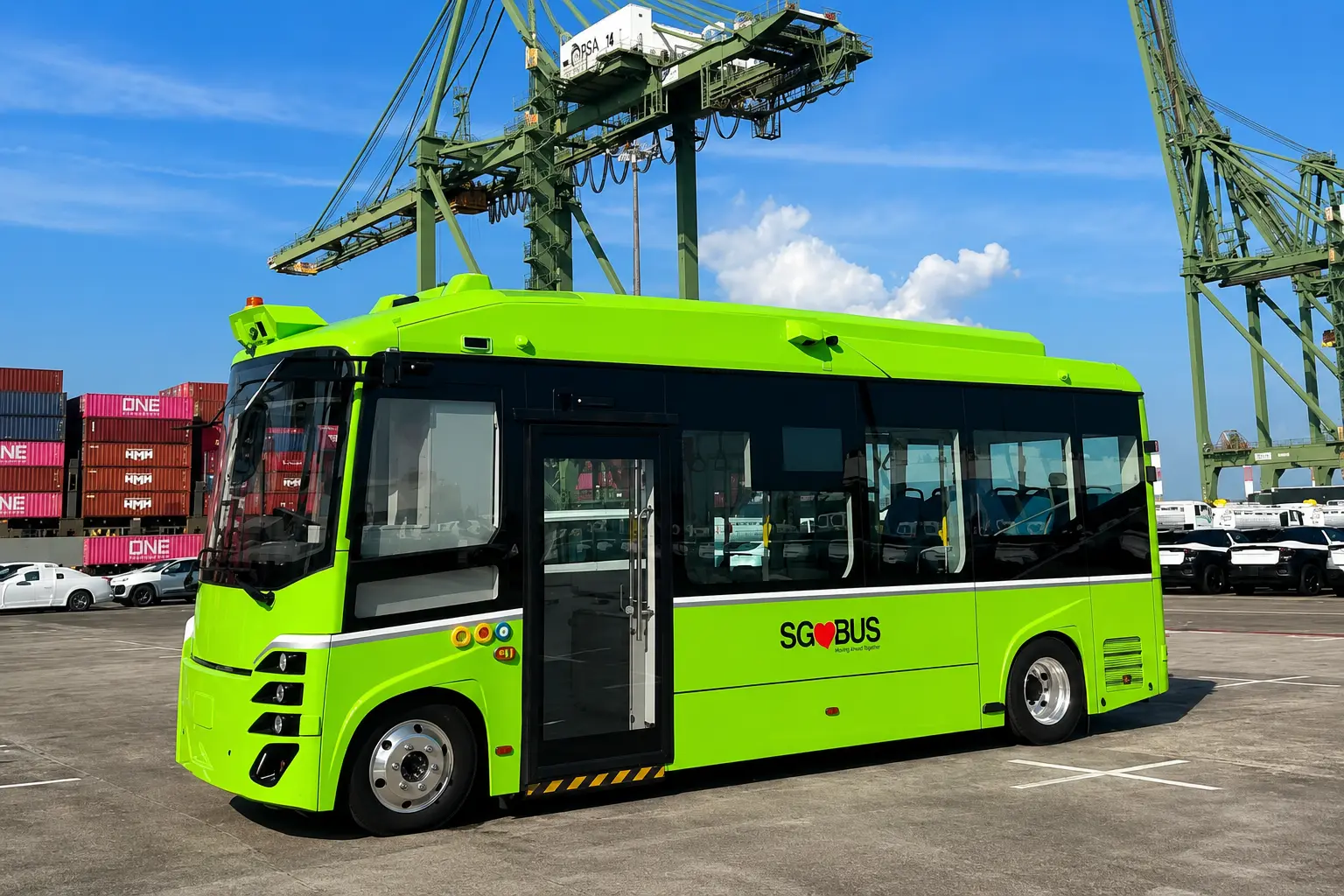
In August 2026, a driverless electric bus began carrying passengers through some of Singapore’s busiest commercial and tourism districts. With no driver taking control and no unexpected interruption to normal operation, the vehicle follows its planned route and completes scheduled trips through a highly demanding urban traffic environment.
This is Singapore’s first official Level 4 autonomous bus pilot project. The deployment represents a significant milestone for Chinese autonomous bus technology in a developed public transport market and demonstrates how autonomous driving, electric mobility and intelligent charging can work together in real-world public transportation.
A Southeast Asian First: China-Made Autonomous Buses Enter Singapore
To understand how the project came together, we need to go back to October 2025.
Singapore’s Land Transport Authority (LTA) announced that a consortium comprising Mogo Auto, BYD and MKX Technologies had secured the exclusive contract for Singapore’s first national-level autonomous driverless bus project, with a contract value of approximately RMB 8.14 million.

In March 2026, the first batch of China-made MOGOBUS vehicles arrived in Singapore. Each vehicle is equipped with Mogo Auto’s MogoMind multimodal large model for the physical world and its independently developed, full-stack MOGO AutoPilot end-to-end autonomous driving system. Eight solid-state LiDAR units and multiple cameras provide 360-degree environmental perception with virtually no blind spots.
By the second half of 2026, MOGOBUS vehicles had entered pilot operations on Bus Service 191 at one-north and Bus Service 400 in Marina Bay.
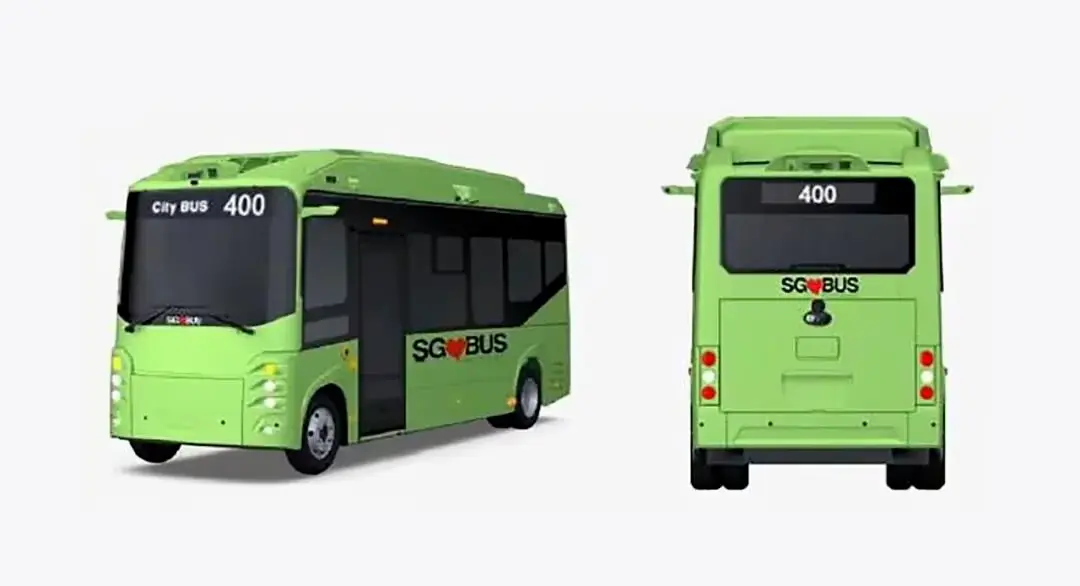
The two routes serve Singapore’s major commercial districts and technology and innovation hubs. Dense commuter traffic, frequent vehicle movements and complex road conditions create demanding requirements for operational safety, schedule adherence and passenger experience.
How Did the Solution Meet Singapore’s Demanding Public Transport Standards?
Singapore’s public transportation system is widely recognized for its emphasis on safety, efficiency and operational discipline. Its requirements extend across technology validation, safety testing, cybersecurity, vehicle operations and service performance.
The operating standards applied to MOGOBUS are also closely aligned with those of conventional public bus services. Schedule adherence is particularly important. Under the disclosed performance requirements, arriving two minutes or more ahead of schedule or being delayed by five minutes or more can be treated as a service violation and included in operational assessments.
For the charging infrastructure behind the autonomous electric bus project, Huawei’s liquid-cooled ultra-fast charging technology provides the hardware foundation, while TrendPower provides the intelligent managed charging platform that coordinates charging operations and energy use.
Singapore’s Ministry of Transport has identified manpower as an important constraint on the continued expansion of public transportation. As recruiting local bus drivers becomes increasingly difficult, autonomous driving offers a potential way to reduce that dependency.
However, removing the driver creates another operational requirement: every bus must have sufficient battery capacity before its scheduled departure.
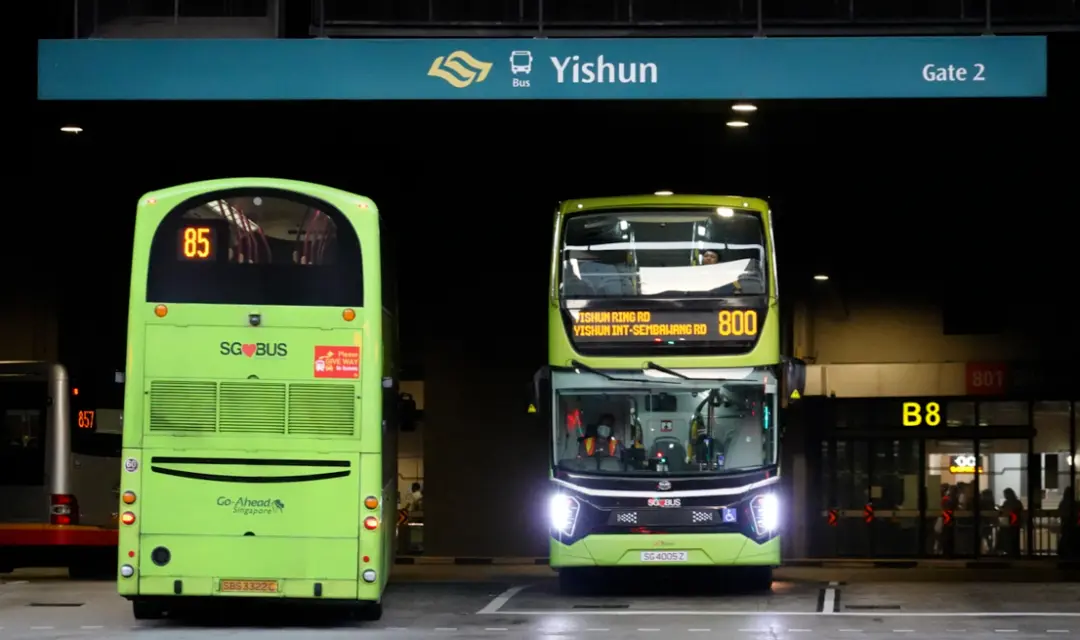
In conventional EV charging scenarios, charging schedules can be relatively flexible. A private electric vehicle may remain parked overnight, so a delayed charging session often has little impact.
Electric buses operate under very different conditions. Every vehicle has a fixed route, a scheduled departure time, an expected driving distance and a minimum required state of charge.
If charging is not properly coordinated, a single charging delay can affect vehicle dispatch and ultimately disrupt the timetable of an entire bus route.
This is one of the least visible parts of autonomous bus operations, yet it is also one of the most technically important.
On-Time Departures Depend on Intelligent Bus Charging
A smart bus charging platform must continuously make real-time operational decisions:
- Which electric bus should be charged first?
- How much charging power should each vehicle receive?
- How should charging duration be coordinated with the departure timetable?
- Will simultaneous charging exceed the depot’s available electrical capacity?
- How should the system respond if charging equipment fails?
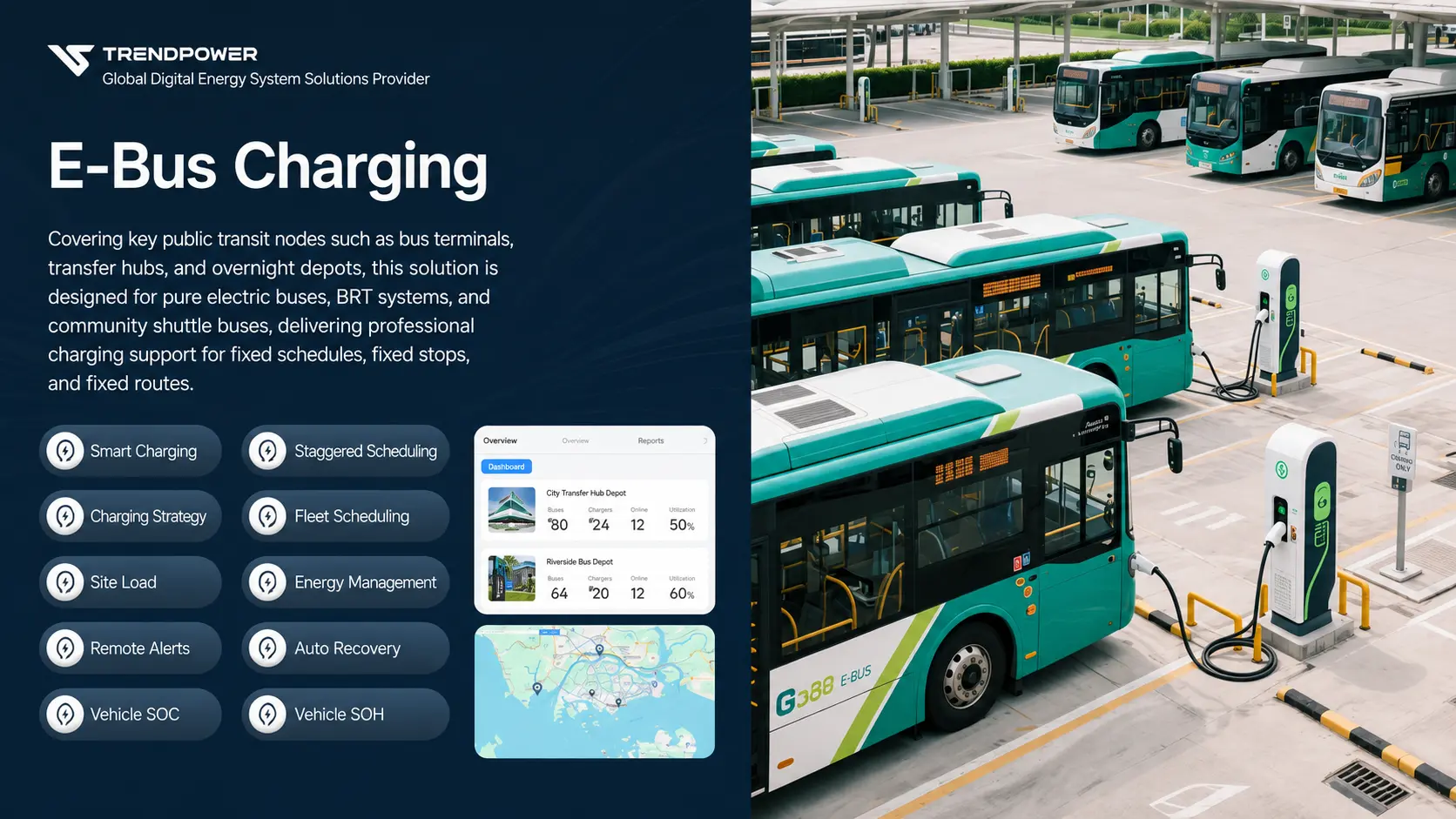
To support reliable pilot operations, TrendPower developed an intelligent platform covering vehicle scheduling, charging queues, time-of-use tariff optimization, grid-load coordination, depot operations and maintenance, energy monitoring and settlement.
The same technology framework is available through TrendPower’s Bus Charging Management Solution, which coordinates bus schedules, battery status, charger availability and depot power capacity from one centralized platform.
01. Smart Charging Scheduling: Keeping Every Bus Ready for Departure
At conventional electric bus depots, charging often follows a simple “first come, first charged” approach. That model becomes inefficient when dozens of buses have different routes, departure times and battery levels.
TrendPower’s intelligent charging platform connects multiple data sources, including bus departure schedules, real-time State of Charge (SOC), route energy requirements and available depot power capacity.
The system then automatically generates a charging priority queue based on operational urgency:
- Earlier departures receive higher priority.
- Vehicles with lower SOC receive higher priority.
- Buses assigned to longer routes receive higher priority.
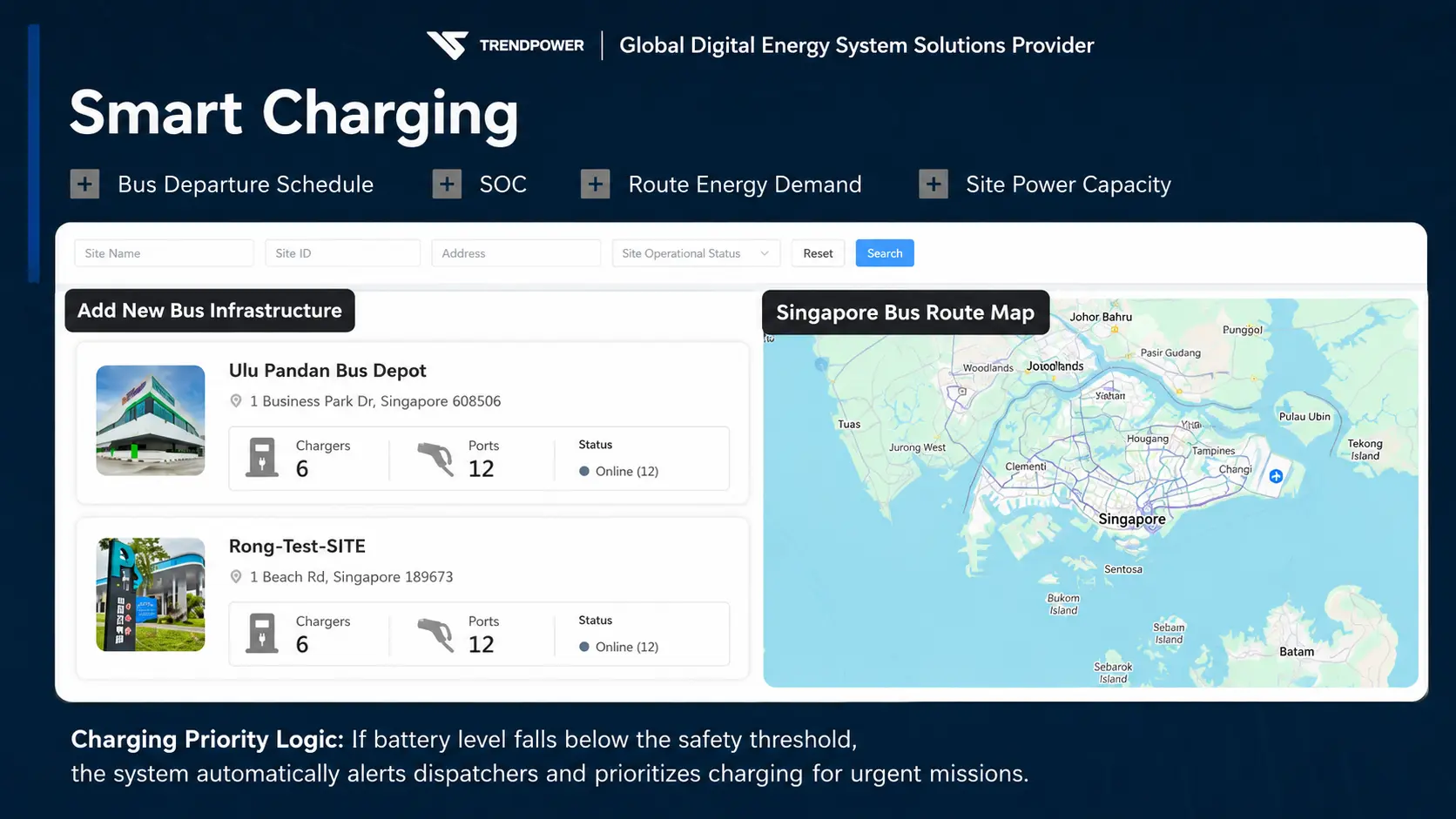
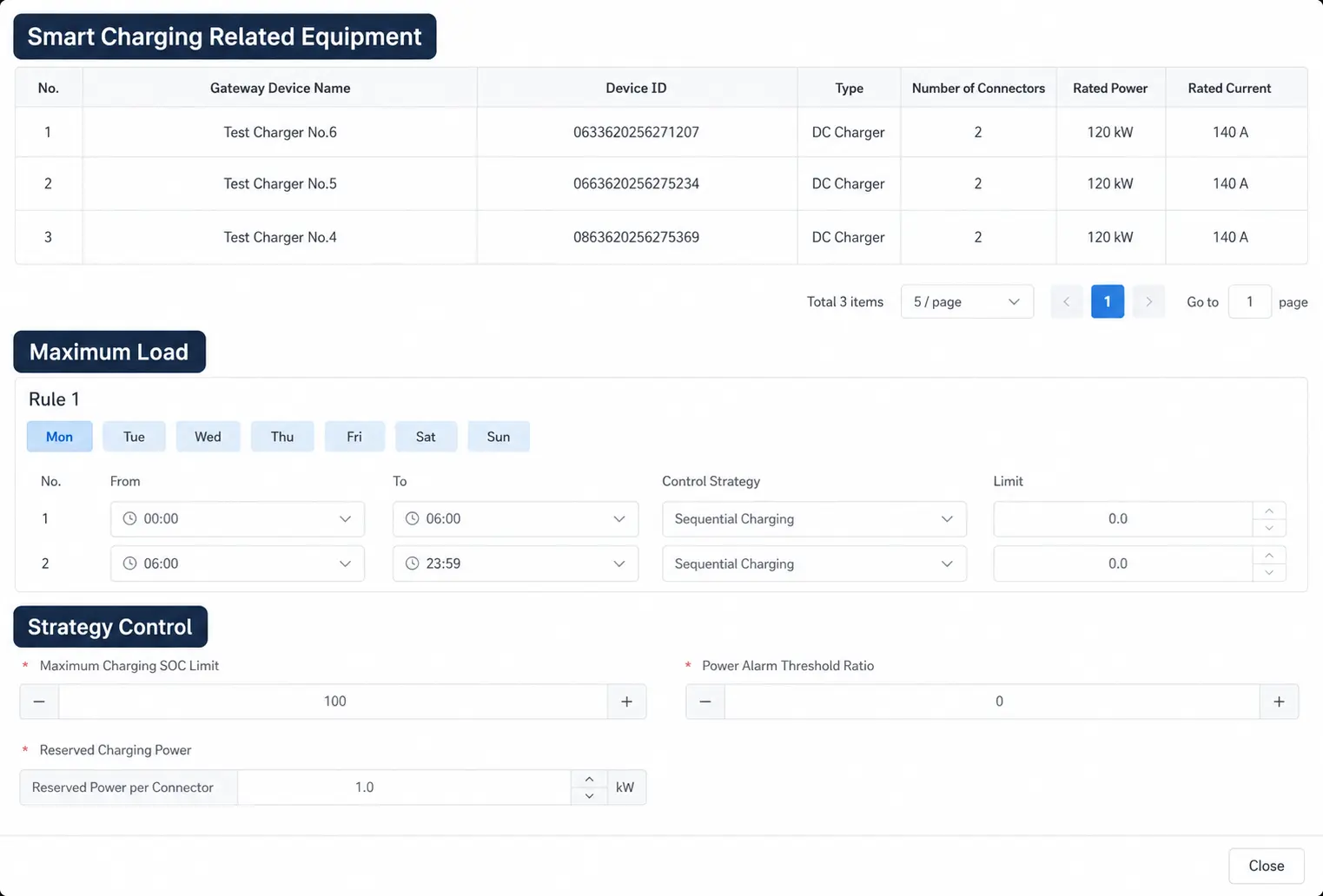
The result is a shift from “first come, first charged” to demand-based charging orchestration. Charging is no longer managed independently from fleet operations; instead, every charging decision is aligned with the bus timetable.
For high-frequency public transport, this coordination is a key safeguard for reliable and on-time departures.
02. Dynamic Power Allocation: Making Better Use of Limited Grid Capacity
Singapore is one of the world’s most densely developed urban environments, where both land and electrical capacity must be used efficiently.
If multiple electric buses charge at maximum power at the same time, total depot demand can rise sharply and approach or exceed the site’s available electrical capacity.
TrendPower addresses this challenge through dynamic load management. The platform continuously distributes charging power according to the depot’s power limit, vehicle readiness requirements and departure priorities.
A bus that must depart soon can receive more charging power, while a vehicle with a longer available charging window can temporarily charge at a lower rate or begin charging later.
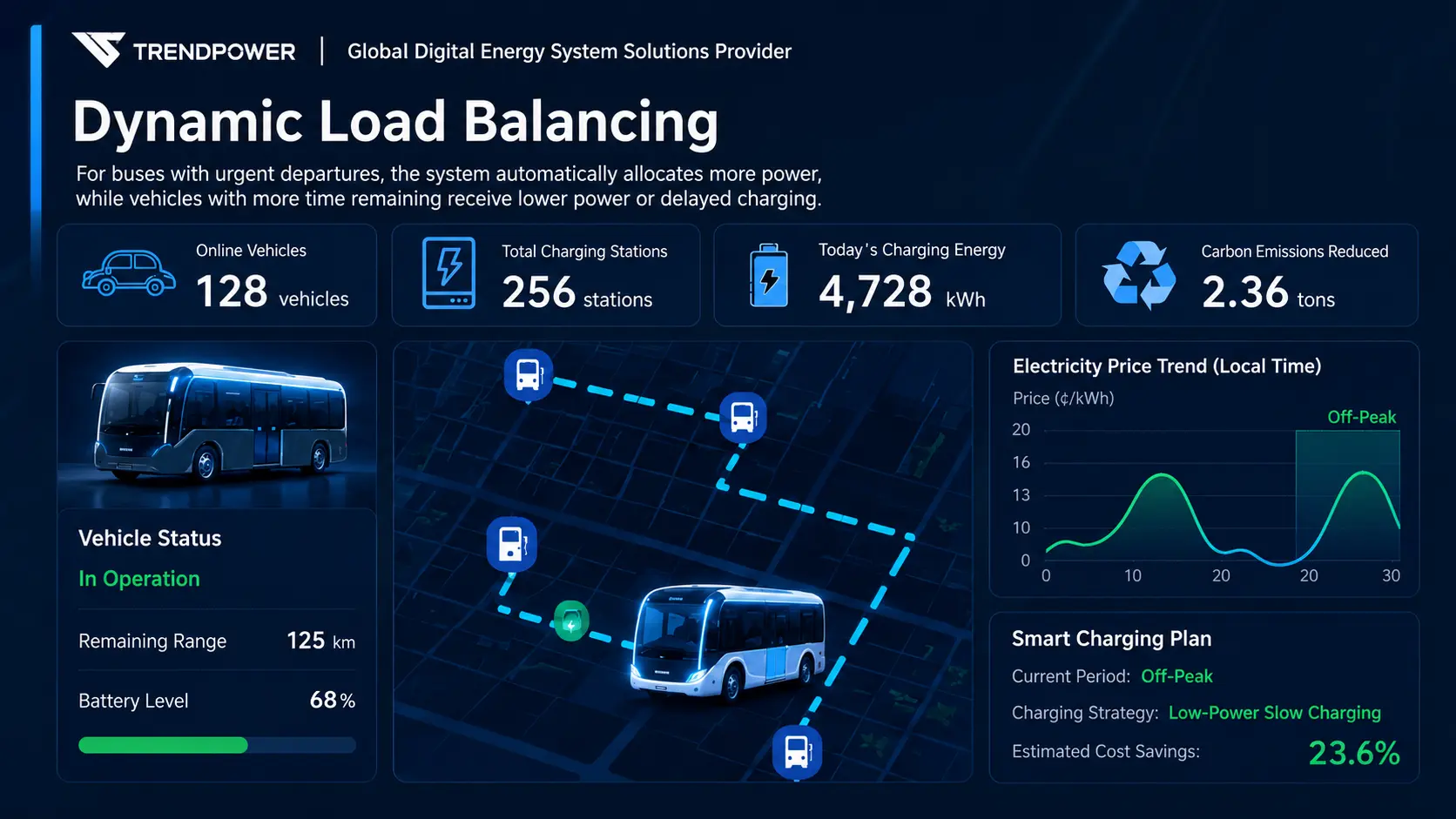
The question therefore changes from simply “When should the bus charge?” to:
- How should each bus charge more efficiently?
- How can all required charging be completed without exceeding the site power limit?
Dynamic power allocation helps prevent concentrated high-power charging from placing unnecessary pressure on the grid. It can also help operators reduce peak-demand costs while maximizing charger and depot utilization.
This approach is particularly well suited to Singapore’s short-distance, high-frequency bus operations and concentrated depot parking patterns.
03. Remote Monitoring and Intelligent O&M: Making Unattended Operations Practical
Autonomous fleets create another important operational challenge. If a charging device fails, there may be no driver beside the vehicle to notice the problem. If a charging session stops unexpectedly, immediate manual intervention may not be available.
TrendPower therefore combines remote monitoring, fault detection, alerts and supported recovery workflows within its Intelligent Operations Management capabilities.
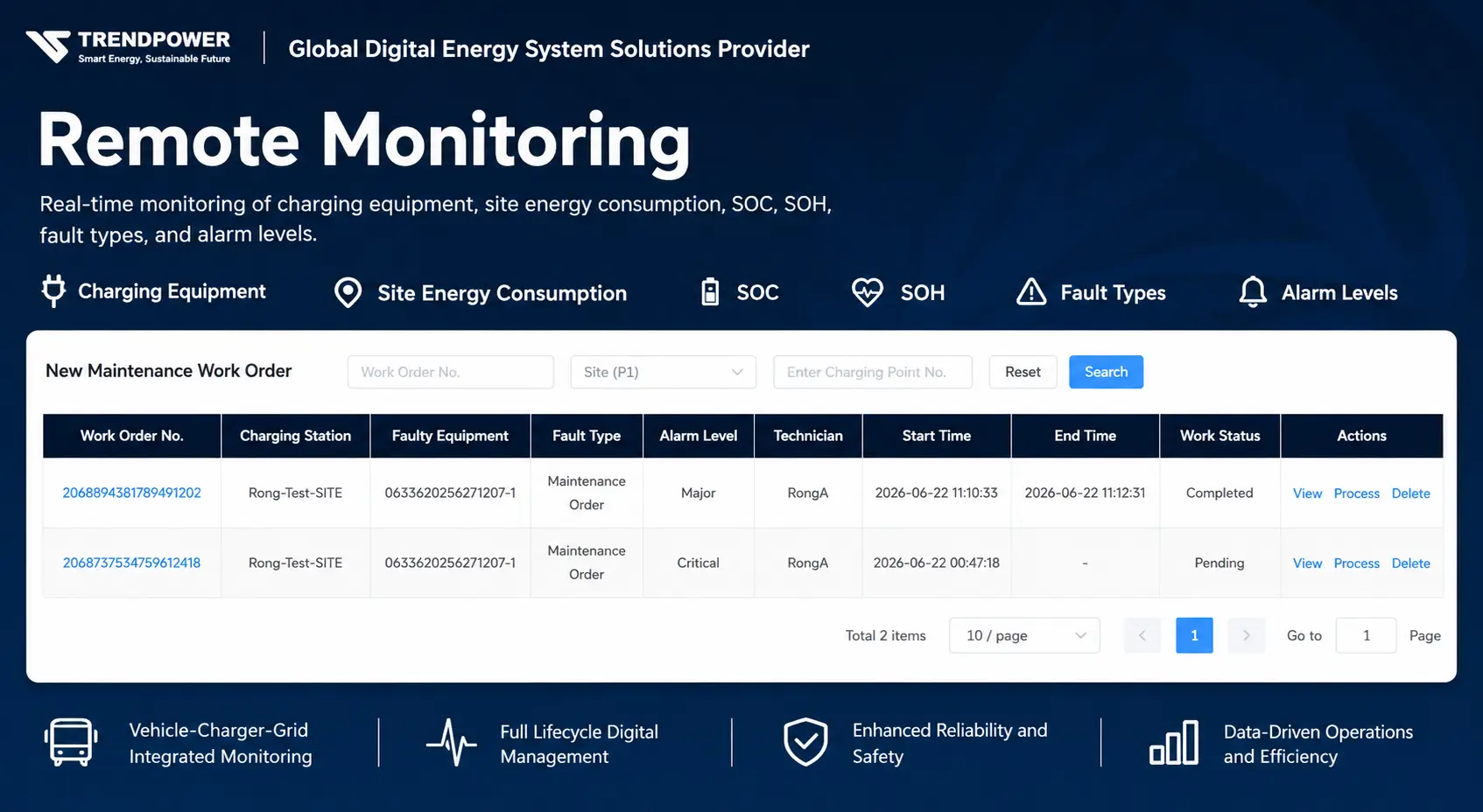
Centralized Visual Monitoring
Through a centralized dashboard, operators can monitor the SOC of every connected vehicle, the status of charging equipment and the depot’s overall energy consumption.
Charger status can include conditions such as available, occupied, offline or faulted, giving operators a real-time view of charging infrastructure across the depot.
Remote Alerts and Automated Response
When an equipment fault occurs, the platform can classify the event by severity and send relevant information to the operations and maintenance team, including the affected vehicle, charger and fault code.
For supported scenarios, predefined automated actions can also be triggered. Examples include:
- Communication timeout: initiate a remote restart workflow.
- Site load approaching the power limit: automatically redistribute or shift charging demand.
- Abnormal charging power: reduce charging output according to predefined control rules.
These capabilities reduce dependence on continuous on-site supervision and help improve the reliability of unattended charging operations.
04. Operational Data Analytics: From Experience-Based Decisions to Data-Driven Fleet Management
Every charging session generates operational data, and every bus trip produces additional information about vehicle performance and energy use.
When charging records are connected with route, vehicle and energy data, fleet managers gain a much clearer picture of how the entire operation performs.
TrendPower can help operators analyze indicators such as vehicle-level energy consumption, route-level energy differences, charger utilization and depot peak load, allowing fleet management to move from experience-driven decisions toward data-driven operations.
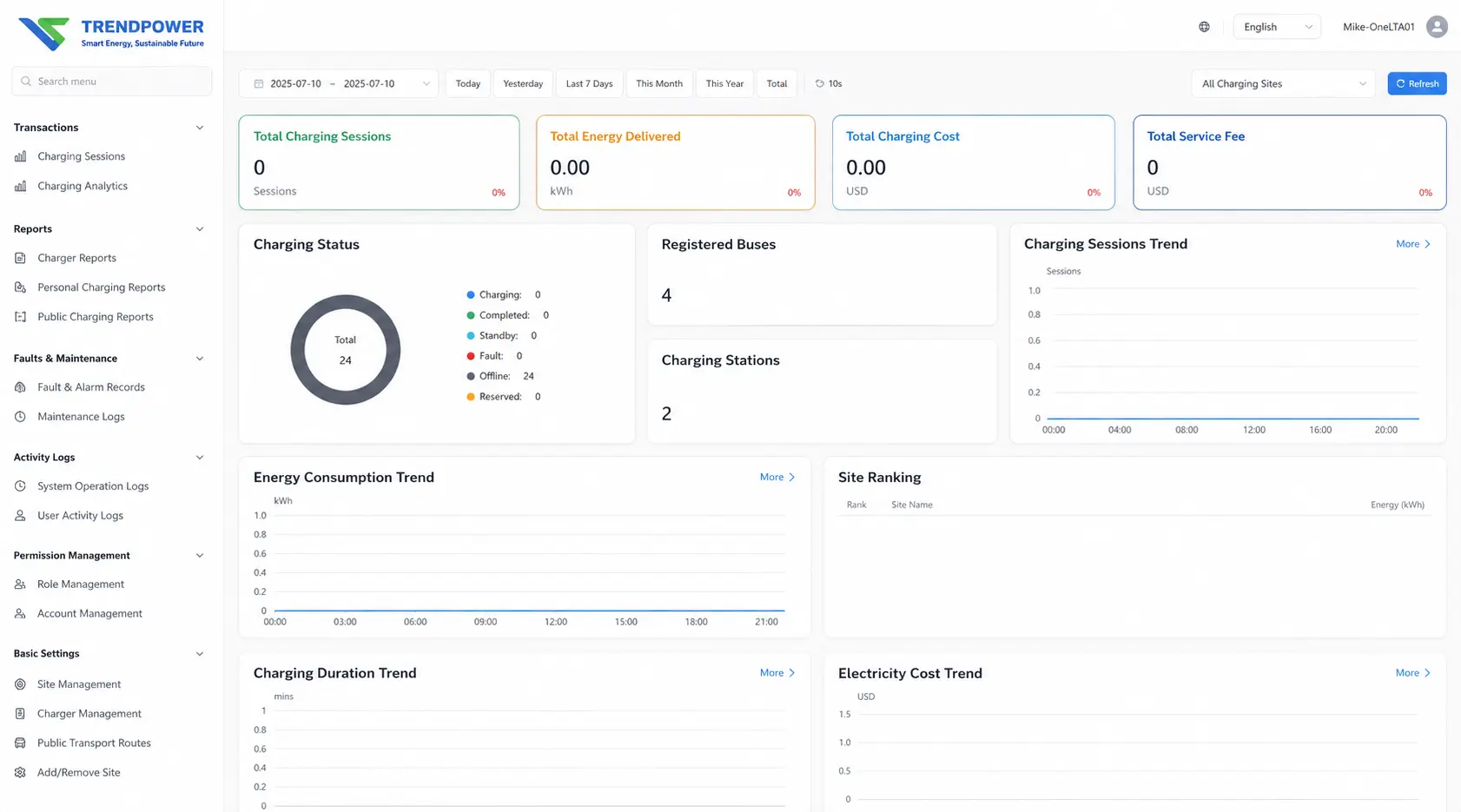
Vehicle and Route Energy Analysis
Which bus route consumes more energy? Is a particular vehicle’s battery State of Health (SOH) showing an unusual degradation trend?
By combining charging and operational data, fleet managers can make better-informed decisions about vehicle scheduling, route planning and preventive maintenance.
Charger Utilization Analysis
Which chargers are heavily utilized? Which chargers remain idle for long periods? When does the depot reach its highest electrical demand?
These indicators provide valuable input for future charging equipment expansion, infrastructure investment and depot capacity planning.
Smart Charging Is Becoming Part of the Autonomous Fleet Operating System
Autonomous driving determines how a vehicle moves. Charging management determines whether the vehicle has enough energy to move when required.
For autonomous electric fleets, charging software is therefore becoming an integral part of the overall fleet operating system.
Singapore provides a particularly demanding environment for this type of deployment: land is limited, expectations for public services are high, traffic conditions are complex and safety requirements are stringent.
The real value of the project does not lie in a single bus or a single high-power charger. It lies in an integrated operating model that connects vehicles, charging infrastructure, fleet scheduling and the power grid.
By combining autonomous driving technology, high-power charging hardware and intelligent charging orchestration, the project demonstrates how multiple technologies can work together to support the next generation of public transportation.
About TrendPower
TrendPower is a global digital energy system solutions provider delivering customized charging operation platforms and integrated solar-storage-charging software solutions for EV charger manufacturers, charging point operators, commercial fleets and EPC contractors.
Through its EV Charging Point Management System and specialized fleet and energy-management solutions, TrendPower helps businesses monitor charging infrastructure, coordinate energy use, automate operational workflows and turn charging data into actionable insights.
TrendPower currently supports customers across more than 30 countries and regions, with solutions covering public charging, commercial charging, dedicated fleet charging and residential charging scenarios.

 EN_GB
EN_GB  EN
EN  ZH
ZH  AR
AR  DE
DE  ES
ES  KO
KO  JA
JA  IT
IT  FR
FR  VI
VI  MS
MS  ID
ID  FR_CA
FR_CA  NL
NL  SV
SV  TH
TH 