
Solutions for Every Stage of EV Charging Operations
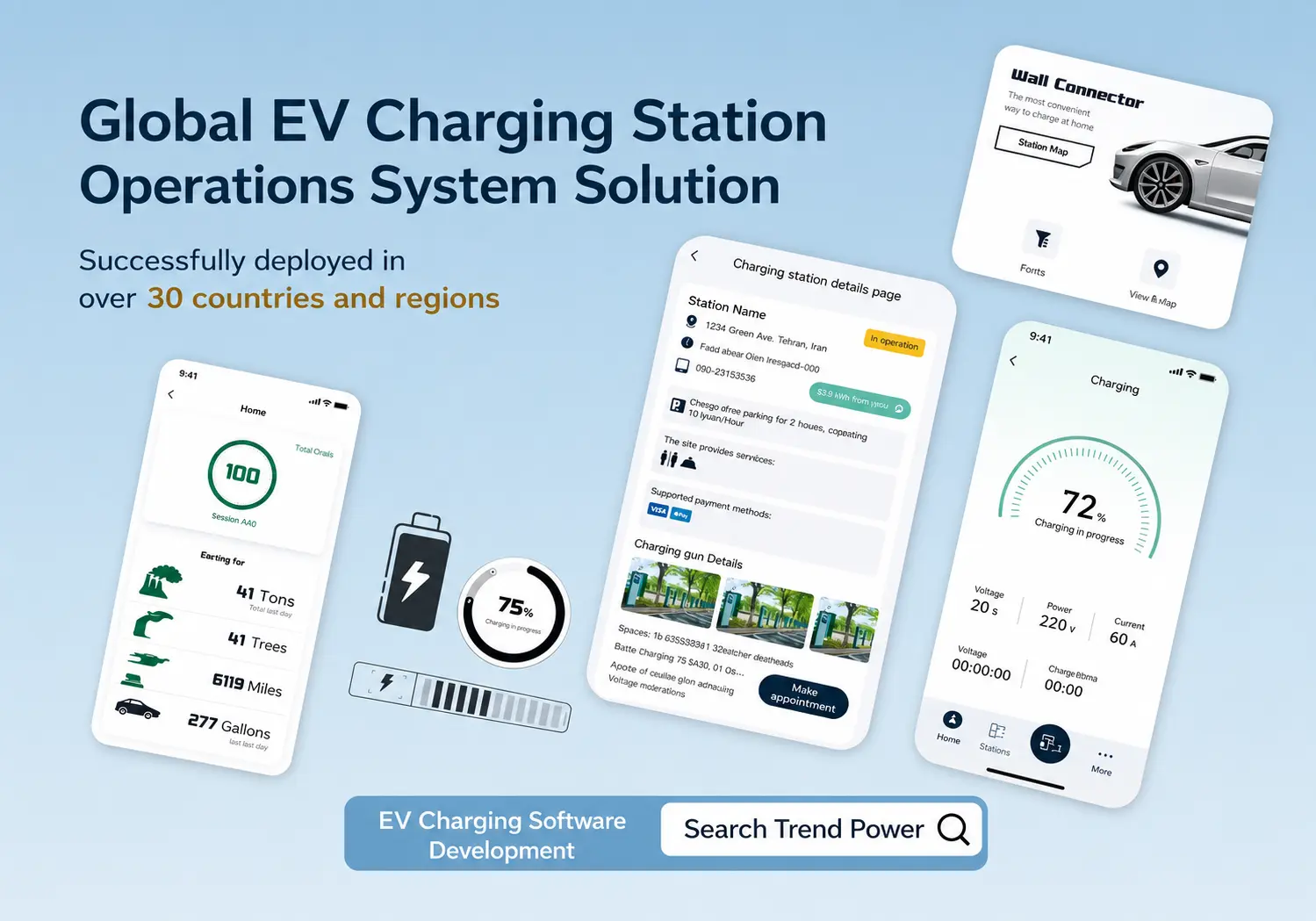
TRENDPOWER connects chargers, users, payments, fleets and energy systems through scalable software solutions for public networks, residential communities, zero-carbon parks, battery swapping and commercial vehicle operations.
One Platform Foundation, Seven Business Solutions
TRENDPOWER adapts charging management, payment, energy and fleet capabilities to the operating requirements of each charging scenario.
Choose the Solution That Matches Your Operating Scenario
Every solution can be configured with the required charger integrations, user roles, payment workflows, energy controls, deployment model and business-system interfaces.
Custom EV Charging Software Solution
Build an EV charging platform around your operating model, charger environment, market requirements and customer experience.
- Custom operator, partner and driver workflows
- Multi-brand charger and OCPP integration
- Localized languages, currencies and payment methods
- Cloud, private cloud and on-premises deployment
EV Charging Payment Solution
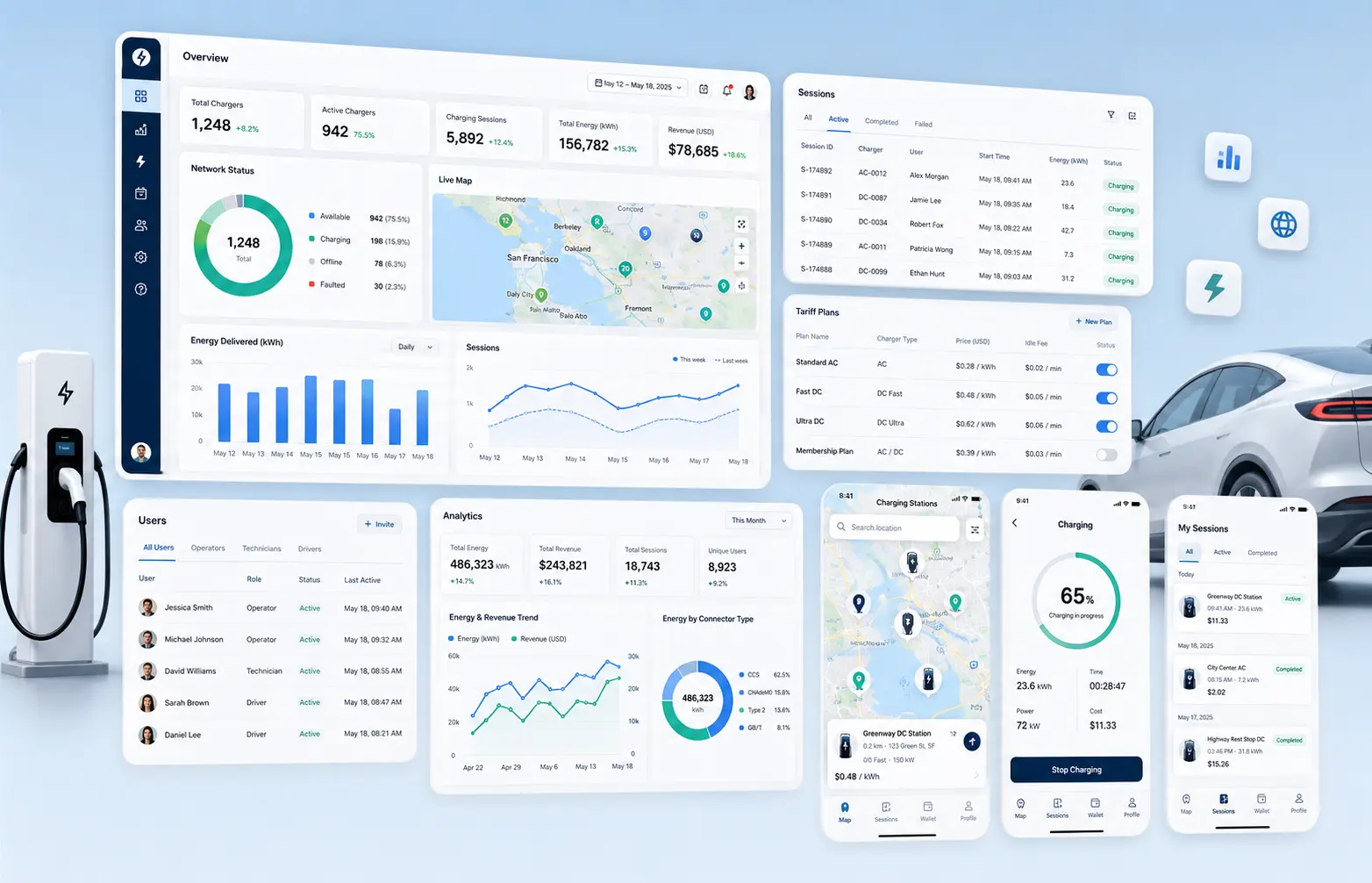
Connect charging sessions with secure payment, billing, reconciliation, settlement and revenue-sharing workflows.
- QR code, wallet, card and RFID payment workflows
- Flexible tariffs, billing rules and transaction records
- Reconciliation, settlement and multi-party revenue sharing
- Multi-currency and regional payment gateway integration
Shared Residential EV Charging Solution
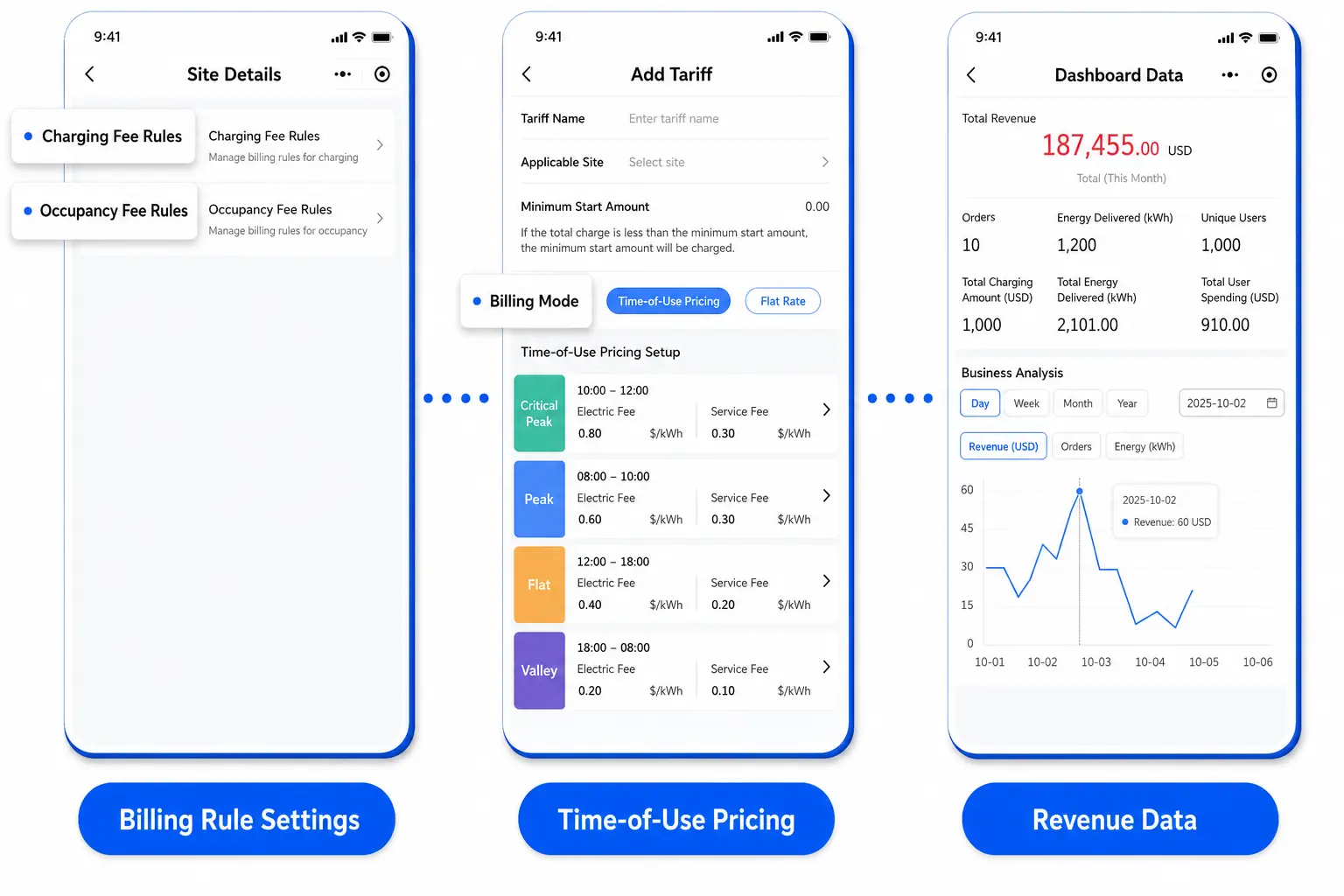
Enable secure charger sharing in apartments, communities and residential parking environments with controlled access and automated billing.
- Resident, visitor and property-management access control
- Reservations, recurring schedules and charger availability
- Automated billing, pricing and revenue allocation
- Remote monitoring, load management and usage reporting
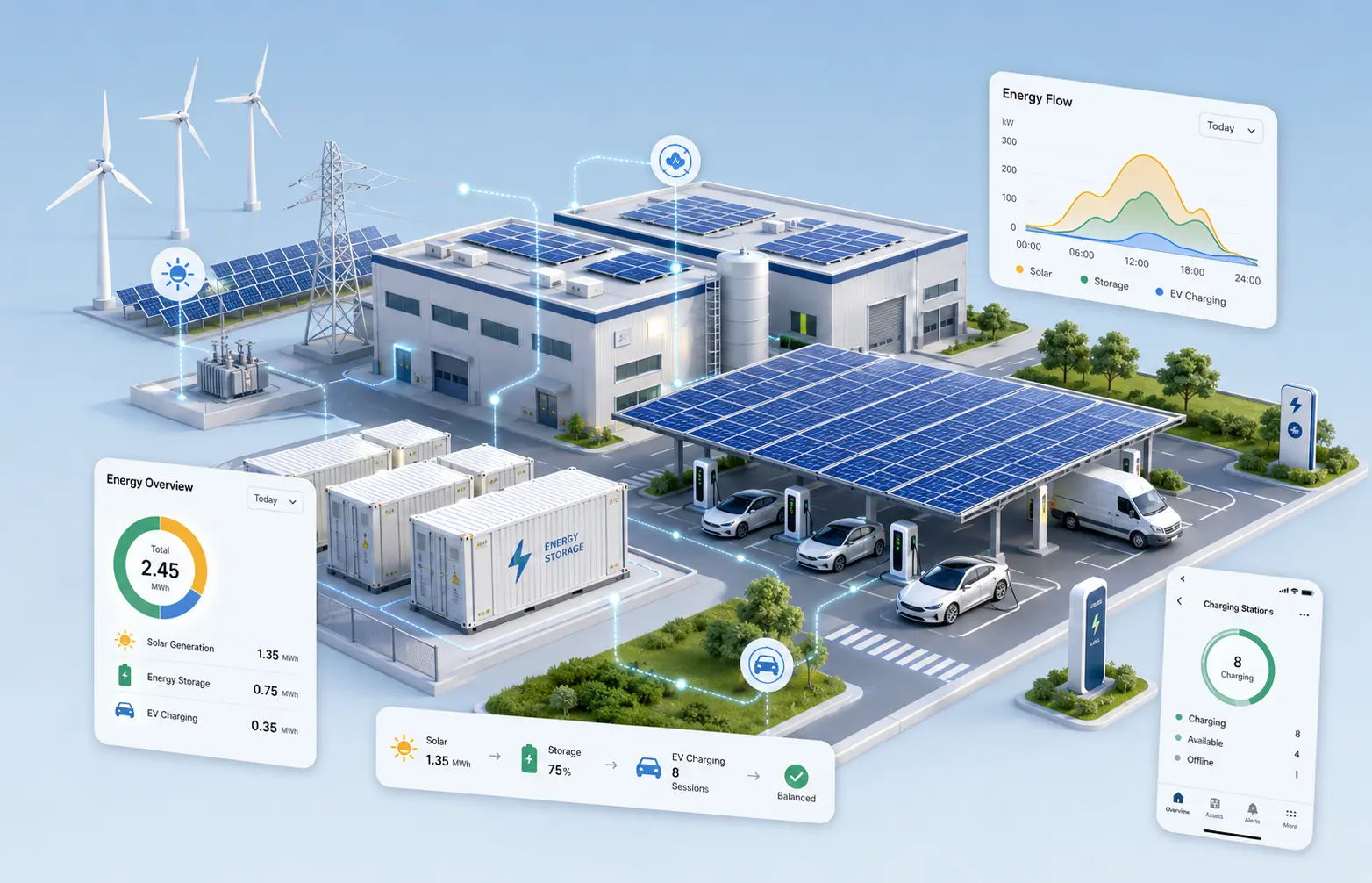
Zero-Carbon Park Solution
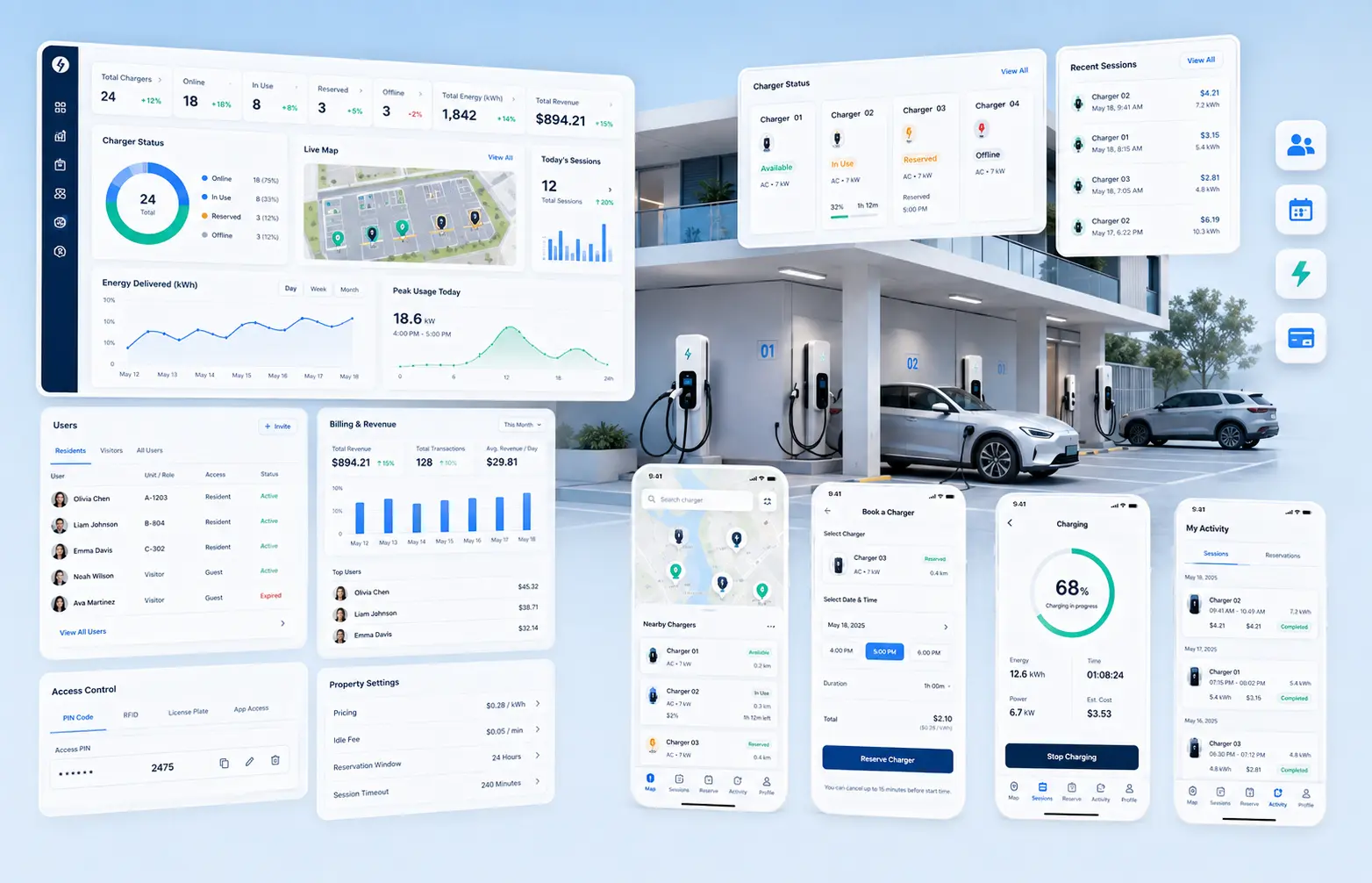
Integrate renewable energy, storage, charging infrastructure and park energy operations into one coordinated management ecosystem.
- PV, energy storage and charging integration
- Microgrid and site-load visibility
- Smart energy scheduling and peak-demand control
- Energy efficiency, carbon and operating reports
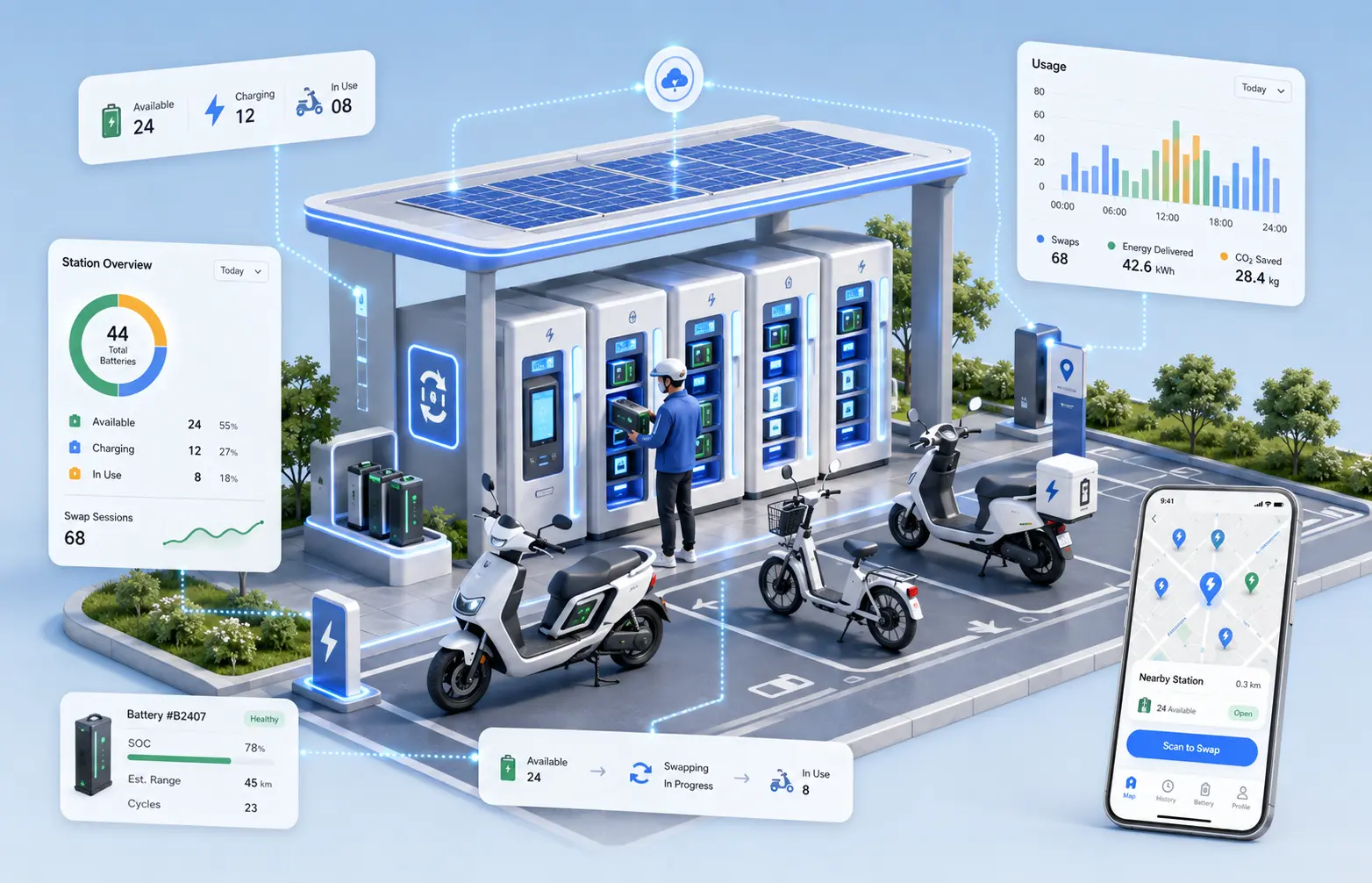
Shared Battery Swapping Station Solution
Operate shared battery swapping networks with smart cabinets, user access, payments, asset tracking and centralized monitoring.
- Battery cabinet, slot and inventory monitoring
- Scan-to-rent, return, charge and swap workflows
- User accounts, subscriptions and flexible payments
- Battery lifecycle, safety and utilization analytics
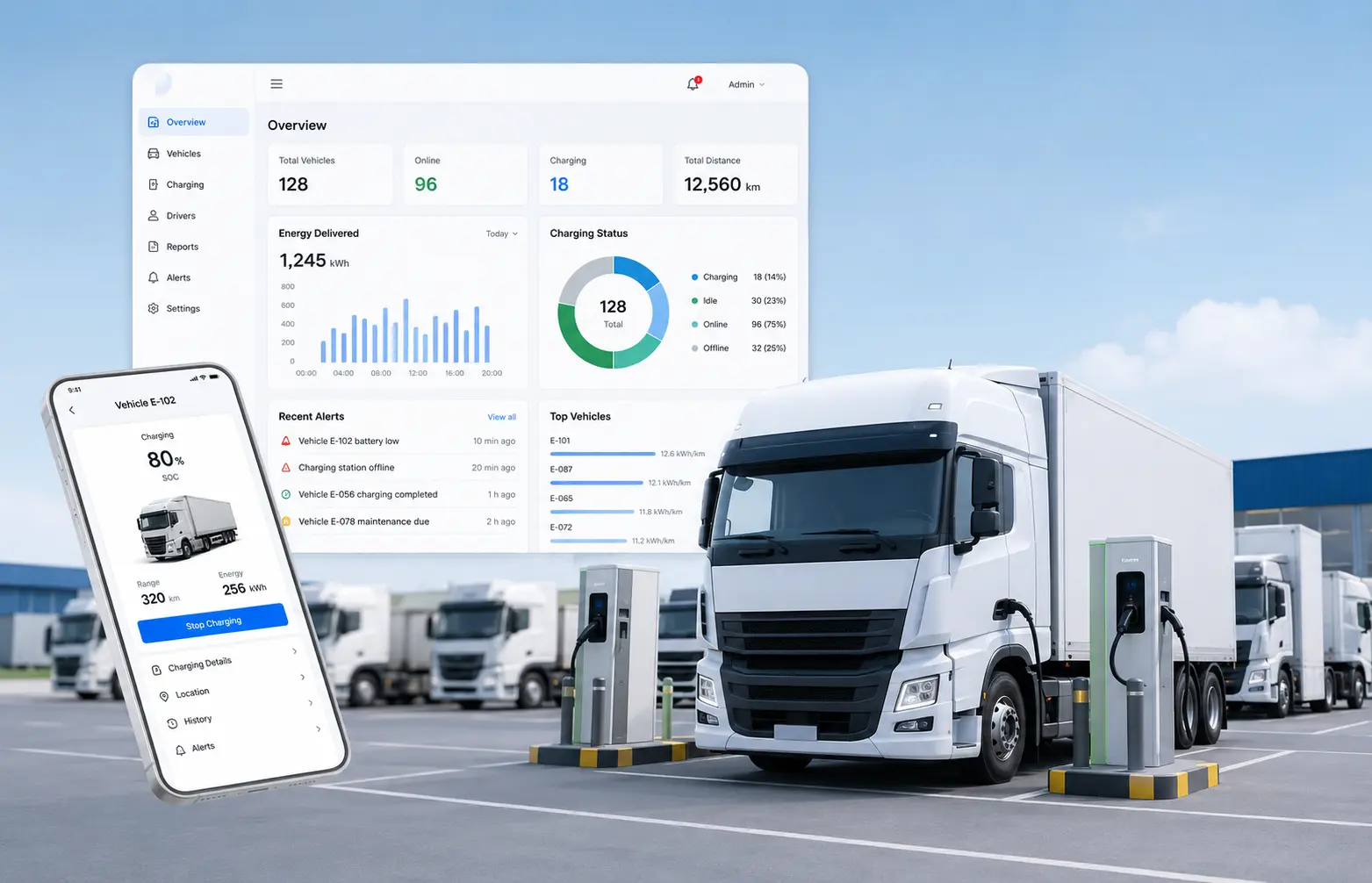
Heavy-Duty Truck Charging Fleet Management System
Coordinate electric truck charging, vehicle readiness, depot energy and fleet operations for logistics, ports and industrial transport.
- Vehicle, charger and battery status monitoring
- Charging scheduling aligned with routes and tasks
- TMS, ERP, enterprise wallet and billing integration
- Energy optimization, diagnostics and fleet analytics
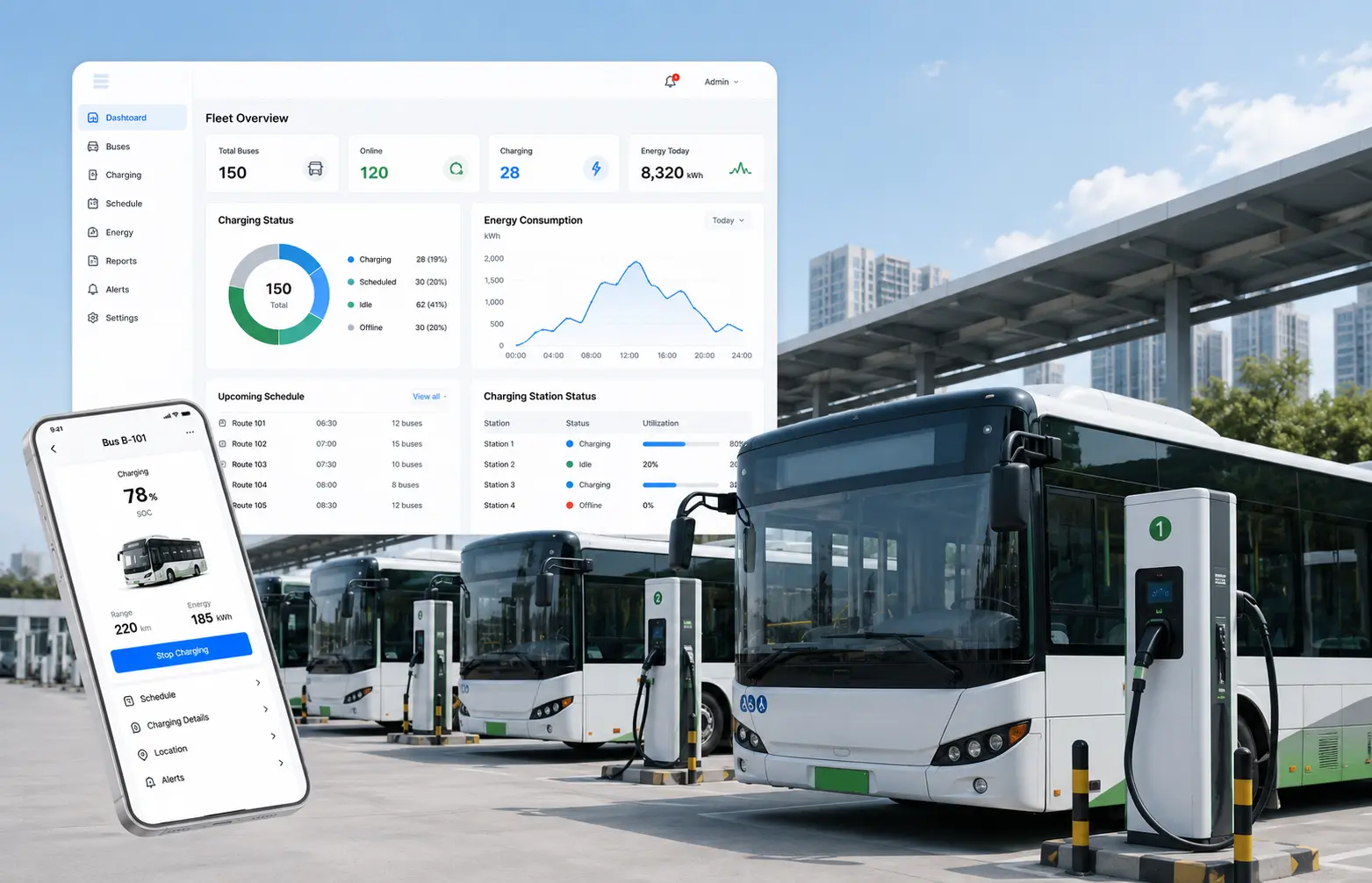
Bus Charging Management Solution
Plan, monitor and optimize electric bus depot charging around dispatch schedules, battery status, grid capacity and electricity tariffs.
- Intelligent charging orchestration and queue management
- Bus, charger and depot-grid visibility
- Peak-demand and electricity-cost optimization
- Fleet readiness, maintenance and operational analytics
Capabilities That Support Every TRENDPOWER Solution
The solution portfolio is built on common capabilities for charger connectivity, digital operations, payments, energy management and scalable deployment.
Charger Integration
Connect compatible chargers, devices and protocols through a centralized management layer.
Payments & Billing
Configure tariffs, transactions, wallets, cards, reconciliation and settlement workflows.
Smart Energy
Coordinate site capacity, tariffs, charging demand, renewable energy and storage.
Global Localization
Adapt languages, currencies, payment methods, roles and workflows to target markets.
Flexible Deployment
Support SaaS, public cloud, private cloud, on-premises and hybrid architectures.
Intelligent Operations
Use monitoring, alerts, diagnostics and analytics to improve reliability and efficiency.
Match the Solution to Your Business Priority
Use the operating scenario and primary business goal to identify the most relevant TRENDPOWER solution.
Choose Custom EV Charging Software for unique workflows, integrations, deployment or localization.
Custom softwareChoose the Payment Solution for tariffs, wallets, gateways, settlement and revenue sharing.
Payment solutionChoose Residential Charging for access control, reservations, billing and property operations.
Residential solutionChoose Zero-Carbon Park for PV, storage, charging, microgrid and site energy management.
Zero-carbon parkChoose Battery Swapping for cabinets, battery assets, subscriptions and fast exchange workflows.
Battery swappingChoose Truck or Bus Charging Management for vehicle readiness, scheduling and depot energy.
Fleet solutionsFrom Operating Requirements to Production Deployment
A structured delivery process aligns the selected solution with chargers, users, payments, energy systems and business workflows.
-
01
Discovery
Define business goals, users, sites, chargers, markets and operating constraints.
-
02
Solution Design
Confirm modules, workflows, architecture, integrations and deployment model.
-
03
Integration
Connect chargers, payments, applications, energy systems and enterprise platforms.
-
04
Testing & Launch
Complete interoperability, functional, localization and production testing.
-
05
Operational Support
Support training, monitoring, optimization and future solution expansion.
Build the Right EV Charging Solution for Your Market
Share your charging scenario, hardware environment, business model and deployment goals with our team.
EV Charging Software Solutions FAQs
Answers for operators, fleets, property groups, energy companies and businesses evaluating TRENDPOWER solutions.
What EV charging solutions does TRENDPOWER provide?
TRENDPOWER provides custom EV charging software, charging payment solutions, shared residential charging, zero-carbon park energy management, shared battery swapping, heavy-duty truck charging fleet management and bus charging management.
How do I choose the right EV charging solution?
Start with the operating scenario, user groups, charger types, payment model, energy constraints and deployment goals. Public networks usually prioritize charger operations and payments, residential projects require access and billing rules, while fleets need scheduling, vehicle readiness and energy optimization.
Can TRENDPOWER integrate chargers from different manufacturers?
TRENDPOWER supports OCPP-based charger integration and can assess different charger brands, firmware versions and communication environments. Compatibility and the final integration scope are confirmed through protocol review and project testing.
Can the solutions support local payment methods and multiple currencies?
Yes. Payment workflows can be configured for regional gateways, cards, QR codes, wallets, RFID or IC cards, currencies, pricing rules, reconciliation and settlement requirements according to the target market.
Does TRENDPOWER support private or on-premises deployment?
Depending on project requirements, TRENDPOWER can support SaaS, public cloud, private cloud, on-premises or hybrid deployment. Architecture, data ownership, security and maintenance responsibilities are defined during solution planning.
Can the platform connect with ERP, TMS or other business systems?
Yes. TRENDPOWER can integrate with external systems through APIs and project-specific interfaces. Typical integrations include ERP, TMS, payment gateways, identity systems, energy platforms, mobile applications and reporting systems.
How does smart charging reduce energy costs?
Smart charging coordinates charging power and time according to vehicle priorities, site capacity, electricity tariffs and energy availability. This can reduce peak demand, avoid overload and improve the use of renewable energy and storage.
What is the typical project delivery process?
A typical project includes requirement discovery, solution design, interface and charger integration, configuration or customization, testing, deployment, training and operational support. The schedule depends on integration complexity and localization requirements.
 EN_GB
EN_GB  EN
EN  ZH
ZH  AR
AR  DE
DE  ES
ES  KO
KO  JA
JA  IT
IT  FR
FR  VI
VI  MS
MS  ID
ID  FR_CA
FR_CA  NL
NL  SV
SV  TH
TH 