
Shared Battery Swapping Station Solution for E-Bikes & Electric Scooters
Build a connected battery swapping network with smart swapping cabinets, mobile station discovery, QR-code access, battery management, flexible pricing, digital payments and unattended self-service operations for e-bikes and light electric mobility.
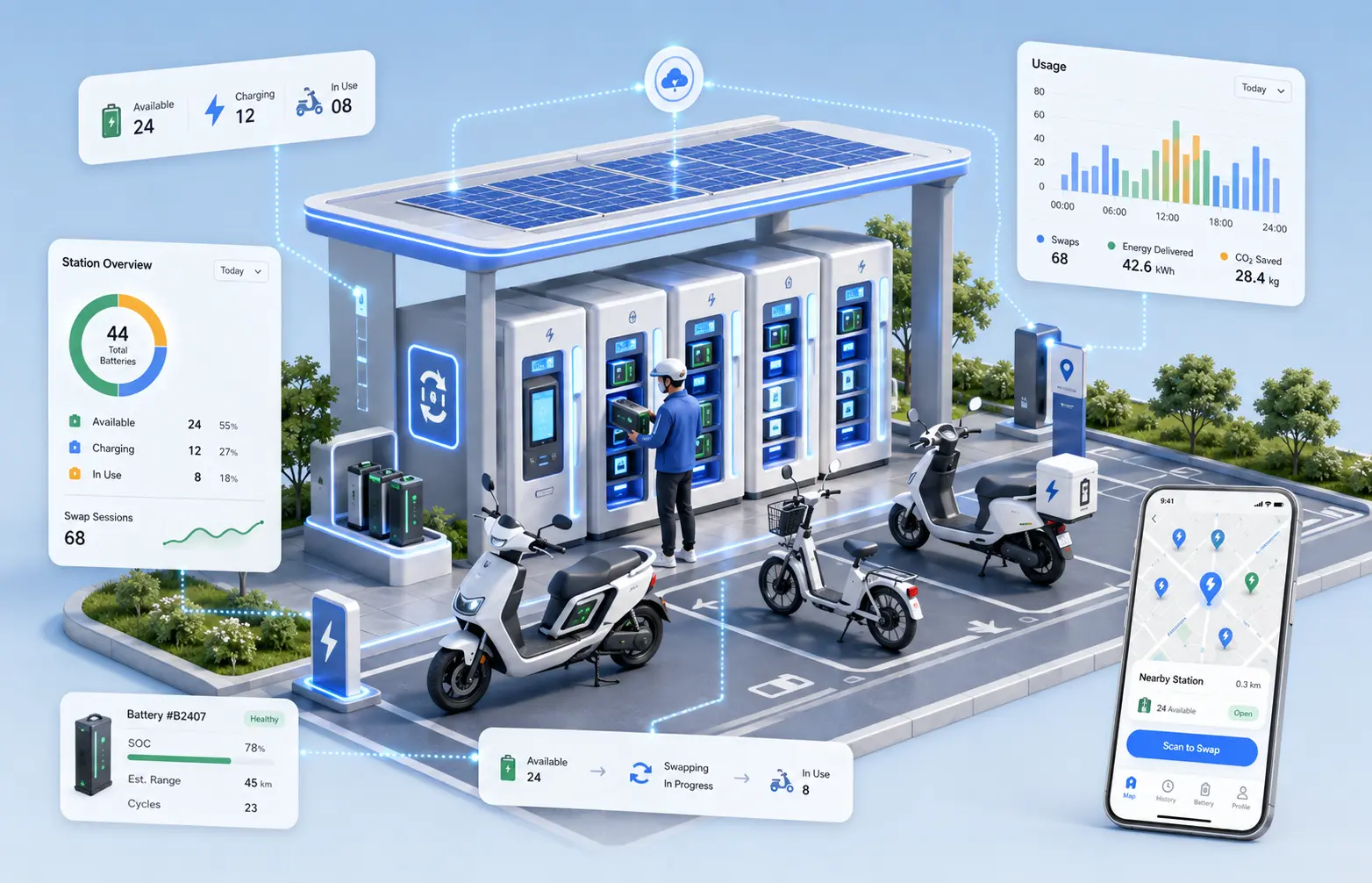
What Is a Shared Battery Swapping Station Solution?
A shared battery swapping station solution combines automated battery cabinets, compatible batteries, user-facing mobile software and an operator management platform so riders can exchange depleted batteries for charged batteries through a controlled self-service workflow.
Users can locate nearby stations, view available battery and cabinet capacity, scan a QR code, return a depleted battery and retrieve an available charged battery. The platform can connect these actions with user accounts, payments, pricing and operational records.
TRENDPOWER also supports related charging and battery-rental scenarios, allowing operators to configure the platform according to battery specifications, cabinet hardware, target users and local commercial requirements.
One Digital Experience From Battery Access to Payment
TRENDPOWER connects rider access, battery-service scenarios, commercial billing and automated station operation around one software workflow.

Scan to Use
Let riders use a mobile device or supported mini app workflow to access the cabinet and start the required battery service.

Charging, Rental & Swapping
Configure differentiated battery-service workflows instead of limiting the platform to a single battery swapping scenario.

Consumption & Payment
Connect battery services with configurable fees, user balances, QR-code payments, card payments and other supported payment models.

Unattended Operation
Automate user access and standard swap workflows so stations can provide self-service without requiring staff for every transaction.
How Does an E-Bike Battery Swapping Station Work?
The platform connects station discovery, cabinet access, battery return, battery pickup and transaction completion into one controlled digital journey.
Find a Station
Use the map to locate a nearby station and review battery and cabinet availability.
Scan the Cabinet
Scan the station or cabinet QR code through the connected mobile experience.
Return the Battery
Place the depleted compatible battery into the assigned available cabinet compartment.
Collect a Charged Battery
The system releases an eligible charged battery according to the configured swapping workflow.
Complete the Transaction
Record the swap and connect applicable rental, service, subscription or payment rules.
From Nearby Station Search to Battery Swap & Payment
Give riders clear access to nearby stations, available battery capacity, cabinet controls, service pricing and account-based transaction workflows.
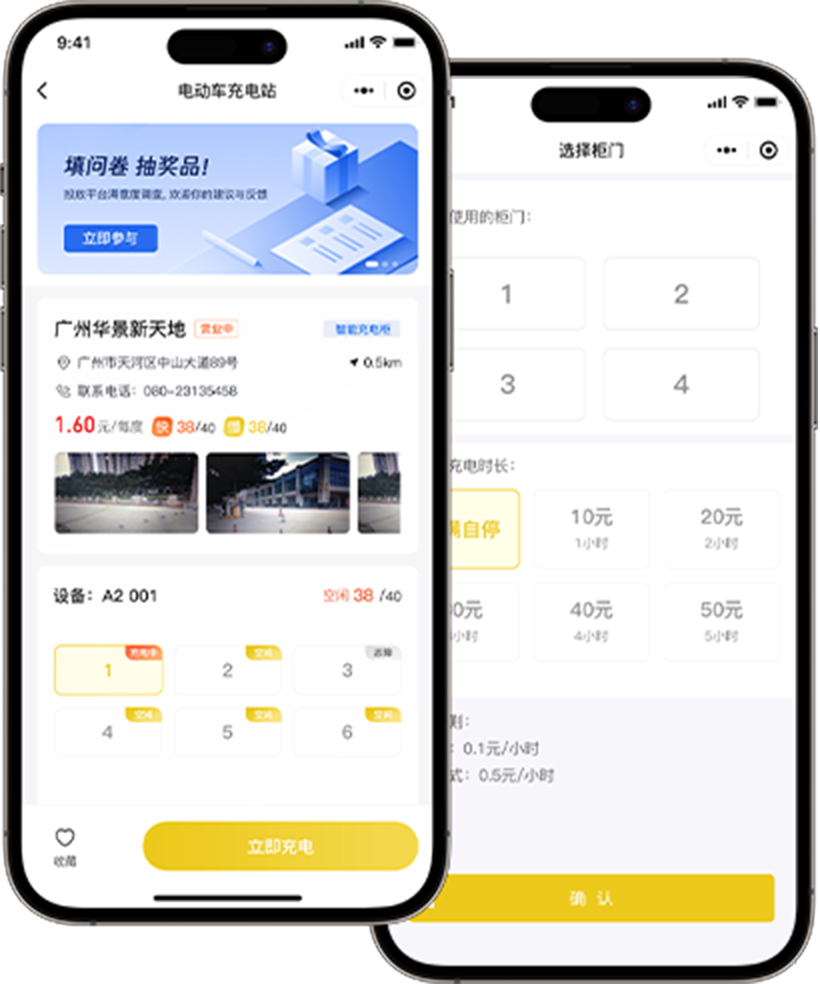
Map Navigation
Find nearby battery stations and review available battery or cabinet capacity before travelling to the location.
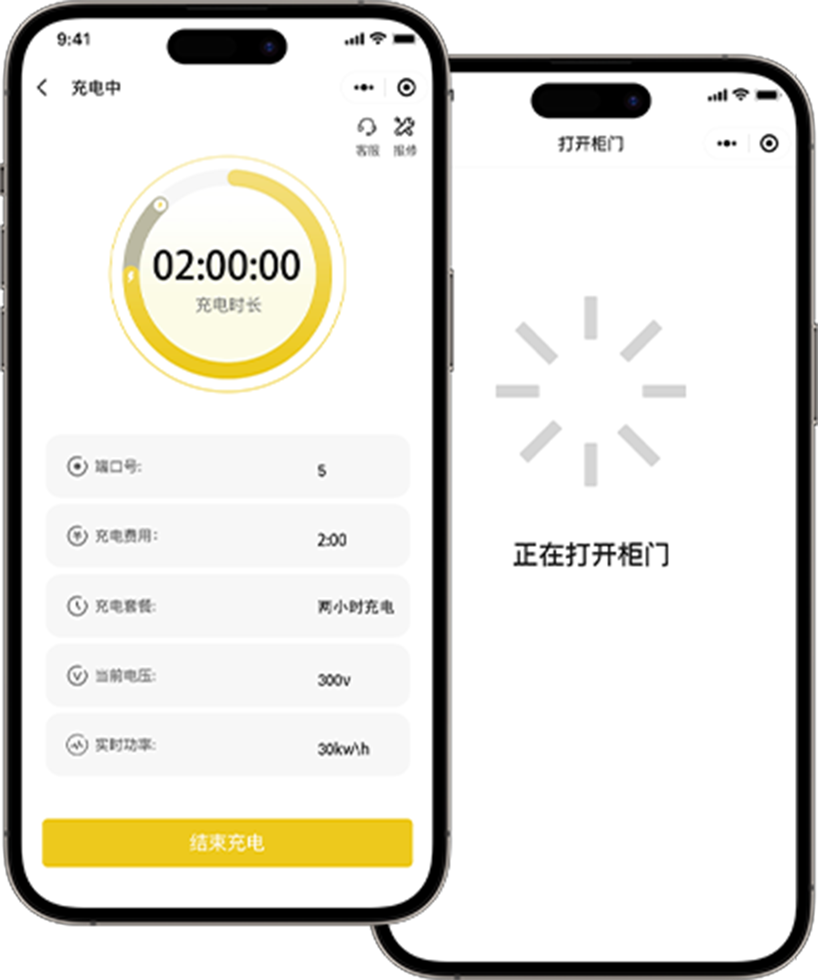
Scan to Swap
Use the connected application to trigger the cabinet workflow, return the depleted battery and retrieve the replacement.
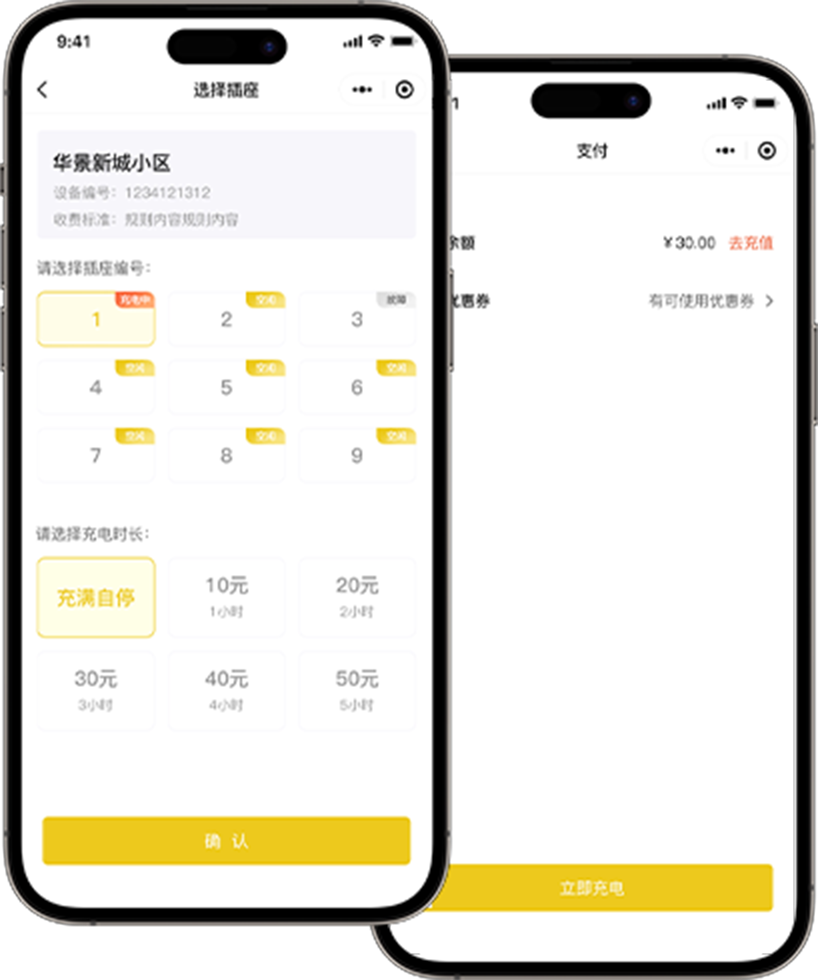
Pricing & Billing
Present the selected battery service, applicable charging or rental duration and payment information to the user.
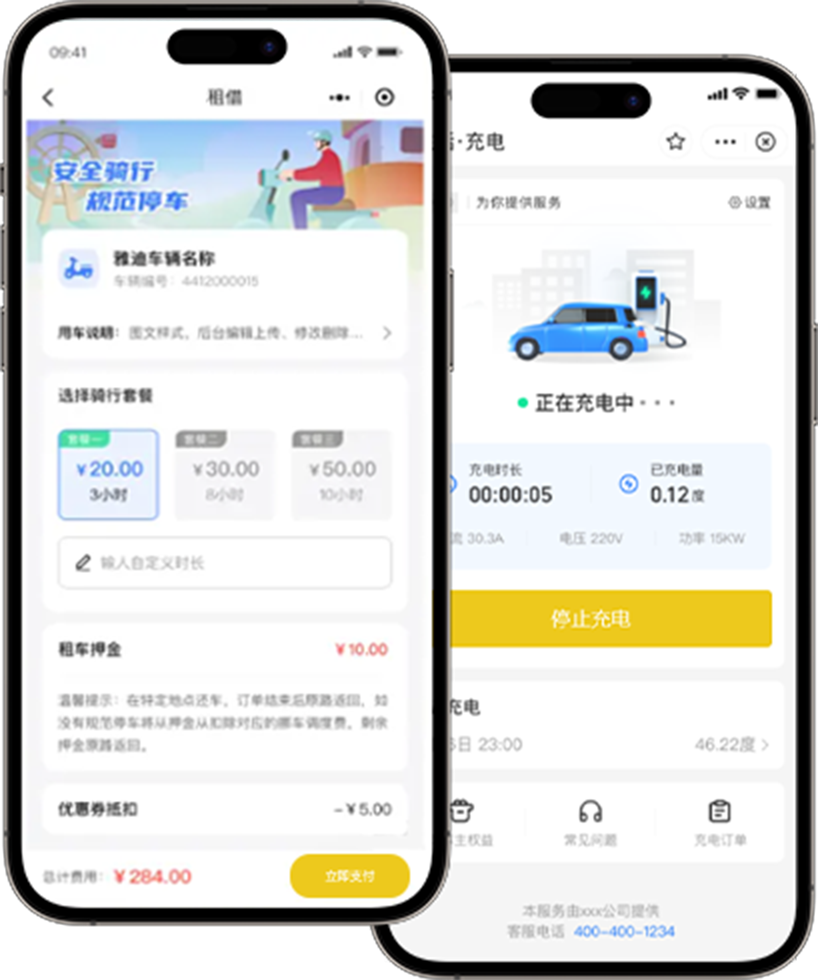
Deposit & Account Options
Configure deposit or eligible credit-based deposit-free workflows according to the service provider and target market.
Manage Battery Swapping Stations, Cabinets & Batteries From One Platform
The operator side of a swapping network needs more than a rider application. Station teams also need visibility into battery inventory, cabinet capacity, usage, pricing and operating status across the network.
Support Charging, Battery Rental & Battery Swapping
Different markets and vehicle fleets may require different battery service models. Configure the software around the hardware, commercial model and user journey required by the project.
Battery Charging
Users can place compatible batteries into charging compartments and retrieve them after the selected charging service is complete.
- Time-based charging options
- Charging status tracking
- Applicable service and storage fees
- Pay-before or project-defined payment workflow
Battery Rental
Provide compatible batteries to eligible users for a defined rental period with account, deposit and billing management.
- Battery rental records
- Deposit management
- Credit-based options where supported
- User account and payment records
Battery Swapping
Allow riders to return a depleted compatible battery and collect an available charged battery through an automated cabinet workflow.
- Station and battery availability
- QR-code cabinet access
- Swap transaction records
- Subscription or per-swap pricing models
Configure the Commercial Model Around the Battery Service
Charging, rental and swapping services may use different pricing structures. Billing can be configured according to service type, location, user group and payment model.
Charging & Service Pricing
Configure pricing around the service offered at each location. Different fees can be separated to improve transaction clarity.
- Charging or usage duration fees
- Battery rental or swapping fees
- Service fees
- Storage or overtime fees
- Location-specific pricing rules
Deposit & Credit-Based Options
Battery rental projects can include deposit management. Where suitable local credit services are technically and commercially available, qualified users may also be offered a deposit-free journey.
- Battery-type-based deposit settings
- User account balance
- Prepaid or online payment
- Credit-based deposit-free integration where supported
- Transaction and rental records
Build a More Scalable Battery Service Network
Shared battery swapping software connects user access with station operations so operators can manage a growing network without relying on manual processes for every battery transaction.
Reduce User Waiting Time
Swapping can provide a faster energy-replacement workflow than waiting for the same depleted battery to recharge.
Improve Asset Visibility
Centralize battery and station information so operators have a clearer view of how network assets are being used.
Enable Self-Service Operations
Automate standard rider interactions such as station search, cabinet access, swapping and payment.
Support Multiple Revenue Models
Combine charging, rental, swapping, deposits, subscriptions and project-specific service fees where required.
Where Can Shared Battery Swapping Stations Be Used?
Battery swapping is most suitable where light electric vehicles operate frequently and compatible battery standards can be coordinated across the target user group.
Delivery Rider Networks
Support riders with frequent daily usage who need to reduce downtime between delivery routes.
Shared E-Bike Networks
Connect compatible e-bike batteries, stations and rider accounts through one service platform.
Electric Scooter Fleets
Support suitable light electric scooter fleets where batteries and cabinet hardware are designed for swapping.
Communities & Commercial Areas
Deploy accessible battery-service points near residential, commercial or high-frequency micromobility locations.
What Should Be Confirmed Before Building a Battery Swapping Network?
Battery swapping depends on close coordination between software, cabinet hardware, batteries and vehicle requirements. Providing these details early helps define the correct integration scope.
Technical Support for Battery Swapping Platform Projects
A battery swapping project can involve cabinet manufacturers, battery suppliers, payment providers and software systems. TRENDPOWER supports project integration according to the agreed scope.

On-Premises Deployment
Evaluate private or project-specific deployment where additional infrastructure and data control is required.

Cabinet Integration & Testing
Coordinate supported battery cabinet hardware with software interfaces and jointly validate required functions.

Deployment & Maintenance
Support platform implementation, configuration and technical maintenance after the battery service is launched.

Ecosystem Coordination
Coordinate selected battery, cabinet, payment and external project partners according to deployment requirements.
See the Shared Battery Swapping Experience in Action
See how the solution connects station discovery, cabinet access, battery swapping, payments and self-service operation through one connected user experience.

Have Battery Cabinets, E-Bikes or a Swapping Business Model to Connect?
Tell TRENDPOWER about your vehicle type, battery specifications, swapping cabinet, target market, payment model and expected network size. Our team can help evaluate a practical battery swapping software and integration scope.
Shared Battery Swapping Station Solution FAQ
Answers about e-bike battery swapping stations, smart battery cabinets, battery management, payments, pricing, unattended operation and battery swapping software.
What is a shared battery swapping station solution?
A shared battery swapping station solution combines automated battery cabinets with user and operator software so riders can locate stations, return compatible depleted batteries and retrieve available charged batteries through a controlled self-service process.
How does an e-bike battery swapping station work?
The user locates a suitable station, checks battery availability, scans the cabinet, returns a depleted compatible battery and retrieves a charged battery. The platform records the transaction and applies the configured account and payment rules.
What vehicles can use a battery swapping station?
Battery swapping can be used with suitable e-bikes, electric scooters and other light electric vehicles. Compatibility depends on the vehicle battery specification, physical battery design, electrical parameters and swapping cabinet integration.
Can users see available batteries before arriving at a station?
Yes. The connected mobile experience can display nearby stations and relevant battery or cabinet availability so users can select an appropriate station before travelling there.
Can a battery swapping station operate without on-site staff?
Standard user interactions can be configured for unattended self-service operation, including station discovery, QR-code cabinet access, battery swapping and payment. Physical maintenance and operational intervention are still required when equipment servicing or exceptions occur.
What payment methods can the battery swapping platform support?
Project workflows can include QR-code payments, prepaid account balances, card or online payment gateways and other localized methods according to the target market and selected providers.
How can operators charge users for battery swapping?
Pricing can be configured around battery charging, rental, swapping, service fees, storage or overtime fees, deposits, subscriptions and other project-specific commercial models.
Can the platform support deposit-free battery rental?
Where a suitable local credit service is available and can be technically integrated, qualified users may be offered a credit-based deposit-free workflow. Otherwise, the project can use a standard deposit model.
How are batteries and swapping stations managed?
Operators can use the management platform to organize stations and connected cabinets, review battery availability and usage, manage users and pricing, and access relevant operational records.
Can TRENDPOWER integrate an existing battery swapping cabinet?
Existing third-party cabinet integration can be evaluated. The required functions depend on the cabinet communication interface, battery specifications, controller capabilities and software integration requirements.
Build a Connected Battery Swapping Network for Light Electric Mobility
Connect smart cabinets, compatible batteries, riders, station discovery, swapping transactions, payments and operator management through one battery swapping software platform designed around your project.
 EN_GB
EN_GB  EN
EN  ZH
ZH  AR
AR  DE
DE  ES
ES  KO
KO  JA
JA  IT
IT  FR
FR  VI
VI  MS
MS  ID
ID  FR_CA
FR_CA  NL
NL  SV
SV  TH
TH 