
Logistics parks are becoming one of the most important charging scenarios in the commercial EV market. As delivery vans, light trucks and heavy-duty trucks move from diesel to electric, charging is no longer just a driver convenience issue. It is now part of fleet scheduling, energy management, cost control and daily logistics operations.
For charging operators, this creates a new business opportunity. Logistics vehicles charge frequently, follow predictable routes and often return to fixed parks, depots or industrial sites. That makes logistics parks ideal locations for high-utilization charging networks.
But there is also a challenge: fleet charging is much more complex than public EV charging.
A public EV charging station usually serves individual drivers. A logistics park may serve hundreds or even thousands of commercial vehicles from multiple companies, each with its own vehicles, drivers, payment rules, dispatch schedules and billing requirements.
That is why operators need more than chargers. They need fleet EV charging software that can connect chargers, vehicles, enterprise accounts, pricing, payments, energy storage and remote operations in one system.
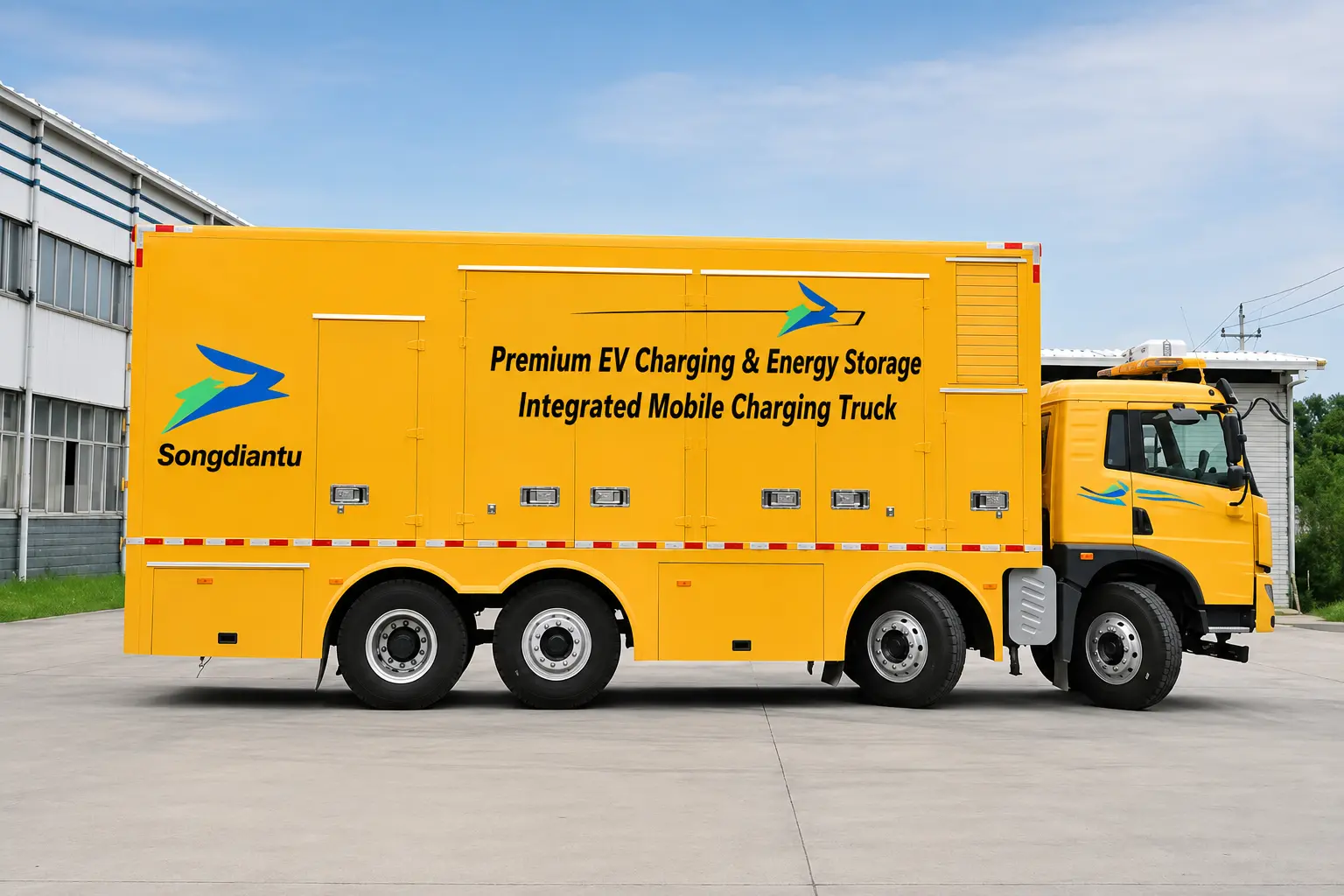
In Q1 2026, Songdiantu, a mobile charging service brand under Guangzhou Chedingzhi Technology Co., Ltd., partnered with TrendPower to build a customized B2B EV charging operation system for logistics parks and industrial fleet charging scenarios. The project combines fixed chargers, mobile charging vehicles, energy storage and fleet charging management software to support high-frequency commercial EV charging.
TrendPower provides EV charging management software for operators, charger manufacturers, fleets and energy companies, with support for OCPP-based charger integration, billing, payments, remote monitoring, analytics and white-label deployment.
Why Logistics Park Charging Is Different from Public EV Charging
Fleet charging is not simply “public charging with more vehicles.” It has a different operating logic.
In public charging, the main goal is to help individual drivers find a charger, start a session and pay easily. In logistics park charging, the goal is to keep commercial vehicles moving while controlling energy cost, driver workflow, charger uptime and enterprise billing.
| Comparison | Public EV Charging | Logistics Fleet EV Charging |
|---|---|---|
| Main user | Individual EV driver | Fleet company, driver, dispatcher, finance team |
| Charging pattern | Occasional or location-based | High-frequency and schedule-based |
| Payment model | Personal payment | Enterprise wallet, fleet account or contract billing |
| Key requirement | Easy access and payment | Fast turnaround, cost control and traceable records |
| Pricing logic | Standard public tariff | Company-specific or fleet-specific pricing |
| Main risk | Poor driver experience | Vehicle downtime, delivery delay and billing disputes |
| Software requirement | Charging app and payment | CPMS, fleet management, billing, remote O&M and reporting |
This difference is important because logistics operators do not only care about whether a charger works. They care about whether the charging process supports the business.
A fleet manager needs to know which vehicle charged, when it charged, how much energy it used and which department or enterprise account should pay. A finance team needs exportable reports. A station operator needs real-time charger status. A driver needs to plug in and leave with minimal friction.
A basic charging app cannot handle all of this. A professional EV charging management software platform is required.
Market Background: Electric Trucks Are Becoming a Real Operating Asset
The commercial vehicle market is entering a new stage of electrification. According to the International Energy Agency, global electric truck sales surpassed 400,000 units in 2025, and China accounted for more than 90% of global electric truck sales. The IEA also reported that one in four trucks sold in China in 2025 was electric.

This shift matters for logistics parks because electric trucks and delivery vehicles need predictable, efficient and scalable charging systems. As fleet electrification grows, charging demand will move from occasional public charging to structured depot, park and route-based charging.
For charging operators, this means B2B fleet customers can become a stable source of recurring charging demand. Unlike random public charging traffic, logistics fleets often have repeatable charging patterns. Once a fleet customer is connected to the platform, the operator can build a more predictable charging business.
However, this opportunity also requires a stronger software foundation.
The Core Challenge: Increasing Charging Capacity Without Creating New Bottlenecks
Many logistics parks want to add more EV charging capacity, but they face practical limitations.
Land may be limited. Transformer capacity may be insufficient. Peak charging demand may happen during the same time windows. Drivers may not have time for complex payment steps. Finance teams may struggle to reconcile thousands of charging orders.
If operators only install more fixed chargers without solving these operational problems, charging can become a new bottleneck for logistics efficiency.
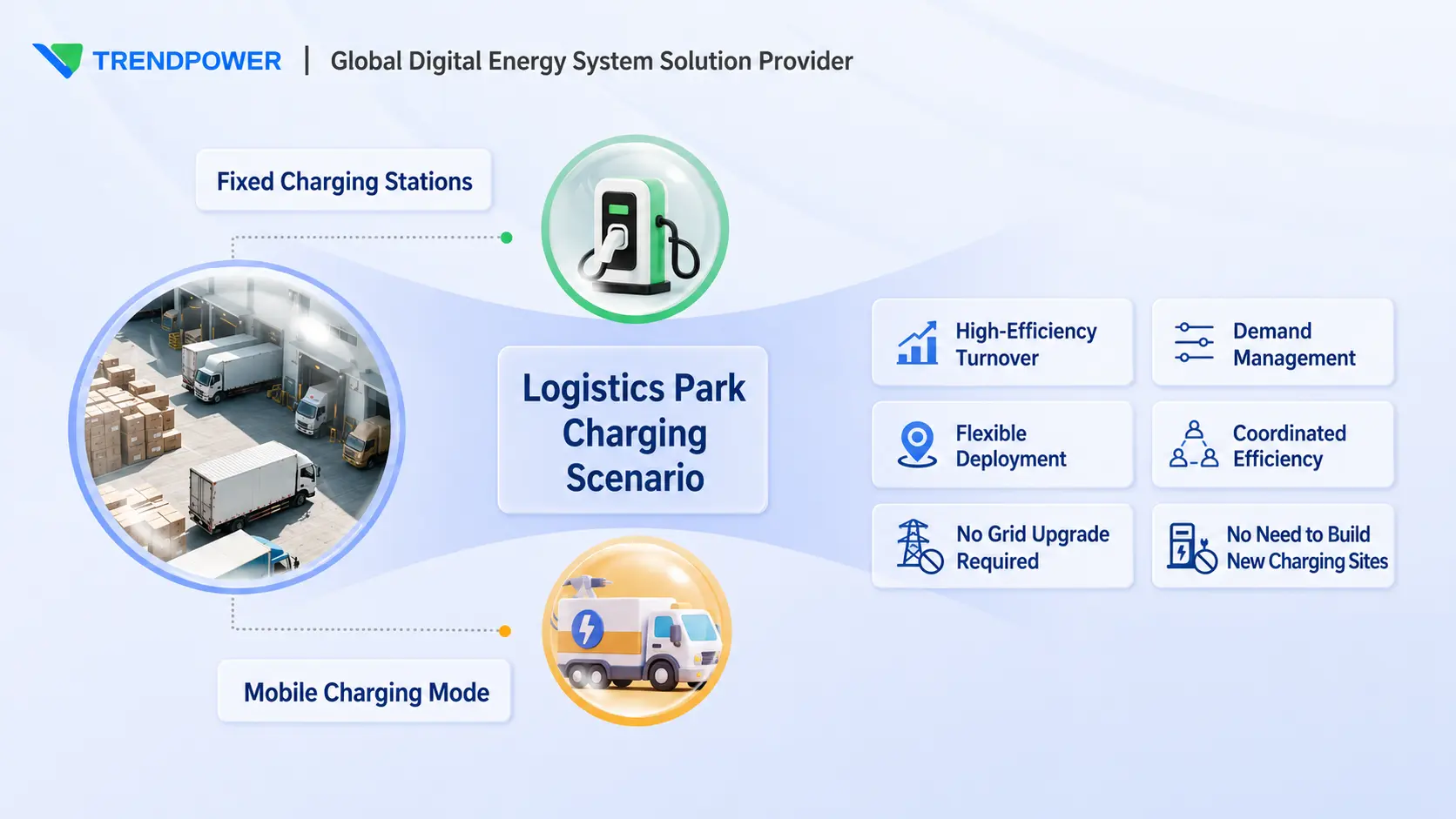
The Songdiantu x TrendPower project addresses this challenge with a more flexible model: fixed chargers, mobile charging, energy storage and software working together.
This model is especially valuable for logistics parks because it improves charging availability without relying only on large-scale grid upgrades or fixed charger expansion.
The “Golden Charging Combination”: Fixed Chargers + Mobile Charging + Energy Storage + Software
For logistics parks, the most effective charging model is not based on a single type of hardware. It requires a coordinated charging system.
Fixed chargers provide stable daily charging capacity for vehicles that return to the park or depot. Mobile charging vehicles provide flexible support for peak demand, emergency charging or areas where fixed chargers are difficult to install. Energy storage helps reduce grid pressure and improve energy flexibility. Fleet EV charging software connects all these resources into one operating platform.
TrendPower’s PV-ESS-Charging Solution follows this same direction by integrating solar power, energy storage and EV charging into one intelligent ecosystem. The solution is designed to help businesses optimize energy usage, reduce operating costs and improve charging efficiency through smart energy management and coordinated scheduling.
For logistics park operators, this combination creates a more scalable business model. Instead of asking “How many chargers can we install?”, operators can ask a better question: “How can we manage charging capacity, energy demand and fleet operations together?”
Case Background: Songdiantu’s Mobile Charging Business
Songdiantu focuses on mobile energy storage vehicles as its core service carrier. Its business covers mobile charging stations, replenishment hubs, on-demand charging, roadside assistance and frictionless charging services.
This model is highly relevant for B2B logistics customers. Commercial vehicles may need charging during loading, unloading, route changes, shift transitions or temporary parking. In these scenarios, mobile charging can bring energy closer to where the vehicle operates, instead of forcing every vehicle to wait for a fixed charger.
By working with logistics parks and enterprise fleet customers, Songdiantu can serve stable, high-frequency charging demand. TrendPower provides the software layer behind this model, including fleet management, VIN-based charging, enterprise wallets, flexible pricing, charging monitoring, remote O&M and customized deployment.
How Fleet EV Charging Software Solves Logistics Park Pain Points
A good logistics park charging system should not only start and stop charging sessions. It should reduce operational friction across the whole charging workflow.
| Logistics Park Pain Point | Software Solution | Business Value |
| Drivers spend too much time scanning, paying or reporting orders | VIN-based charging and automatic account matching | Faster vehicle turnaround |
| Fleet charging costs are difficult to reconcile | Enterprise wallet and fleet-level billing | Less manual finance work |
| Different companies need different charging prices | Flexible pricing by company, fleet, station or time period | Better B2B customer management |
| Charger faults affect dispatch schedules | Real-time monitoring and remote O&M | Higher uptime and fewer service interruptions |
| Grid capacity is limited during peak charging periods | Energy storage and coordinated charging strategy | Lower grid pressure and better energy flexibility |
| Operators want long-term fleet customers | Membership, top-up and B2B account tools | Stronger retention and more predictable revenue |
This is the core value of fleet EV charging software: it turns charging from a hardware service into a managed business operation.
Key Feature 1: VIN-Based Charging for Faster Vehicle Turnaround
In logistics charging, every extra step matters.
Drivers should not need to scan a QR code, choose a payment method, submit a receipt and wait for reimbursement after every charging session. These steps may seem small for one driver, but they become a major efficiency problem across hundreds of vehicles and thousands of charging orders.
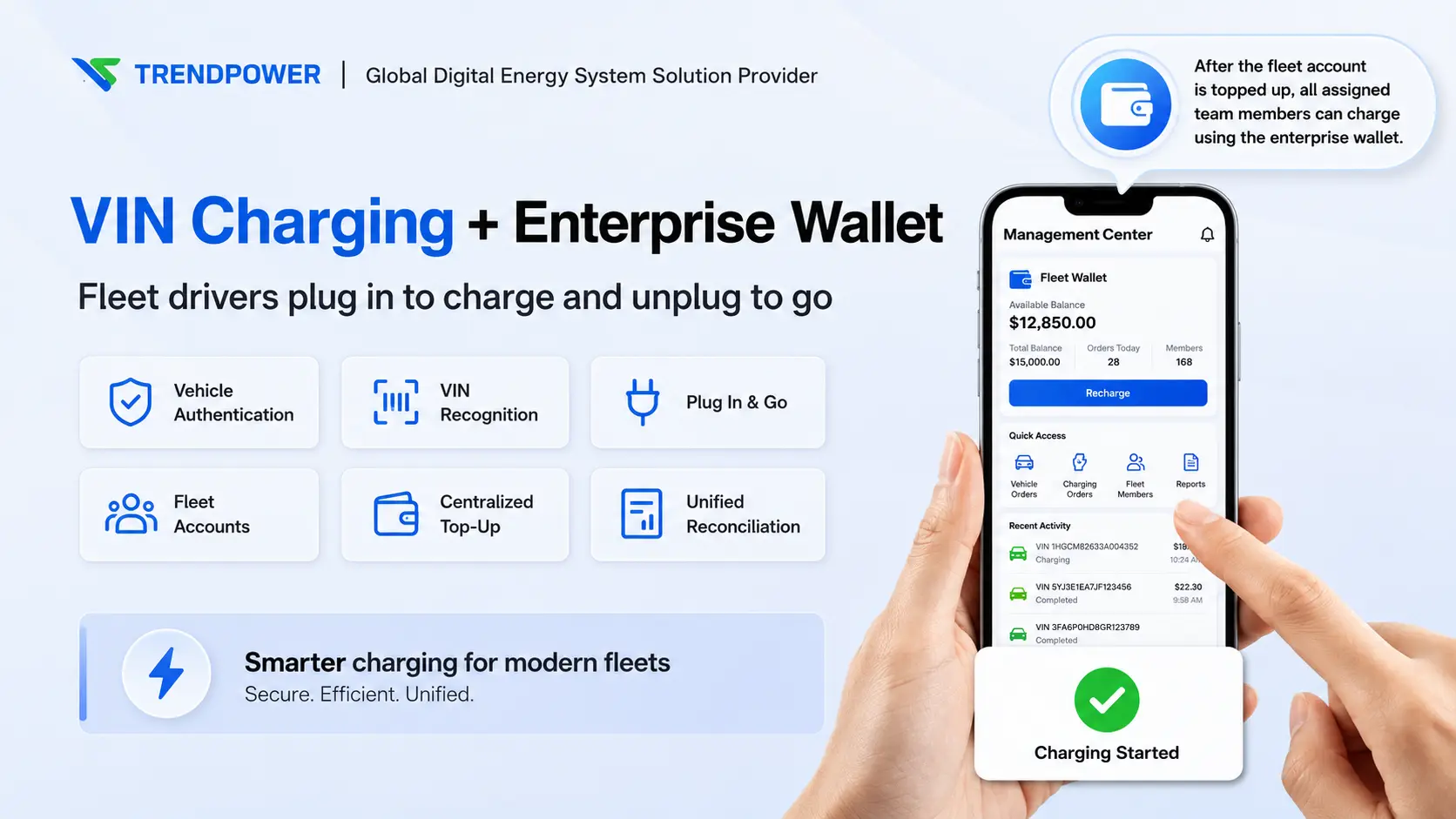
With VIN-based charging, a vehicle is registered in the platform once. After authorization, the driver can plug in and charge. The system automatically identifies the vehicle, matches it with the right fleet or enterprise account, and records the order for billing and reporting.
This feature is especially useful for commercial fleets because it reduces driver workload and improves order accuracy. Fleet managers can trace charging records by vehicle, while finance teams can reconcile costs without relying on manual receipts.
TrendPower’s heavy-duty EV charging software is designed for fleet scenarios that require centralized vehicle management, charging records, billing reconciliation and operational visibility.
Key Feature 2: Enterprise Wallets for B2B Fleet Payment
Payment is one of the biggest differences between public charging and fleet charging.
In public charging, the driver usually pays directly. In fleet charging, the company often pays. If the software does not support enterprise-level payment, drivers may need to pay first and submit reimbursement claims later. This creates unnecessary administrative work and makes cost control harder.
An enterprise wallet solves this problem.
A logistics company can recharge a central wallet, authorize specific vehicles or drivers, and let the system deduct charging fees automatically after each session. Operators can also link wallet usage with enterprise accounts, pricing policies and monthly reports.
TrendPower’s EV Charging Payment Solution supports flexible payment integration, billing workflows, wallet balance, settlement and reconciliation for charging operators.
For fleet customers, enterprise wallets reduce reimbursement work. For charging operators, they support prepaid revenue, customer retention and clearer account management.
Key Feature 3: Fleet Management for Vehicles, Drivers and Enterprise Accounts
A logistics park charging operator may serve several companies in the same location. Each company may have different vehicles, drivers, charging permissions and payment rules.
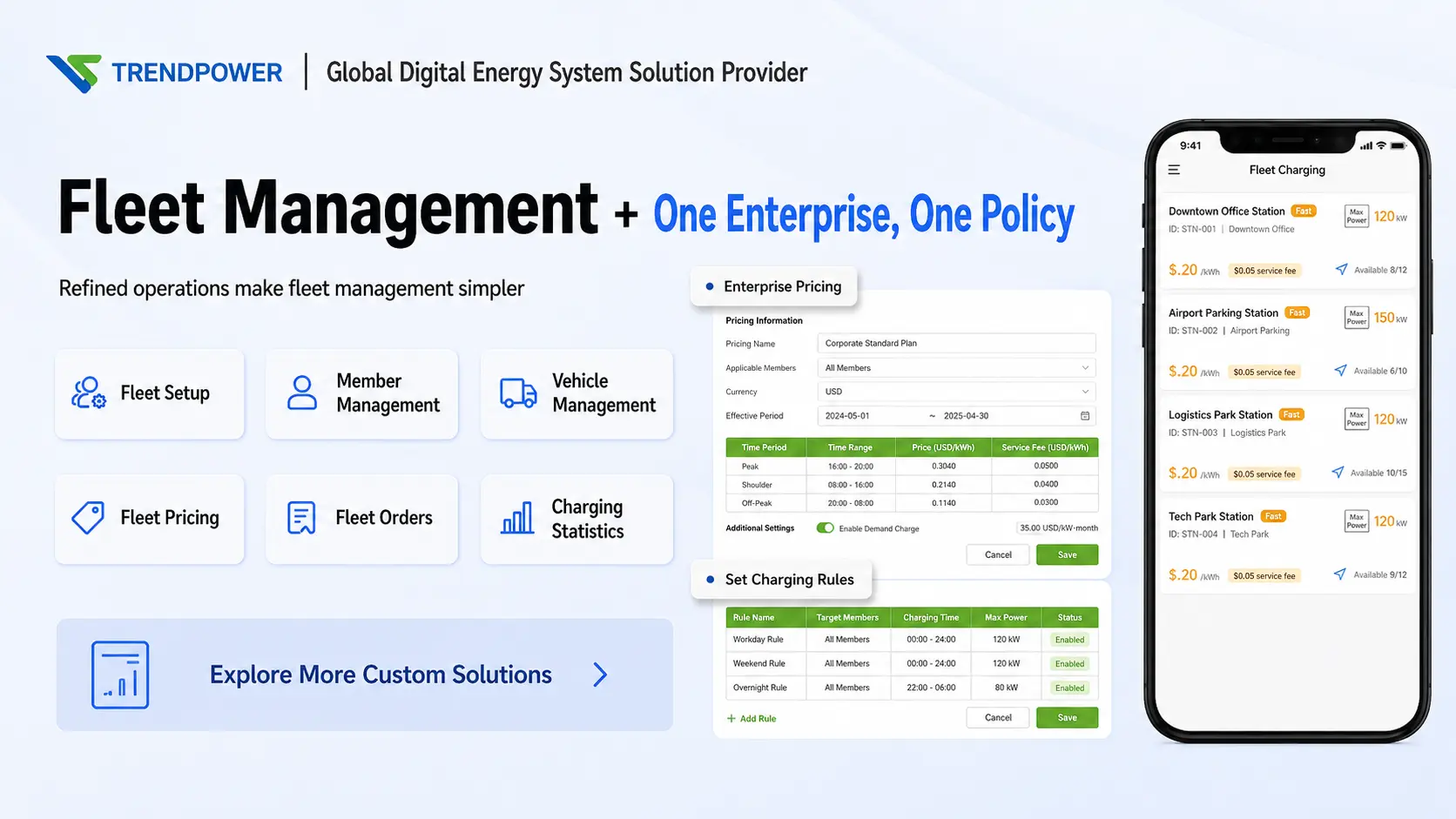
Fleet management software allows the operator to create enterprise accounts, bind vehicles, manage driver permissions and track charging records. Fleet managers can view charging history, energy consumption, spending and abnormal sessions. Finance teams can export reports instead of manually checking screenshots, receipts or driver claims.
This improves the experience for every user role.
Drivers get a faster charging workflow. Fleet managers get visibility. Finance teams get cleaner reports. Station operators get better control. Enterprise customers get a more professional B2B service.
Key Feature 4: Flexible Pricing for Different Fleet Customers
Fleet charging is not a one-price-fits-all business.
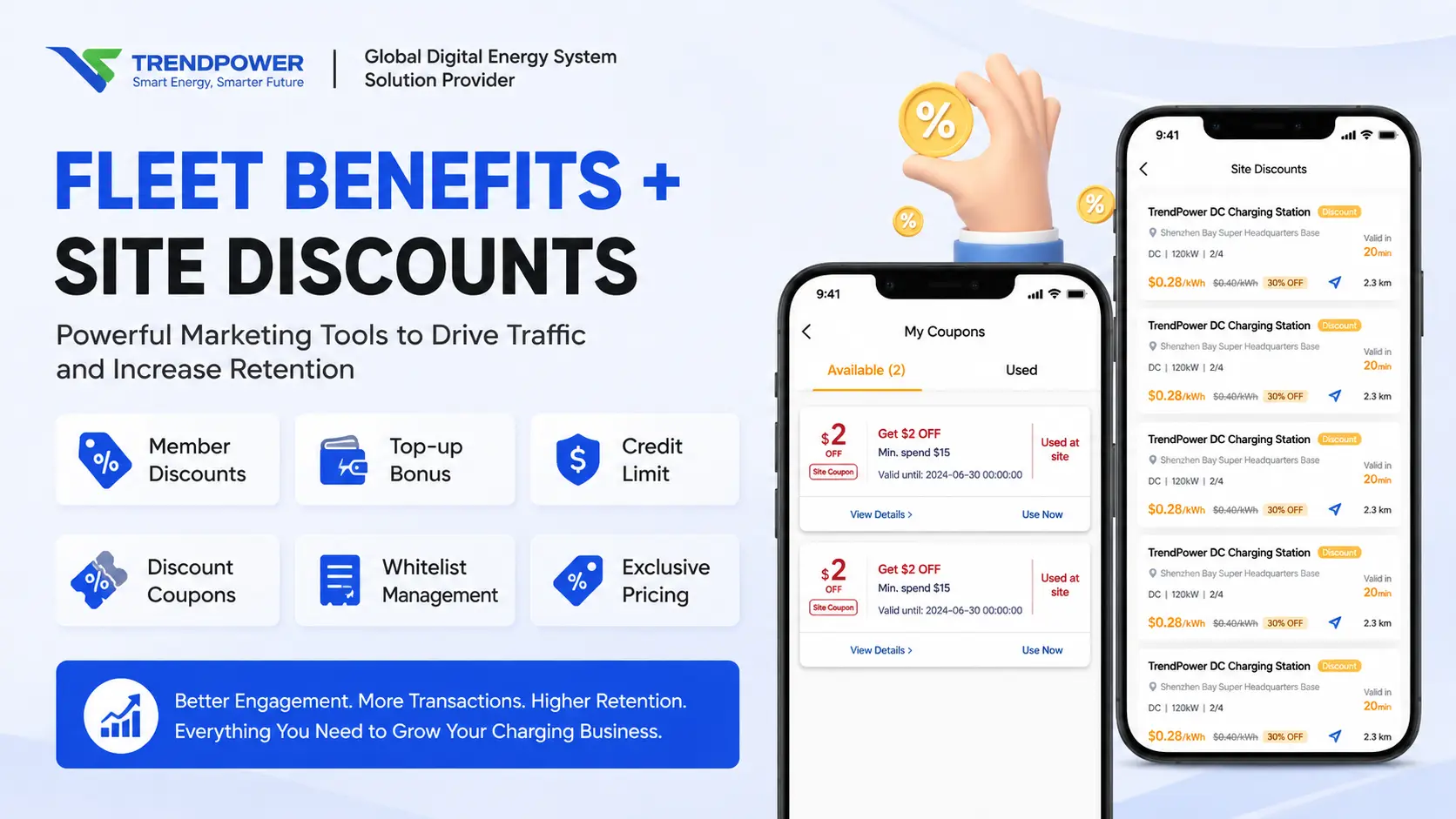
A charging operator may need to offer different pricing rules based on logistics park location, station type, charging time, contract terms, fleet size or customer value. For example, one company may use time-of-use pricing, while another may have a fixed corporate rate or special service fee.
TrendPower’s charging management platform can support pricing and tariff management as part of operator workflows, including billing, payments, reporting and network management.
For logistics park charging, flexible pricing helps operators move from simple electricity sales to refined B2B account operations. This is important because long-term fleet customers often expect contract-based pricing, not only public charging tariffs.
Key Feature 5: Remote Monitoring and Intelligent O&M
For logistics parks, charger uptime directly affects fleet operations. If a charger fails during a peak charging window, vehicles may miss dispatch schedules or create congestion at other chargers.
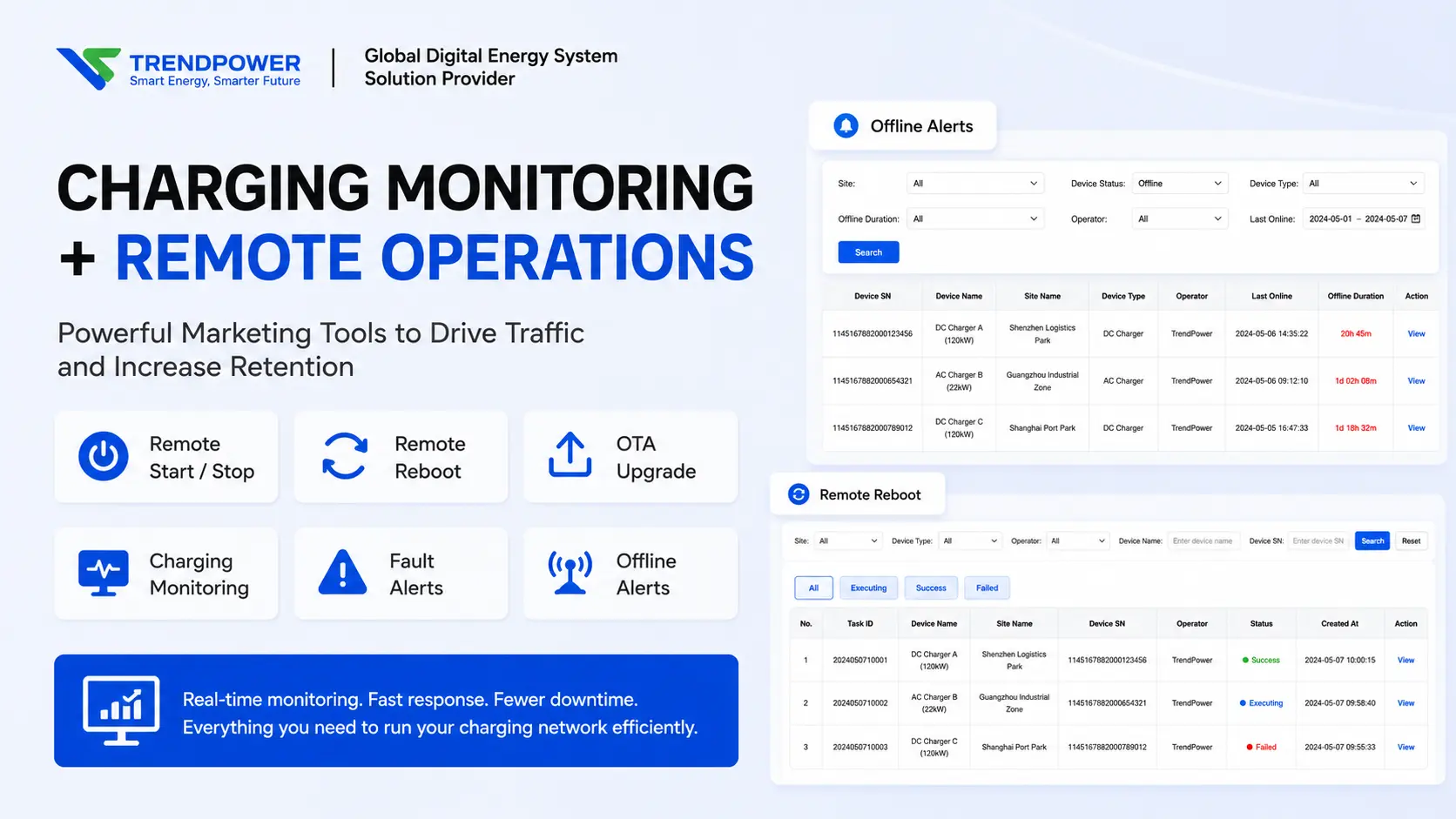
Remote monitoring and intelligent O&M help operators detect problems earlier and resolve many issues without sending staff to the site.
A strong fleet charging platform should support charger status monitoring, remote start and stop, remote restart, fault alerts, charging session tracking, abnormal order detection and operational reporting.
TrendPower’s EV charging management software supports real-time monitoring, OCPP compatibility, remote diagnostics, billing integration, analytics and intelligent O&M tools for charging operators and fleet businesses.
For multi-site operators, this is essential. The more logistics parks an operator manages, the more important remote operation becomes.
Key Feature 6: White-Label Platform for a Branded Charging Business
Some charging operators do not want to rely entirely on third-party apps. They want their own brand, customer experience, app interface, web portal and management dashboard.
This is where white-label EV charging software becomes useful.
TrendPower’s white-label EV charging software helps operators launch branded OCPP CPMS platforms with functions such as billing, monitoring, load balancing and charger management.
For logistics park charging, a branded platform can help operators build direct relationships with fleet customers, improve customer retention and create a more professional service experience.
Deployment Checklist for Logistics Park EV Charging Software
Before launching a logistics park charging platform, operators should evaluate both technical and business requirements.
| Checklist Item | Why It Matters |
| OCPP charger compatibility | Helps connect chargers from different hardware brands |
| Fleet account management | Supports companies, vehicles, drivers and permissions |
| VIN-based charging | Reduces driver steps and improves order accuracy |
| Enterprise wallet | Enables centralized company payment and prepaid balance |
| Flexible pricing | Supports different tariffs by company, station, fleet or time |
| Remote O&M | Reduces downtime and unnecessary site visits |
| Billing and reports | Helps finance teams reconcile fleet charging costs |
| Energy storage integration | Supports peak shaving and better energy flexibility |
| White-label options | Allows operators to build their own charging brand |
| Custom deployment | Fits different markets, payment systems and business workflows |
TrendPower’s custom EV charging software solution is designed for businesses that need tailored workflows, payment integration, private deployment and localized charging platform development.
Business Value for Charging Operators
The Songdiantu x TrendPower project demonstrates a practical B2B charging model for logistics parks.
For operators, the value is not only in selling electricity. The bigger opportunity is building long-term fleet customer relationships.
A logistics fleet may charge every day. It may use multiple vehicles, multiple drivers and repeat routes. Once the operator provides a reliable charging experience, the customer can become a stable source of recurring revenue.
Fleet EV charging software supports this business model by helping operators improve charger utilization, reduce manual work, manage enterprise customers, increase payment efficiency and scale across more logistics parks or industrial sites.
In this sense, software becomes the foundation of the charging business.
Why TrendPower Fits Logistics Park and Fleet Charging Projects
Logistics park charging requires more than a standard charging app. It needs a flexible CPMS that can support hardware integration, enterprise billing, fleet operations, payment workflows, remote monitoring and energy management.
TrendPower is a strong fit for this type of project because its software platform supports charging operators, charger manufacturers, fleet businesses and energy companies with OCPP compatibility, billing, payments, real-time monitoring, analytics, white-label deployment and customized development.
For operators entering logistics park charging, this flexibility is important. Each park may have different charger brands, grid conditions, customer contracts, payment methods and operational workflows. A customizable platform allows the charging business to adapt to real market conditions instead of forcing every customer into the same model.
Conclusion: Logistics Park Charging Is Becoming a Software-Driven Business
The Songdiantu x TrendPower project shows where commercial EV charging is heading.
For logistics parks, the future is not simply about installing more chargers. The better model combines fixed chargers, mobile charging, energy storage, fleet accounts, enterprise wallets, flexible pricing, remote O&M and data-driven operations.
As electric trucks and logistics vehicles continue to scale, operators that can manage software, energy and B2B customers together will have a stronger competitive advantage.
TrendPower helps charging businesses build this capability with EV charging management software, OCPP integration, payment solutions, white-label platforms, PV-ESS-Charging integration, heavy-duty fleet charging tools and customized deployment.
If you are planning a logistics park charging network, industrial fleet charging project or commercial EV charging platform, explore TrendPower’s EV charging management software or request a customized fleet charging software solution for your business.
FAQ
What is fleet EV charging software?
Fleet EV charging software is a platform that helps operators manage commercial EV charging for fleet vehicles. It connects chargers, vehicles, drivers, enterprise accounts, pricing, payments, billing reports and remote operations in one system.
Why do logistics parks need EV charging management software?
Logistics parks need EV charging management software because fleet charging involves high-frequency charging, multiple companies, vehicle-level records, enterprise wallets, special pricing and strict dispatch schedules. A basic public charging app usually cannot support these B2B requirements.
What is VIN-based EV charging?
VIN-based EV charging allows a registered vehicle to start charging through vehicle identification. After the vehicle is authorized in the system, the driver can plug in and charge, and the order is automatically linked to the correct vehicle, fleet and enterprise account.
How does an enterprise wallet help fleet charging?
An enterprise wallet allows a company to manage charging payment through a central account. Authorized vehicles or drivers can charge without paying personally, while all costs are deducted from the enterprise wallet and recorded for reconciliation.
Why combine fixed chargers, mobile charging and energy storage?
Fixed chargers provide stable daily charging capacity, mobile charging supports flexible and emergency scenarios, and energy storage helps reduce grid pressure. Together, they create a more scalable charging model for logistics parks and commercial fleets.
What features should logistics park EV charging software include?
Logistics park EV charging software should include charger monitoring, OCPP integration, fleet management, VIN-based charging, enterprise wallets, flexible pricing, payment settlement, billing reports, remote O&M, fault alerts and energy management.
Can TrendPower support customized fleet charging software?
Yes. TrendPower supports customized EV charging software for logistics parks, fleet depots, charging operators, charger manufacturers and energy companies. The platform can support OCPP charger integration, payment systems, white-label apps, fleet management, PV-ESS-Charging integration and private deployment.

 EN_GB
EN_GB  EN
EN  ZH
ZH  AR
AR  DE
DE  ES
ES  KO
KO  JA
JA  IT
IT  FR
FR  VI
VI  MS
MS  ID
ID  FR_CA
FR_CA  NL
NL  SV
SV  TH
TH 