
EV charging infrastructure in the Philippines is entering a decisive phase. More electric and electrified vehicles are reaching local showrooms, policy support is improving, and fuel-price volatility keeps the cost of driving in focus. Yet for many drivers and operators, the practical question is still simple: where can the vehicle charge reliably?
From our work with charging businesses across more than 30 countries and regions, the TrendPower team has seen this pattern before. Vehicle adoption can move quickly; dependable charging operations take longer. The opportunity in the Philippines is therefore not only to install more chargers, but to build a connected, locally usable and commercially sustainable charging network.
Is the Philippines a promising EV charging market?
Yes. The long-term demand case is supported by EV policy, a broader model selection and exposure to imported-fuel prices. Success, however, will depend on site power, charger uptime, local payments, interoperability and coverage beyond the strongest urban markets.

Why EV interest is rising in the Philippines
The Philippines has a structural reason to take transport electrification seriously. The country remains exposed to international fuel-price movements, so every oil shock affects household budgets, public transport and fleet operating costs. Electric vehicles offer a way to reduce direct dependence on gasoline or diesel, but their value is only fully realized when charging is convenient and predictable.
Policy has also moved in a supportive direction. The Electric Vehicle Industry Development Act (Republic Act No. 11697), commonly known as EVIDA, created a national framework covering EVs, charging stations, service providers, buildings, utilities and government agencies. The Philippines later extended zero tariffs on electric vehicles and selected parts through 2028, with expanded coverage that includes hybrid vehicles, e-motorcycles and e-bicycles.
EVIDA defines roles for the DOE, LGUs, distribution utilities, charging service providers and property owners.
Preferential tariff treatment through 2028 helps widen the range of electrified vehicles available to Filipino buyers.
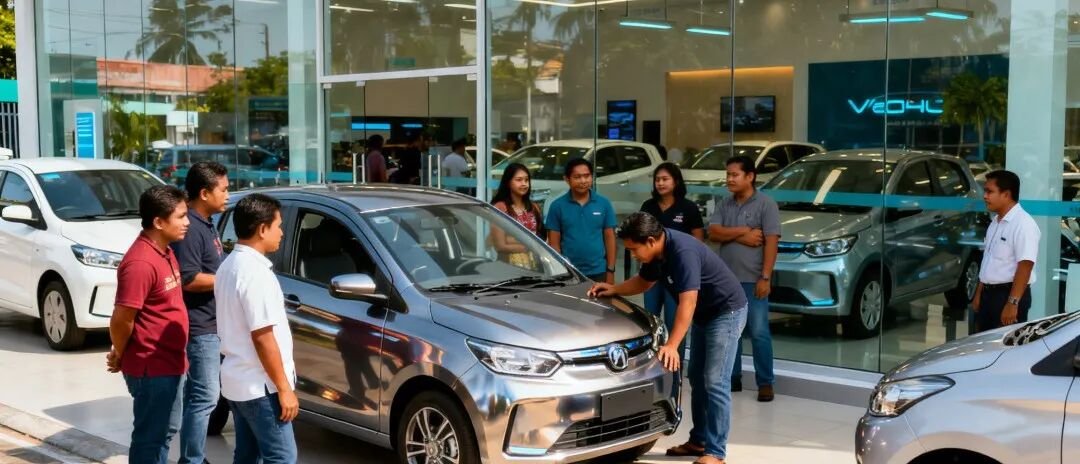
Malls, offices, hotels, condominiums, dealerships, fleets and transport operators all create distinct charging use cases.
Charging can be combined with load management, solar and storage where site economics and grid conditions support it.
The real bottleneck: usable charging, not dots on a map
Public charger counts are useful, but they do not tell the whole story. A charger listed on a map may be occupied, offline, incompatible with a vehicle, limited to customers of a property, or too slow for a driver’s schedule. For an operator, the more meaningful measures are available connectors, successful charging sessions, uptime, utilization and time to repair.
This distinction matters in a market where charging sites are still unevenly distributed. Metro Manila has the strongest concentration of commercial activity, while intercity corridors and cities such as Cebu and Davao require different site economics, power planning and support arrangements. The Philippines is also an archipelago: a network cannot be treated as one continuous mainland rollout.
Slow charging is useful—but only in the right place
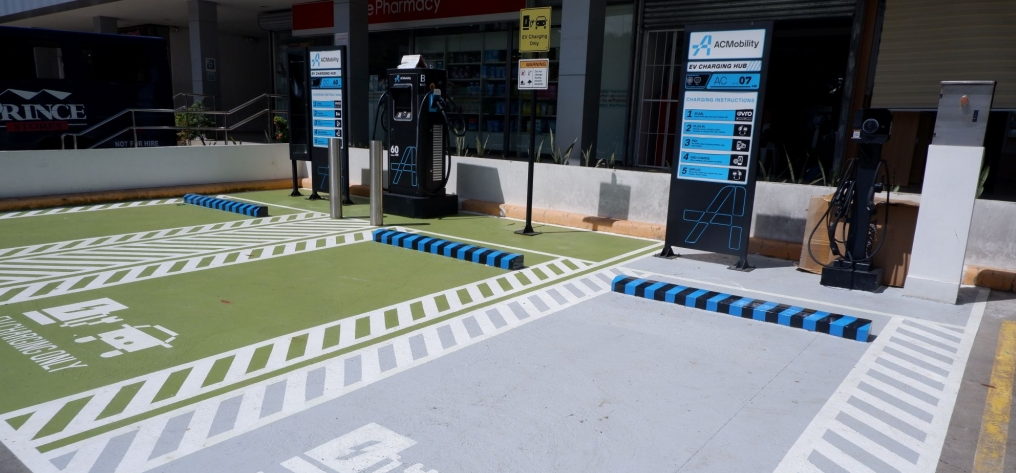
AC charging is a strong fit when vehicles stay parked for several hours: homes, workplaces, hotels, residential communities and shopping destinations. It can be less suitable for ride-hailing drivers, delivery fleets or intercity travelers who value time more than a lower equipment cost.
DC fast charging addresses that time constraint, but it also raises the bar for grid connection, demand management, equipment cost and maintenance. The right network will use both. The decision should begin with dwell time, daily energy demand and site power—not with a blanket preference for “fast” or “slow.”
Uptime becomes part of the customer promise
When chargers are scarce, a failed session has an outsized effect. Drivers may travel to a site specifically to charge, only to discover that the connector is unavailable. A charging management system should help the operations team identify faults remotely, distinguish connectivity problems from hardware problems, and escalate the right incident to the right service partner.
What EVIDA means for charging businesses and property owners
EVIDA is more than a vehicle policy. It assigns the Department of Energy responsibility for promoting EV adoption, developing charging infrastructure, accrediting charging station service providers and maintaining public information on commercial charging stations. It also requires coordination with utilities and local government units.
For property owners, one provision is especially relevant: new public and private buildings with 20 or more parking spaces must designate at least 5% of their parking slots for EVs, subject to the law and the Comprehensive Roadmap for the Electric Vehicle Industry. The roadmap also determines when dedicated spaces should include charging stations.
| Market participant | Immediate opportunity | Software requirement |
|---|---|---|
| Malls, hotels and mixed-use properties | Destination charging that supports footfall and tenant services | Access control, tariffs, parking integration, promotions and site-host settlement |
| Condominiums and residential developers | Shared charging where private charger installation is difficult | User authorization, reservations, energy allocation and transparent billing |
| Ride-hailing, delivery and commercial fleets | Depot or hub charging with high daily utilization | Vehicle scheduling, charging priority, energy limits and fleet reporting |
| Charger manufacturers and distributors | Complete hardware-plus-software offering for local buyers | OCPP integration, white-label apps, remote O&M and local payment connections |
| Regional CPOs and energy companies | Multi-site networks across cities and partner-owned locations | Central operations, role permissions, revenue sharing and multi-tenant reporting |
Designing charging for an archipelagic market
A Philippine rollout needs to account for more than national policy. Site power, distribution-utility requirements, local permits, maintenance coverage and customer behavior vary by location. A reliable plan should start with a small representative pilot and expand only after the team has validated the complete charging journey.
- Validate grid capacity: confirm the available service connection, transformer limits and peak-demand exposure before selecting charger power.
- Match speed to dwell time: use AC for longer stays and reserve higher-power DC for sites where faster turnover creates measurable value.
- Plan for weak connectivity: define safe offline behavior, transaction recovery and local support procedures for unstable network conditions.
- Localize the payment journey: evaluate cards, QR-based payments and Philippine e-wallets such as GCash or Maya through approved, project-specific integrations.
- Build maintenance coverage: keep spare-parts responsibility, incident ownership and service-level targets clear across islands and regions.
- Measure real availability: track connector uptime, session success, fault recurrence and repair time—not only installed charger counts.
Mobile charging can fill specific gaps
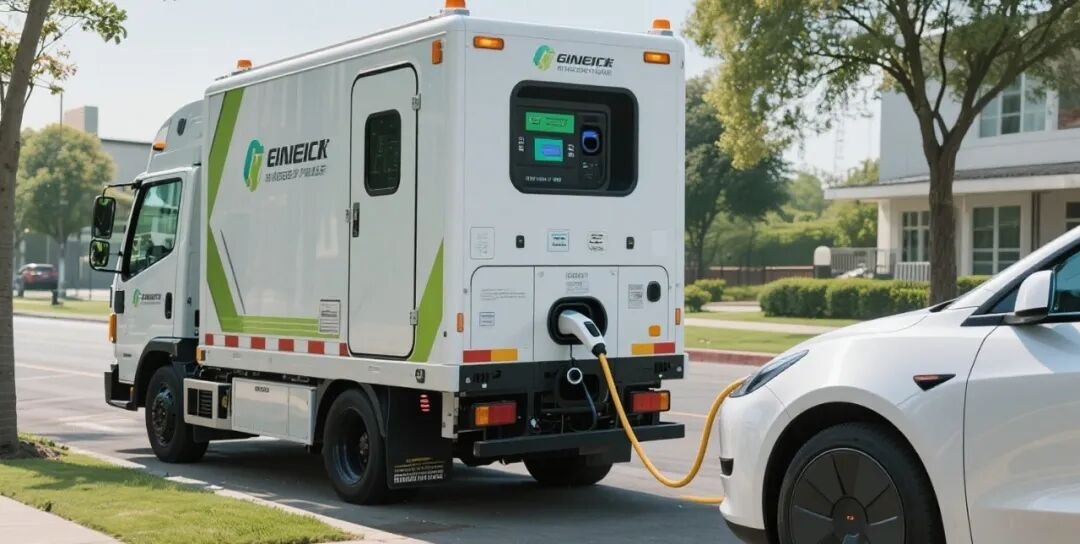
Mobile charging is attracting interest because it can support stranded vehicles, temporary demand, apartment residents or fleets that do not yet have permanent infrastructure. It is not a substitute for a dense fixed network, but it can be a useful service layer during early market development.
Why the software layer will decide who scales
Hardware delivers electricity. Software turns chargers into a service that drivers can find, start, pay for and trust. This becomes increasingly important when a network combines different charger brands, site owners, fleet customers and payment providers.
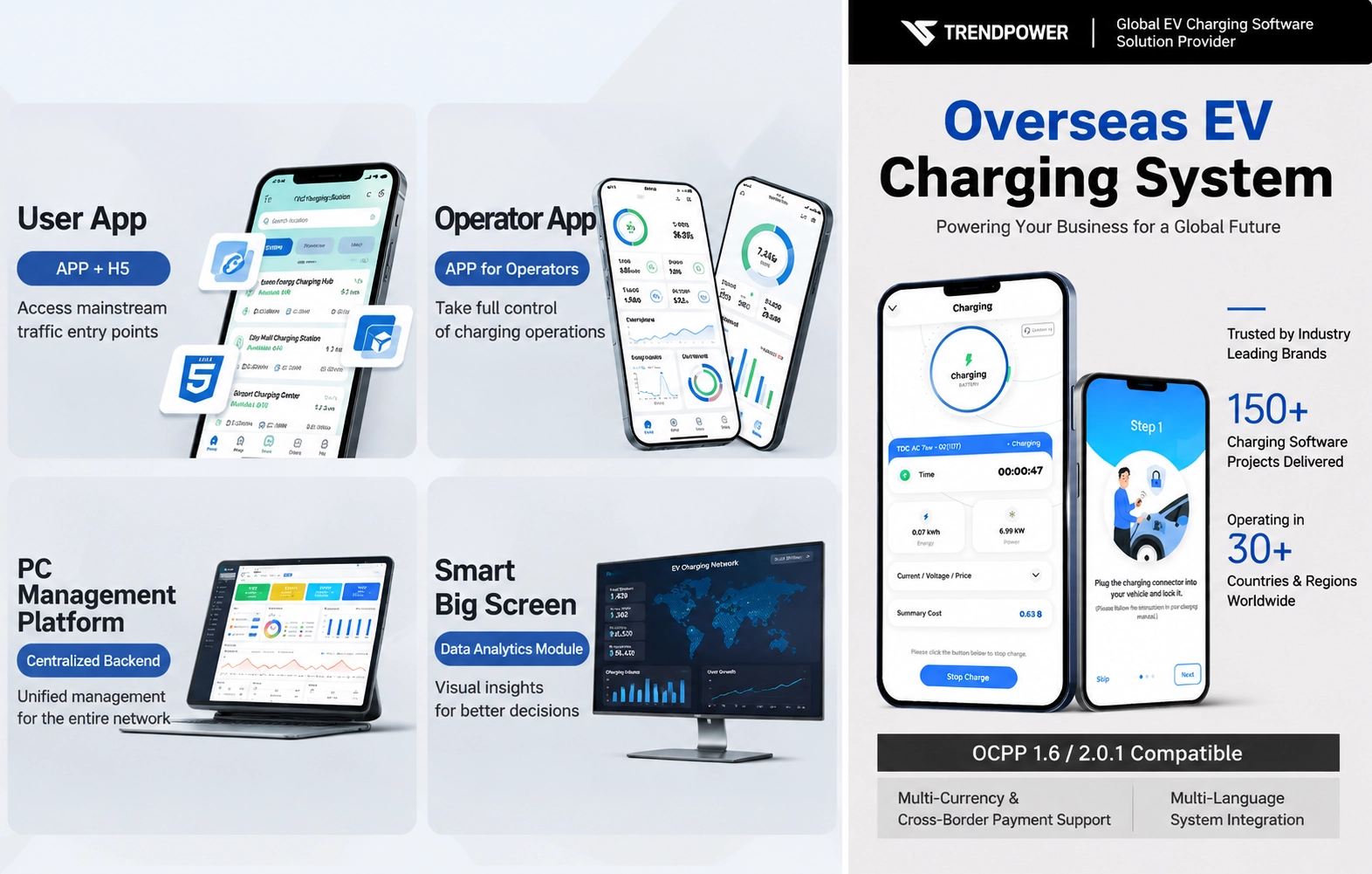
An EV charging point management system—often called a CPMS—connects chargers, users, sessions, tariffs, payments, alerts and operating data in one platform. For the Philippines, the strongest platform requirements are practical rather than decorative:
- OCPP interoperability: connect compatible chargers from different manufacturers and validate the actual firmware and message set during a pilot. Learn more from the Open Charge Alliance.
- Remote operations: monitor connector status, review logs, reset supported equipment and coordinate maintenance without sending a technician for every alert.
- Local commercial rules: configure Philippine peso tariffs, memberships, promotions, parking partnerships and revenue sharing.
- Payment flexibility: integrate the gateways and e-wallet workflows selected for the project, with reconciliation and refund processes defined before launch.
- Energy management: apply charging profiles, site power limits and scheduling where the charger, protocol and electrical design support them.
- White-label customer experience: provide a branded app or web journey in the languages and workflows that fit the target user group.
Important: “OCPP-compatible” is not the same as “every function works automatically.” Charger model, firmware, certificates, supported commands and offline behavior should be tested against agreed acceptance criteria before a large rollout.
How TrendPower supports EV charging projects in the Philippines
TrendPower is an EV charging software and digital-energy solution provider. We do not manufacture charging hardware. Instead, we help charger manufacturers, charging point operators, fleets, property groups and energy companies connect compatible equipment and build the operating workflows around it.
Our software delivery experience dates to 2005, and our published project experience spans more than 30 countries and regions. Depending on project scope, the TrendPower platform can support OCPP 1.6 and OCPP 2.0.1 integration, white-label driver and operator interfaces, public-cloud or private deployment, remote operations, billing, payments, partner settlement and energy-management workflows.
For a Philippine launch, our recommended process is straightforward: validate the chargers, define the local payment and tariff journey, pilot representative sites, train the operating team, then scale with measurable uptime and session-success targets. Explore our white-label EV charging software, review charging software case studies, or consider a PV–energy storage–charging solution for sites where the energy design supports it.
Planning an EV charging rollout in the Philippines?
Tell us your charger models, planned sites, target users, payment preferences and deployment requirements. The TrendPower team can help you turn those inputs into a practical CPMS pilot scope.
Frequently asked questions
Does the Philippines have enough EV charging stations?
Coverage is still developing and remains uneven. The business issue is not only the number of installed chargers, but also where they are located, whether they are publicly accessible, their charging speed, connector availability and real operating uptime.
What law governs EV charging infrastructure in the Philippines?
Republic Act No. 11697, the Electric Vehicle Industry Development Act or EVIDA, provides the national framework for EVs, charging stations, service providers, buildings, utilities and relevant government agencies. Operators must also follow applicable DOE, utility, LGU, building, safety and technical requirements.
Why is OCPP important for a Philippine charging network?
OCPP can help a management platform communicate with compatible chargers from different manufacturers, reducing dependence on a single hardware vendor. Real compatibility still needs to be tested against the charger model, firmware and functions required by the project.
Can TrendPower integrate GCash, Maya or other Philippine payments?
Payment integrations are scoped project by project. TrendPower can assess the selected payment provider, API availability, merchant-account requirements, settlement rules, refund flows and security responsibilities before confirming an integration.
Should a Philippine CPMS use cloud or private deployment?
Cloud deployment is often faster to launch and simpler to scale, while private deployment may suit projects with specific data-control, security or integration requirements. The right choice depends on operating responsibility, local infrastructure, compliance needs, integrations and total cost.
Editorial note: Public charger totals can differ by date, definition and data source. This article therefore focuses on verified policy and operating requirements rather than repeating unverified point-in-time counts.
Sources:

 EN
EN  ZH
ZH  AR
AR  DE
DE  ES
ES  KO
KO  JA
JA  IT
IT  FR
FR  VI
VI  MS
MS  ID
ID  FR_CA
FR_CA  NL
NL  SV
SV  EN_GB
EN_GB  TH
TH 