
Port drayage EV charging software helps electric container truck fleets reduce charging downtime, automate driver authentication, plan charging along fixed logistics routes, centralize fleet payments and monitor battery health. In this TrendPower case study, a dedicated charging operation platform was deployed for Zhejiang Telian Dongneng Technology to support electric truck charging around port logistics scenarios. The platform combines VIN-based plug-and-charge workflows, dual-gun fast charging, route-based station search, fleet account management, vehicle energy planning and battery bank management in one system.
For port operators, charging point operators, logistics parks and heavy-duty EV fleets, the key lesson is clear: electrifying trucks is not only a vehicle replacement project. It is an operational software project.
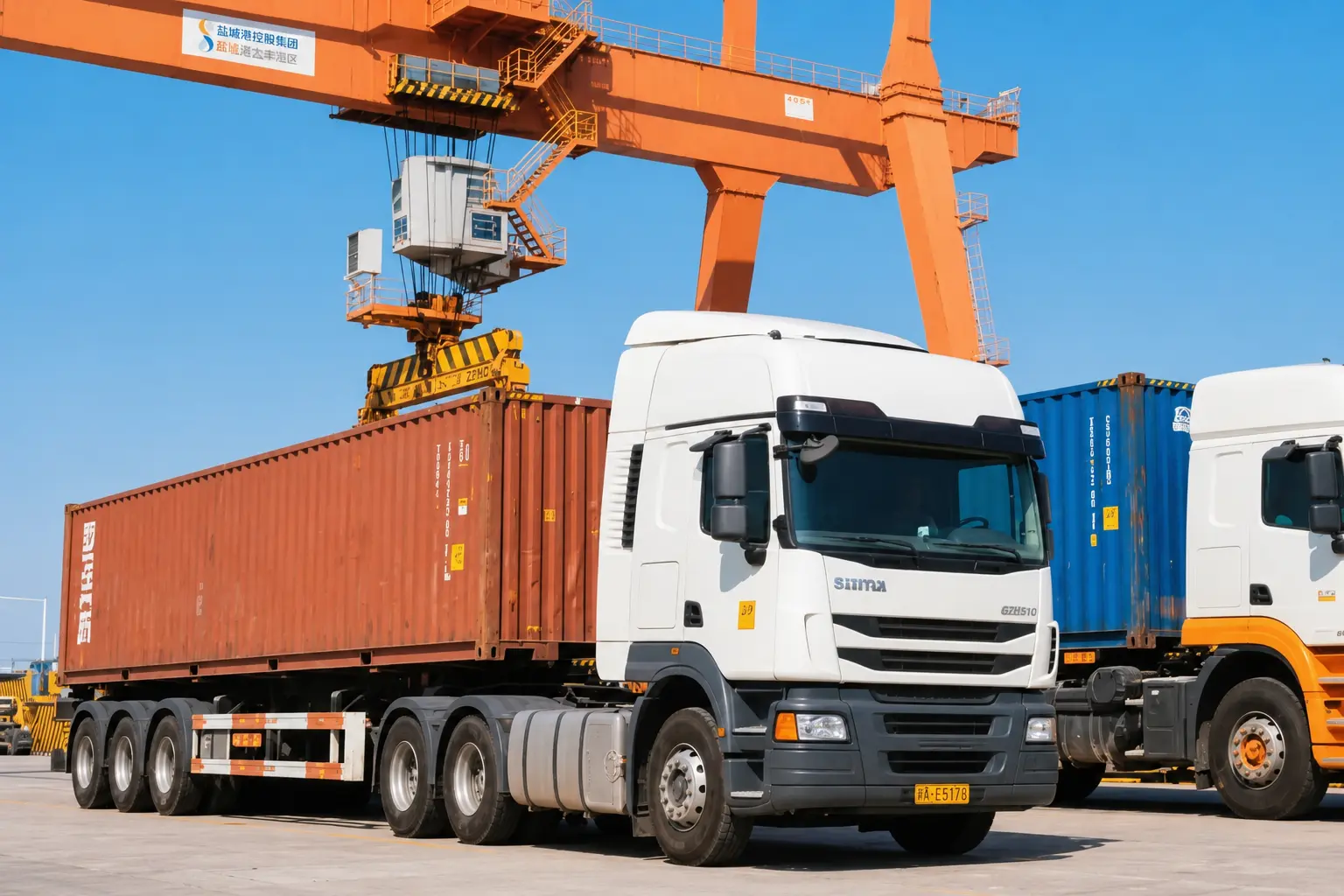
Why Port Drayage Is a Strong Use Case for Electric Trucks
Port drayage is one of the most practical entry points for heavy-duty truck electrification.
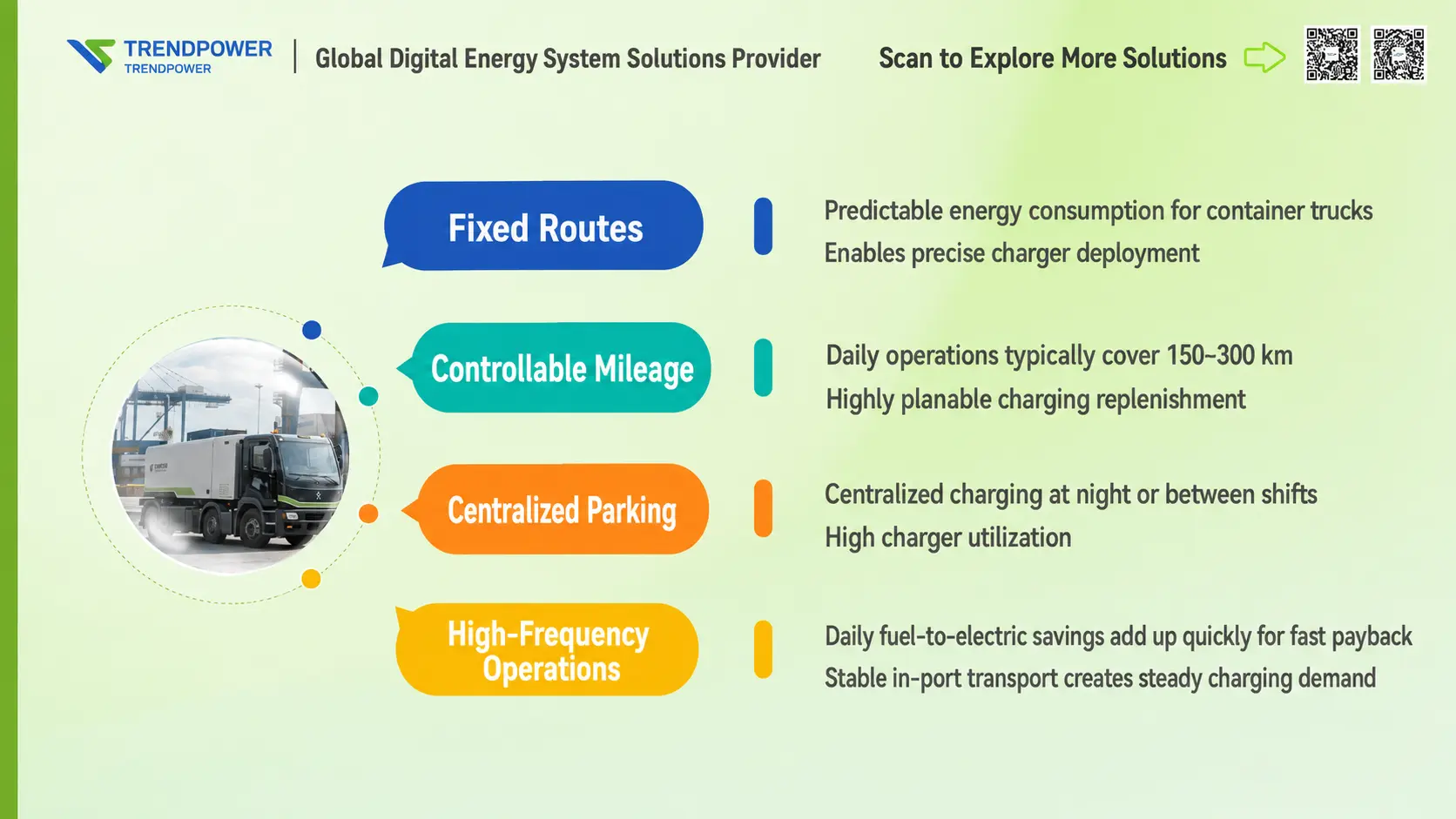
Unlike long-haul freight, port container transport usually involves fixed routes, predictable mileage, frequent short-distance trips and repeated charging windows. These conditions make it easier to plan electric truck charging, compare energy costs and manage vehicle utilization.
Ningbo-Zhoushan Port, the operating context behind this case, is one of the world’s largest cargo ports. In 2025, the port handled more than 1.4 billion tons of cargo and remained the world’s busiest port by cargo throughput for the 17th consecutive year. Globally, electric truck adoption is also accelerating. The IEA’s Global EV Outlook 2026 reported that electric truck sales more than doubled in 2025, reaching 9% of all truck sales worldwide, with China accounting for most of the growth.
This is why electric container trucks are moving from pilot projects to scaled commercial operation. But as more trucks enter daily service, charging becomes more complex.
A port may have chargers. A fleet may have electric trucks. But without the right software, drivers still waste time searching for chargers, managers lack real-time visibility, finance teams struggle with settlement, and battery assets become difficult to track.
That is where a dedicated Heavy-Duty Truck Charging Fleet Management System becomes essential.
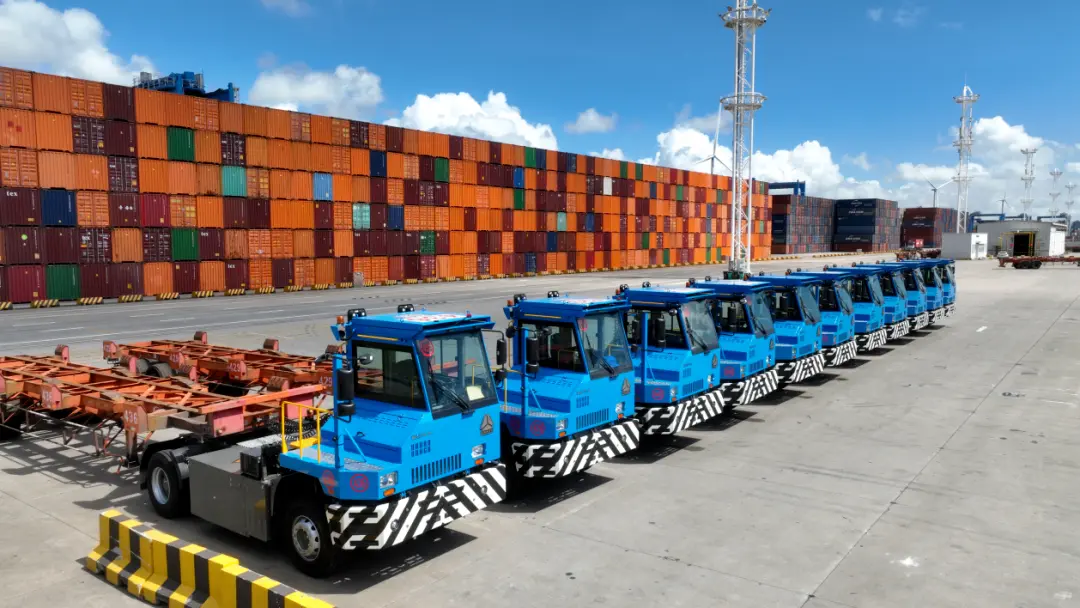
Case Background: Zhejiang Telian Dongneng Technology x TrendPower
In Q1 2026, Zhejiang Telian Dongneng Technology partnered with TrendPower to deploy a dedicated charging operation platform for electric container trucks.
The project was designed for port logistics scenarios, especially high-frequency drayage operations around Ningbo-Zhoushan Port and nearby container transport routes. Telian Dongneng serves electric truck fleets operating in and around the port. The company also plans to build and operate its own transport capacity for short-haul and port-related logistics tasks, while providing backup fleet capacity during peak demand or temporary shortages.
For this business model, a generic public charging app is not enough. The company needed a platform that could connect vehicles, chargers, fleet accounts, drivers, routes, battery data and charging orders.
TrendPower built the platform around the real operating logic of electric container truck fleets.
The Core Challenge: Electric Trucks Need Operational Charging, Not Just Public Charging
In consumer EV charging, the driver usually decides where to charge.
In port drayage, that model creates problems.
Electric container trucks often operate under tight dispatch schedules. Drivers may need to charge multiple times a day. Charging windows can be short. Waiting in line, scanning the wrong QR code, using a personal payment account or choosing a charger outside the planned route can all disrupt operations.
For a fleet manager, the real questions are more operational:
Which truck needs charging first?
Which charger is available near the active route?
Can the vehicle use dual-gun charging to reduce downtime?
Is the charging session linked to the correct fleet account?
Can the back office see low-battery alerts before a vehicle misses a task?
Is battery health being tracked across the asset lifecycle?
Can partner charging stations join the network under unified rules?
These questions cannot be solved by a simple station map. They require a connected EV charging software platform.
TrendPower’s EV Charging Point Management System provides the foundation for charger monitoring, session tracking, user management, billing and network operation. For port drayage, these capabilities are extended into a fleet-specific workflow.
Platform Architecture: People, Vehicles, Chargers and Sites
A port drayage charging platform must coordinate four operating layers:
People: drivers, fleet managers, finance teams, station operators and partner investors.
Vehicles: electric container trucks, VIN records, state of charge, vehicle location and battery status.
Chargers: high-power charging equipment, dual-gun chargers, station availability and charging sessions.
Sites: port terminals, logistics routes, charging depots, partner stations and route-side charging locations.
When these layers are managed separately, operations become fragmented. When they are connected in one platform, charging becomes part of transport scheduling.
That is the main value of port drayage EV charging software: it turns charging from a driver-side decision into a managed fleet operation.
Key Feature 1: VIN-Based Charging for Faster Driver Workflows
VIN-based charging is one of the most important features in this case.
After a vehicle is registered in the system, the driver can plug in and start charging. The platform recognizes the vehicle through its VIN and automatically connects the charging session with the correct vehicle, fleet, driver and enterprise account.
This creates a much lighter charging experience:
No repeated QR code scanning.
No manual account selection.
No driver-side reimbursement.
No missing charging records.
No confusion between personal and company payments.
For high-frequency port operations, this matters. Drivers do not need a complicated app workflow at every charging stop. They simply plug in, charge and return to work.
For fleet managers, every charging session remains traceable in the back office.
Key Feature 2: Dual-Gun Charging for Heavy-Duty Electric Trucks
Electric container trucks need high charging efficiency because they often operate on tight schedules.
The platform supports dual-gun charging, allowing compatible heavy-duty electric trucks to charge through two connectors at the same time. This can help reduce charging time and improve vehicle turnover.
For fleet operators, faster charging is not only a technical benefit. It affects revenue and dispatch efficiency.
A truck that charges faster can return to transport tasks sooner. A fleet that charges more efficiently can operate with better vehicle availability. A port charging network that supports dual-gun workflows can serve more heavy-duty vehicles during peak periods.
This is why heavy-duty EV charging software must be designed around vehicle utilization, not just charger availability.
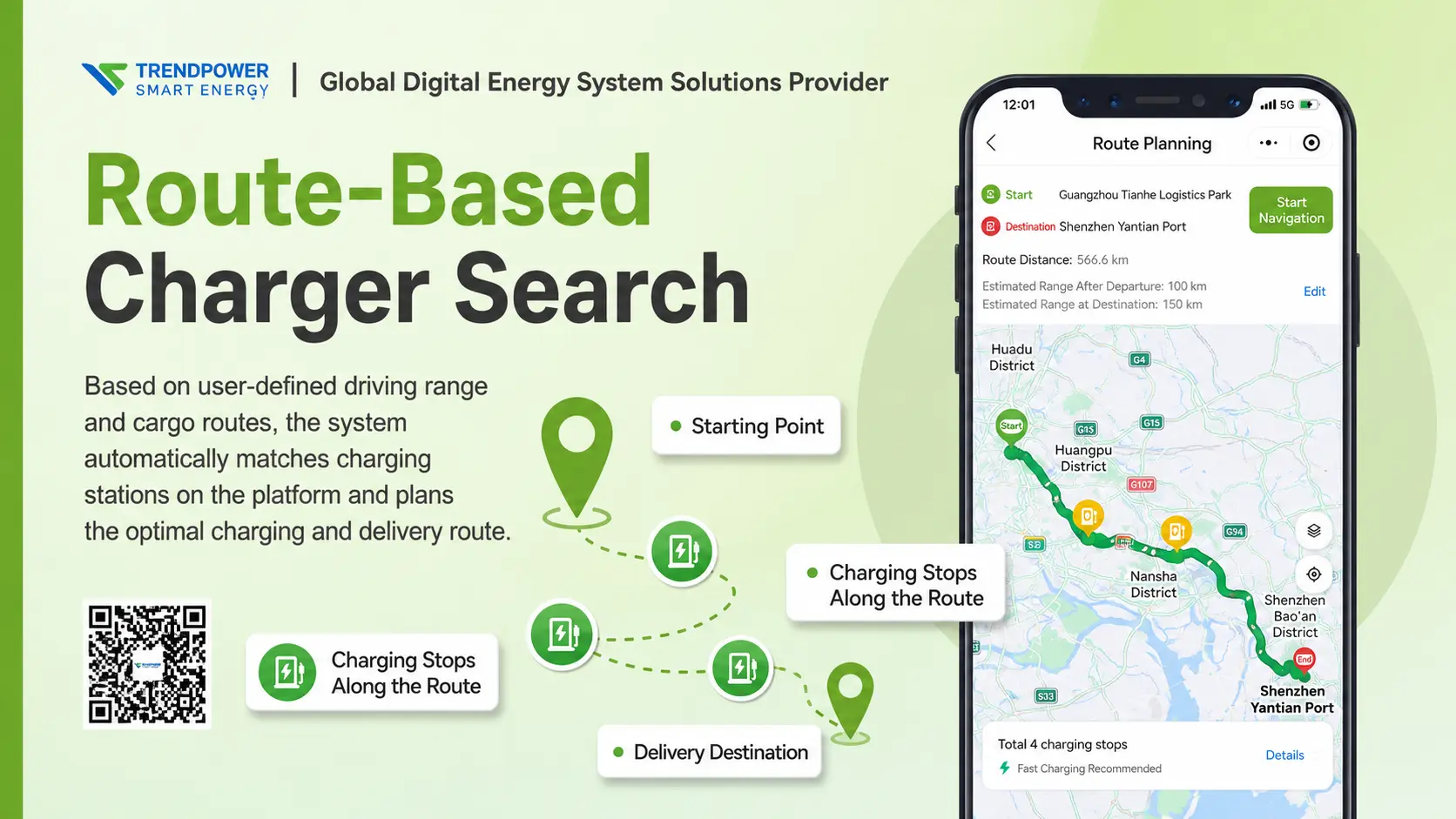
Key Feature 3: Route-Based Charging Station Search
Port trucks do not move randomly. They usually follow fixed or semi-fixed routes between terminals, yards, logistics parks and nearby warehouses.
That makes route-based charging more useful than simple “nearby charger” search.
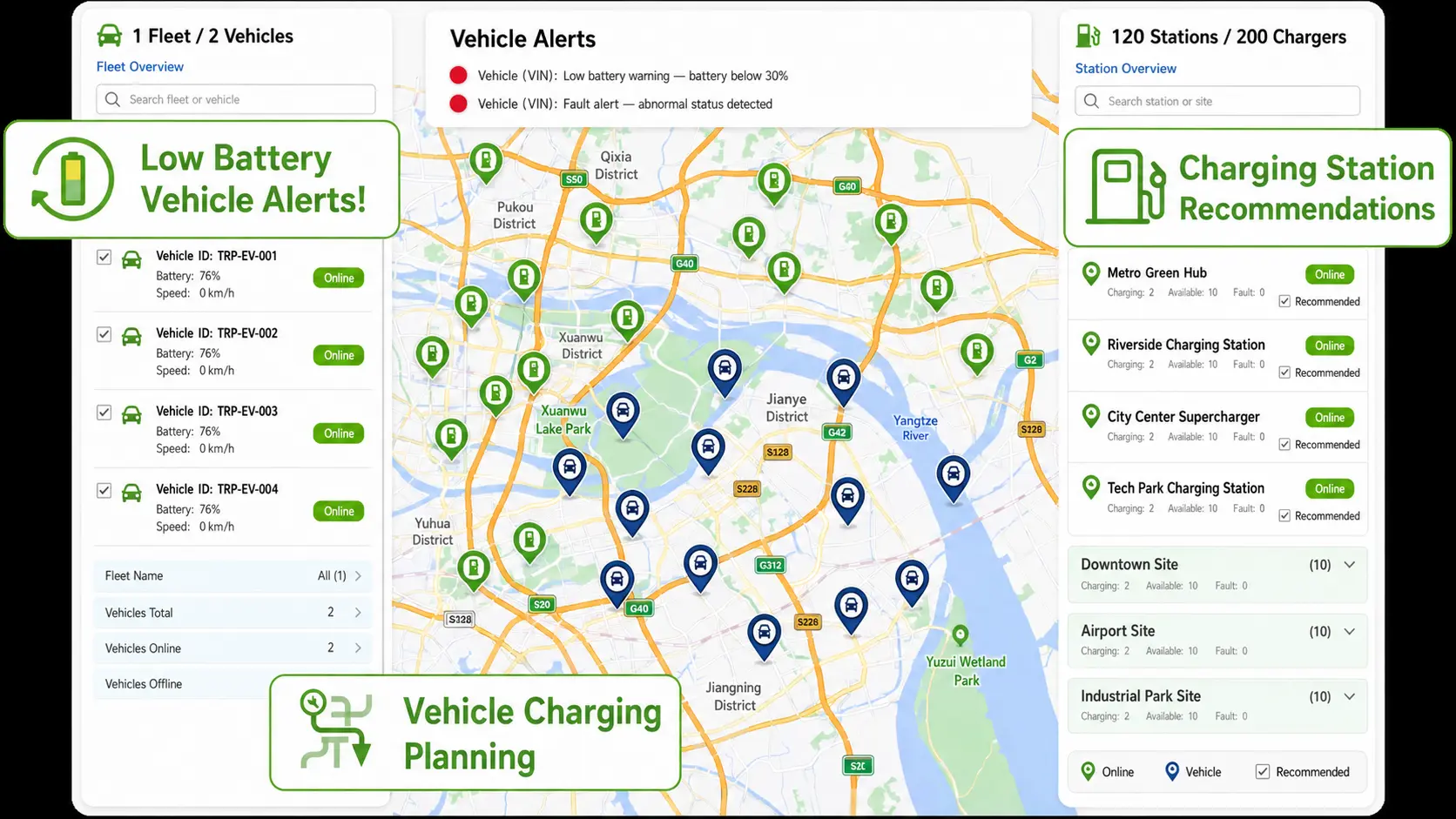
In the TrendPower platform, drivers or managers can generate or import a driving route. The system can then recommend charging stations near that route. Operators can also consider vehicle range, transport route and charging demand to plan a more suitable energy replenishment path.
This is especially important when charging must happen without disrupting delivery schedules.
A nearby charger may not be the best charger. The best charger is the one that fits the vehicle’s route, state of charge, charging power requirement, queue status and next task.
For operators with custom route, billing or dispatch requirements, TrendPower can also provide a Custom EV Charging Software Solution to match local business workflows.
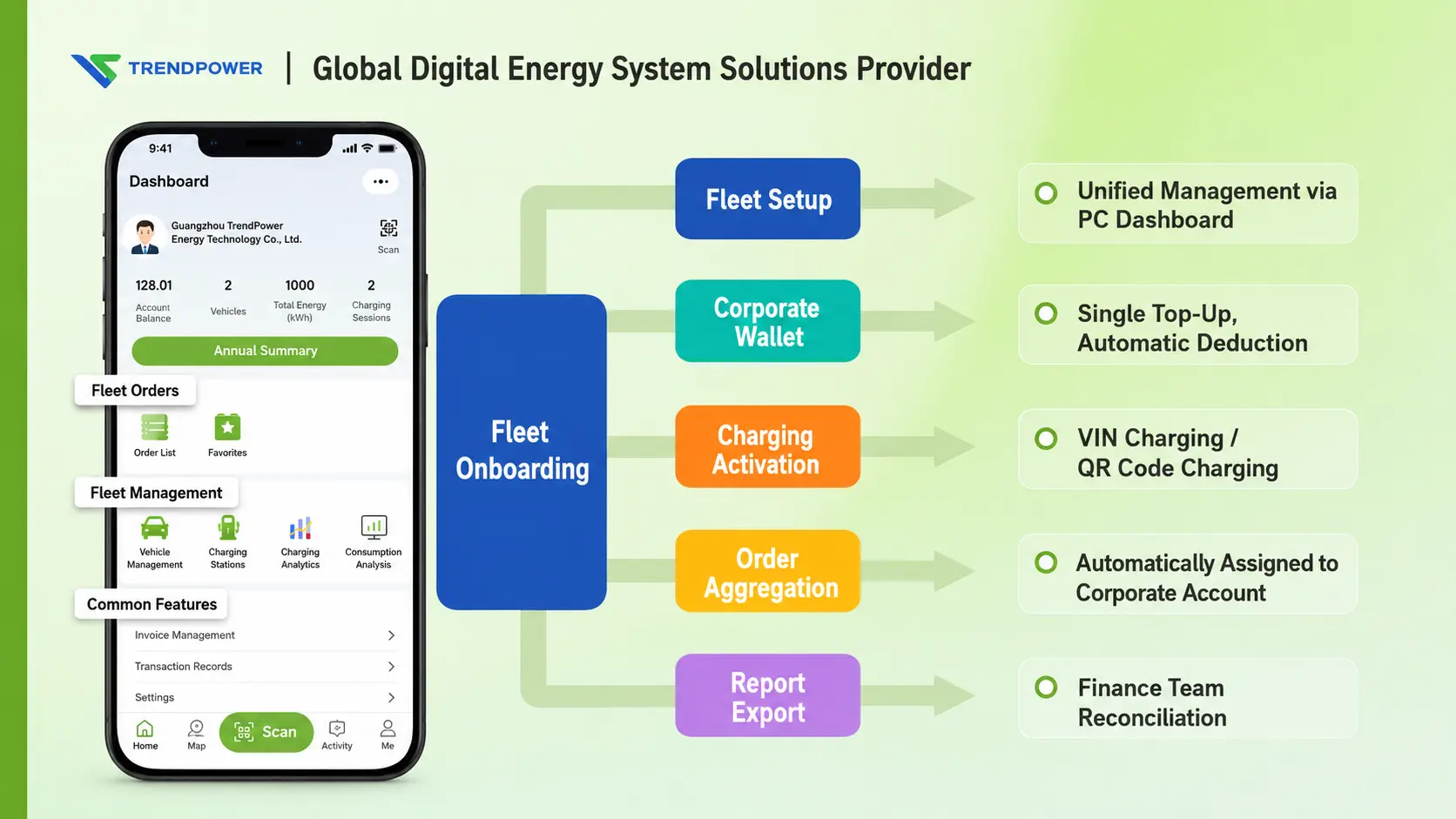
Key Feature 4: Fleet Management and Enterprise Wallet
Fleet charging is not the same as individual driver charging.
In a commercial fleet, the company usually needs centralized account management, unified payment, order aggregation and financial reporting. Drivers should not need to pay upfront and submit reimbursement claims after every charging session.
The platform supports fleet information management through a PC-based back office. Fleet administrators can create enterprise accounts, manage fleet members, assign vehicles and review charging behavior.
The enterprise wallet allows authorized fleet members to charge using the company account balance. Charging records are automatically grouped into enterprise orders.
Finance teams can clearly see:
Who charged the vehicle
Which vehicle was charged
When the session happened
Where the session took place
How much energy was delivered
How much the session cost
Which account paid for it
For charging operators, these capabilities connect directly with settlement and revenue management. TrendPower’s EV Charging Payment Solution supports wallet balance, payment workflows, reconciliation, settlement and reporting for charging operations.
Key Feature 5: Vehicle Energy Planning and Low-Battery Alerts
In traditional operations, drivers often decide when to charge based on experience.
That approach becomes inefficient when the fleet grows.
The port drayage charging platform monitors vehicle status and can alert the back office when a vehicle has low battery or abnormal operating conditions. Based on the vehicle’s real-time location and route, operations staff can plan the best charging path and send it to the driver side.
This creates a centralized energy dispatch workflow.
Instead of waiting for drivers to search for chargers, the back office can plan charging proactively. Instead of reacting after a vehicle runs low, managers can identify risks before they affect transport tasks.
For large charging networks, this also connects with intelligent operations and maintenance. TrendPower’s Intelligent Operations Management helps operators monitor equipment, detect faults, dispatch work orders and reduce charger downtime.
Key Feature 6: Battery Bank for Battery Asset Management
Battery data is becoming a key part of electric truck operations.
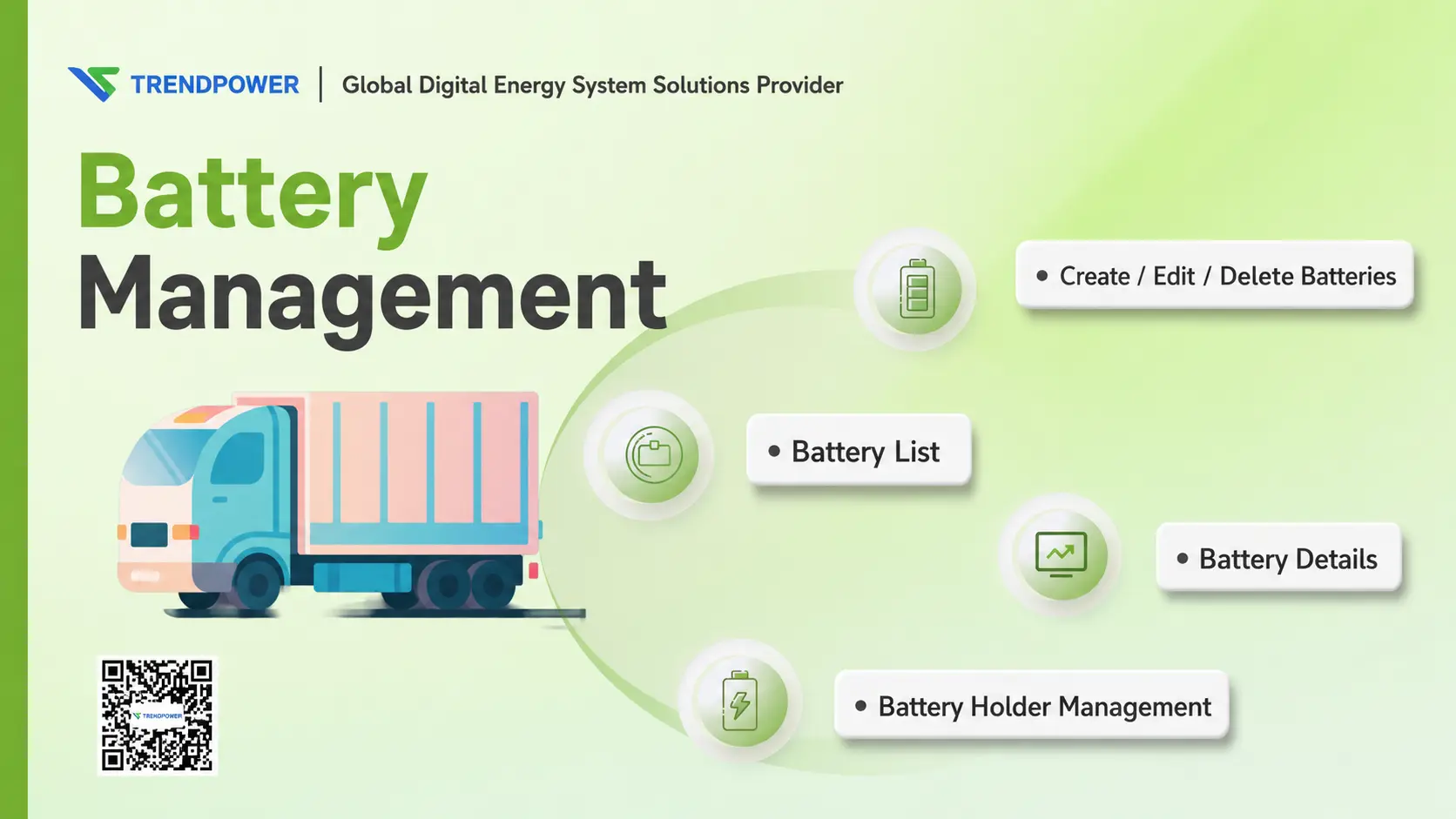
The platform includes a battery bank module that connects with the battery management system, or BMS. It can collect and monitor data such as state of charge, state of health, voltage and temperature.
This helps operators understand battery performance and make better maintenance decisions.
The battery bank also supports battery owner management. Each battery asset is linked to a specific owner account, making ownership, operation records and maintenance information more transparent and traceable.
This is valuable for companies that manage battery leasing, shared battery assets, battery replacement programs or multi-party investment models. Battery ownership and battery health should not be hidden in spreadsheets. They should be part of the charging operation platform.
For businesses exploring shared battery or battery asset models, TrendPower’s Shared Battery Swapping Station Solution shows how digital systems can support battery access, payment, asset tracking and self-service energy replenishment.
Why Generic Charging Apps Do Not Fit Port Drayage
A generic public charging app is usually designed for individual drivers. It focuses on station discovery, charging start, payment and basic order records.
Port drayage requires more.
A port charging platform must support fleet-level workflows, including:
VIN-based vehicle authentication
Dual-gun fast charging
Route-based charging station planning
Fleet member and vehicle management
Enterprise wallet and centralized settlement
Charging order aggregation
Low-battery and abnormal-status alerts
Battery bank data and asset ownership
Partner station onboarding
Back-office dispatch and reporting
This is why purpose-built software is becoming a competitive advantage for port charging operators.
The charger is the hardware entry point. The platform is the business operating system.
Business Value for Port Operators and Charging Networks
A dedicated port drayage EV charging platform can create value in several ways.
First, it improves driver efficiency. Drivers spend less time searching, scanning and paying.
Second, it increases vehicle utilization. Faster charging, better route planning and proactive energy dispatch help trucks return to work sooner.
Third, it improves financial control. Enterprise wallets, charging order aggregation and settlement reports reduce manual accounting work.
Fourth, it improves charger reliability. Real-time monitoring, fault alerts and O&M workflows help operators reduce downtime.
Fifth, it supports network expansion. With partner and franchise functions, the operator can invite third-party stations, investors or site owners to join the charging network under unified digital rules.
For companies that want to operate under their own brand, TrendPower also provides White-label EV Charging Software for branded apps, dashboards, user workflows and charging network management.
Building a Port Charging Network with Partner Stations
One important part of this case is the platform’s ability to support cooperation with external partners.
Telian Dongneng can use the platform to develop online and offline partnership channels, including third-party investors, charging station owners and route-side energy service providers. These partners can help expand charging coverage around Zhoushan Port and container transport corridors.
This model is important because port electrification cannot rely on a single depot.
Electric container trucks need a coordinated charging network across terminals, yards, depots and route-side stations. With the right software, every partner station can follow shared rules for pricing, access control, settlement, reporting and service quality.
That is how independent charging stations become a connected port energy network.
Expert Takeaway: Port Charging Is a Software-Led Operation
The future of electric port drayage will not be decided by chargers alone.
It will be decided by how well operators coordinate vehicles, routes, batteries, payments, drivers and charging assets.
In this TrendPower deployment, the platform was built around real port logistics needs: high-frequency charging, short dispatch windows, fixed routes, enterprise payment, vehicle energy planning and battery asset management.
For charging operators, logistics companies and port infrastructure investors, the lesson is practical:
Do not treat electric truck charging as a standalone transaction. Treat it as a fleet operating process.
When charging software is connected with fleet management, route planning, enterprise settlement and battery monitoring, electric trucks become easier to operate at scale.
Conclusion
Port drayage is one of the most promising scenarios for heavy-duty EV adoption because routes are predictable, mileage is manageable and charging demand can be planned. But scaling electric container trucks requires more than installing chargers.
Operators need software that can manage the entire charging workflow.
TrendPower’s port drayage EV charging platform for Zhejiang Telian Dongneng Technology shows how a purpose-built system can combine VIN-based charging, dual-gun charging, route-based station search, fleet management, vehicle energy planning and battery bank management.
For port operators and charging businesses, this is the next stage of EV infrastructure.
The charger delivers energy. The platform delivers control, efficiency and business scalability.
To learn more about fleet charging software for heavy-duty vehicles, explore TrendPower’s Heavy-Duty Truck Charging Fleet Management System or contact TrendPower to discuss your charging operation requirements.
FAQ
What is port drayage EV charging software?
Port drayage EV charging software is a platform used to manage charging operations for electric container trucks and heavy-duty vehicles around ports. It connects chargers, vehicles, drivers, fleet accounts, routes, payments and battery data in one system.
Why do electric container truck fleets need dedicated charging software?
Electric container trucks operate under tight schedules and high utilization. Dedicated charging software helps fleets reduce downtime, automate authentication, plan route-based charging, centralize payment and monitor battery status.
What is VIN-based charging?
VIN-based charging allows the platform to identify a vehicle through its vehicle identification number. After registration, the driver can plug in and charge without scanning a QR code or manually selecting a payment account.
How does route-based charging help port fleets?
Route-based charging recommends charging stations based on the truck’s planned route, remaining range and operating task. This helps drivers avoid unnecessary detours and helps managers plan charging before battery levels become a problem.
What is a battery bank in EV charging software?
A battery bank is a battery asset management module. It tracks battery ownership, state of charge, state of health, voltage, temperature and maintenance-related information. For electric truck fleets, it supports battery lifecycle management and operational safety.
Can port charging software support enterprise payments?
Yes. A fleet charging platform can support enterprise wallets, member accounts, centralized payment, order aggregation, reconciliation and financial reporting. This helps companies avoid driver reimbursement and improve financial visibility.
Is this type of platform suitable for charging operators outside China?
Yes. The same operating logic applies to ports, logistics parks, fleet depots and industrial transport corridors in global markets. The platform can be localized for different languages, payment methods, charger protocols, billing models and business rules.

 EN_GB
EN_GB  EN
EN  ZH
ZH  AR
AR  DE
DE  ES
ES  KO
KO  JA
JA  IT
IT  FR
FR  VI
VI  MS
MS  ID
ID  FR_CA
FR_CA  NL
NL  SV
SV  TH
TH 