
As the EV market grows, EV charging station monetization is becoming a critical strategy for charge point operators, charger manufacturers, parking operators, utilities, fleets, and destination charging businesses. Selling electricity alone is no longer enough. Today, operators need to turn charging traffic into repeat customers, retail revenue, loyalty engagement, local merchant income, and long-term user data assets.
With a self-owned EV charging software platform, operators can move beyond basic charging sessions and build a complete business ecosystem around drivers, vehicles, chargers, payments, and locations.
The opportunity is growing fast. The International Energy Agency reported that electric cars reached 25% of global car sales in 2025, while the total stock of public charging points worldwide reached more than 7 million by the end of 2025.
For charging operators, the next question is not only “How many chargers should we install?” It is also:
How can every charging station become a revenue-generating destination?
What Is EV Charging Station Monetization?
EV charging station monetization is the process of generating revenue from charging station traffic beyond electricity sales. This can include value-added services, retail partnerships, loyalty programs, advertising, parking fees, subscriptions, car wash services, EV accessories, merchant commissions, and digital payments through an EV driver app or charging management platform.
For charge point operators, monetization is not just about increasing charging fees. It is about owning the customer journey before, during, and after every charging session.
A modern EV charging management software platform allows operators to control the full commercial workflow: charger management, driver app, billing, payment, coupons, memberships, revenue sharing, merchant partnerships, and operational analytics.
Why Charging Stations Are Becoming Consumption Scenarios
A gas station is usually built for speed. A charging station is built around dwell time.
This difference changes the business model. A fuel customer may stay for only a few minutes, but an EV driver may stay 20 minutes or longer depending on charger power, battery level, vehicle model, route plan, and queue time. McKinsey noted that EV charging customers can have an extended dwell time of over 20 minutes, making nonfuel retail offers more important for mobility retailers.
That waiting time is not wasted time. It can become shopping time, dining time, service time, entertainment time, or membership engagement time.

Tesla’s Hollywood Diner in Los Angeles is a visible example of this shift. Tesla describes the site as a Supercharging station, classic American diner, and drive-in experience in one location, while ABC News reported that the site features 80 Supercharger stations, two large movie screens, and a restaurant-style experience.
The lesson is not that every EV charging operator should open a diner. The real lesson is that charging traffic has commercial value when software connects users, services, payments, and offline scenarios.
The Profit Ceiling of Electricity-Only Charging
Electricity sales remain the foundation of the EV charging business. However, operators that rely only on kWh margins often face several challenges:
- Electricity costs fluctuate by region and time of use.
- Demand charges and grid connection costs can be high.
- Utilization varies by time, site type, and local competition.
- Hardware maintenance and downtime reduce profitability.
- Drivers may compare stations only by price if the brand relationship is weak.
- Third-party platforms may control traffic, payment, and user data.
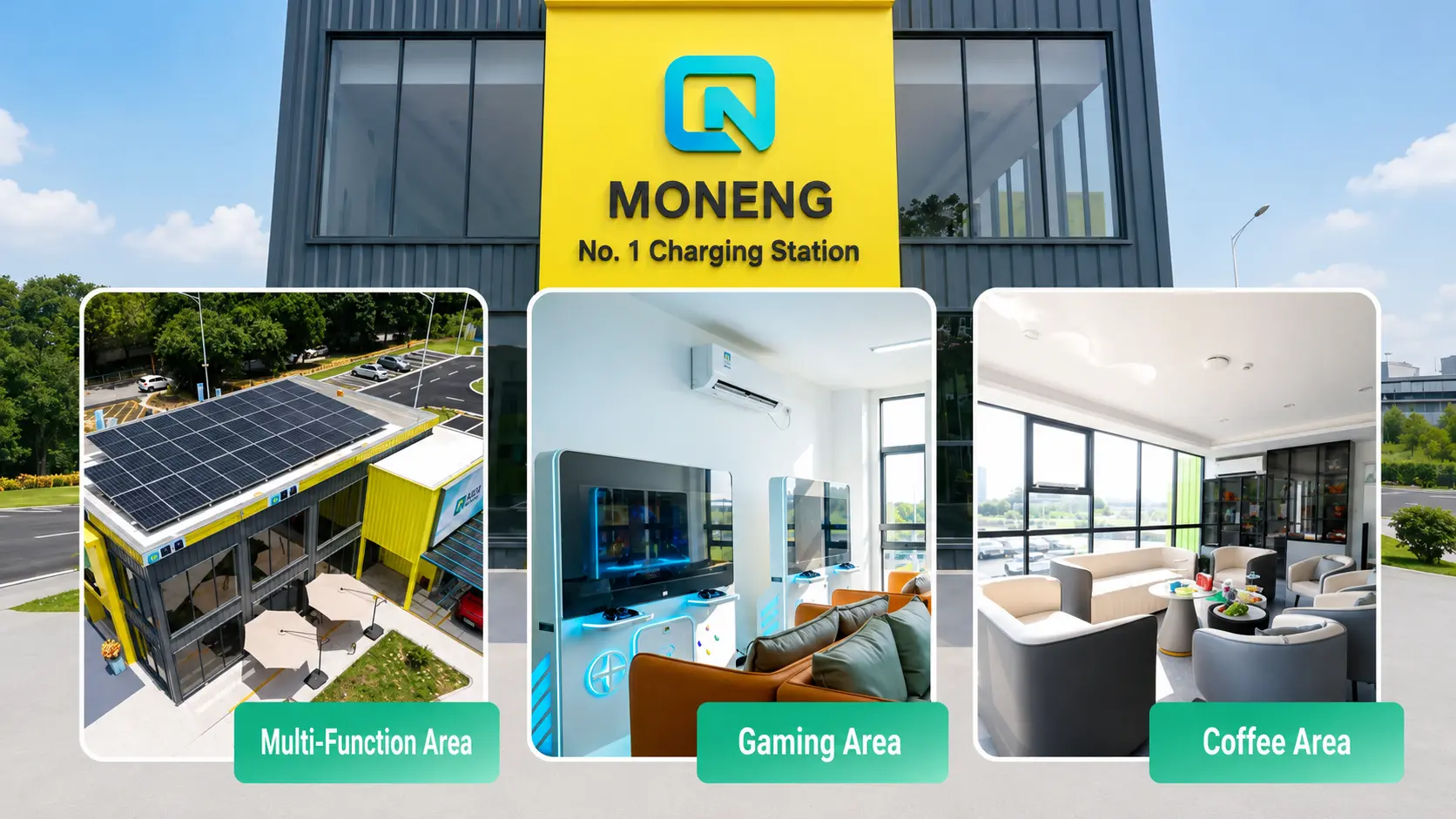
A pure charging-fee model can work at high-utilization locations, but it often leaves significant value untapped. When a station attracts hundreds or thousands of monthly users, those users represent more than charging orders. They represent app traffic, payment behavior, vehicle ownership, location-based intent, retail demand, service demand, and repeatable customer relationships.
That is why operators need to move from “charging point operation” to “charging traffic operation.”
Why Operators Need a Self-Owned EV Charging Software Platform
A self-owned EV charging software platform helps operators stop working only as infrastructure providers and start operating their own customer ecosystem.
If drivers discover, start, pay for, and review charging through third-party apps only, the operator may control the charger but not the user relationship. That makes it difficult to launch loyalty programs, build membership plans, push coupons, connect merchants, or analyze customer behavior.
By contrast, a self-owned EV Charging Point Management System gives operators direct control over:
- Charger monitoring and remote control
- User registration and driver app experience
- Pricing, tariffs, and billing rules
- Wallet payments and transaction records
- Coupons, memberships, and loyalty points
- Business district integration and merchant promotions
- Automated revenue sharing
- Data analytics and revenue reports
TrendPower’s CPMS supports real-time monitoring, smart charging optimization, automated billing, advanced analytics, marketing management, flexible billing, operational commission management, automated revenue sharing, and business district integration for EV charging operators.
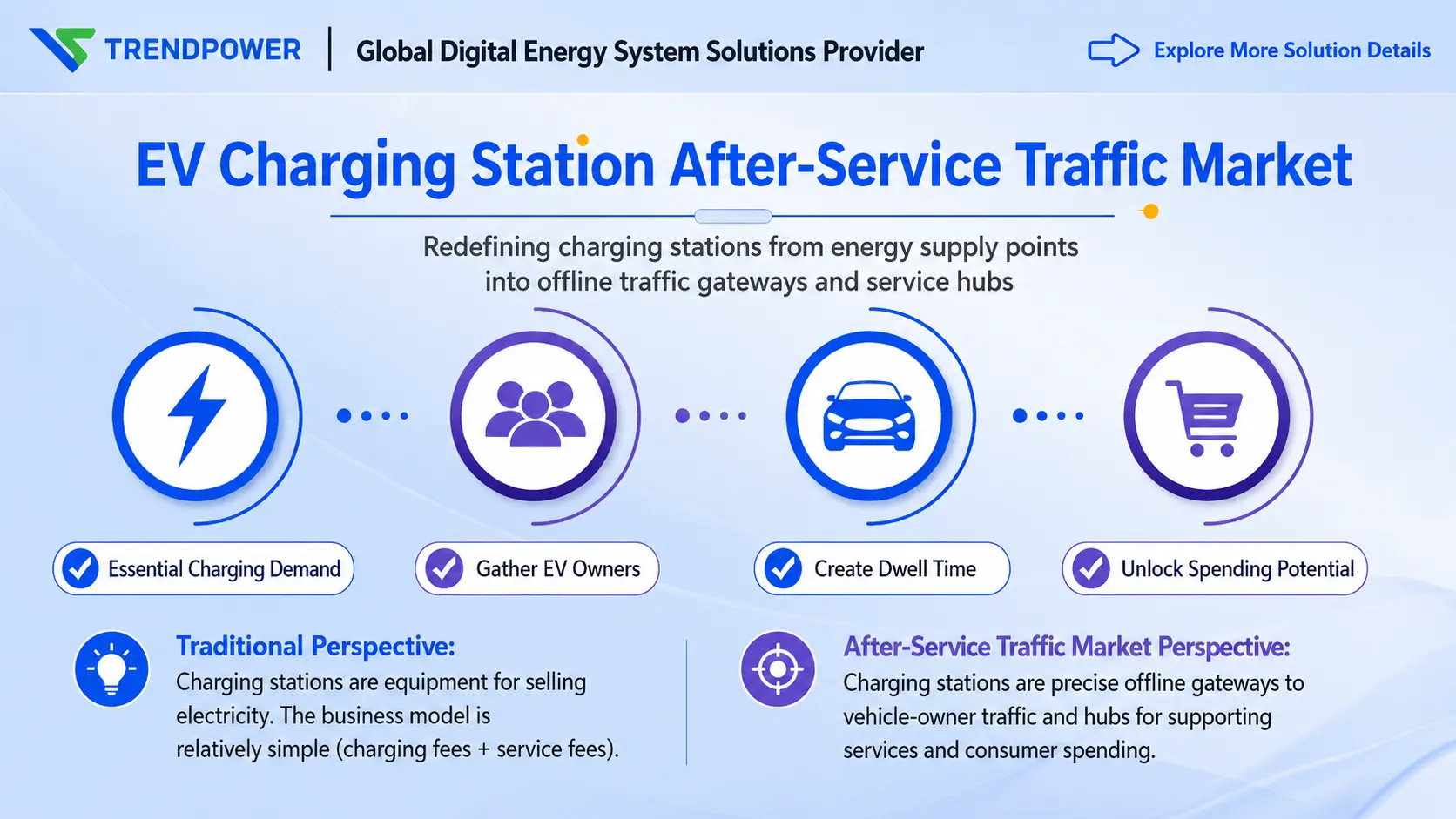
EV Charging Station Monetization Models
The following table shows how different monetization models can be connected to an EV charging management platform.
| Monetization Model | Driver Scenario | Revenue Source | Required Platform Features | Best-Fit Charging Sites |
| Charging + Automotive Services | Drivers charge while booking car wash, inspection, maintenance, or insurance services | Service commission, partner fees, service package sales | EV driver app, coupons, service booking, user profiles, partner settlement | Community stations, parking lots, car service centers |
| Charging + Loyalty Program | Users earn points from charging, top-ups, referrals, and membership purchases | Repeat charging, prepaid wallet balance, membership revenue | Points system, membership tiers, recharge rewards, coupon engine | Public charging networks, residential charging, fleet charging |
| Charging + New Retail | Drivers redeem points or buy EV accessories, snacks, local goods, or charging products | Product sales, retail margin, supplier commission | Online store, product catalog, wallet payment, order management | Highway hubs, shopping malls, scenic destinations |
| Charging + Local Merchants | Users receive nearby restaurant, café, hotel, cinema, or convenience store offers | Merchant listing fees, ads, commissions, revenue share | Business district integration, merchant portal, location-based offers | Commercial areas, hotels, tourist areas, malls |
| Charging + Parking | Drivers pay for charging and parking in one workflow | Parking fee, idle fee, bundled charging package | Parking integration, time-based billing, QR payment, automated settlement | Urban parking lots, office buildings, airports |
| Charging + Fleet Services | Fleet drivers charge with account-based authorization and automatic reporting | Fleet subscriptions, B2B billing, energy service fees | Driver accounts, RFID/IC card, fleet dashboard, invoices, reports | Depots, logistics parks, workplace charging |
| Charging + Advertising | Drivers see targeted in-app ads, charger screen ads, or local promotions | Advertising fees, campaign fees, merchant promotion fees | User segmentation, ad placement, campaign analytics | High-traffic public stations and destination hubs |
Model 1: Charging + Automotive Services
The first revenue layer is vehicle-related services.
EV drivers are already in a vehicle-care mindset when they charge. They may need car washing, detailing, tire checks, battery health reports, insurance renewal, parking services, accessories, roadside support, or maintenance reminders.
A charging operator can use its EV driver app as the touchpoint. When a user starts a charging session, the app can recommend services based on location, charging duration, and user behavior.
Examples include:
- “Get 20% off a self-service car wash while you charge.”
- “Book a tire pressure check at the service bay next door.”
- “View your battery health report after this session.”
- “Claim an EV insurance consultation coupon.”
- “Buy cabin cleaning or detailing services before charging ends.”
This turns waiting time into productive vehicle-care time.
The key is relevance. A highway fast-charging user may prefer food, restrooms, and rest areas. A community charging user may prefer car wash, parking packages, or maintenance. A fleet user may need driver authentication, billing reports, and account-based settlement.
With a custom EV charging software solution, operators can design workflows around their exact station type, user group, region, and business model. TrendPower’s custom solution supports scalable infrastructure, smart energy management, user experience optimization, multi-brand charger integration, multilingual systems, payment integration, and localized deployment.
Model 2: Charging + Loyalty and New Retail
Traditional charging promotions often rely on discounts. However, discounting electricity directly reduces operator margin. A better strategy is to build a loyalty ecosystem.
With a self-owned EV charging station monetization platform, operators can launch a points mall or rewards center. Users can earn points from:
- Daily charging
- Wallet top-ups
- Monthly memberships
- Referral campaigns
- Off-peak charging
- Birthday rewards
- Merchant purchases
- Fleet usage milestones
They can redeem points for charging coupons, food vouchers, parking discounts, car wash services, EV accessories, or local merchant offers.
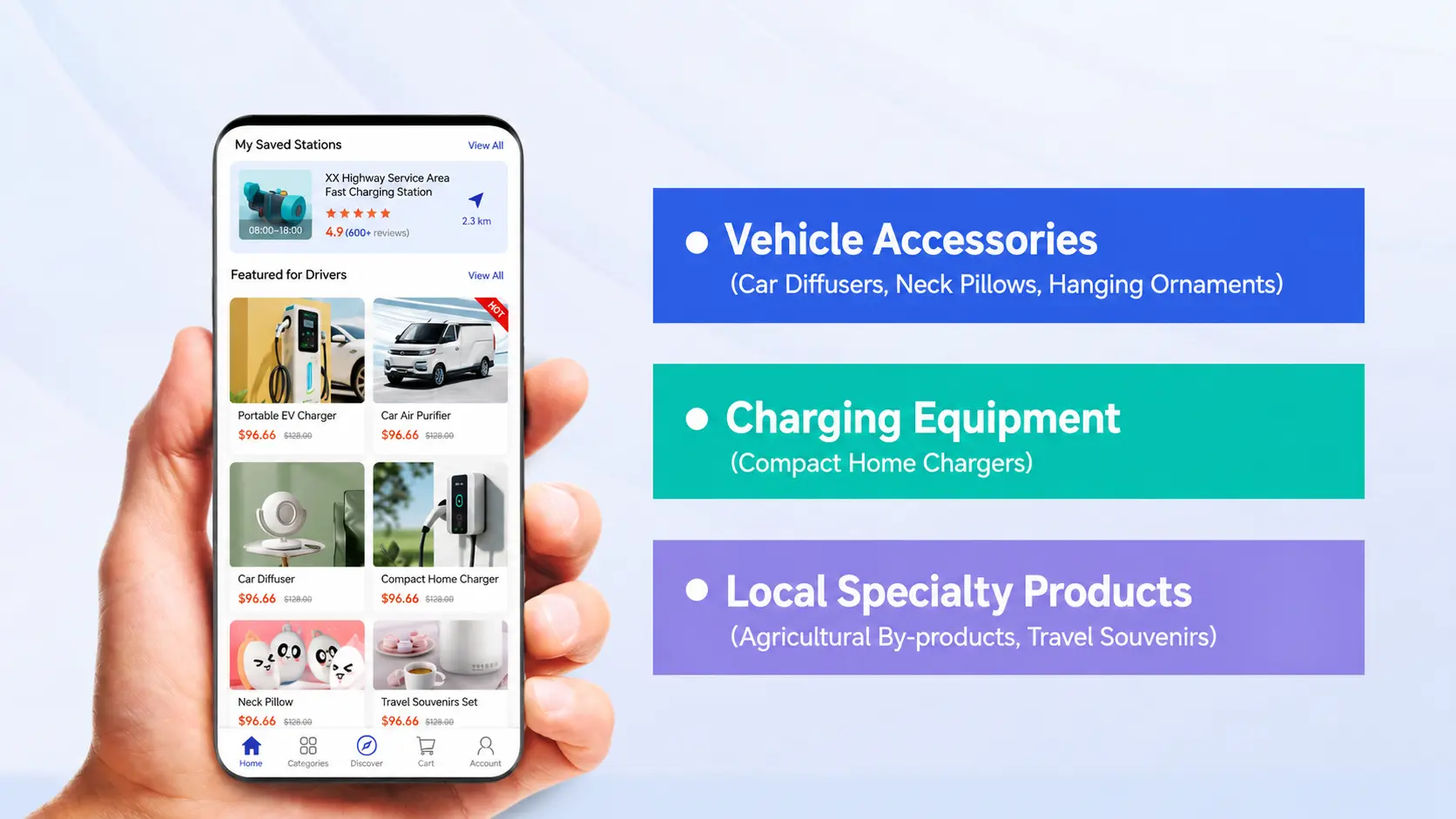
This changes the psychology of loyalty. Instead of seeing points as a small discount, users begin to see them as stored value inside the operator’s ecosystem.
New retail categories can include:
- EV accessories, charging cables, adapters, mats, organizers, fragrances, and cleaning kits
- Home chargers, portable chargers, and charging-related equipment
- Coffee, snacks, meal vouchers, and convenience-store coupons
- Local specialty products for scenic or tourism stations
- Maintenance packages, car wash cards, and parking bundles
Reuters reported that adding EV chargers at retail locations could increase foot traffic by an average of 4% and revenue by 5%, based on data cited in a Consumer Reports study.
For charging operators, the relationship works both ways: retail makes charging stations more attractive, and charging traffic makes retail more measurable.
Model 3: Charging Station + Local Business District
The third monetization model is local business integration.
Most charging stations are near restaurants, cafés, convenience stores, shopping malls, hotels, cinemas, parking lots, offices, residential communities, tourist attractions, or service centers. These nearby businesses want qualified traffic. EV drivers are qualified traffic because they are physically nearby and likely to spend time in the area.
A self-owned CPMS and EV driver app can turn the charging station into a local traffic portal.
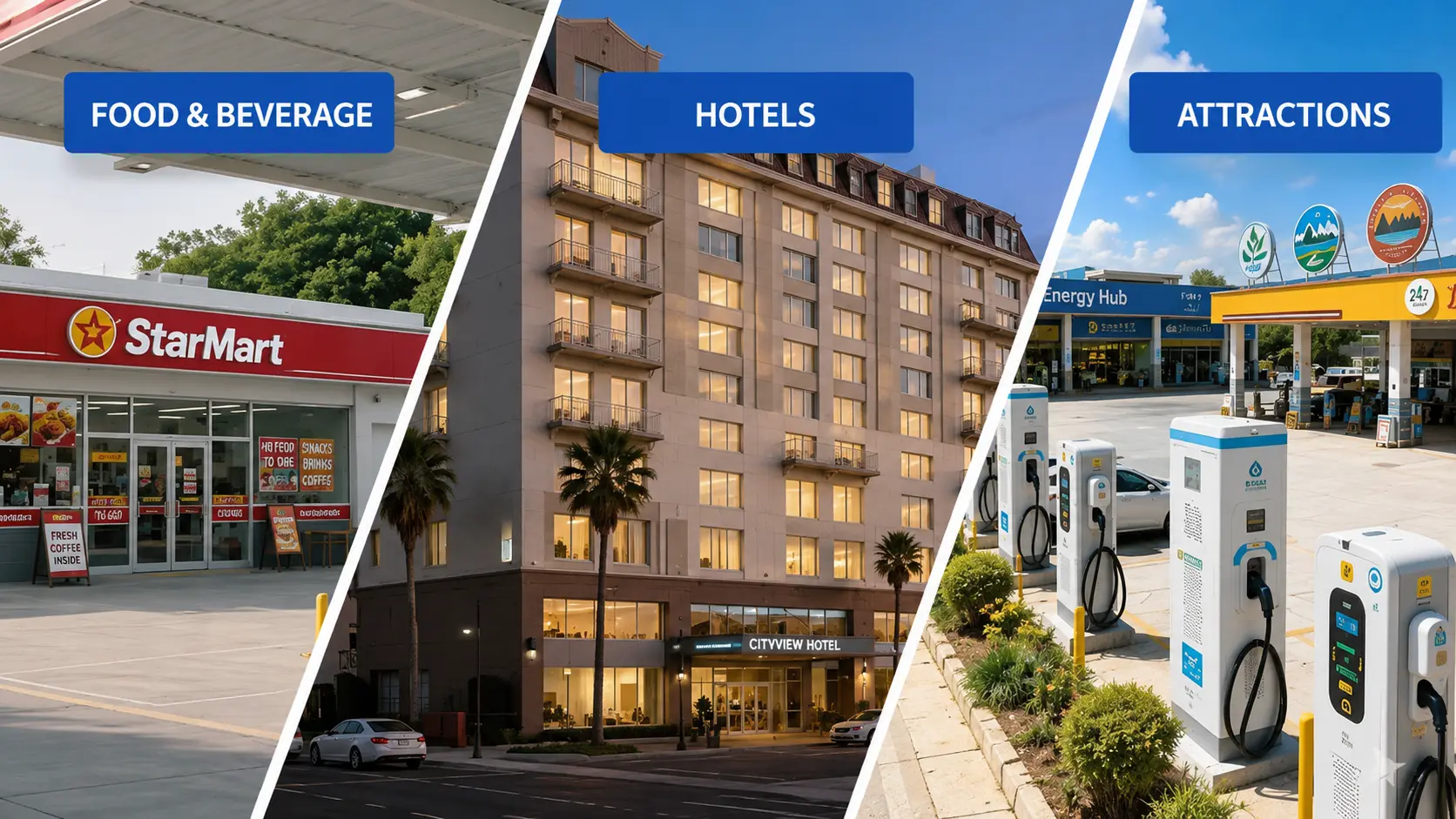
Examples include:
- A café offers a free drink upgrade to users charging for more than 30 minutes.
- A supermarket provides a coupon for weekday afternoon charging users.
- A hotel offers overnight parking and charging packages.
- A cinema sells movie tickets bundled with charging credits.
- A tourist attraction sells local souvenirs through the charging app.
- A restaurant pays commission for every order generated from the station page.
The operator can earn revenue through merchant entry fees, advertising fees, commissions, or revenue sharing. The merchant gains targeted foot traffic. The user receives convenient nearby services. The platform becomes the connector.
This is where a charging station becomes more than an energy facility. It becomes a local commerce node.
Why OCPP and Open Platforms Matter
EV charging station monetization requires more than marketing features. It also requires a stable technical foundation.
The Open Charge Alliance describes OCPP as the global open communication protocol between charging stations and charging management systems. OCPP helps the EV charging ecosystem build scalable, interoperable networks instead of being locked into isolated proprietary systems.
For operators, an OCPP charging platform makes it easier to connect chargers from different manufacturers, manage stations from one backend, scale across regions, and reduce hardware lock-in.
Networked charging infrastructure is also essential for payments and data. The U.S. Department of Energy’s Alternative Fuels Data Center explains that networked charging infrastructure can support RFID, smartphone, or credit card payment, while enabling site hosts to monitor and analyze use and provide customer support.
In other words, monetization depends on connectivity. If chargers, users, payments, and station data are not connected, operators cannot build a scalable revenue model.
Key Features of an EV Charging Monetization Platform
To monetize charging station traffic effectively, operators should look for a platform that includes both operational control and business growth tools.
1. EV Driver App or Web App
The driver-facing interface should support station search, real-time charger status, scan-to-charge, session control, wallet balance, payment, invoices, coupons, loyalty points, membership, customer service, and nearby merchant offers.
A white-label EV charging platform is especially important for operators that want to build their own brand. TrendPower’s white-label EV charging software supports branded web apps, mobile apps, backend platforms, OCPP charger management, billing, monitoring, and load balancing for operators, utilities, governments, private companies, and fleets.
2. CPMS and Operator Dashboard
The backend should support charger monitoring, remote diagnostics, device control, pricing rules, billing, order management, user management, revenue reports, and station-level analytics.
3. Flexible Billing and Pricing
Operators should be able to configure pricing by kWh, time, power, service fee, idle fee, parking duration, user group, membership tier, station type, and time-of-use tariff.
4. EV Charging Payment Solution
Payment infrastructure is a critical part of monetization. A strong EV charging payment solution should support QR code payments, card payments, wallet top-ups, RFID/IC card access, whitelist-based transactions, automated reconciliation, settlement, and multi-party revenue sharing. TrendPower’s payment solution supports multiple payment methods for flexible user experiences.
5. Loyalty and Marketing Engine
Operators need tools for welcome coupons, recharge rewards, monthly plans, subscription packages, referral campaigns, tiered membership, merchant vouchers, and off-peak incentives.
6. Merchant and Partner Management
A monetization platform should allow local merchants, agents, site hosts, and service providers to join the ecosystem, publish offers, track performance, and settle revenue automatically.
7. Data Analytics
Operators need to track station utilization, repeat charging rate, average order value, coupon redemption, user retention, merchant conversion, peak-hour behavior, and revenue by channel.
Without analytics, value-added services are guesswork. With analytics, they become a repeatable growth engine.
Practical Playbook: How Operators Can Start
Operators do not need to launch every monetization model on day one. The best approach is to start with the strongest scenario for each site.
For a highway fast-charging hub, start with food, beverage, restrooms, lounges, route support, and convenience-store coupons.
For a shopping mall station, start with parking validation, store coupons, membership points, and order pickup.
For a community station, start with monthly charging packages, wallet top-ups, car wash coupons, and home-charging product sales.
For a hotel or scenic destination, start with overnight charging, tourism packages, local products, restaurant offers, and parking bundles.
For a fleet station, start with driver accounts, RFID or IC card authorization, billing reports, route charging, and automated settlement.
Once the first model proves conversion, operators can expand into points malls, merchant advertising, local business partnerships, subscriptions, and multi-site membership programs.
How TrendPower Helps Operators Monetize EV Charging Traffic
TrendPower provides commercially scalable and localized EV charging management software for charging equipment manufacturers, operators, energy companies, fleets, and related EV charging businesses worldwide.
Through TrendPower’s EV Charging Point Management System, operators can manage chargers, users, orders, pricing, billing, revenue reports, marketing campaigns, commissions, revenue sharing, and business district integration from one platform.
For businesses that want to launch a branded charging network, TrendPower’s white-label EV charging software for operators supports branded mobile apps, web portals, backend platforms, OCPP charger management, billing, monitoring, and customer-facing charging experiences.
For operators with unique workflows, TrendPower’s custom EV charging software solution helps build tailored charging systems with localized features, multilingual interfaces, multiple payment integrations, and scalable deployment options.
For payment and settlement, TrendPower’s EV charging payment solution helps operators support diverse payment methods, wallet balance, card payment, QR code payment, RFID/IC card access, and transaction workflows.
The goal is simple: help every charging node grow into a smarter business.
Conclusion: The Future of Charging Station Revenue Is Platform-Driven
The EV charging industry is entering a new phase. Hardware deployment remains important, but software-defined operations will determine who captures the most value.
Operators that only sell electricity will compete on charger speed, price, and location. Operators that own their platform can compete on customer experience, loyalty, retail, payment convenience, local partnerships, data, and ecosystem revenue.
EV charging station monetization is not a side business. It is the next growth model for charge point operators.
With the right EV charging software, CPMS, white-label app, payment system, loyalty engine, and merchant ecosystem, every charging station can become more than a place where cars get energy. It can become a destination where people spend time, make decisions, and create new revenue.
Explore TrendPower’s EV charging management software to build a branded, data-driven, and monetizable EV charging network.
FAQ
What is EV charging station monetization?
EV charging station monetization means generating revenue from charging station traffic beyond electricity sales. It can include retail partnerships, loyalty programs, parking fees, advertising, subscriptions, car wash services, EV accessories, merchant commissions, and value-added services.
How can EV charging stations make money beyond electricity sales?
EV charging stations can make money through charging fees, service fees, idle fees, parking fees, memberships, wallet top-ups, retail sales, advertising, merchant commissions, car wash services, fleet billing, and local business partnerships.
Why do operators need their own EV charging software platform?
Operators need their own EV charging software platform to control customer data, payments, loyalty programs, pricing, merchant partnerships, user experience, and revenue-sharing rules. A self-owned platform reduces dependence on third-party apps and helps operators build long-term customer assets.
What features should EV charging management software include?
EV charging management software should include charger monitoring, remote control, OCPP integration, user management, billing, flexible pricing, payment processing, wallet management, RFID or IC card support, data analytics, marketing tools, coupons, memberships, and revenue sharing.
How can a white-label EV charging platform increase charging station revenue?
A white-label EV charging platform helps operators launch branded apps and portals, own the customer relationship, create loyalty programs, promote local services, manage payments, and build a scalable charging business under their own brand.
What is the role of CPMS in EV charging station monetization?
A CPMS connects chargers, users, payments, billing, pricing, analytics, marketing, and partner settlement into one backend system. It helps operators manage daily operations while creating new revenue streams from charging traffic.
References
- International Energy Agency, Global EV Outlook 2026: Trends in Electric Cars.
- International Energy Agency, Global EV Outlook 2026: Electric Vehicle Charging.
- McKinsey & Company, Harnessing Analytics and AI to Shape the Future of Mobility Retail.
- Tesla, Tesla Diner.
- ABC News, Inside Tesla’s New Hollywood Diner.
- Reuters, US retailers can help EV adoption by adding more charging stations to parking lots.
- Open Charge Alliance, Open Charge Point Protocol.
- U.S. Department of Energy, Alternative Fuels Data Center, Electric Vehicle Readiness.
- TrendPower, EV Charging Point Management Systems.
- TrendPower, White-label EV Charging Software for Operators.
- TrendPower, Custom EV Charging Software Solution.
- TrendPower, EV Charging Payment Solution.

 EN_GB
EN_GB  EN
EN  ZH
ZH  AR
AR  DE
DE  ES
ES  KO
KO  JA
JA  IT
IT  FR
FR  VI
VI  MS
MS  ID
ID  FR_CA
FR_CA  NL
NL  SV
SV  TH
TH 