
Quick Answer: What Does an EV Charging Platform in Brazil Need?
An EV charging platform Brazil project must do more than connect chargers to software. To operate successfully in Brazil, the platform should support CPF-based user identity, Portuguese UI, Pix and local card payments, flexible billing rules, plug-in fees, service fees, OCPP charger integration, remote monitoring, and localized settlement workflows.
Brazil’s EV market is growing fast, creating a strong opportunity for charger manufacturers and charging operators. But selling chargers into Brazil is only the first step. The real challenge is making those chargers work inside Brazil’s local commercial environment.
For companies planning to enter the market, a localized EV charging management software solution is now essential. Without the right software layer, even high-quality charging hardware may struggle with user registration, payment success, billing transparency, charger compatibility, and daily station operation.
TrendPower helps EV charger manufacturers, CPOs, energy companies, fleets, and infrastructure partners build a localized EV charging platform for Brazil with CPF login, Pix-ready payment workflows, Portuguese interfaces, OCPP compatibility, flexible tariff settings, and white-label deployment options.
Brazil Is Becoming a Strategic EV Charging Market in Latin America
Brazil is one of the most important EV markets in Latin America. According to ABVE, Brazil’s electrified light vehicle market reached 223,912 units in 2025, setting a new annual record. In 2026, sales continued to grow strongly, while public and semi-public charging infrastructure also expanded.
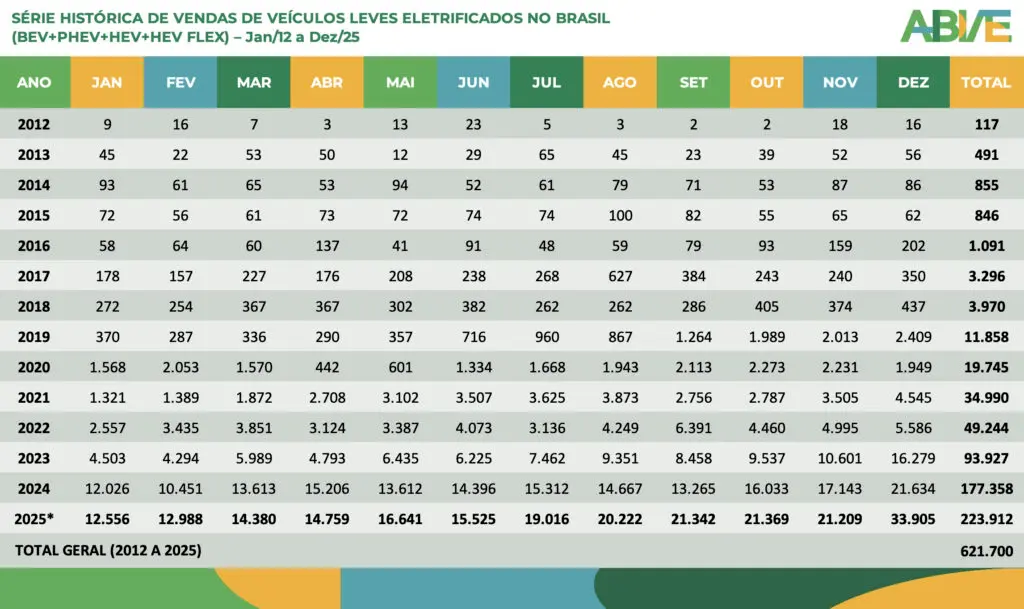
This growth is creating an urgent demand for more charging stations, better charging apps, reliable charger operation systems, and localized payment solutions.
For Chinese and global charger manufacturers, Brazil offers a clear export opportunity. Electric vehicle brands are expanding, fleet electrification is accelerating, and local charging networks need more hardware and software support. However, Brazil is not a market where companies can simply copy a China, Europe, or North America charging model.
A successful EV charging platform Brazil deployment needs to solve three local problems:
- Charging billing rules are different from simple kWh pricing.
- User identity must support CPF, not only mobile phone registration.
- Localization must include Portuguese UI, Pix payment, and OCPP charger compatibility.
These are not small details. They directly affect whether a charging network can operate, monetize, scale, and retain users.
1. EV Charging Billing in Brazil Is More Than “Price per kWh”
In many markets, EV charging pricing is built around a simple model: electricity fee plus service fee. In Brazil, operators may need a more flexible transaction structure. A charging order can include both a service fee and a fixed plug-in or session-start fee.
For a local charging operator, this means the platform must support more than one basic tariff.
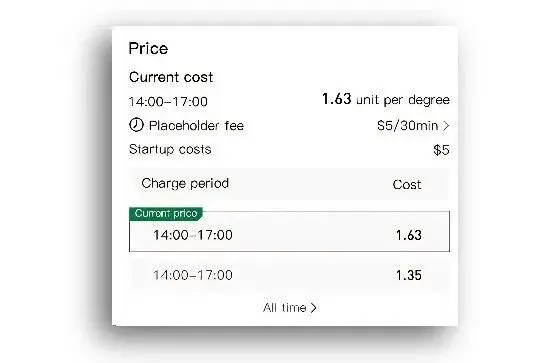
A Brazil-ready EV charging billing system should allow operators to configure:
- Charging service fee by kWh
- Charging service fee by time
- Fixed plug-in fee per charging session
- Station-level pricing
- Region-level pricing
- Time-of-use pricing
- User-group pricing
- Fleet account pricing
- Tax-friendly order breakdown
- Transparent driver-facing billing details
For example, a charging operator may use a fixed plug-in fee to cover connector wear, site operation costs, parking-side services, or station maintenance. At the same time, the service fee may include electricity cost, platform cost, and operator margin.
This is why a generic charging app that only supports one flat kWh price is not enough for Brazil. Operators need a flexible CPMS software system that can manage both the technical side and the commercial side of charging operations.
TrendPower’s platform supports charging order management, tariff configuration, billing logic, payment workflows, settlement records, and multi-site operation. This allows operators to build pricing models that match real business needs instead of forcing every site into one fixed template.
Why Flexible Billing Matters for Brazil
Billing flexibility is especially important in Brazil because charging scenarios can vary widely:
- Public charging stations
- Shopping mall charging sites
- Highway fast charging corridors
- Hotel and parking charging stations
- Residential community charging
- Fleet depot charging
- Heavy-duty truck charging sites
- Dealer and OEM charging networks
A highway DC fast charging site may need different pricing from a residential AC charging site. A commercial parking operator may need a fixed plug-in fee. A fleet operator may need internal cost allocation instead of direct driver payment. A CPO may need promotional tariffs for members or corporate users.
A localized EV charging platform Brazil solution should be able to handle all of these models from one dashboard.
2. CPF-Based User Identity Is Critical for Brazil EV Charging Apps
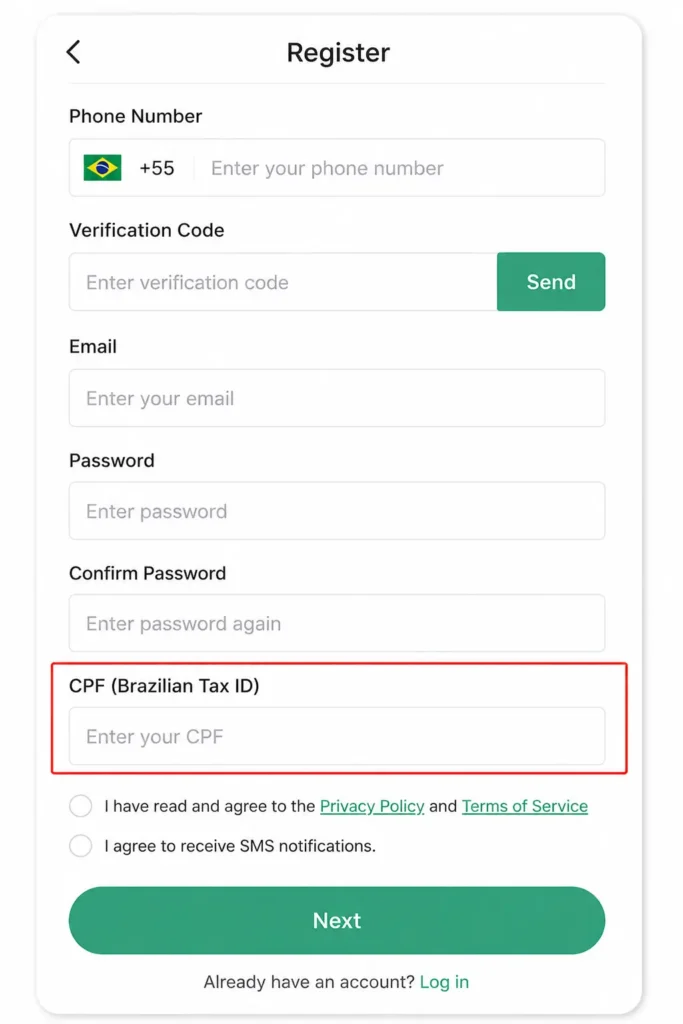
In Brazil, CPF is a central identity credential. CPF stands for Cadastro de Pessoas Físicas, the individual taxpayer registry number issued by Brazil’s tax authority. It is widely used in digital services, payments, registration, invoicing, and identity verification.
This creates a major difference from charging platforms in many other countries.
In some markets, users register through a phone number and SMS code. In Brazil, an EV charging app may need to treat CPF as a core account field.
A Brazil-ready charging platform should support:
- CPF-based registration
- CPF login or CPF account binding
- CPF verification in payment workflows
- CPF-linked user profiles
- Transaction records connected to user identity
- Local invoice and settlement requirements
- Driver account management for private and business users
This is not just a small form update. CPF affects the account system, payment verification, data structure, customer service, and operator reporting.
For EV charger manufacturers entering Brazil, this is one of the most common software localization gaps. The hardware may be ready, the OCPP connection may work, and the station may be installed, but the user cannot complete the local registration or payment process smoothly.
That is why TrendPower designs localized user identity workflows for overseas EV charging markets. For Brazil, the account system can be adapted around CPF logic, Portuguese user prompts, local verification needs, and operator-side user management.
A truly localized EV charging platform for Brazil should feel native to Brazilian drivers from the first registration screen.
3. Localization Requires Portuguese UI, Pix Payment and OCPP Support
Many companies think software localization means translation. In Brazil, this is not enough.
A charging platform must localize the full user and operator journey: language, pricing display, payment process, charger protocol, station management, customer service, and business reporting.
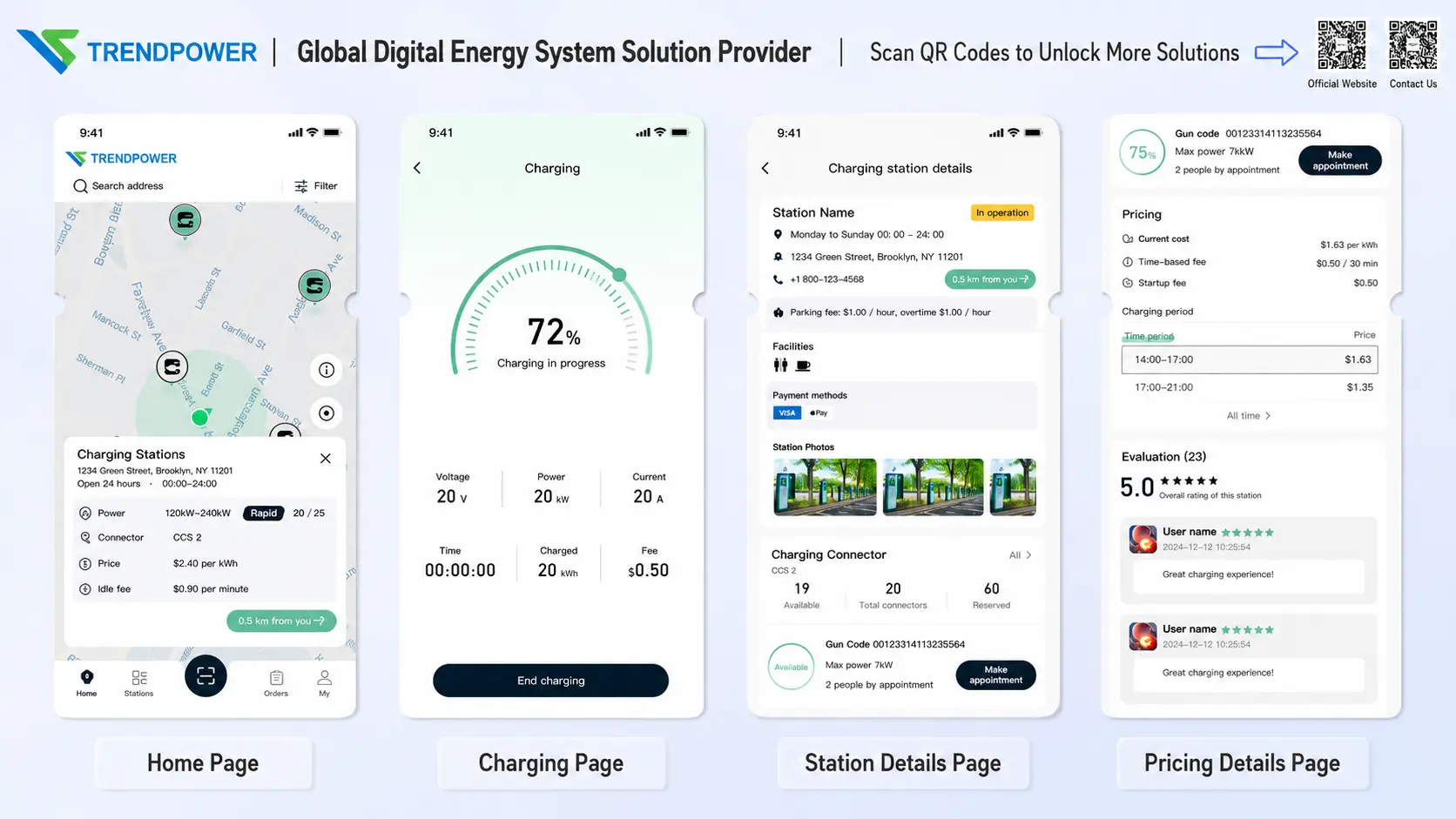
Portuguese UI Is a Basic Requirement
Brazilian drivers need a clear Portuguese interface across the mobile app, web app, charging screen, order page, wallet page, and payment page.
A localized charging app should clearly show:
- Nearby charging stations
- Charger availability
- Connector type
- Charging price
- Plug-in fee
- Service fee
- Estimated cost
- Charging progress
- Payment confirmation
- Completed order details
- Customer support entry
The more clearly the platform explains the fee structure, the easier it is for drivers to trust the service. This is especially important when a charging order includes both a service fee and a fixed plug-in fee.
A localized white-label EV charging software solution also helps operators launch under their own brand, with customized app name, logo, colors, driver-facing interface, and operator portal.
For charger manufacturers and local partners, white-label deployment can make the charging service look like a local Brazilian brand instead of a foreign software product.
Pix Payment Is Essential for Brazil
Pix is one of Brazil’s most important payment methods. It is instant, widely used, and available 24/7. For EV charging, this matters because drivers expect payment to be fast, familiar, and reliable.
A Brazil-ready EV charging payment system should support:
- Pix payment
- Credit card payment
- Local payment gateway integration
- Wallet balance
- Refund workflow
- Payment status synchronization
- Operator settlement reports
- Fleet and corporate account billing
- Transaction reconciliation
Public charging is highly sensitive to payment friction. If users cannot pay easily, they may abandon the charging session or choose another station. For charging operators, failed payments also create customer service pressure and revenue loss.
TrendPower’s EV charging backend software is designed to connect charging sessions with billing, payment, order records, user management, and operator reporting. For Brazil projects, this makes it easier to integrate local payment workflows such as Pix and card payments.
OCPP Compatibility Supports Multi-Brand Charger Operation
Brazil’s charging infrastructure may include chargers from different manufacturers. This makes OCPP compatibility essential.
OCPP, or Open Charge Point Protocol, is the open communication protocol between EV chargers and charging management systems. It helps operators avoid hardware lock-in and manage multi-brand charging networks from one platform.
A strong OCPP charging platform Brazil solution should support:
- OCPP 1.6 charger connection
- OCPP 2.0.1 compatibility planning
- Remote start and stop
- Charger status monitoring
- Fault alerts
- Session control
- Meter value collection
- Remote reset
- Charging record management
- Multi-brand charger onboarding
TrendPower supports OCPP-based charger management, helping operators connect compatible chargers, monitor charger status, control sessions, manage alerts, and scale charging networks across multiple sites. Businesses comparing platform options can also review this guide to the best EV charging management software for more information on choosing software for global charging operations.
Why Charger Manufacturers Need Software Localization Before Entering Brazil
Many charger companies entering Latin America focus on product certification, export logistics, local distributors, and hardware pricing. These are important, but they are not enough.
After chargers are installed, the real questions begin:
Can local drivers register with CPF?
Can they pay with Pix?
Can the app display prices clearly in Portuguese?
Can operators charge both a service fee and a plug-in fee?
Can the platform connect to OCPP chargers from different manufacturers?
Can station owners monitor charger faults remotely?
Can the operator review transactions, refunds, and settlement records?
Can the system support multiple sites and multiple business partners?
If the answer is no, the project may face operational delays after installation.
This is why Brazil should be treated as a full charging operation market, not only a charger sales market.
A localized EV charging platform Brazil solution helps charger manufacturers provide more value to local partners. Instead of only selling hardware, manufacturers can offer a complete charging business package: charger, app, CPMS, payment, billing, OCPP integration, station monitoring, and operation support.
That makes the solution more competitive in tenders, distributor cooperation, fleet projects, and CPO expansion.
Use Case: From Selling Chargers to Running Charging Networks in Brazil
Imagine a charger manufacturer planning to enter Brazil with AC chargers, DC fast chargers, and a local distribution partner.
Without localized software, the manufacturer may face several problems:
- The app registration flow does not support CPF.
- The payment system does not support Pix.
- The pricing model cannot separate service fees and plug-in fees.
- The UI is translated but not adapted to Brazilian user habits.
- The operator dashboard does not support local settlement workflows.
- Chargers from different product lines require separate management tools.
- Local partners cannot launch the service under their own brand.
With a localized TrendPower solution, the same business can build a complete charging service:
- CPF-based user account logic
- Portuguese driver app and operator portal
- Pix-ready payment integration workflow
- Flexible charging tariff templates
- OCPP charger connection and remote monitoring
- White-label branding for local market launch
- Multi-site station management
- Transaction records and settlement reports
- Scalable deployment for future growth
This changes the business model. The company is no longer just selling equipment. It is helping local partners launch and operate a charging network.
For commercial transport and logistics scenarios, TrendPower can also support charging operation needs through a heavy-duty truck charging fleet management system, helping fleet operators monitor charging infrastructure, reduce downtime, manage charging sessions, and improve operational efficiency.
What Features Should an EV Charging Platform Brazil Project Include?
A practical Brazil-ready platform should include both driver-facing and operator-facing tools.
Driver-Side Features
- Portuguese mobile app or web app
- CPF registration and login workflow
- Station map and charger availability
- QR code scanning
- Real-time charging progress
- Pix and card payment options
- Wallet and account balance
- Transparent fee breakdown
- Charging order history
- Customer support entry
Operator-Side Features
- Charger management dashboard
- OCPP charger onboarding
- Real-time charger status
- Remote start, stop, reset, and diagnostics
- Station and connector management
- Flexible tariff templates
- Plug-in fee configuration
- Service fee configuration
- User and account management
- Payment and settlement reports
- Fault alerts and maintenance records
- Multi-site operation
- Role-based permission control
- Data analytics and revenue reporting
Business-Side Features
- White-label branding
- Local payment gateway integration
- Corporate account billing
- Fleet charging account management
- Revenue sharing logic
- Partner and site owner settlement
- Marketing and membership options
- API integration with third-party systems
- Custom deployment for local business models
These features help transform charging infrastructure into a manageable, scalable, and revenue-generating business.
For businesses evaluating the broader role of charging back-office systems, TrendPower’s guide to charging point management systems explains how CPMS platforms support real-time monitoring, billing, payments, user management, analytics, and OCPP compatibility.
TrendPower: Localized EV Charging Software for Brazil and Global Markets
TrendPower provides EV charging management software and CPMS solutions for charger manufacturers, charging point operators, fleet operators, energy companies, parking operators, property groups, and digital energy businesses.
As a global EV charging software platform, TrendPower supports charging network operation with charger management, user management, billing, payment workflows, remote monitoring, data analytics, and localized deployment.
For Brazil, TrendPower can help businesses build a localized charging operation system with:
- CPF-based user identity adaptation
- Portuguese UI for drivers and operators
- Pix and local payment integration support
- Flexible service fee and plug-in fee configuration
- OCPP 1.6 and OCPP 2.0.1 charger compatibility planning
- White-label mobile app and web portal
- Multi-site charging station management
- Remote monitoring and intelligent operation tools
- Billing, transaction records, and settlement reporting
- Custom workflows for CPOs, fleets, OEMs, utilities, and charger manufacturers
TrendPower’s value is not only software delivery. It is global charging operation experience. The platform is designed to help businesses enter new markets faster, reduce localization risk, and build charging networks that can actually run in local conditions.
For Brazil, this means helping operators solve the three most practical problems first: billing, identity, and localization.
Conclusion: Brazil Rewards Charging Companies That Localize Fast
Brazil’s EV market is growing quickly, but the charging market will not reward companies that only export hardware. It will reward companies that understand how charging operations work locally.
A successful EV charging platform Brazil strategy must support CPF identity, Pix payment, Portuguese UI, flexible billing, plug-in fees, OCPP charger integration, and white-label operation tools.
For charger manufacturers, this is a chance to move from equipment sales to complete charging solutions. For CPOs, it is a way to launch faster and operate smarter. For fleets and energy companies, it creates a software foundation for scalable charging infrastructure.
TrendPower helps EV charging businesses build localized, OCPP-compatible, payment-ready and operator-friendly charging platforms for Brazil and other overseas markets.
Selling chargers to Latin America is the first step. Making them operate profitably in Brazil is where the real opportunity begins.
FAQ: EV Charging Platform Brazil
What is an EV charging platform Brazil solution?
An EV charging platform Brazil solution is a localized software system that helps operators manage EV chargers, users, payments, pricing, charging sessions, station data, and settlement workflows in the Brazilian market. It should support CPF identity, Pix payment, Portuguese UI, flexible billing, and OCPP charger integration.
Why does Brazil EV charging software need CPF support?
Brazil EV charging software needs CPF support because CPF is a core individual identity number in Brazil. It can be used for user registration, account verification, payment validation, invoicing, and transaction traceability.
Is Pix important for EV charging payments in Brazil?
Yes. Pix is one of Brazil’s most widely used instant payment methods. An EV charging platform in Brazil should support Pix or Pix-ready payment gateway integration to improve payment success and user convenience.
What billing features should an EV charging platform for Brazil support?
An EV charging platform for Brazil should support kWh pricing, time-based pricing, service fees, fixed plug-in fees, station-level tariffs, time-of-use pricing, user-group pricing, fleet billing, order records, refunds, and settlement reports.
Why is OCPP important for Brazil charging operators?
OCPP allows EV chargers and charging management systems to communicate through an open protocol. For Brazil charging operators, OCPP support makes it easier to connect chargers from different manufacturers and manage them from one platform.
Can TrendPower provide white-label EV charging software for Brazil?
Yes. TrendPower provides white-label EV charging software that can support branded apps, operator portals, OCPP charger management, billing, payment workflows, Portuguese localization, CPF-based account logic, and local operation needs for Brazil.
Who should use a Brazil-ready EV charging platform?
A Brazil-ready EV charging platform is suitable for charger manufacturers, CPOs, fleet operators, energy companies, parking operators, real estate groups, shopping centers, logistics companies, OEMs, and infrastructure investors entering the Brazilian EV charging market.

 EN_GB
EN_GB  EN
EN  ZH
ZH  AR
AR  DE
DE  ES
ES  KO
KO  JA
JA  IT
IT  FR
FR  VI
VI  MS
MS  ID
ID  FR_CA
FR_CA  NL
NL  SV
SV  TH
TH 