
เครือข่ายสถานีชาร์จสาธารณะ
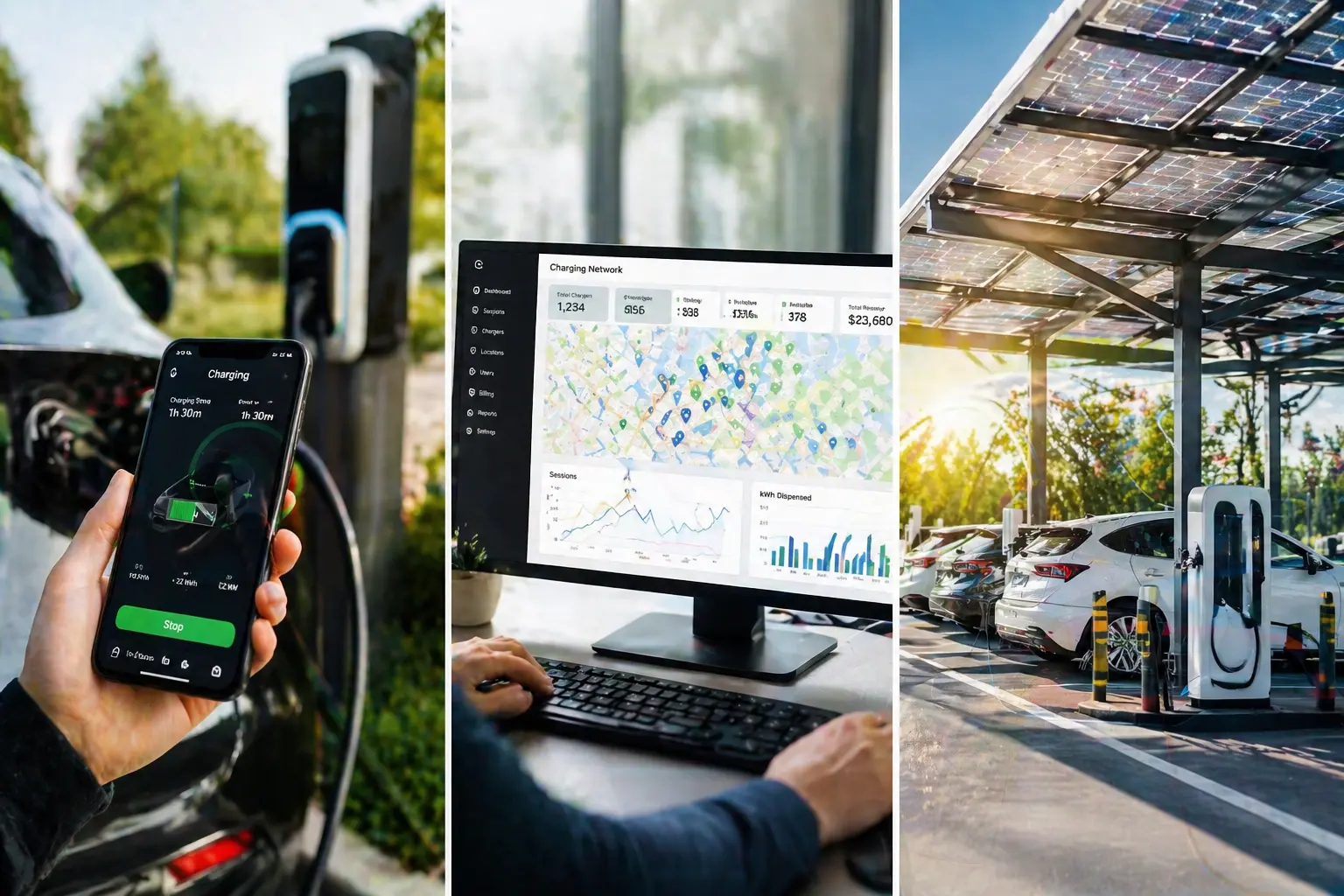
Public charging networks – operated by municipalities, utilities or retail chains – require open access and reliable payment systems. Drivers should be able to find stations on a branded app or map, start a charging session with a card or mobile app, and pay seamlessly. White-label software supports all this: it lets charging point operators (CPOs) offer contactless or app-based authentication and integrates with roaming networks so any EV driver can charge. Software for public networks typically includes features like ADA-compliant payment flows, simple driver interfaces, and public reporting dashboards. For instance, one guide notes that city-run networks need “open access with simple payment flows,” as well as roaming compatibility and grant-tracking for public funding. In practice, a white-label platform enables a city or parking operator to place chargers, issue branded RFID cards or apps, and even enforce idle fees or time limits to keep chargers available. By centralizing station monitoring, CPO software also alerts operators to outages or maintenance needs. Overall, white-label solutions make it easy for a public charging network to launch under a municipality’s brand, while meeting technical requirements like payment processing and accessibility.
Fleet Charging Operations
Corporate and municipal fleets (such as delivery vans, buses, or government vehicles) have distinct needs: they must keep vehicles charged, track usage per vehicle, and often handle driver reimbursement for home charging. Fleet EV charging software addresses this with depot dashboards and integrations. For example, fleet modules include a “depot view” aligned with routes and shifts, and integration with telematics to monitor each vehicle’s energy use. The software can automatically generate reports on per-vehicle energy consumption and cost, helping fleet managers compare costs and efficiency. A key feature is automated reimbursement: drivers can plug in at home or on the road and the system will calculate reimbursements, just like a fuel card. Modern fleet platforms also offer live monitoring of charger health at all sites (ensuring high uptime) and การจัดการโหลด to charge many vehicles without tripping breakers. In short, white-label fleet solutions let a company “take total control” of its charging infrastructure with real-time status, automated driver billing, detailed analytics (including carbon and energy reports), and smart load balancing. All tools work under the company’s brand, so drivers and fleet managers interact with a cohesive corporate app or portal.
การชาร์จในที่ทำงาน
Employers and commercial property managers install chargers for employees and visitors on campus or at offices. Workplace charging software must handle commercial EV charging software features like access control, billing to departments, and reservation systems. For example, the platform may let a company designate chargers for tenants versus guests, set different prices or limits, and even offer “guaranteed spot” reservations when demand is high. It also supports cost allocation: time spent charging can be billed to an employee’s department or client, or recorded for ESG (sustainability) reporting. White-label software often includes a branded driver portal or app that integrates with an employer’s single sign-on or payroll system. As one provider explains, its charging management platform “supports workplace charging solutions that match how facility and HR teams already measure success”. In practice, an office building can roll out chargers where each tenant’s logo appears in the app, and sessions can be billed to the right tenant account. Dynamic features like scheduled charging or load sharing further help businesses optimize power usage during peak vs. off-peak hours.
Apartment and Residential Charging
Multi-unit residential properties (apartments, condos, HOAs) face unique challenges: multiple residents share limited charging spots, and there must be fair billing. White-label apartment EV charging solutions address this with tenant management features. For instance, the software can bill individual tenants or integrate with an HOA’s billing system, enforce fair-use policies, and even maintain a waitlist for busy locations. Residents might register on a branded app or portal tied to their parking spot. Property managers get a dashboard showing usage per resident or unit. As noted above, software designed for “multifamily, condos, and HOAs” handles tenant billing, waiting-list management, mixed-access for residents and guests, and clear reports for property teams. In effect, a residential property can offer EV charging as an amenity: the company’s branding can appear in the driver app and billing statements, while the backend automates payments and rights-of-way. By treating EV charging like another utility service, white-label platforms simplify rollout in apartment complexes and ensure only authorized residents can charge.
Retail and Hospitality Charging
Retail centers, hotels, and restaurants often view EV charging as an amenity to attract customers and increase dwell time. In these environments, ease of use is paramount. White-label software lets venues offer “frictionless payment” (for example, tap-and-go or credit cards) so guests don’t need to download a new app on the spot. Session time limits or parking fees can enforce turnover during peak times (e.g. don’t let a car occupy a charger all day). For example, a hotel might set a 4-hour limit to ensure chargers free up for overnight guests. Underlying software provides simple, on-brand user interfaces: a diner or shopper can open the venue’s branded charging portal or app, or just tap a tap-and-go card. The system then bills them per kWh or time, all under the venue’s name. Performance reports can show if charging is indeed bringing repeat business or increasing shopping hours. As AmpUp describes, hospitality users focus on “clear session time limits to support turnover” and “simple pricing and access rules that don’t require app downloads,” since charging is an amenity rather than the main service. White-label solutions empower hotels and shops to launch branded charging stations that enhance customer experience while potentially generating incremental revenue.
บริษัทพลังงานและสาธารณูปโภค
Traditional energy providers and utilities are increasingly entering the EV charging space. They can leverage white-label software to tie charging into their energy management systems. For example, a diversified energy firm used a white-label platform to offer public, residential, and fleet charging under one umbrella. Utility companies often value features like demand-response and load management: the case study shows the software’s dynamic load management helped balance electrical loads and optimize power use – a key concern for grid stability. Utilities also use pricing tools to align charging rates with time-of-use energy pricing. TrendPower’s own CPMS (Charge Point Management System) can integrate with back-office systems and even support incentives or rebates. In practice, a utility might offer a branded charging network, rewarding off-peak charging with lower rates. The software’s flexibility lets them create competitive pricing for each location (for example, different rates at a residential site vs. a public station). By white-labeling, energy companies “maintain their established brand identity” while expanding EV services. In summary, utilities use these platforms to diversify revenue streams, support e-mobility goals, and maintain one unified customer experience across electricity and EV charging.

How White Label EV Charging Software Adapts to Each Model
White-label charging platforms pack in features that any business model can customize:
- Branding and UI: Companies supply their logo, colors, and messaging for the driver-facing apps and portals. For example, the platform can display your logo on app loading screens, map pins, charger receipts and emails. Everything from the mobile app to the payment receipts can look as if you built it in-house. This consistent branding builds trust with customers and reinforces your identity every time a driver charges.
- Billing and Payments: The software integrates major payment methods (credit cards, mobile wallets, fleet cards) so stations are billable out-of-the-box. It handles per-minute, per-session, or per-kWh billing, idle fees, and can generate invoices or reports. Back-end billing is often automated: after each charge, customers receive an email receipt or digital invoice in your brand. Platforms usually support APIs to connect charging revenue into the company’s existing accounting or customer systems.
- Charger Monitoring: White-label platforms include dashboards for operators. From a single pane, your staff can see live status of all chargers, receive alerts for faults, and even remotely reboot units if needed. This applies to any model: a retailer can monitor its parking lot chargers, while a fleet operator watches depot stations. Without software, chargers are “isolated devices,” but with a platform they become a managed network you can control remotely.
- Access Control: You can configure who can charge and when. For example, workplace software can use employee badges or app logins, while apartment chargers might be limited to registered residents. The platform enforces these rules seamlessly, regardless of model.
- Support and Roaming: Many white-label vendors also handle customer support and network roaming. Your branded charging service can tap into roaming networks so any driver can use your stations, and the software handles the complex protocols behind the scenes. Some providers even offer a branded call center that assists drivers under your name. This means you deliver a polished experience without building support from scratch.
By packaging all these capabilities, white-label software adapts to public CPOs, fleets, workplaces, or any niche. As one expert put it, a charge point management platform “enables the management, maintenance, and monetization of a charging station network across a wide range of use cases and business models”. In short, it lets each business model plug in its unique rules and branding on a shared technology foundation.
Revenue Opportunities: Subscriptions, Pay-per-Use, Memberships, Dynamic Pricing
Monetization options are built into modern EV charging software. Operators can choose one or several fee models to maximize revenue:
- Pay-Per-Use Fees: The most common approach is charging drivers based on usage. This can be per-kWh (energy consumed), per-minute (time charging), or a flat fee per session. For example, you might charge $0.30 per kWh, or $1 per hour of charging. Idle or “overstay” fees can also be added (e.g. $0.20/min after charging completes) to encourage turnover. These rates are easily configured in the software’s billing settings.
- Memberships/Subscriptions: Businesses can offer monthly or annual plans. For instance, a hotel might sell a $50/month “EV charging pass” for unlimited charging during stays. Workplace and apartment programs often use subscription plans to simplify billing. The software tracks member status so chosen users get free or discounted charging.
- Differentiated Pricing: White-label systems allow custom pricing for different user groups or times. You could give employees or loyal customers a lower rate than casual drivers. Time-of-day pricing is another strategy: set lower rates at night or off-peak periods. Dynamic pricing can even tie to grid rates: software can raise prices during high-demand hours and lower them when wholesale electricity is cheap.
- Bundled Parking Fees: Some operators charge a parking fee in addition to charging, or offer parking passes that include charging. Platforms can add a per-stay parking rate on top of the charging rate.
- Tiered and Hybrid Rates: Advanced billing options allow tiers. For example, a station might charge $1 per hour for the first 3 hours, then $2 per hour afterward (useful for discouraging long dwell times). Rates can also vary by charger power level (cheaper on a slow charger, higher on a fast charger).
In essence, charging point operator software includes full tariff management. As one platform notes, you can “set your EV charging tariffs per kWh, per duration, or time of day” and “organize prices by customer type,” even combining direct charging fees with subscription plans. All pricing strategies are managed centrally, and customers receive clear receipts. Operators use these flexible pricing and membership tools to boost revenue, reward loyal users, and encourage optimal charging behavior.
บทสรุป
White-label EV charging software is the Swiss Army knife of EV charging: it flexibly adapts to any business model while keeping your brand front and center. Whether you run a public charging network, manage a corporate fleet, equip a workplace, serve apartment residents, welcome retail customers, or operate on behalf of a utility, a white-label platform gives you the tools you need. It handles everything from billing and monitoring to customer support, freeing you to focus on your core business. By choosing a white-label solution, companies avoid reinventing the wheel: they inherit proven charging software, accelerate time-to-market, and retain full control over branding and customer relationships. In today’s fast-growing EV market, that means any organization can launch and scale charging programs with confidence, knowing the software will scale with them. In summary, the flexibility, scalability and comprehensive features of white-label EV charging software make it a cornerstone for all EV charging business models.

 TH
TH  EN
EN  ZH
ZH  AR
AR  DE
DE  ES
ES  KO
KO  JA
JA  IT
IT  FR
FR  VI
VI  MS
MS  ID
ID  FR_CA
FR_CA  NL
NL  SV
SV  EN_GB
EN_GB