
INDUSTRY NEWS
| August 16, 2026
| Smart Charging, Electrification & V2G
The European Commission’s new Electrification Action Plan is placing electric vehicles, smart charging and bidirectional energy flows more firmly within Europe’s wider electricity strategy as the EU seeks to accelerate the shift from fossil fuels to clean electricity.
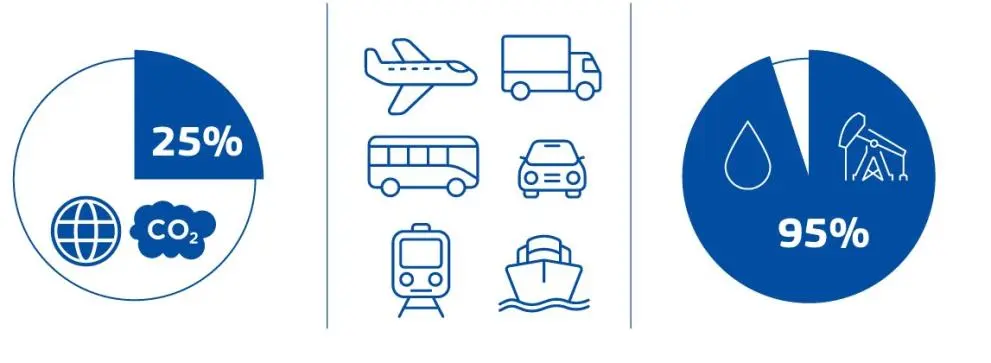
Source: European Commission, Directorate-General for Energy.
© European Union. Reuse under CC BY 4.0 unless otherwise indicated.
View original source.
At a glance: The European Commission has set an indicative objective for electricity to account for 46% of EU final energy consumption by 2040, compared with approximately 23% today.
Key figures
23% — electricity’s current share of EU final energy consumption
46% — indicative EU electrification objective for 2040
€260 billion — estimated annual reduction in fossil-fuel import costs by 2040 if the objective is reached
July 17, 2026 — publication date of the Electrification Action Plan
Europe sets a broader electrification objective
The European Commission published its Electrification Action Plan on July 17, 2026, outlining measures intended to accelerate the transition from fossil fuels to electricity across transport, buildings and industry.
Electricity currently represents around 23% of final energy consumption in the European Union.
The new plan sets an indicative objective for that share to reach 46% by 2040. The Commission says the target will be assessed as part of the post-2030 Energy Union package.
According to the Commission, achieving that level of electrification could reduce the EU’s annual fossil-fuel import bill by approximately €260 billion by 2040.
The plan focuses on several barriers to faster electrification, including high electricity costs relative to fossil fuels, lengthy grid-connection processes, investment requirements and difficulties bringing some technologies to commercial scale.
Transport is central to the electrification challenge
Transport remains one of the most important sectors in the European electrification strategy.
The European Commission estimates that transport is responsible for around 25% of total greenhouse-gas emissions and that approximately 90% to 95% of the energy consumed in the transport sector still comes from fossil fuels.
Road transport represents the largest share, followed by aviation and maritime transport.
Electric vehicles are therefore becoming important not only from a transport-decarbonisation perspective but also because they create a direct connection between mobility and the electricity system.
Smart charging links EV demand to grid conditions
The Commission specifically highlights smart charging as a way of making EV electricity demand more flexible.
Instead of every vehicle beginning to charge as soon as it is connected, smart-charging systems can shift charging sessions according to factors such as electricity prices, renewable-energy availability and electricity-network conditions.
That flexibility can reduce grid congestion and allow a larger share of EV charging demand to coincide with periods of abundant renewable generation.
Examples of smart-charging inputs
- Electricity tariff and time-of-use pricing
- Available site power
- Grid capacity and congestion signals
- Renewable-energy availability
- Vehicle departure time
- Required battery state of charge
How those inputs are implemented varies by charging site, electricity market and software architecture.
Bidirectional charging gives EV batteries a second role
The Commission also highlights bidirectional charging as a potential source of energy-system flexibility.
With compatible vehicles, chargers and market arrangements, electricity stored in an EV battery can potentially be supplied back to a building or electricity grid.
The Commission describes this as a way for EVs to operate as distributed energy storage during periods of peak demand or reduced renewable-energy production.
In practice, large-scale deployment will depend on several technical and regulatory factors.
- Vehicle support for bidirectional power transfer
- Compatible charging equipment
- Interoperable communication standards
- Grid-connection requirements
- Electricity-market rules
- Metering and settlement
- Cybersecurity and customer authorisation
Charging software becomes part of the flexibility layer
The policy direction also has implications for EV charging-management systems.
A traditional charging backend primarily needs to communicate with charging stations, users, payment systems and roaming platforms.
In a more energy-aware environment, software may also need to coordinate with site energy-management systems, electricity tariffs, grid signals, distributed energy resources and vehicle energy requirements.
This does not mean the European Commission has prescribed one mandatory software architecture.
Instead, it illustrates why charging software is becoming increasingly connected to energy management.
Software capabilities increasingly relevant to smart charging
- Dynamic charging scheduling
- Site load balancing
- Energy-tariff integration
- Grid and flexibility signal processing
- Bidirectional charging orchestration
- Real-time charger monitoring
- Metering and energy-data reconciliation
These are technical implications of the broader market transition, rather than universal requirements introduced directly by the Action Plan.
Grid capacity remains a major constraint
Electrification increases electricity demand, making grid capacity an important part of the charging-infrastructure discussion.
The European Commission identifies grid connections as one of the barriers that can slow the adoption of electricity-based technologies.
This is particularly relevant to high-power EV charging sites.
A location with multiple DC fast chargers may have a theoretical charger capacity far above the site’s available grid connection.
Software-based energy management can help allocate available power between active charging sessions, but it does not eliminate the underlying need for appropriate grid infrastructure.
Smart meters are also part of the strategy
The Commission’s wider electricity package published alongside the Electrification Action Plan also seeks faster deployment of smart meters.
Smart-meter infrastructure can give consumers and energy systems better visibility into electricity use and support more dynamic energy-management models.
For EV charging, more granular energy information can support time-based tariffs, energy optimisation and coordination between charging demand and the wider electricity system.
The next phase is implementation
The Electrification Action Plan establishes strategic direction rather than immediately creating a universal V2G market across Europe.
The development of smart and bidirectional charging will continue to depend on technical standards, vehicle and charger capability, grid rules, data exchange, market access and national implementation.
However, the plan provides further evidence that European energy policy increasingly views EV charging infrastructure as a flexible part of the electricity system rather than only as transport infrastructure.
Sources & editorial methodology
This report is based primarily on European Commission material. Statements concerning charging-software architecture and operational implications are editorial analysis and are not presented as new legal requirements.
Primary source:
European Commission, Directorate-General for Energy — Electrification
Official Action Plan:
European Commission — Electrification Action Plan, COM(2026) 595
Energy-system context:
European Commission — Energy System Integration
Image reuse policy:
European Commission Legal Notice — CC BY 4.0 reuse policy

 EN
EN  ZH
ZH  AR
AR  DE
DE  ES
ES  KO
KO  JA
JA  IT
IT  FR
FR  VI
VI  MS
MS  ID
ID  FR_CA
FR_CA  NL
NL  SV
SV  EN_GB
EN_GB  TH
TH 