
Singapore is preparing to integrate autonomous electric buses into scheduled public transport—not as a closed demonstration, but as part of real bus services operating alongside conventional vehicles.
In October 2025, Singapore’s Land Transport Authority, or LTA, awarded an approximately S$8.14 million contract for the initial deployment of six 16-seat autonomous electric buses. The vehicles are scheduled to serve Bus Service 400 in Marina Bay and Bus Service 191 in one-north during a three-year pilot beginning in the second half of 2026.
The official consortium comprises MKX Technologies, Zhidao Network Technology and BYD Singapore. According to TrendPower’s project documentation, TrendPower EV charging management software provides the ordered-charging and digital operations layer needed to coordinate buses, charging equipment, depot operations and available electrical capacity.
This combination of autonomous driving, electric vehicles and intelligent energy management creates a complete operating chain rather than a collection of disconnected technologies.
For urban transport authorities, the project answers a critical question:
How can a city operate autonomous electric buses at scale without allowing charging demand, depot congestion or equipment faults to disrupt the timetable?
The answer lies in a coordinated vehicle-charger-depot-grid architecture.
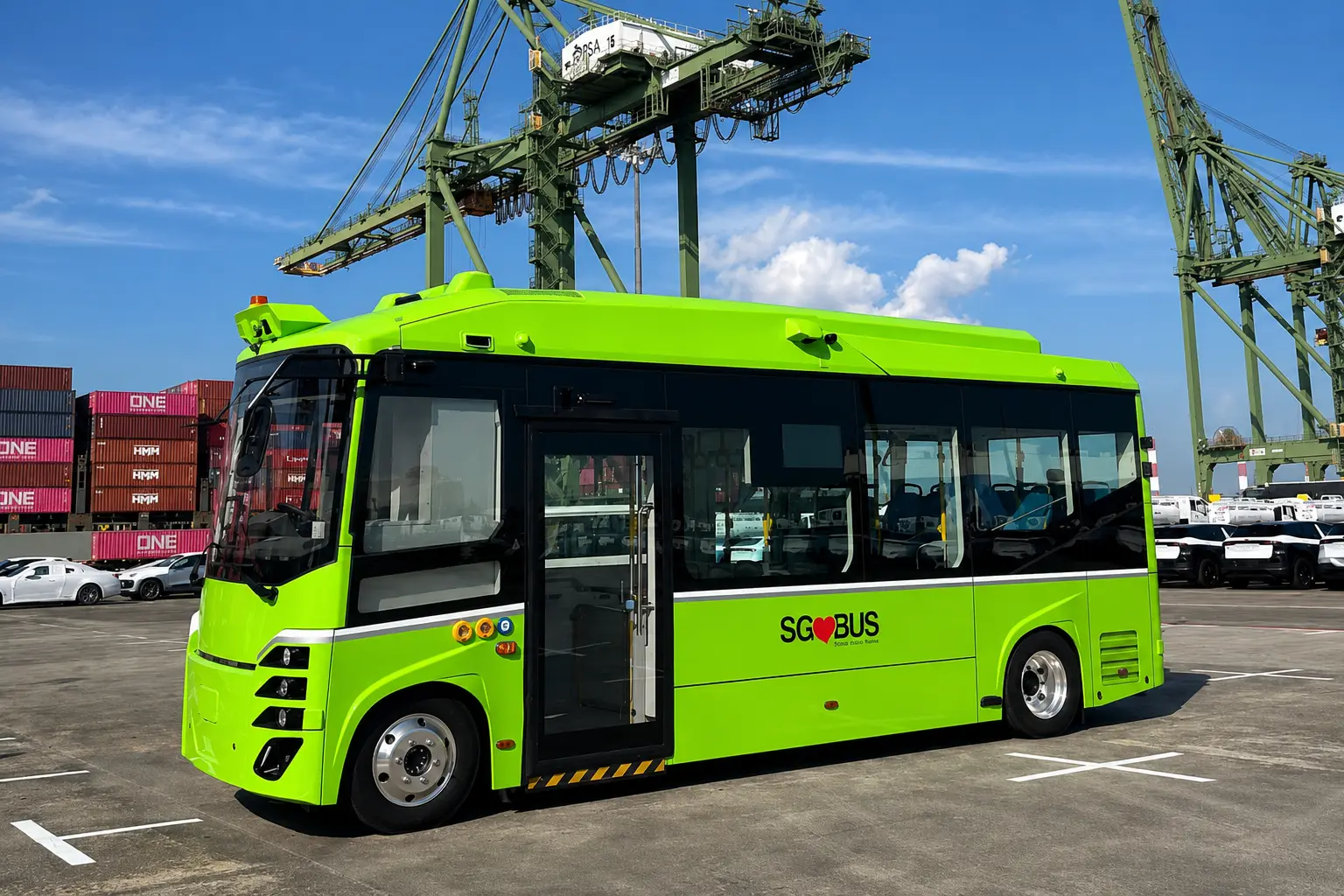
Singapore’s First Autonomous Buses on Scheduled Public Transport Services
Under the LTA autonomous bus pilot, six autonomous electric buses will be introduced on two existing public bus services.
Service 400 operates in the Marina Bay area, while Service 191 serves the one-north technology district. LTA selected these routes partly because they are relatively short and suitable for a controlled introduction of autonomous bus operations.
The buses will initially operate as part of a hybrid fleet alongside conventional driver-operated buses. A safety operator will remain onboard during the early stages, while LTA monitors driving performance, regulatory compliance and passenger experience.
Before carrying passengers, the vehicles must pass LTA’s safety and operational assessments, including its Milestone 1 closed-circuit test and evaluations of safe passenger boarding and alighting. Singapore’s wider autonomous vehicle assessment framework also covers document review, route demonstrations, on-road assessments and teleoperation readiness.
Subject to the results of the initial deployment, LTA has the option to purchase up to 14 additional buses and extend autonomous operations to more public transport routes.
This phased approach allows the authority and bus operator to evaluate the entire service model—not only autonomous driving accuracy, but also dispatch reliability, charging readiness, remote supervision, maintenance and passenger acceptance.
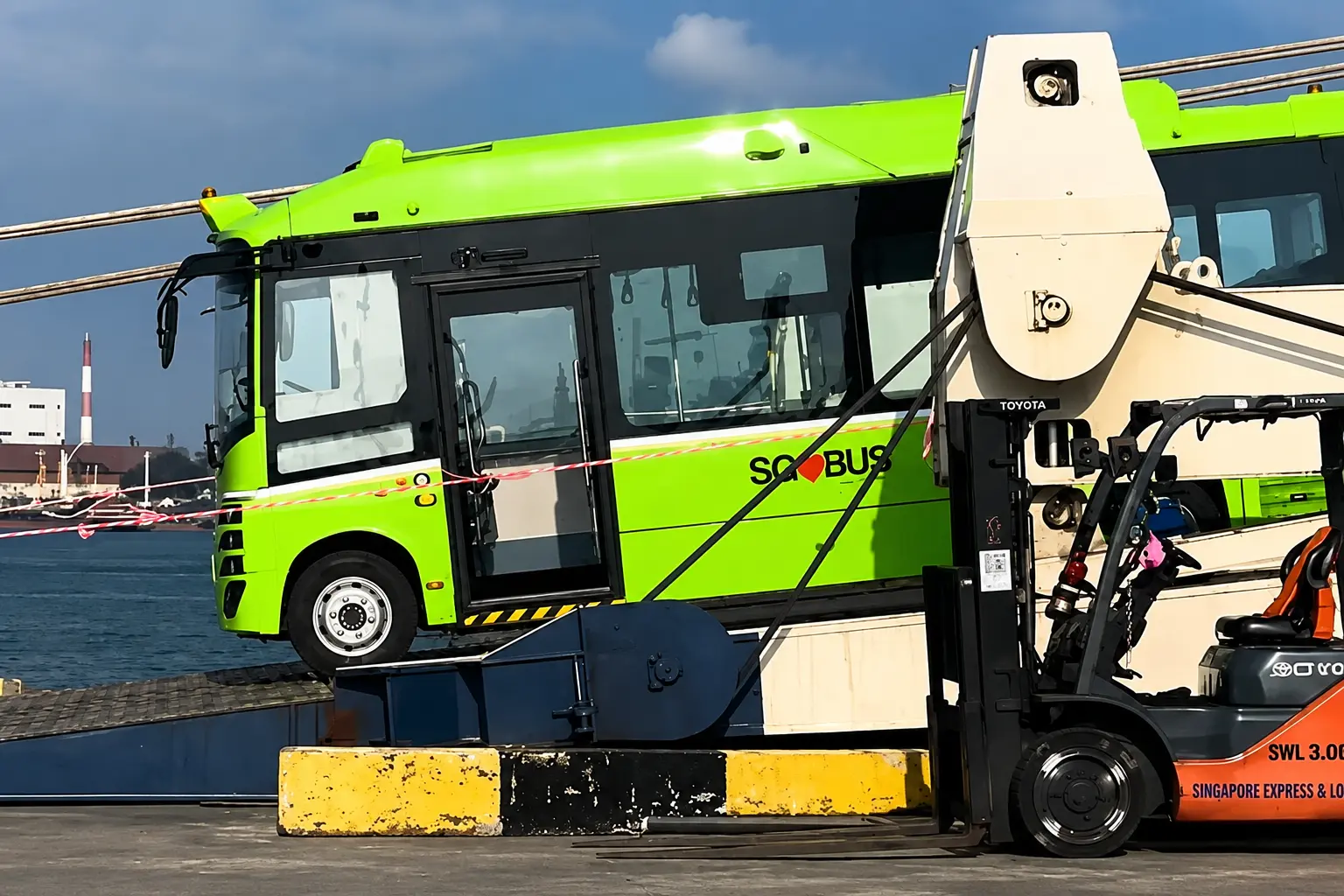
Why Singapore Is Accelerating Electric and Autonomous Public Transport
The project supports Singapore’s broader transition toward a lower-carbon and more technology-enabled transport network.
Under the Singapore Green Plan 2030, electric buses are expected to account for half of the country’s public bus fleet by 2030. Singapore also aims to transition vehicles toward cleaner-energy models as part of its longer-term transport and energy strategy.
Electrification addresses emissions and energy efficiency. Autonomous driving addresses a different structural challenge: manpower availability.
Singapore’s Ministry of Transport has described manpower as a binding constraint on the continued expansion of public transport. Recruiting local bus captains has become increasingly difficult, making autonomous vehicle technology a potential long-term way to support network growth.
Autonomous buses will not remove people from public transport operations. Instead, the transition is expected to create and expand roles in remote supervision, fleet management, passenger support, engineering, cybersecurity and technical maintenance.
However, replacing a driver-operated diesel bus with an autonomous electric bus introduces a new operational dependency.
The vehicle must not only be safe and correctly dispatched. It must also receive sufficient energy before every scheduled departure.
That makes charging software part of the public transport operating system.
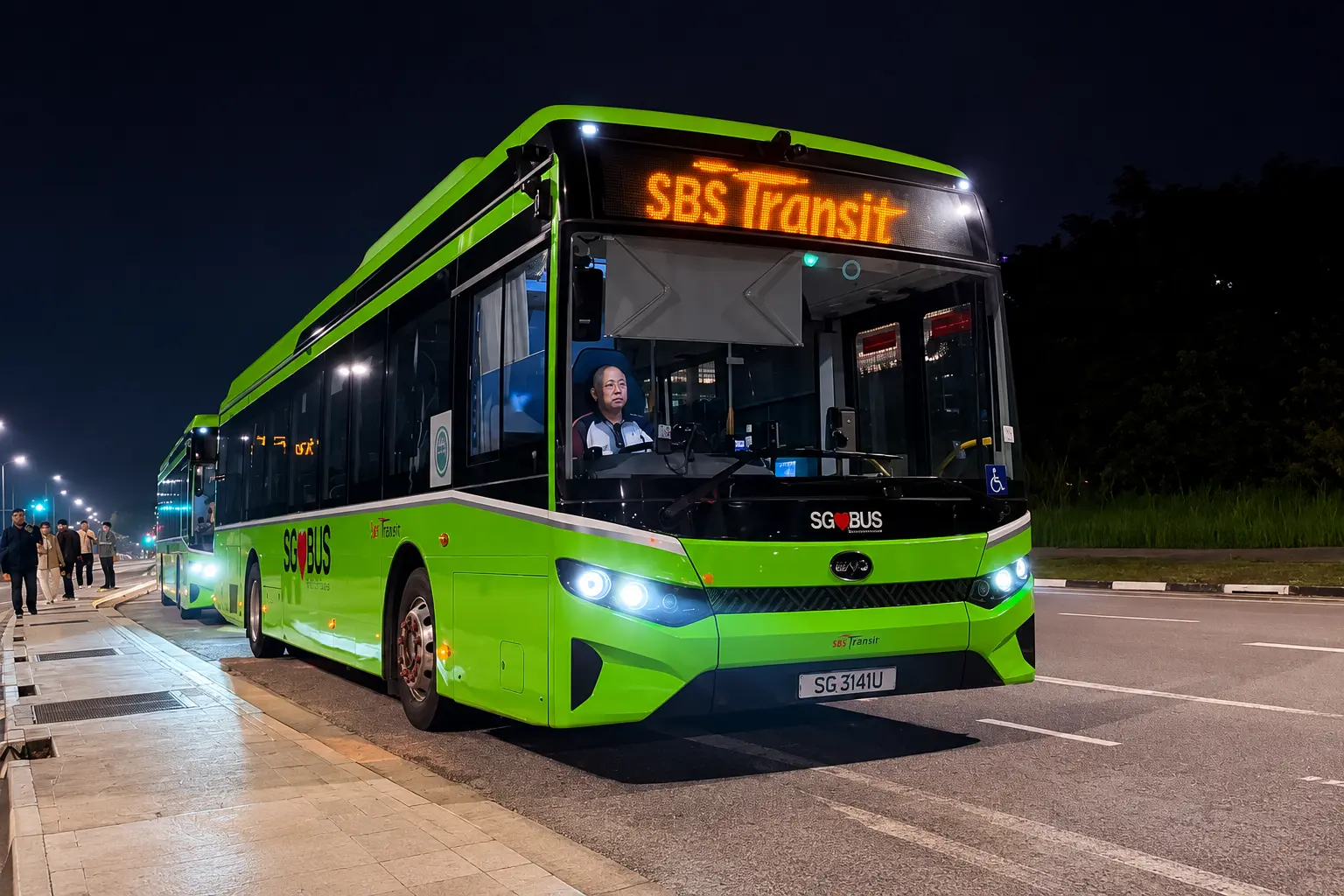
Why Conventional EV Charging Is Not Enough for Electric Bus Depots
Charging a private electric car is relatively flexible. The vehicle may remain parked overnight, and a delayed charging session may have little operational impact.
An electric public bus is different.
Every bus has a route assignment, departure deadline, expected mileage and minimum energy requirement. Missing a charging window can delay an entire service rather than a single driver.
The charging platform must continuously determine:
- Which bus should charge first
- How much power each bus should receive
- How long each charging session should continue
- What state of charge is required for the next route
- Whether simultaneous charging will exceed site capacity
- How to respond when a bus, charger or network connection develops a fault
These decisions become more difficult in high-density cities where depot space and electrical infrastructure are constrained.
Short Routes Create Fragmented Charging Windows
Urban buses may complete multiple short trips throughout the day.
Although individual journeys may use less energy than intercity routes, frequent departures create fragmented and constantly changing charging opportunities. A bus may have only a limited turnaround period before its next assignment.
A system built around the assumption that every vehicle can “charge once and operate all day” cannot reliably support this operating model.
Bus Depots Operate Around the Clock
Depot charging is not limited to one predictable overnight period.
Vehicles continually arrive, depart, change assignments and enter maintenance. Traffic conditions or passenger demand can also change their expected return times.
An effective EV fleet management software platform must therefore update charging priorities dynamically rather than relying on a fixed first-in, first-out sequence.
Multiple High-Power Chargers Can Stress Site Capacity
Several buses may return to the depot at approximately the same time.
If every charger immediately operates at maximum power, total demand can approach or exceed the transformer limit. The resulting peak may increase energy costs, trigger protective measures or require expensive electrical upgrades.
Installing more chargers does not automatically solve this problem. Without coordinated power management, additional chargers can increase the potential for simultaneous high-power demand.
The better strategy is to use software to distribute the available capacity intelligently.
Public Transport Departures Are Not Flexible
Commercial fleet charging must ultimately support a timetable.
Electricity price optimisation and peak reduction are valuable, but neither objective should cause a bus to miss its scheduled departure.
A smart charging system must therefore treat service readiness as the primary constraint and energy cost as an optimisation variable.
How TrendPower’s Ordered-Charging Platform Works
TrendPower’s platform combines vehicle schedules, battery information, charger availability, site-load data and tariff periods to produce an executable charging plan.
Instead of giving every connected bus the same charging power, the system determines the most appropriate charging sequence for the entire depot.
The platform addresses four fundamental questions:
- Which vehicle needs energy most urgently?
- How much energy does it need for its next assignment?
- How quickly must that energy be delivered?
- How can the depot complete every required charging task without exceeding its power limit?
This operational logic can be delivered through a configurable EV Charging Point Management System that gives fleet and depot teams centralised visibility over charging sessions, equipment status, energy consumption and operating performance.
1. Charging Priority Based on the Bus Schedule
A conventional charging system may simply start charging vehicles in the order they connect.
TrendPower’s ordered-charging model uses operational urgency instead.
The platform can evaluate each bus according to factors such as:
- Next scheduled departure
- Current state of charge
- Estimated driving range
- Required energy for the next route
- Available charging time
- Charger compatibility
- Vehicle and battery condition
A bus scheduled to depart soon with insufficient energy receives a higher charging priority.
A vehicle that will remain in the depot for several hours can be assigned a later charging window or temporarily receive reduced power.
This turns the public transport timetable into a direct input for depot energy management.
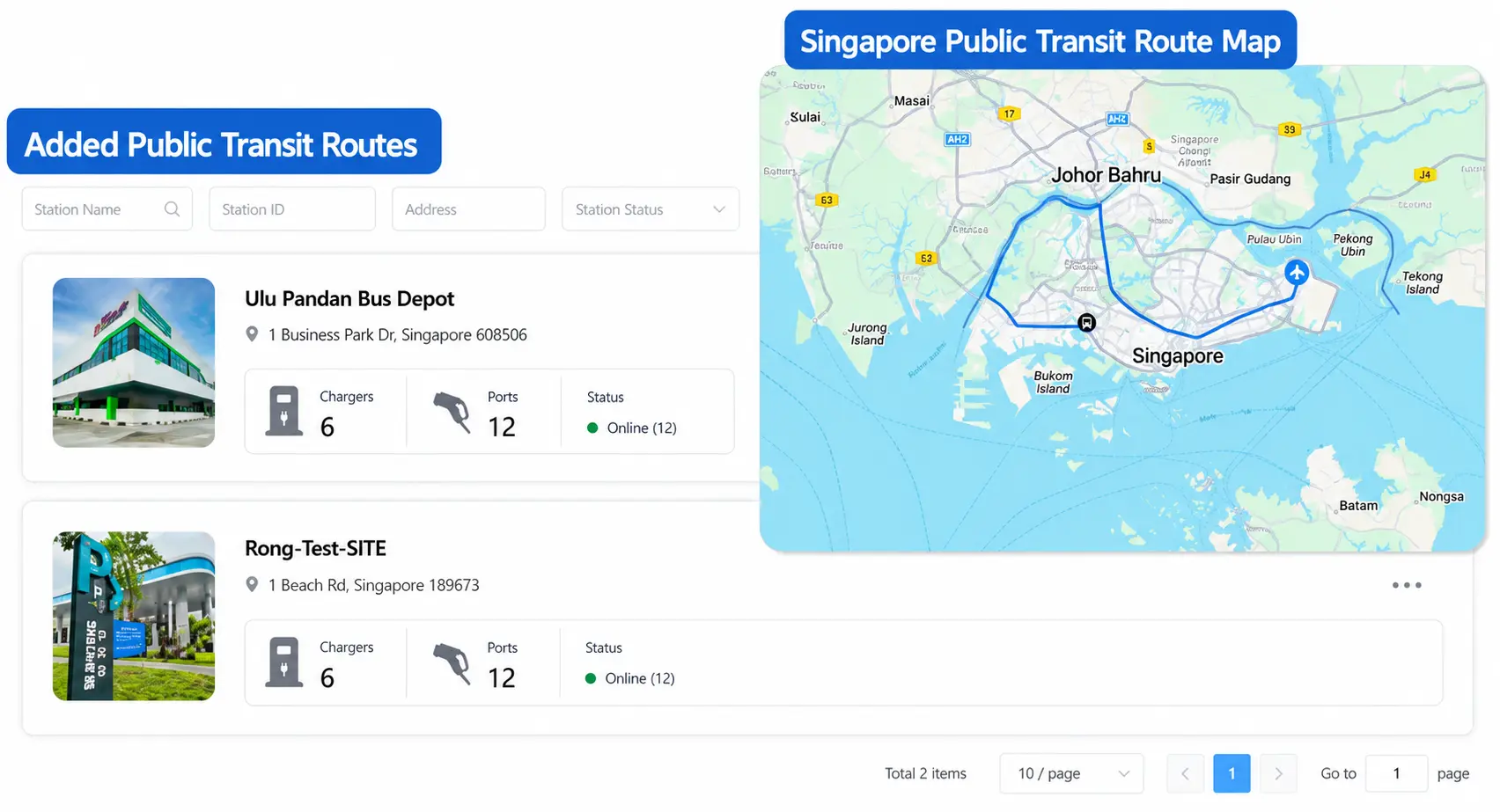
2. Dynamic EV Bus Depot Load Balancing
Not every bus needs to charge at full power at the same time.
TrendPower can dynamically allocate the available site capacity among active charging sessions. One urgent vehicle may receive full charging power, while another bus with a later departure receives a reduced power level.
When the first bus reaches its target state of charge, its allocated power can be transferred to another vehicle.
The charging plan can also be recalculated when:
- A bus returns later than expected
- A route assignment changes
- A charger becomes unavailable
- Depot power demand increases
- An urgent vehicle enters the charging queue
- Battery data changes the expected charging duration
This form of OCPP smart charging and power allocation enables the depot to make more productive use of its existing electrical infrastructure.
The objective is not necessarily to minimise the power used by each charger. It is to ensure that total charging demand remains within the site limit while every operationally required bus is prepared on time.
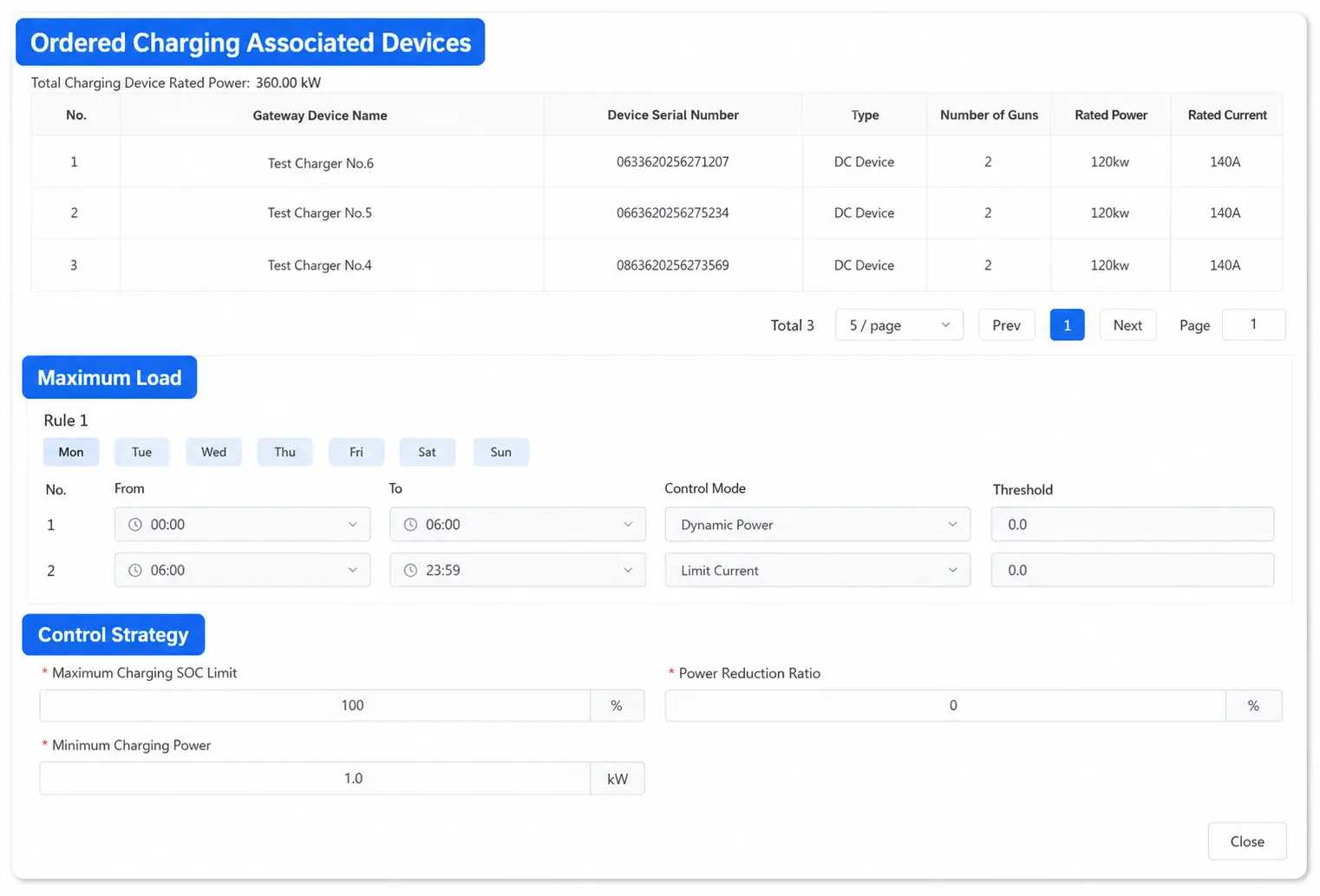
3. Target State-of-Charge Management
Charging every bus to 100% after every connection is rarely the most efficient strategy.
The platform can calculate the energy required for the vehicle’s next scheduled route, add an appropriate operational reserve and assign a target state of charge.
For example, a bus serving a short route may only need sufficient energy for its next duty cycle plus a safety margin. Charging beyond that target could occupy a charger unnecessarily and prevent a more urgent vehicle from connecting.
Target state-of-charge management can improve:
- Charger turnover
- Vehicle availability
- Depot throughput
- Power allocation flexibility
- Battery charging efficiency
Where the necessary data are available, the calculation may also consider traffic conditions, auxiliary energy use, weather, passenger load and battery health.
4. Time-of-Use Electricity Tariff Optimisation
Electricity prices may vary by time period or commercial tariff structure.
When a bus has sufficient scheduling flexibility, the platform can shift part of its charging demand toward a more economical period.
However, price optimisation is always constrained by the vehicle’s next departure. A lower electricity rate has no operational value if the bus is not ready for service.
TrendPower combines tariff data, charging deadlines, required energy and site capacity to find a lower-cost feasible schedule—not simply the lowest theoretical electricity price.
The platform’s broader EV charging payment and settlement solution can also help operators record energy use, calculate charging costs and support settlement across fleets, departments, operating entities or commercial partners.
5. Vehicle-Charger-Grid Coordination
Reliable autonomous electric bus operations depend on information moving between several systems.
The smart operations platform needs visibility into:
| Operating Layer | Essential Data |
|---|---|
| Vehicle | SOC, SOH, remaining range, location and operating status |
| Fleet | Route assignment, departure time and vehicle priority |
| Charger | Availability, charging power, session status and fault codes |
| Depot | Total load, transformer limit and charger utilisation |
| Energy | Tariff period, peak demand and available capacity |
| Maintenance | Alerts, diagnostic records and work-order status |
This closed-loop architecture enables charging decisions that would be impossible if vehicles, chargers and depot energy systems operated independently.
TrendPower provides custom EV charging software development for projects that require connections to vehicle platforms, dispatch systems, charger protocols, energy meters, payment services or third-party enterprise software.
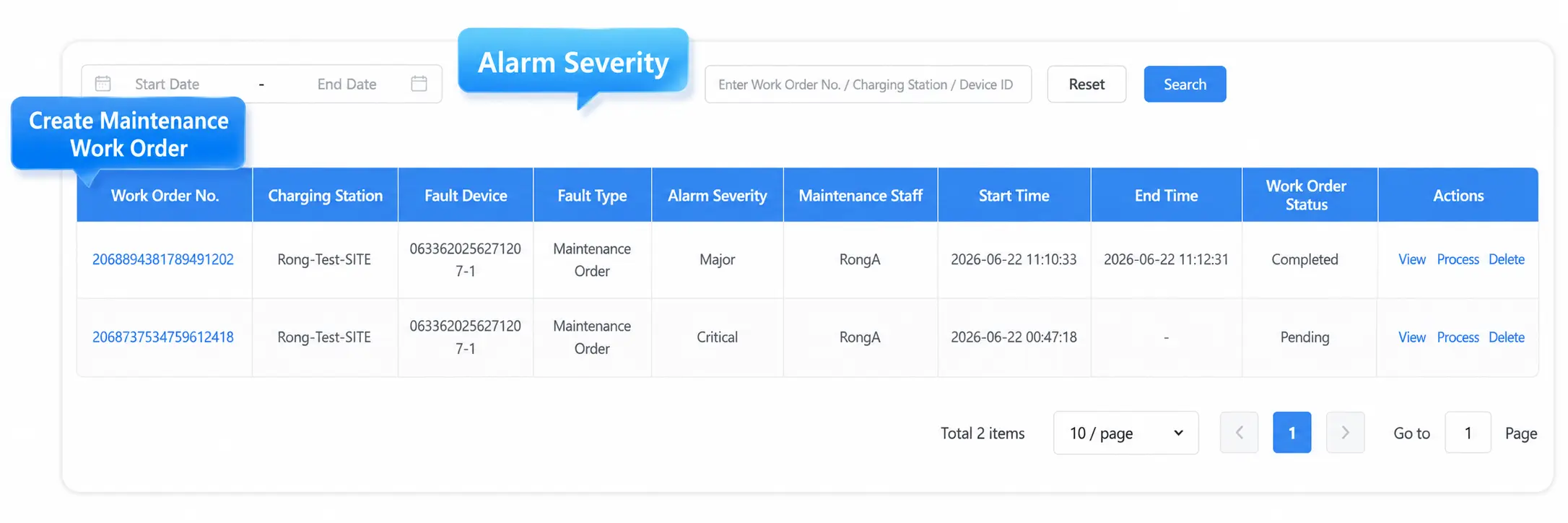
OCPP Interoperability for Multi-Vendor Charging Infrastructure
Large fleet projects should avoid unnecessary dependence on a single hardware manufacturer.
The Open Charge Point Protocol provides a standard communication interface between charging stations and charging management systems. The Open Charge Alliance describes OCPP as a global protocol designed to support interoperable and scalable EV charging infrastructure.
TrendPower supports OCPP-compatible charger integration, including OCPP 1.6 and OCPP 2.0.1 scenarios.
OCPP 2.0.1 introduces capabilities relevant to advanced fleet charging, including improved device management, security functions and more sophisticated smart charging communication.
Operators evaluating protocol compatibility can review TrendPower’s OCPP 2.0.1 guide for charging operators.
Protocol support does not mean that every charger automatically supports every possible function. Hardware models, firmware implementations and required charging profiles should still be tested during integration.
This technical qualification is particularly important for high-power electric bus charging, where the backend, charger and vehicle must exchange reliable real-time information.
Real-Time Fleet and Charger Monitoring
Charging optimisation is only effective when the underlying operational data are accurate.
TrendPower’s platform can centralise the monitoring of vehicles, chargers, charging sessions and depot energy use.
Battery State of Charge
SOC monitoring allows the system to identify buses approaching a configured minimum operating threshold.
When a vehicle lacks sufficient energy for its next duty, the platform can raise its charging priority and notify the appropriate dispatcher.
Battery State of Health
SOH data provides insight into longer-term battery performance.
When battery health falls below a defined threshold or shows an unusual degradation trend, the vehicle can be added to a maintenance plan. Charging calculations may also be adjusted to reflect changes in usable capacity.
Charger Status and Fault Codes
Fleet operators need to know whether each charger is:
- Available
- Occupied
- Reserved
- Offline
- Power-limited
- Reporting an error
Remote access to diagnostic data helps technicians distinguish between charger faults, network interruptions, backend communication problems and vehicle-side issues.
TrendPower’s intelligent EV charging operations management supports real-time monitoring, smart alerts, remote diagnostics and structured maintenance workflows.
Remote Alerts and Automated Recovery
A technical alarm should not be treated as an isolated event.
The platform should evaluate how the fault affects fleet operations.
For example, an offline charger connected to a bus that does not depart until the following day may be a lower priority. The same fault becomes urgent when the affected bus must begin service in 30 minutes.
By connecting alarms with the dispatch schedule, the platform can classify incidents according to operational impact.
Depending on charger capabilities and safety rules, recoverable issues may trigger automated actions such as:
- Re-establishing a communication connection
- Restarting a software process
- Reducing charging power
- Reassigning the bus to another charger
- Moving the vehicle higher in the charging queue
- Recalculating the site charging plan
More serious events can be escalated to the depot manager or maintenance team with the relevant vehicle, charger, error and schedule information already attached.
This reduces the time required to understand the problem and supports faster operational decisions.
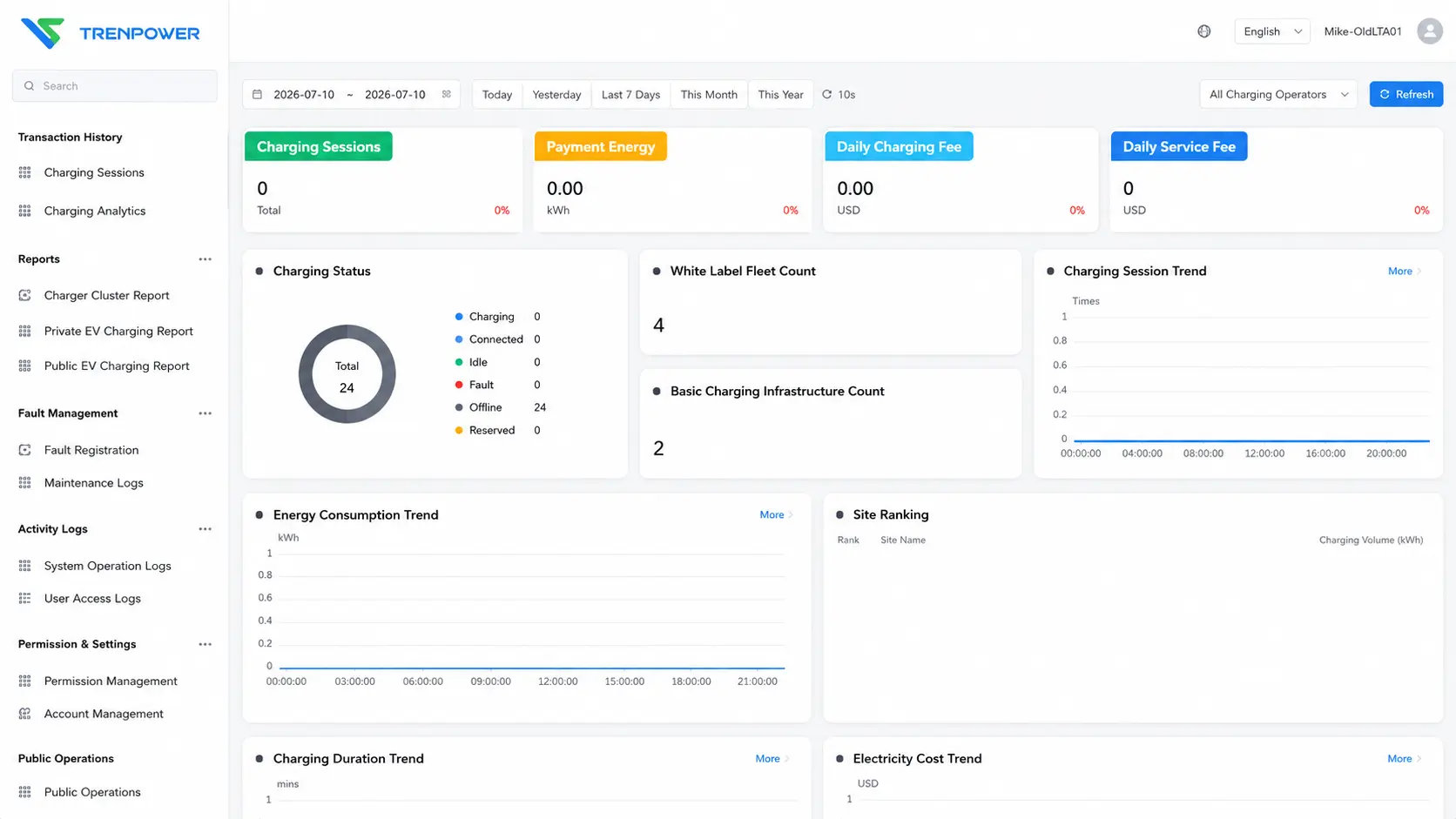
Converting Charging Data Into Fleet Intelligence
Every charging session produces data that can improve future operations.
When charging records are connected with route, vehicle and energy information, fleet managers can analyse:
- Energy consumption per bus
- Energy use by route or duty cycle
- Charger utilisation
- Depot peak demand
- Average charging duration
- Charging queue time
- Cost per vehicle
- Abnormal battery behaviour
- Fault frequency and charger uptime
Energy consumption by route can help identify differences caused by traffic, passenger load, air-conditioning use or operating conditions.
Repeated charging queues may indicate that return-time assumptions are unrealistic, charging priorities need adjustment or particular chargers are underused.
Accurate energy allocation also allows managers to calculate operating costs at the individual vehicle or route level.
These insights help the organisation move from experience-based planning toward data-supported fleet and electrification decisions.
Why Smart Charging Becomes More Important as Fleets Become Autonomous
In a conventional fleet, a driver may notice that a charging session failed and contact the depot team.
An autonomous fleet must detect and manage more exceptions digitally.
That increases the importance of:
- Reliable vehicle and charger integration
- Accurate real-time information
- Automated charging prioritisation
- Remote diagnostic capabilities
- Traceable decision records
- Cybersecurity and access control
- Human escalation procedures
Autonomous driving determines how the vehicle moves. Charging management determines whether it has enough energy to move at all.
The charging platform therefore becomes part of the fleet’s operational control layer rather than a separate back-office tool.
A Replicable Model for Southeast Asian Cities
Singapore provides a demanding environment for autonomous electric transport.
The city has limited land, high public transport service expectations and structured safety requirements. These conditions make the project a useful reference for other dense urban markets.
The most transferable element is not a particular bus or charger. It is the integrated operating model:
- Vehicles provide trusted battery and diagnostic data.
- Fleet systems provide departure and route requirements.
- Chargers accept remote control and power instructions.
- The depot provides electrical-capacity constraints.
- A central platform converts the data into charging decisions.
- Operations teams retain visibility and human control.
This architecture can be adapted for municipal buses, airport shuttles, industrial parks, campuses, tourism zones and other scheduled electric fleets.
TrendPower’s EV charging management system for Southeast Asia is designed around the localisation, protocol integration, payment and multi-scenario requirements that charging businesses and fleet operators face across the region.
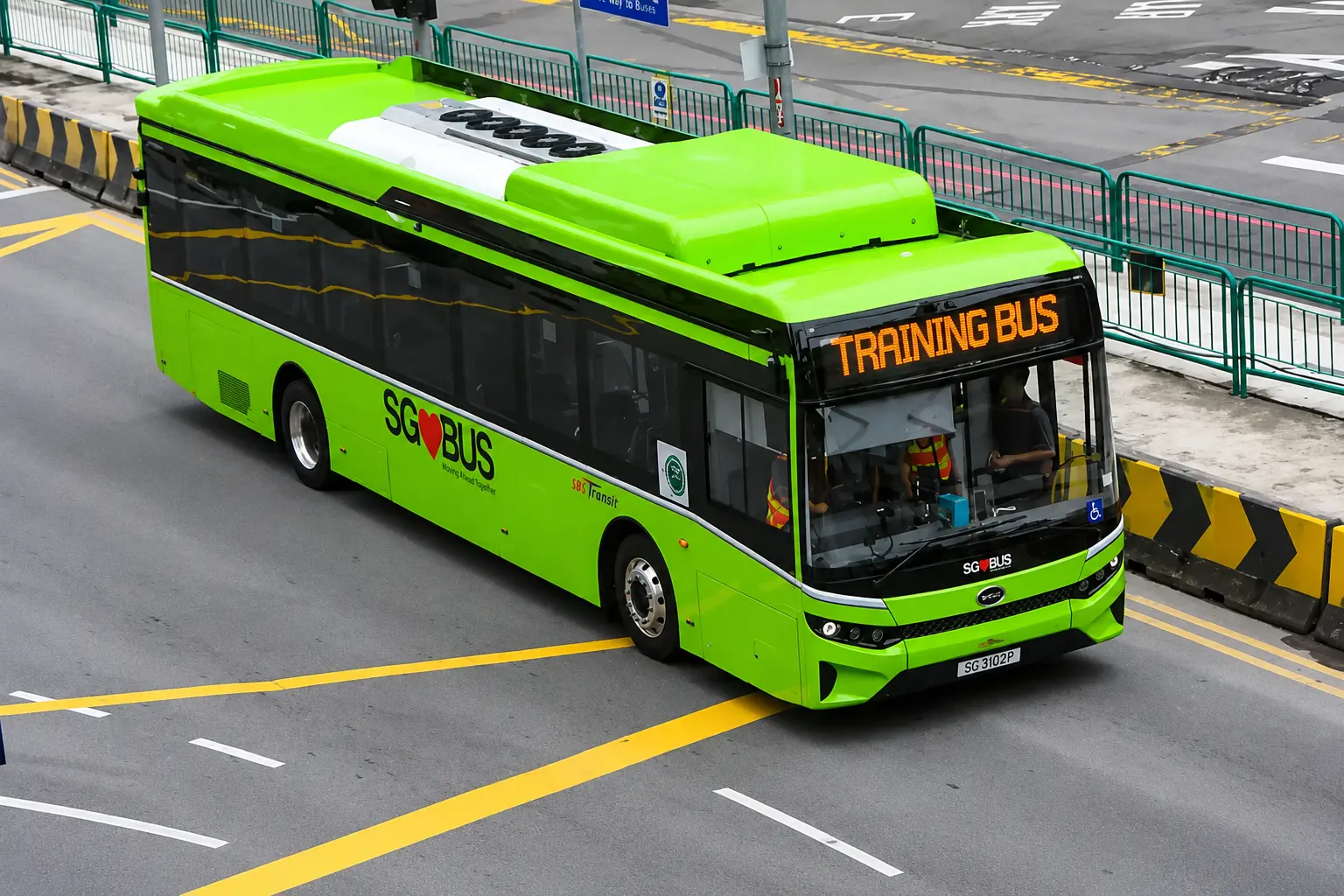
What the Singapore Project Demonstrates About TrendPower
TrendPower has focused on digital energy and EV charging software since its parent company was established in 2005.
Its platform capabilities include:
- Charging Point Management Systems
- OCPP charger integration
- Smart charging and load management
- Fleet charging workflows
- Real-time monitoring
- Intelligent operations and maintenance
- Payment, billing and settlement
- Data analytics
- White-label applications
- Private, hybrid and customised deployment
The Singapore project demonstrates how these capabilities can be applied to a demanding public transport scenario.
For fleet operators, the value is measured in buses prepared on time, reduced charging congestion, lower peak demand and fewer manual interventions.
For charging equipment providers, the platform connects hardware to a broader operational ecosystem.
For transport and energy stakeholders, it provides visibility across vehicles, chargers, depots and electricity demand.
This is the difference between installing chargers and operating an intelligent electric fleet.
Conclusion: Autonomous Mobility Requires Intelligent Energy Coordination
Electric vehicles and autonomous driving are often discussed as separate technologies.
In real public transport operations, they must function as one system.
The autonomous driving platform determines how the bus navigates the road. The fleet management system determines where and when it should operate. The charging platform determines when the vehicle receives energy, how much power it receives and whether it will be ready for its next service.
Singapore’s autonomous electric bus pilot shows why the future of urban transport depends on coordinated vehicles, roads, chargers, depots and power grids.
Autonomous technology allows the bus to drive more independently.
Ordered charging allows energy to be used more intelligently.
A unified operations platform makes both technologies scalable.
For transport operators, charging businesses and infrastructure partners developing high-utilisation fleet projects, TrendPower provides the software foundation needed to connect these operating layers.
Contact TrendPower’s EV charging software team to discuss autonomous fleet charging, electric bus depot management, OCPP integration or a customised smart charging platform.
Frequently Asked Questions
What is Singapore’s autonomous electric bus pilot?
Singapore’s LTA has awarded a contract for six 16-seat autonomous electric buses to operate on Bus Services 400 and 191. The three-year pilot is expected to begin in the second half of 2026 after the vehicles complete the required safety and operational assessments.
Why do electric buses need smart charging software?
Electric buses operate according to fixed schedules and may have limited charging windows. Smart charging software prioritises vehicles, distributes available power, monitors battery status and ensures that each bus receives enough energy for its next route without exceeding depot capacity.
What is an ordered-charging system?
An ordered-charging system determines which vehicle charges first, when the session begins, how much power is allocated and what target state of charge should be reached. Decisions are based on vehicle schedules, battery levels, route requirements, charger availability and site power limits.
How does EV bus depot load balancing work?
Depot load balancing distributes available electrical capacity across multiple chargers. Urgent vehicles can receive more power, while vehicles with later departure times receive reduced power or charge later. This prevents excessive simultaneous demand and improves the use of existing infrastructure.
Can TrendPower connect chargers from different manufacturers?
TrendPower supports OCPP-compatible charging equipment, including OCPP 1.6 and OCPP 2.0.1 integration scenarios. Actual feature compatibility depends on the charger model, firmware, protocol implementation and required smart charging functions.
Can charging software guarantee that every bus departs on time?
Software cannot eliminate every operational risk, but it can significantly improve readiness by continuously monitoring schedules, battery status, charger availability and site capacity. The system can identify potential energy shortages early, adjust charging priorities and alert depot teams before an issue affects service.
Does smart charging reduce electricity costs?
Smart charging can reduce costs by limiting peak demand, moving flexible charging into lower-cost tariff periods and preventing inefficient charging. However, public transport service readiness must remain the first priority.
Editorial and Source Transparency
Official procurement, route, deployment and safety information in this article is based on publications from Singapore’s Land Transport Authority, Ministry of Transport and Singapore Green Plan. Descriptions of TrendPower’s project role and platform functions are based on TrendPower project documentation and product capabilities.
Reviewed by: TrendPower EV Charging Software Team
Expertise: EV charging software, CPMS deployment, fleet charging, OCPP integration and digital energy operations
Last reviewed: July 2026

 EN
EN  ZH
ZH  AR
AR  DE
DE  ES
ES  KO
KO  JA
JA  IT
IT  FR
FR  VI
VI  MS
MS  ID
ID  FR_CA
FR_CA  NL
NL  SV
SV  EN_GB
EN_GB  TH
TH 