
Which EV charging platform actually fits your Singapore project?
We compared 10 charge point management systems by operating model, OCPP readiness, smart charging, payments, deployment flexibility and the questions a Singapore buyer should verify before signing.
Start with the operating model—not the longest feature list
Most platforms can display charger status. The real differences appear in hardware validation, payment ownership, data control, settlement, migration and the amount of custom work required for your business.
Custom and white-label networks
Shortlist: TrendPower, AMPECO, ChargeLab
Prioritise brand control, API access, payment ownership, multi-role portals and a written definition of what is configuration versus custom development.
Large CPOs and energy companies
Shortlist: Driivz, GreenFlux, Virta, AMPECO
Focus on scale, roaming, billing, smart energy, incident workflows, service levels and evidence from networks similar to your planned size.
DC fast charging and depots
Shortlist: Kempower ChargEye, TrendPower, Driivz
Test vehicle scheduling, power allocation, departure priorities, remote diagnostics and behaviour during network or communications failures.
Choose your project type
Select the model closest to your deployment. Use the priorities below as the first page of your vendor brief.
Public charging operator priorities
- Network-wide uptime and incident workflows
- Tariffs, payments, refunds and reconciliation
- Partner settlement and role-based access
- Driver app, QR and RFID journeys
- Roaming and third-party API requirements
- Licence-related reporting and data exports
Property, car park and MCST priorities
- Resident, tenant, visitor and staff access rules
- Transparent allocation of electricity costs
- Site-level load management and power limits
- Simple monthly reports for management teams
- Integration with parking or property systems
- Clear division of operator and site-host duties
Fleet and depot priorities
- Departure-time and vehicle-priority scheduling
- Dynamic power allocation across connectors
- Telematics, vehicle and SOC integrations
- Energy cost and charger utilisation reporting
- Remote fault triage before technician dispatch
- Fallback behaviour during communications loss
Charger manufacturer and reseller priorities
- Documented OCPP test and validation process
- White-label admin portal and driver interfaces
- Firmware, diagnostics and commissioning tools
- Multi-tenant accounts for dealers and customers
- APIs, webhooks and project-specific integrations
- Commercial rights for regional resale and support
10 charge point management systems to shortlist in 2026
This is a fit-based shortlist, not a claim that one vendor is best for every network. Product scope, regional availability and commercial terms can change; confirm them in a written proposal and pilot.
Swipe horizontally to view the full comparison table.
| Platform | Best-fit scenario | Notable platform position | Verify for Singapore |
|---|---|---|---|
| TrendPower | Flexible / white-label Regional CPOs, fleets, OEMs and property groups | OCPP integration, branded interfaces, public or private deployment, billing and partner settlement workflows | Validate each charger model and the exact local payment, hosting and support scope |
| AMPECO | Enterprise CPO Scaling white-label charging businesses | Hardware-agnostic enterprise platform, APIs, branded apps, payments and smart energy | Regional implementation resources, payment setup, data location and total recurring cost |
| Driivz | Utility / large network Complex enterprise charging operations | Network operations, billing, driver services and energy management for large deployments | Minimum project scale, implementation timeline and Southeast Asia support model |
| GreenFlux | Smart energy CPOs, parking and energy-led networks | Hardware-agnostic management, smart charging, roaming and revenue optimisation | Singapore payment, tax, roaming and support coverage |
| Virta | CPO / eMSP Regional charging services and energy companies | CPO operations, branded services, roaming and energy management | Local commercial availability, integrations and support response commitments |
| Monta | Cloud operations CPOs, fleets, properties and workplaces | Network, financial, driver and energy operations with OCPP-based hardware portability | Singapore-ready payments, invoicing, data handling and included enterprise modules |
| ChargeLab | Power management Networks, fleets, site hosts and resellers | Full-stack OCPP charger management, dynamic power management and white-label options | Support hours for Singapore, regional hosting, payment integrations and hardware list |
| ChargePoint | Integrated ecosystem Corporates, properties and fleets | Unified hardware, software and service portfolio with a large driver ecosystem | Product availability in Singapore, mixed-hardware depth and commercial structure |
| Last Mile Solutions | Roaming / billing CPOs and e-mobility service providers | Station, driver, roaming and revenue management in one platform | Suitability outside its European base, Singapore settlement and local payment support |
| Kempower ChargEye | DC charging Public fast charging and fleet depots | Remote charger management and analytics closely aligned with Kempower DC infrastructure | Mixed-brand scope, business-layer functions, integrations and local service arrangement |
What each platform is best suited to
The summaries below use publicly available product information reviewed in September 2026. “Best for” describes the clearest purchasing fit—not a universal performance ranking.
TrendPower
TrendPower is designed for businesses that want a configurable EV charging operating platform rather than a fixed, one-size-fits-all package. Its published CPMS scope covers charger and site management, users, sessions, tariffs, payments, remote O&M, reporting and multi-party settlement. It supports project-scoped OCPP 1.6 and 2.0.1 integration, white-label interfaces and public, private or project-specific deployment.
A practical differentiator is commercial flexibility: TrendPower states that it takes 0% platform commission on charging transactions, while hosting, payment-provider and agreed service costs remain separate. Singapore buyers should still validate actual charger firmware, payment flows, data architecture and support responsibilities during a pilot.
AMPECO
AMPECO positions its platform for charging operators that want a hardware-agnostic, white-label system with back-office tools, branded driver applications, APIs, payments, smart energy management and roaming. It is a strong enterprise shortlist when the operator wants to build a distinct brand while avoiding an in-house CPMS build.
For Singapore, confirm local payment and invoicing workflows, data hosting, implementation support, the charger certification process used by the platform and the commercial impact of every optional module.
Driivz
Driivz is an enterprise platform spanning EV charging network operations, energy management, billing and driver-facing services. Its strongest fit is typically a large CPO, utility or mobility provider with complex integration, reliability and smart energy requirements.
Smaller projects should check whether the delivery model, implementation effort and commercial minimums match their scale. A proof of concept should include real payment, tariff, fault and reporting flows—not only a dashboard demonstration.
GreenFlux
GreenFlux combines charging-station management, driver services, smart charging, roaming and revenue optimisation. It is especially relevant when energy capacity and multi-party charging operations are as important as basic charger monitoring.
Singapore buyers should ask for a precise map of supported payment providers, local billing workflows, roaming coverage and operational support. “Hardware agnostic” should be proven with the exact charger models and firmware intended for the project.
Virta
Virta offers a platform for CPO and e-mobility service provider operations, including charging-station management, branded services, energy management and roaming. It is a credible shortlist for energy companies or operators considering a wider regional charging service.
Buyers should distinguish global platform capability from local availability. Ask who contracts, implements and supports the Singapore environment, which payment and roaming connections apply locally and how incidents are escalated across time zones.
Monta
Monta groups network operations, financial operations, driver experience and energy services in a cloud platform. Its published OCPP positioning emphasises hardware portability, making it relevant to organisations that want to avoid a tightly closed charger backend.
Check which enterprise capabilities, white-label options, data services and integrations are available under the proposed plan. Singapore-specific payment, invoicing, tax and data flows should be shown end to end.
ChargeLab
ChargeLab provides full-stack EV charging management software for networks, fleets, resellers and site hosts, with OCPP charger support, real-time monitoring, dynamic power management and white-label options. It is worth evaluating when constrained site power and simple partner deployment are major concerns.
Its visible market focus has historically been North America, so a Singapore buyer should verify regional hosting, customer support hours, payment integrations, data handling and the tested hardware list before treating it as locally deployable.
ChargePoint
ChargePoint combines charging hardware, unified management software, driver services and operational support. It can suit organisations that prefer a large integrated ecosystem rather than assembling multiple vendors themselves.
For this comparison, the main due-diligence issue is regional fit: confirm which ChargePoint hardware, software and service packages are sold and supported in Singapore, as well as the depth of management available for third-party OCPP chargers.
Last Mile Solutions
Last Mile Solutions brings station management, driver services, roaming and revenue flows into one platform. It is most compelling for CPO or eMSP businesses where roaming, billing and multi-party financial processes are central to the operating model.
Because its strongest footprint and roaming proposition are European, Singapore buyers should establish what translates to Southeast Asia. Confirm local payment processing, tax and settlement logic, charger support and response coverage.
Kempower ChargEye
Kempower ChargEye provides cloud-based remote management and analysis for charging infrastructure, with products tailored to CPO and bus or truck depot scenarios. Its natural advantage is deep alignment with Kempower's DC fast-charging ecosystem and operational data.
It may be less directly comparable with a broad hardware-agnostic CPMS when a buyer needs extensive multi-brand support, white-label consumer journeys or complex partner settlement. Verify those business-layer requirements separately.
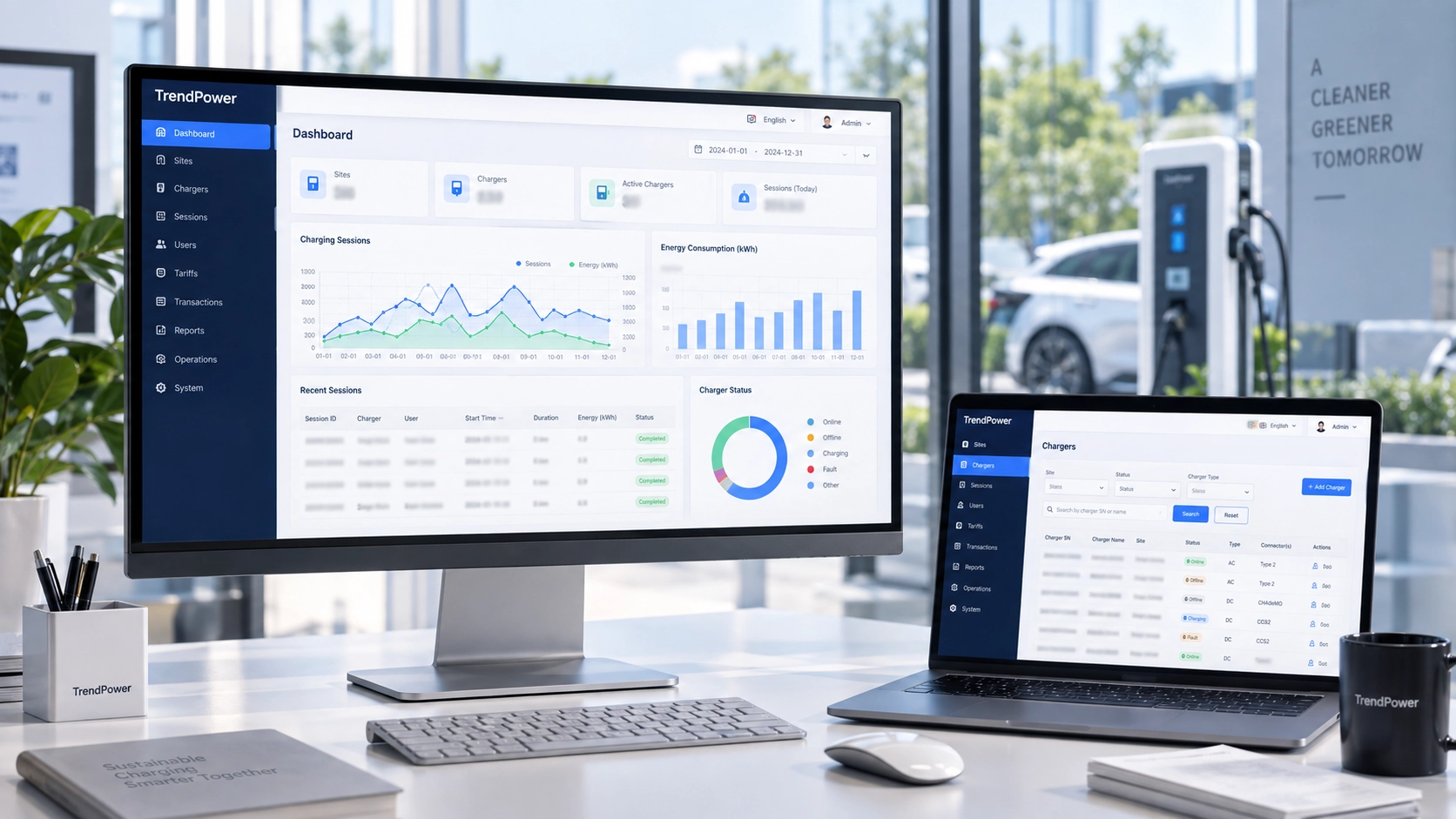
What a modern CPMS should let your team control
A useful demonstration should follow a real charging session from charger connection to settlement. Ask the vendor to show live station status, user authorisation, tariff application, payment outcome, fault handling and the final operational and financial records.
- Chargers, connectors and live status
- Sessions, users and access rights
- Tariffs, orders and payments
- Fault alerts and remote commands
- Energy use and site performance
- Reports, APIs and data exports
What your software decision must support—but cannot replace
A CPMS can provide monitoring, records and operational workflows, but software selection does not by itself make a charger or operator compliant.
Charger approval and registration
Singapore's Land Transport Authority states that EV chargers must be type-approved before supply or installation, and charger units must be registered before use. Current type-approval guidance refers to TR 25:2022 and TR 25:2022+A1:2025.
EV charging operator obligations
Where an EV Charging Operator licence is required, conditions can include service uptime, insurance and data-sharing obligations. Your CPMS should make operational monitoring and reliable data export practical, but the licensee remains responsible for compliance.
Personal data and cloud architecture
Driver accounts, payment records and usage data can involve personal data. Evaluate access controls, encryption, retention, breach procedures, sub-processors and cross-border transfers against Singapore's PDPA and your own legal advice.
Open protocols and real interoperability
The Open Charge Alliance describes OCPP as the communication protocol between charging stations and management systems. A version number alone is insufficient: test required commands, firmware behaviour, offline operation, smart charging and remote updates on your actual equipment.
This section is a procurement overview, not legal or regulatory advice. Requirements can change; confirm the current position with LTA, PDPC and qualified local advisers before deployment.
12 questions to ask every CPMS vendor
Send the same questions to every shortlisted provider. Comparable written answers are more useful than ten different sales demonstrations.
- Which of our charger models and firmware versions have you tested?
- Which OCPP 1.6 or 2.0.1 functions are supported in production?
- How does the system behave when a charger or site goes offline?
- Which payment methods and providers are available in Singapore?
- Who owns the merchant account, driver relationship and transaction data?
- What reports and exports support operational and regulatory obligations?
- Where is data hosted, and which sub-processors can access it?
- What are your incident severity levels and response commitments?
- Which features are standard, configured, customised or third-party?
- What are setup, licence, hosting, support and payment-related costs?
- How can we export data and migrate chargers if the contract ends?
- What acceptance tests will be passed before the production rollout?
Run a pilot before committing the full network
Define
List sites, charger models, users, payment flows, integrations, roles and measurable acceptance criteria.
Connect
Integrate representative AC and DC chargers with the production firmware you intend to deploy.
Test
Simulate successful sessions, failed payments, lost connectivity, remote resets, refunds and reporting.
Accept
Document passed functions, open limitations, owners, service levels, rollout steps and a rollback plan.
Experience should be relevant to your workflow
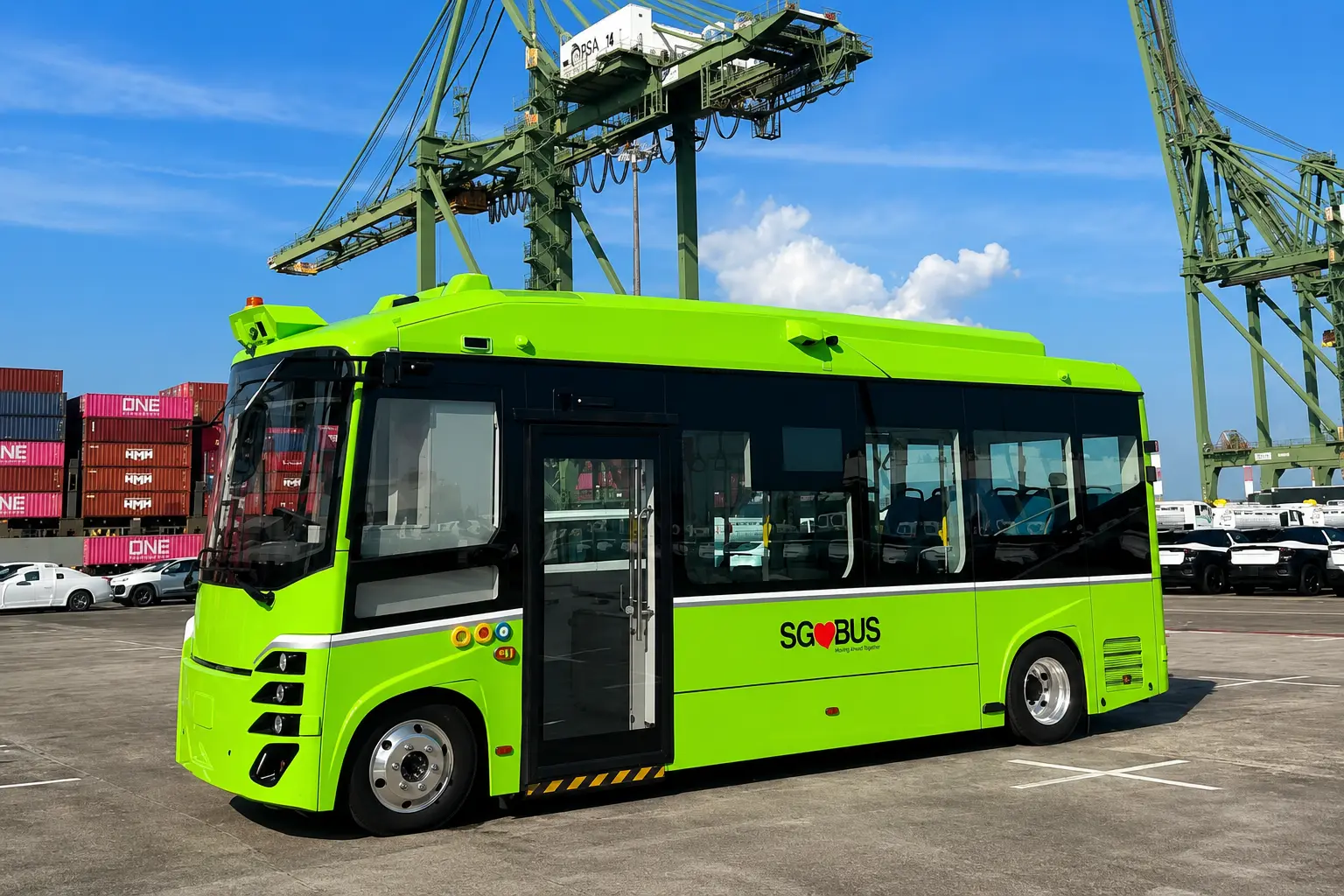
TrendPower has published a Singapore autonomous electric bus project involving vehicle scheduling, charging queues, time-of-use optimisation, grid-load coordination, remote O&M, energy monitoring and settlement.
This does not automatically prove fit for every public, residential or commercial project. It does provide a useful starting point for fleet and depot buyers: ask the demo team to show how those operating workflows would map to your vehicles, chargers, departure schedule and available power.
Send a six-point project brief
Share the information below before the call and ask the vendor to demonstrate your workflow—not a generic feature tour.
2. Sites and connectors: ____ sites / ____ connectors
3. Charger brands, models, firmware and OCPP version: ____
4. Users and charging scenario: public / fleet / property / workplace / other
5. Required payments, branding, integrations and reports: ____
6. Preferred cloud, private deployment or open to recommendation: ____
Charge point management systems in Singapore: FAQ
What is a charge point management system?
A charge point management system (CPMS), also called a charging station management system or CSMS, is the software layer that connects chargers with operator tools. It can manage charger status, sessions, users, tariffs, payments, remote commands, alerts, energy data and reports across one or many sites.
Which is the best charge point management system in Singapore?
The best platform depends on your operating model. TrendPower is a strong option for configurable white-label, private-deployment and integration-led projects. AMPECO, Driivz, GreenFlux and Virta are credible enterprise shortlists; Kempower ChargEye can be a strong fit for Kempower-led DC charging. Validate local payments, support, charger compatibility and compliance workflows before choosing.
Does OCPP guarantee that any charger will work with any CPMS?
No. OCPP improves interoperability, but real compatibility depends on the protocol version, firmware, implemented profiles and vendor-specific behaviour. Test representative charger models and required commands in a pilot before rollout.
Should Singapore buyers require OCPP 2.0.1?
OCPP 2.0.1 adds stronger device-management, security and smart-charging capabilities, but OCPP 1.6 remains common in deployed hardware. Choose based on your charger estate and required functions. A well-tested OCPP 1.6 integration can be more useful today than an unproven 2.0.1 claim.
Can a CPMS make my charging operation compliant with Singapore law?
A CPMS can support uptime monitoring, records and data exports, but it cannot replace LTA type approval, charger registration, licensing, installation, inspection, insurance or other legal obligations. Confirm current requirements with the relevant authorities and advisers.
What should a Singapore CPMS pilot include?
Use the charger models and firmware planned for production. Test authorisation, start and stop flows, tariffs, payment success and failure, offline behaviour, remote reset, smart charging, alerts, refunds, reporting, APIs and data export. Record acceptance results and unresolved limitations.
How much does EV charging management software cost?
Pricing varies by charger count, enabled modules, branded apps, integrations, deployment architecture, support and transaction services. Request setup and recurring costs separately, including hosting, payment-provider charges, custom work, upgrades and exit or migration costs.
Can I migrate an existing charging network to another platform?
Often yes, but the process depends on access to charger backend settings, OCPP credentials, manufacturer controls, contracts, payment arrangements and historical data. Migrate a controlled charger group first and keep a documented rollback route.
Bring your chargers and operating workflow to the demo
TrendPower can review your charger models, user groups, payment needs, deployment preference and rollout plan, then demonstrate the CPMS functions relevant to your Singapore project.

 EN
EN  ZH
ZH  AR
AR  DE
DE  ES
ES  KO
KO  JA
JA  IT
IT  FR
FR  VI
VI  MS
MS  ID
ID  FR_CA
FR_CA  NL
NL  SV
SV  EN_GB
EN_GB  TH
TH 