
CPMS buyer's guide · 2026
What EV Charging Management Software Really Costs
EV charging management system cost is rarely a single licence number. A useful comparison separates platform fees, charger connections, transactions, implementation, integrations, hosting, support and future expansion. This guide explains the major CPMS pricing models and shows how to compare them on a three-year total-cost basis.
Key takeaways
- CPMS vendors may charge per connector, per station, per site, per transaction, by feature tier, through a licence, or with a hybrid of these methods.
- The lowest monthly fee is not necessarily the lowest cost once payment, roaming, app, integration, cloud and support charges are added.
- Compare proposals over 36 months and use the same network assumptions for every supplier.
- Ask vendors to separate one-time, recurring, usage-based and third-party costs.
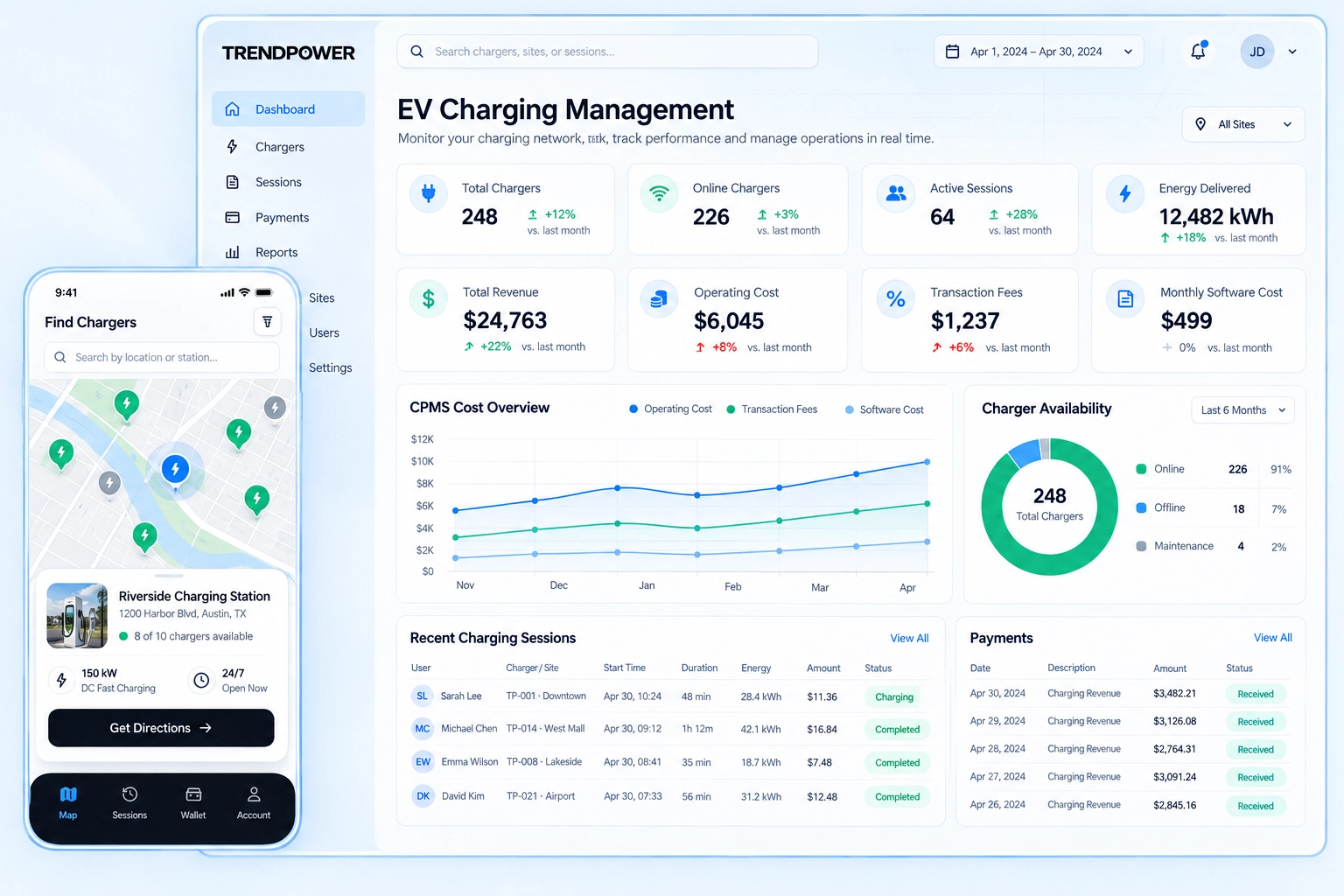
If you are budgeting a new public network, fleet depot, workplace programme, residential charging service or charger-manufacturer platform, start by defining what the word price includes. Some offers cover only the cloud back office. Others bundle the driver app, payment workflow, smart charging, monitoring, support and white-label branding. Comparing the headline price without matching the scope produces a misleading result.
What Does a CPMS Price Actually Cover?
A charge point management system (CPMS), also called a charging station management system (CSMS), is the software layer between chargers, drivers, operating teams and connected business systems. It receives charger status and session data, applies access and tariff rules, supports remote commands, and passes records to payment, reporting or settlement workflows.
The Open Charge Alliance describes OCPP as the open communication protocol between charging stations and charging management systems. Open standards can reduce hardware dependence, but “OCPP-compatible” does not mean that every charger, firmware version and optional function will work without validation. Integration and testing therefore remain real cost items.
Core platform
Charger and site management, users, sessions, tariffs, alerts, remote control, reports and role permissions.
Commercial layer
Driver access, payments, wallets, invoicing, subscriptions, promotions, partner commissions and settlement.
Delivery layer
Charger onboarding, configuration, data migration, cloud deployment, integrations, training, support and upgrades.
Before requesting prices, define the count correctly. A physical charger may contain two connectors or EVSEs, and a vendor may bill each connector rather than each cabinet. Also confirm whether inactive, test, seasonal or temporarily offline units are billable.
Seven Common CPMS Pricing Models
There is no universal EV charging software pricing model. The right structure depends on network size, transaction volume, required control and how quickly the project must launch. These seven models appear most often in commercial proposals.
Per connector or per charger
A recurring fee is charged for every connected asset, normally monthly or annually. This model is easy to forecast when network growth is predictable, but the billing unit must be explicit.
Per site or fixed platform subscription
The operator pays one recurring fee for a site, portfolio or defined capacity tier. This can be economical for dense sites, although limits on chargers, users, sessions or API traffic may trigger the next tier.
Transaction or revenue share
The software provider takes a percentage or fixed charge from paid charging sessions. Entry costs can be lower, but software expense rises with revenue and may become significant at scale.
Tiered or modular subscription
Core charger management is sold at one level, while payment, smart charging, roaming, analytics, white-label apps or advanced support are separate modules or higher tiers.
White-label licence
A branded driver app, web experience and operator portal are delivered on an existing platform foundation. Pricing may include setup, app-store work, design configuration and ongoing platform fees.
Custom licence or private deployment
A project fee covers agreed software, workflows, interfaces and deployment. Annual maintenance, cloud infrastructure, change requests and support are usually priced separately.
Hybrid pricing
Enterprise offers commonly combine a setup fee, recurring platform licence, connected-asset charge, support plan and third-party usage costs. Hybrid pricing is not inherently expensive, but it demands a clear bill of materials.
What Do Published CPMS Prices Show?
Most enterprise CPMS providers quote by project, so public prices should be used as reference points rather than a universal market average. The examples below show how widely the billing unit and included scope can vary. They are third-party published prices reviewed on September 16, 2026, not TrendPower quotations or endorsements.
| Published example | Pricing structure | What it demonstrates | Buyer caution |
|---|---|---|---|
| Elvo | €3.99 per station/month; published transaction charge of 3% + €0.20 for paid sessions | Low per-asset SaaS fee combined with usage-based payment economics | Confirm currency, tax, included features and definition of “station.” |
| PlugChoice | €5.95 per EVSE/month for AC; published note that DC counts double | Power class or charger type may change the billable quantity | Check activation, payment, support and optional-module charges. |
| 2025 public procurement price sheet | Examples include US$200/year for Level 2 and US$750/year for Level 3, plus activation charges | Annual software and one-time onboarding can vary by charger category | Procurement pricing and scope may not apply to another network. |
| AskaCharge | Published flat platform and payment/roaming charges | A flat-price offer can still contain session or optional-service fees | Model the actual payment and roaming mix, not only the base plan. |
These examples are intentionally not presented as a definitive “average.” A self-service platform for standard chargers is not equivalent to a private-cloud, multilingual, white-label platform with payment, roaming, smart charging and enterprise integrations. The correct benchmark is a matched scope.
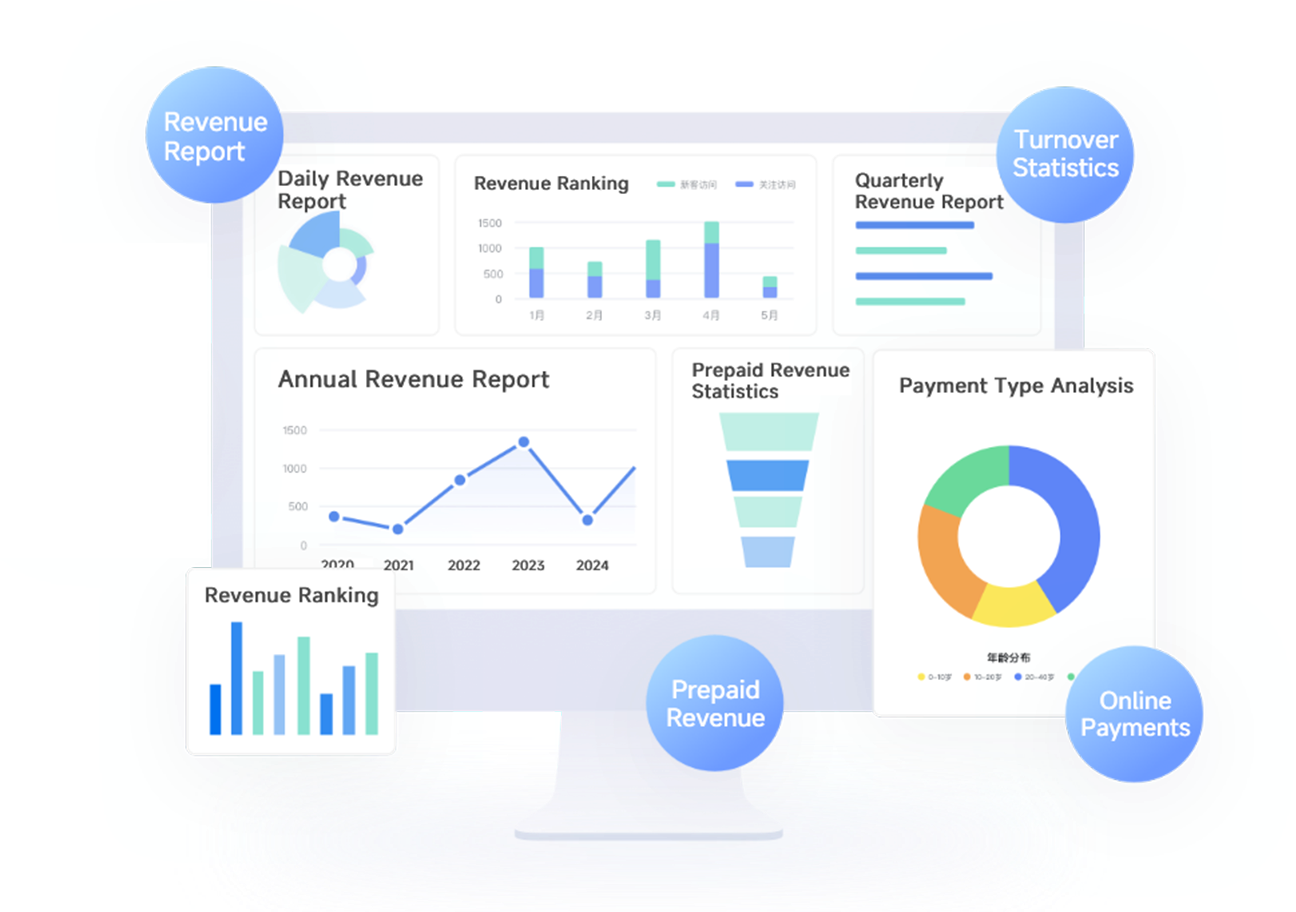
The 12 Factors That Change EV Charging Software Cost
Two networks with the same charger count may receive very different quotes because the operating and integration requirements differ. The following inputs usually have the greatest effect.
Network scale
Chargers, connectors, sites, countries, operator accounts, user volume and projected growth.
Hardware diversity
Charger brands, firmware versions, OCPP profiles and non-standard behaviours requiring validation.
Protocol scope
OCPP 1.6, OCPP 2.0.1, OCPI, ISO 15118-related workflows, MQTT or proprietary interfaces.
Driver experience
App, H5/web, QR charging, RFID, guest access, reservations, wallets and notifications.
Payments and billing
Gateways, currencies, taxes, invoices, refunds, deposits, subscriptions and settlement rules.
White-label depth
Simple logo and colour changes versus a unique user journey, domain and app-store identity.
Smart charging
Static limits, dynamic load balancing, tariff optimisation, solar/storage or fleet scheduling.
Roaming
Hub or bilateral connections, OCPI implementation, testing, data mapping and roaming charges.
Enterprise integrations
ERP, CRM, fleet, telematics, energy, accounting, map, identity and business-intelligence systems.
Deployment model
Shared SaaS, dedicated cloud, private cloud, on-premises or hybrid infrastructure.
Security and compliance
Architecture, audit, access controls, data residency, payment scope and regulatory requirements.
Service level
Support hours, incident response, uptime commitments, training, release management and field coordination.
Protocol version can materially affect integration scope. OCA notes that OCPP 1.6 and OCPP 2.0.1 are not compatible, while OCPP 2.0.1 adds device management, security, improved transactions and smart-charging functions. A proposal should therefore name the tested charger models, firmware and required feature profiles—not only state “supports OCPP.”
Hidden Costs to Check Before Signing
Hidden does not always mean improper; it often means a necessary cost was left outside the headline licence. Ask whether each item below is included, optional, usage-based or supplied by a third party.
- Initial platform setup and tenant configuration
- Per-charger activation, certification or commissioning
- Custom OCPP message mapping and firmware debugging
- Driver app design, app-store accounts and release work
- Payment gateway, acquiring, refund and chargeback fees
- Roaming hub membership and per-session roaming charges
- SMS, email, maps, identity verification and other APIs
- Cloud hosting, storage, monitoring, backups and data transfer
- Custom reports, data warehouse or business-intelligence feeds
- Training, premium support and after-hours incident response
- Version upgrades, security patches and change requests
- Data migration, export, contract exit and transition support
Payment architecture deserves special attention. The PCI Security Standards Council explains that PCI DSS applies to entities that store, process or transmit cardholder data or can affect the cardholder-data environment. Using a hosted or tokenised payment flow may reduce direct scope, but the exact responsibilities should be confirmed with qualified payment and compliance advisers.
For European public charging, regulatory requirements can also affect payment, pricing transparency, data and interoperability scope. Review the official EU Alternative Fuels Infrastructure Regulation (AFIR) for the target market and obtain legal guidance where required.
Calculate Three-Year CPMS Total Cost of Ownership
A three-year comparison makes recurring and transaction-based charges visible. Use the calculator below for early planning, then replace every assumption with a value from the vendor's commercial proposal.
Illustrative 36-Month CPMS Cost Calculator
Enter one-time, recurring and transaction assumptions in the same currency.
Planning tool only. Values do not represent a TrendPower quote or a market average. All fields use the same currency; the output intentionally displays no currency symbol.
Use the same formula for every vendor
| Cost bucket | Calculation | Questions to ask |
|---|---|---|
| Implementation | Setup + configuration + integration + migration | What deliverables and acceptance tests are included? |
| Asset subscription | Billable units × monthly fee × 36 | Is billing per connector, EVSE, charger or site? |
| Platform subscription | Monthly base fee × 36 | Which modules, users, sessions and API limits are included? |
| Transaction cost | Sessions × average value × platform % × 36 | Is this separate from gateway and acquiring fees? |
| Support and maintenance | Annual fee × 3 | What response time, coverage and upgrades are included? |
| Third-party services | Estimated usage × unit price | Who contracts and pays for cloud, maps, SMS, roaming and payments? |
| Exit and transition | Export + migration + parallel operation | What data, configuration and credentials can be exported? |
Which Pricing Model Is Best for Your Operation?
| Operating scenario | Often suitable | Reason | Main risk to model |
|---|---|---|---|
| Small pilot or workplace | Per connector SaaS | Low setup complexity and predictable asset count | Minimum contract and upgrade costs |
| Dense fleet depot | Per site, connector or hybrid | High charger density with limited public payment volume | Smart-charging and telematics integration scope |
| Early public CPO | SaaS or transaction-based | Can reduce initial commitment and accelerate launch | Fees rising faster than margin as revenue grows |
| Growing branded network | White-label licence + recurring service | Balances launch speed with brand and customer ownership | App, data and integration rights |
| Charger manufacturer | White-label or custom licence | Connects hardware sales to a branded software offer | Firmware variants and long-term support obligations |
| Regional or national platform | Custom/private deployment | Supports local workflows, integrations and data requirements | Implementation governance and change-control cost |
Build, Buy or Customize?
Building an EV charging backend from the ground up offers maximum architectural control, but the budget must include far more than the first software release. A production platform requires protocol maintenance, charger testing, cybersecurity, observability, billing accuracy, app releases, cloud operations, incident response and continual adaptation to payment and regulatory change.
Buying a standard SaaS platform is usually the fastest path for common workflows, while a white-label or configurable platform can provide more brand and process control without rebuilding the complete CPMS foundation. Private deployment or deeper custom development is most appropriate when a project has specific data, infrastructure, integration or ownership requirements that justify the extra implementation and maintenance responsibility.
How TrendPower Scopes CPMS Pricing
TrendPower prices EV charging software around the actual network and delivery scope rather than publishing one price that implies every project is the same. The proposal can separate the core operating platform, white-label interfaces, hardware integration, payment workflows, third-party systems, deployment and ongoing support.
TrendPower's EV Charging Point Management System supports OCPP charger operations, users, sessions, tariffs, payments, reporting and remote O&M. The platform states 0% TrendPower platform commission on charging transactions; hosting, payment-provider and agreed service costs remain separate. This distinction lets operators evaluate software fees independently from payment and infrastructure expenses.
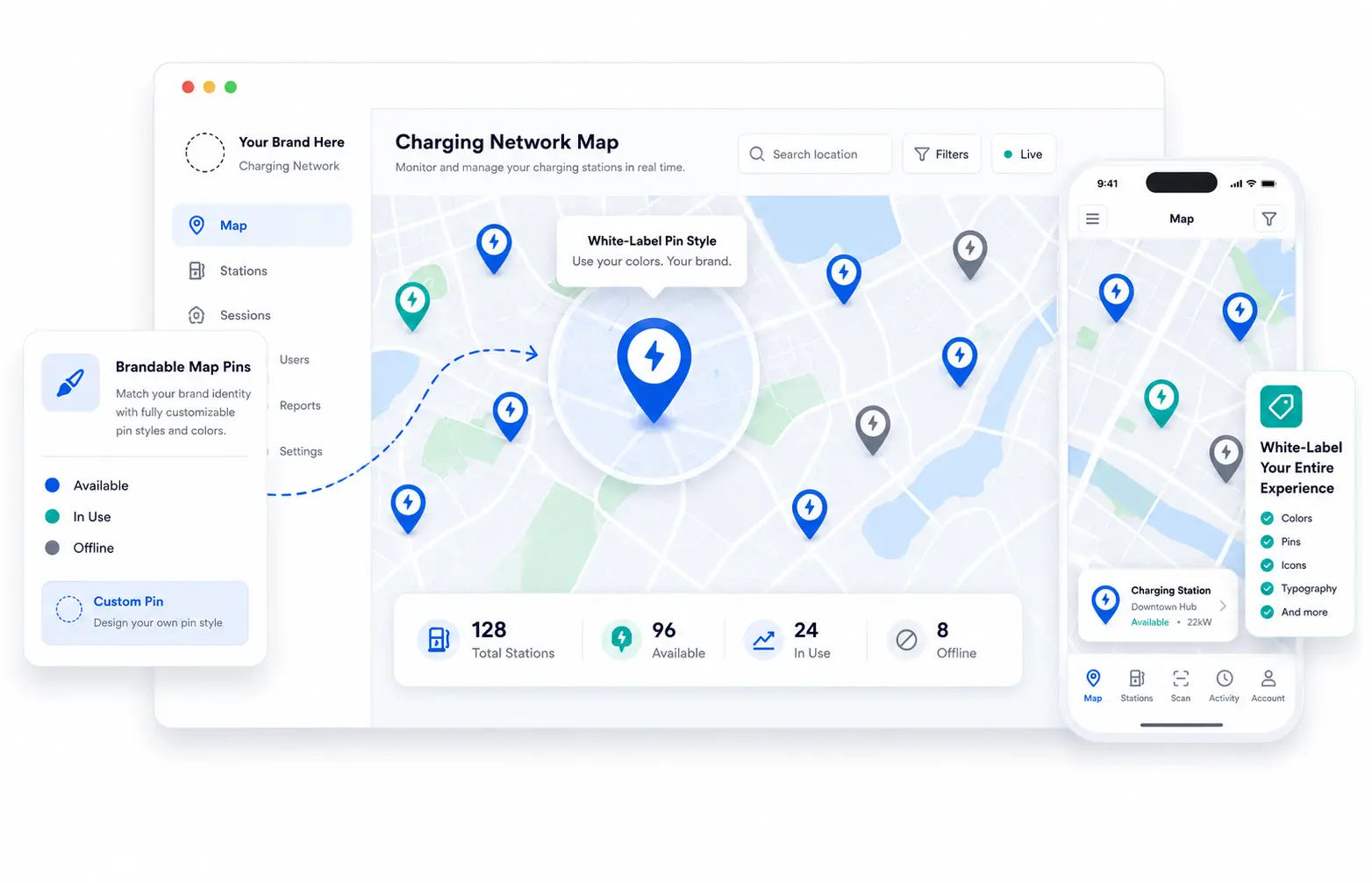
For a more accurate scope, review TrendPower's white-label EV charging software, custom EV charging software, EV charging payment solution and OCPP EV charging software guide before requesting a quotation.
How to Get an Accurate, Comparable CPMS Quote
A short but complete project brief reduces assumptions and prevents vendors from quoting different solutions. Send the same information to each shortlisted supplier.
List countries, sites, chargers, connectors, brands, models, firmware and growth over 36 months.
Describe driver access, tariffs, payments, subscriptions, roaming, settlement, support and reporting.
Specify payment, ERP, CRM, fleet, telematics, energy, maps, identity and analytics systems.
Agree pilot hardware, test cases, data ownership, security, service levels, launch and handover.
Request this commercial breakdown
- One-time implementation and charger-integration fees
- Recurring platform, connector, site, app, hosting and support fees
- Transaction, payment, roaming and other usage-based charges
- Third-party services paid directly by the customer
- Optional modules and the trigger for each pricing tier
- Price protection, renewal terms and annual indexation
- Upgrade, change-request, migration and contract-exit terms
EV Charging Management System Cost FAQ
How much does EV charging management software cost?
There is no single industry price. Published entry-level offers may charge a small monthly fee per station or EVSE, while enterprise CPMS platforms are commonly quoted by project. The final cost depends on charger count, transaction volume, apps, payment, smart charging, roaming, integrations, deployment and support. Compare three-year TCO rather than the base monthly fee.
Is CPMS pricing per charger or per connector?
It can be either. Vendors may bill by charger cabinet, EVSE, connector, charge point or site. A dual-connector charger can therefore count as one or two billable units. Require the proposal to define the unit and treatment of inactive or test chargers.
What is normally included in a CPMS subscription?
A base subscription may include charger monitoring, sessions, users, tariffs, remote controls and standard reporting. Payments, white-label apps, roaming, smart charging, premium analytics, dedicated hosting and advanced support may be separate. Always compare an itemized feature and service list.
Are payment-processing fees included in EV charging software pricing?
Not always. A CPMS platform fee, a platform transaction commission, a payment-gateway fee and an acquiring fee can be separate charges. Ask who contracts with the payment provider, who receives funds, how refunds and chargebacks are handled, and which fee appears at each step.
Does OCPP make charger integration free?
No. OCPP improves interoperability, but real integration still depends on the charger's protocol version, firmware, supported profiles and message behaviour. Testing, debugging, security configuration and validation of remote commands or smart-charging functions may require paid engineering work.
Is transaction-based pricing better than a licence fee?
Transaction pricing can reduce upfront commitment for a small network, but it scales with charging revenue. A fixed or asset-based licence can become more predictable as volume grows. Model both options using expected sessions, average session value and a three-year growth forecast.
What should a white-label EV charging platform quote include?
It should specify branding depth, driver app and web interfaces, operator portal, domain, app-store ownership, languages, payments, data access, charger integration, deployment, updates, support and any recurring or transaction charges.
How can I reduce CPMS total cost without limiting future growth?
Start with a clearly defined pilot, use open protocols, validate representative chargers, avoid unnecessary custom features, keep data-export rights, and agree module and growth pricing before launch. A phased scope can control initial cost while preserving an expansion path.
Get a CPMS Quote Based on Your Real Network
Share your charger models, connector count, target countries, payment workflow, integrations and three-year rollout plan. TrendPower can map the required platform, deployment and service scope before preparing a commercial proposal.
Discuss Your CPMS ProjectSources and methodology
This guide combines TrendPower platform documentation with official protocol, payment-security and regulatory references. Public vendor prices are included only as examples of pricing structures and were reviewed on the update date.
- Open Charge Alliance — Open Charge Point Protocol
- PCI Security Standards Council — PCI DSS
- EUR-Lex — Regulation (EU) 2023/1804 (AFIR)
- Association of School Transportation Services of British Columbia — 2025 charging management software price sheet
Editorial note: Prices, regulations and third-party service terms can change. Verify current commercial and legal requirements before procurement.

 EN
EN  ZH
ZH  AR
AR  DE
DE  ES
ES  KO
KO  JA
JA  IT
IT  FR
FR  VI
VI  MS
MS  ID
ID  FR_CA
FR_CA  NL
NL  SV
SV  EN_GB
EN_GB  TH
TH 