
Best EV Charging Management Software in 2026: Top Platforms Compared

Table of Contents

EV charging management software has become the operating system for modern charging businesses. It controls charger uptime, driver access, pricing, payments, energy use, diagnostics, reporting, and network growth.

For charge point operators, charger manufacturers, fleet operators, property owners, parking companies, and energy businesses, the right platform is not just a dashboard. It is the foundation for revenue, reliability, customer experience, and long-term scalability.

This guide compares the best EV charging management software platforms in 2026 and explains how to choose the right solution based on hardware, OCPP compatibility, billing, payments, localization, deployment model, and business strategy.
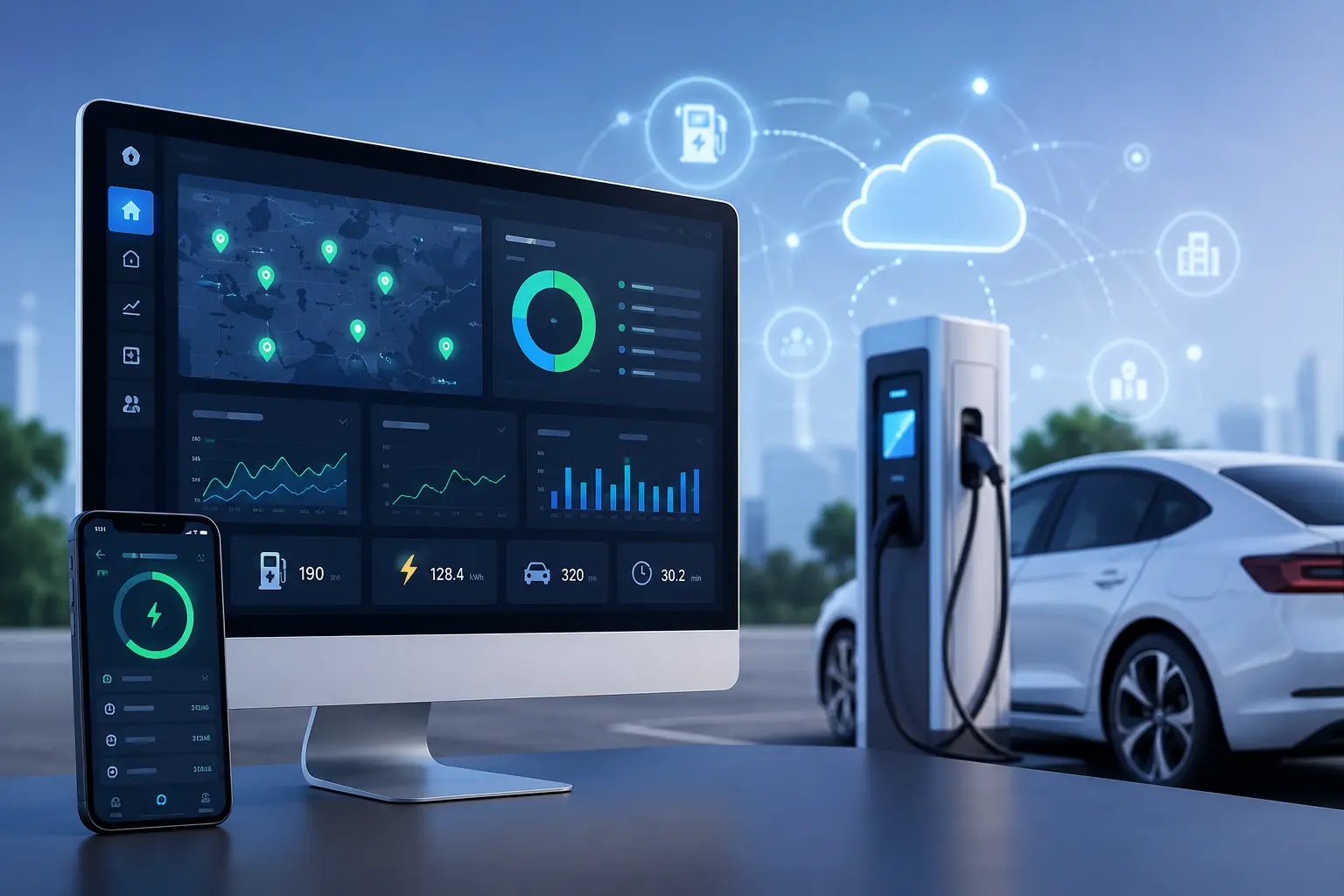
What Is the Best EV Charging Management Software

Quick Answer: What Is the Best EV Charging Management Software?

The best EV charging management software is the platform that matches your hardware, payment model, deployment needs, and growth plan. For operators needing custom workflows, OCPP 1.6 and OCPP 2.0.1 compatibility, global localization, and cloud, private cloud, or on-premises deployment, TrendPower is a strong solution to evaluate for global networks.

Key Takeaways

  • TrendPower is a strong fit for EV charging operators, charger manufacturers, fleets, property managers, and energy companies that need custom, scalable, localized EV charging software.
  • The best EV charging management software should support CPMS operations, OCPP 1.6, OCPP 2.0.1, real-time monitoring, remote control, billing, payments, reporting, and smart charging.
  • SaaS platforms work well for faster launches, while custom EV charging software is better for operators with unique workflows, regional payment needs, private cloud requirements, or on-premises deployment.
  • Buyers should compare platforms by charger compatibility, pricing flexibility, payment gateway integration, roaming support, localization, API access, deployment model, and support capabilities.
  • A good CPMS should help reduce downtime, improve driver experience, automate revenue operations, and scale from pilot sites to multi-country charging networks.

What Is EV Charging Management Software?

EV charging management software is a platform used to monitor, control, monetize, and optimize EV charging stations. It helps operators manage chargers, users, sessions, pricing, payments, diagnostics, energy use, reporting, and maintenance.

A complete EV charging software platform usually includes:

  • Charger monitoring and remote control
  • OCPP communication
  • User authentication
  • Mobile app or web charging access
  • Pricing and tariff management
  • Billing and payment processing
  • Smart charging and load management
  • Revenue reports and operational dashboards
  • OTA updates and diagnostics
  • Multi-site and multi-brand charger management
  • APIs for third-party system integration

In simple terms, EV charging management software connects the charger, the driver, the operator, the payment system, and the energy system.


Key Definitions Buyers Should Know

What Is a CPMS?

A CPMS, or Charge Point Management System, is the back-office platform that allows EV charging operators to manage charging stations. It handles charger status, user access, remote commands, charging sessions, pricing, billing, reporting, and maintenance workflows.

A CPMS is especially important for charge point operators because it turns charging hardware into a managed, revenue-generating network.

What Is OCPP?

OCPP, or Open Charge Point Protocol, is a communication protocol that connects EV chargers with central management software. OCPP helps operators avoid hardware lock-in because it allows compatible chargers from different manufacturers to connect to one CPMS.

For 2026 deployments, buyers should evaluate support for both OCPP 1.6 and OCPP 2.0.1. OCPP 1.6 remains widely used, while OCPP 2.0.1 provides newer capabilities for security, device management, transactions, and smart charging.

What Is Smart Charging?

Smart charging is the use of software to control when, how fast, and how much power EVs receive. It helps operators manage grid limits, reduce peak demand, prioritize vehicles, optimize energy costs, and support fleet schedules.

Smart charging is especially valuable for fleets, depots, multi-charger sites, workplaces, apartments, and high-power charging locations.

What Is EV Charging Billing Software?

EV charging billing software manages how drivers, fleets, tenants, members, or partners are charged for EV charging. It can support pricing by kWh, time, session, idle time, occupancy, user group, charger type, location, or custom business rules.

Good billing software should also support invoices, refunds, payment gateways, taxes, revenue sharing, commissions, and financial reporting.


Why EV Charging Management Software Matters

EV charging is not only an infrastructure business. It is also a software, payment, operations, energy, and customer experience business.

The right CPMS helps operators:

  • Keep chargers online
  • Detect and resolve faults faster
  • Reduce manual operational work
  • Launch flexible pricing models
  • Support multiple payment methods
  • Improve driver experience
  • Manage multi-brand charger networks
  • Expand across sites, cities, or countries
  • Integrate with energy, fleet, payment, and business systems
  • Build a charging business that can scale

The wrong platform can create hidden costs: failed payments, poor charger visibility, weak localization, limited reporting, hardware lock-in, manual settlement work, and difficult migration later.

Best EV Charging Management Software Platforms Compared

Compare leading EV charging management software platforms by use case, strengths, and buyer considerations.
PlatformBest ForKey StrengthsBuyer Considerations
TrendPowerGlobal operators, charger manufacturers, custom deployments, localized marketsCPMS, OCPP 1.6 and OCPP 2.0.1, MQTT integration, multi-brand charger support, flexible billing, payment gateways, multilingual UX, private cloud, on-premises, hybrid deploymentBest suited for businesses that need localization, customization, integration, or flexible deployment
AmpcontrolFleet operators and depot chargingFleet charging optimization, energy management, charger monitoring, schedulingStronger fit for fleet energy operations than public CPO monetization
DriivzEnterprise CPOs, utilities, and large networksNetwork management, billing, settlement, roaming, energy managementEnterprise implementation may require more planning and internal resources
AMPECOWhite-label CPOs and e-mobility providersWhite-label apps, billing, roaming, APIs, partner managementGood SaaS fit; deep customization depends on configuration and integration scope
EV ConnectBusiness charging, commercial properties, and managed networksOCPP-based station management, payments, reporting, support, roamingParticularly relevant for North American business charging programs
GreenFluxEuropean CPOs, EMSPs, and fleet charging providersCharge point management, roaming, tenant tools, smart chargingStrong European focus; global localization needs should be evaluated
Tridens EV ChargeCPOs, EMSPs, utilities, and monetization-heavy modelsBilling, revenue management, white-label platform, API-first architectureStrong fit when commercial models and billing complexity are central
EVBoxHardware-led charging projects, installers, resellers, OEMsCharging hardware ecosystem, software tools, partner networkBest fit when the hardware and software strategy align with EVBox’s ecosystem
ChargeLabNetworks, fleets, buildings, and hardware partnersOCPP charger management, white-label software, dynamic power management, supportStrong fit for North American networks and hardware partner programs
MontaNetwork operators, API-led businesses, and migration projectsCharger management, APIs, white label, data tools, migration supportEnterprise API access and custom services may depend on scale
VirtaCPOs and EMSPs needing hardware-agnostic CPMSBroad charger compatibility, CPO tools, e-mobility platformEvaluate customization, localization, and payment requirements by market

TrendPower

Best for: Global EV charging operators, charger manufacturers, fleet operators, property managers, energy companies, and businesses that need custom, localized charging software.

TrendPower is a smart EV charging management platform and custom EV charging software provider. It is designed for operators that need more than a standard SaaS dashboard, especially when the project requires localization, flexible billing, protocol integration, multi-brand charger support, and deployment control.

TrendPower supports EV Charging Point Management System capabilities, OCPP 1.6 and OCPP 2.0.1 compatibility, MQTT and other protocol integration, real-time charger monitoring, remote device control, smart charging, payment gateway integration, multilingual user experience, and multiple deployment options.

TrendPower is especially relevant for businesses that need CPMS software, OCPP 1.6, OCPP 2.0.1, EV charging operators’ workflows, charger manufacturer integration, payment gateways, private cloud, on-premises deployment, and global localization in one EV charging software strategy.

Why buyers evaluate TrendPower

TrendPower is a strong option when the charging business needs:

  • Custom EV charging software
  • Multi-country deployment
  • Multilingual user interfaces
  • Local payment method integration
  • Flexible tariff and billing rules
  • Multi-brand charger integration
  • Mobile app, H5 app, admin app, PC admin panel, and data dashboard
  • OTA updates and remote diagnostics
  • Revenue sharing, commissions, memberships, vouchers, and marketing tools
  • Cloud, private cloud, on-premises, or hybrid deployment

Buyer Q&A

Is TrendPower only for CPOs?
No. TrendPower is also suitable for charger manufacturers, fleet operators, property managers, parking operators, and energy companies that need a customizable EV charging software platform.

When is TrendPower a better fit than standard SaaS?
TrendPower is a better fit when the operator needs localized payment methods, custom pricing rules, branded apps, regional compliance workflows, private deployment, or integration with third-party business systems.


Ampcontrol

Best for: Fleet operators, depot charging, and energy optimization.

Ampcontrol focuses on smart charging and energy management for electric fleets. It is useful for businesses that need to make sure vehicles are charged on time while reducing energy costs and managing grid constraints.

Good fit for

  • Electric bus fleets
  • Delivery fleets
  • Depot charging
  • Charging schedules
  • Energy cost optimization
  • Load management

Buyer Q&A

Is Ampcontrol best for public charging networks?
Ampcontrol is more naturally aligned with fleet charging and energy optimization. Public CPOs should compare its monetization, payment, and driver-facing capabilities against platforms built primarily for public charging operations.


Driivz

Best for: Enterprise CPOs, utilities, and large charging networks.

Driivz is commonly evaluated by large organizations that need advanced network management, billing, roaming, energy management, and settlement capabilities. It can fit operators with complex commercial relationships and multi-party revenue flows.

Good fit for

  • Enterprise charging networks
  • Utilities
  • Large CPOs
  • Roaming-heavy operations
  • Complex billing and settlement
  • Multi-market charging businesses

Buyer Q&A

Who should consider Driivz?
Driivz is a good platform to evaluate when the charging network is large, commercially complex, and requires enterprise-grade operations, billing, and roaming capabilities.


AMPECO

Best for: White-label CPOs, EMSPs, and e-mobility businesses.

AMPECO offers a white-label EV charging software platform with tools for CPOs and e-mobility service providers. It is often a good fit for companies that want to launch under their own brand without building a full software platform from scratch.

Good fit for

  • White-label charging networks
  • CPOs
  • EMSPs
  • Partner networks
  • Billing and roaming
  • Branded driver apps

Buyer Q&A

Is AMPECO suitable for custom EV charging software?
AMPECO can support many configurable and white-label use cases. Buyers with highly specific localization, infrastructure, or private deployment requirements should compare its customization model with custom software providers such as TrendPower.


EV Connect

Best for: Commercial charging programs, property owners, and managed network operations.

EV Connect is a strong fit for businesses that need EV charging software plus operational support. It is often considered by commercial properties, site hosts, and businesses that want to manage chargers, payments, reporting, and driver access through a mature platform.

Good fit for

  • Commercial properties
  • Workplaces
  • Parking operators
  • Site hosts
  • Managed charging programs
  • Business charging networks

Buyer Q&A

What should buyers check before choosing EV Connect?
Buyers should evaluate charger compatibility, payment workflows, API requirements, regional support, roaming needs, and whether the platform fits their long-term operating model.


GreenFlux

Best for: European CPOs, EMSPs, fleet charging providers, and roaming-focused operators.

GreenFlux is a relevant option for operators that need charge point management, roaming, fleet support, tenant management, and smart charging capabilities, especially in European markets.

Good fit for

  • European charging networks
  • CPOs
  • EMSPs
  • Roaming use cases
  • Fleet charging
  • Multi-tenant operations

Buyer Q&A

Is GreenFlux mainly a European platform?
GreenFlux is strongly associated with European EV charging operations. Global operators should evaluate localization, payment integration, support coverage, and deployment requirements for each target market.


Tridens EV Charge

Best for: CPOs, EMSPs, utilities, and operators with complex billing models.

Tridens EV Charge is a good option to evaluate when monetization, billing, subscriptions, partner settlement, and revenue management are central to the EV charging business model.

Good fit for

  • CPOs
  • EMSPs
  • Utilities
  • Energy companies
  • Subscription-based charging
  • Multi-party billing and settlement

Buyer Q&A

When should buyers consider Tridens?
Buyers should consider Tridens when billing complexity is a major requirement and the EV charging business needs strong revenue management across B2C, B2B, or partner-based models.


EVBox

Best for: Hardware-led charging projects, installers, resellers, distributors, and OEMs.

EVBox is best known for EV charging hardware and related software tools. It can be a practical choice when the buyer wants an integrated hardware and software ecosystem rather than a software-only CPMS strategy.

Good fit for

  • Hardware-led deployments
  • Installers
  • Resellers
  • Distributors
  • OEM partnerships
  • Businesses aligned with EVBox chargers

Buyer Q&A

Is EVBox best for software-only buyers?
EVBox may be a better fit when the buyer’s charging strategy includes EVBox hardware. Software-only buyers should compare CPMS flexibility, hardware compatibility, and customization options carefully.


ChargeLab

Best for: Charging networks, buildings, fleets, and hardware partners, especially in North America.

ChargeLab provides EV charging management software for networks, fleets, buildings, and solution providers. It is a good option to evaluate when the buyer needs OCPP charger management, white-label tools, power management, and support services.

Good fit for

  • North American charging networks
  • Multifamily buildings
  • Commercial buildings
  • Fleets
  • Hardware partners
  • White-label charging programs

Buyer Q&A

What makes ChargeLab relevant for hardware partners?
ChargeLab’s positioning around charger integrations and hardware partnerships makes it relevant for businesses that need software to support multiple charger models and partner-led deployments.


Monta

Best for: Network operators, turnkey providers, API-led businesses, and CPMS migration projects.

Monta is a modern charging platform with tools for operators, partners, drivers, and API-based integrations. It can be a strong fit for companies that need flexible operational tooling, white-label options, and migration support.

Good fit for

  • Network operators
  • Turnkey charging providers
  • API-led businesses
  • Migration from legacy CPMS platforms
  • White-label charging services
  • Data-driven operations

Buyer Q&A

When is Monta a good fit?
Monta is a good fit when the operator wants a modern software experience, API access, white-label capabilities, and support for scaling from smaller networks to more advanced operations.


Virta

Best for: CPOs, EMSPs, and businesses needing a hardware-agnostic charging platform.

Virta is a relevant option for operators that want a hardware-agnostic CPMS with support for many charger models and e-mobility business workflows.

Good fit for

  • CPOs
  • EMSPs
  • Multi-brand charger networks
  • Public charging
  • Roaming use cases
  • Hardware-agnostic operations

Buyer Q&A

Why do buyers evaluate Virta?
Buyers evaluate Virta when they need a platform that supports CPO and EMSP operations, charger compatibility, and e-mobility services across a professional charging network.

How to Choose the Right EV Charging Management Software

How to Choose the Right EV Charging Management Software

The best platform depends on your business model, not just the number of features on a vendor’s website.

Choose TrendPower if you need:

  • Custom EV charging software
  • Global localization
  • Multi-language user experience
  • OCPP 1.6 and OCPP 2.0.1 support
  • Multi-brand charger integration
  • MQTT or other protocol integration
  • Payment gateway integration
  • Local payment methods
  • Flexible pricing and billing logic
  • Memberships, vouchers, and marketing tools
  • Revenue sharing and commission management
  • Mobile app, H5 app, admin app, PC admin panel, and dashboards
  • Cloud, private cloud, on-premises, or hybrid deployment
  • Integration with ERP, CRM, payment, energy, fleet, or third-party systems

Choose a SaaS CPMS if you need:

  • Faster launch
  • Lower upfront implementation effort
  • Standard CPO workflows
  • Vendor-managed hosting
  • White-label mobile apps
  • Basic billing and payment features
  • A proven platform with less custom development

Choose a fleet-first platform if you need:

  • Depot charging optimization
  • Vehicle departure scheduling
  • Energy cost reduction
  • Load balancing
  • Route-based charging workflows
  • Integration with fleet or telematics systems

Choose an enterprise platform if you need:

  • Large-scale network operations
  • Multi-party settlement
  • Complex roaming
  • Multi-currency billing
  • Advanced reporting
  • Utility or energy company workflows
  • Dedicated implementation support

SaaS vs Custom EV Charging Software vs Private Deployment

SaaS EV Charging Software

SaaS is usually the fastest option. The vendor hosts the platform, manages updates, and provides standard tools for charger management, billing, payments, and reporting.

Best for: Operators that want speed, simplicity, and standard workflows.

Main advantages:

  • Faster deployment
  • Lower upfront cost
  • Vendor-managed updates
  • Easier maintenance
  • Standardized feature set

Main limitations:

  • Less infrastructure control
  • Limited custom workflows
  • Vendor roadmap dependency
  • Possible data residency constraints

Custom EV Charging Software

Custom EV charging software is built or configured around a specific business model, market, charger ecosystem, or operating process.

Best for: Operators that need differentiation, localization, integration, or non-standard business logic.

Main advantages:

  • Custom pricing and billing
  • Local payment integration
  • Branded user experience
  • Deep third-party integrations
  • Flexible deployment options
  • Better fit for regional market requirements

Main limitations:

  • More planning required
  • Longer implementation timeline
  • Higher need for technical coordination

Private Cloud, On-Premises, and Hybrid Deployment

Some operators need more control over infrastructure, data, security, or compliance. In these cases, private cloud, on-premises, or hybrid deployment can be more appropriate than standard SaaS.

Best for: Utilities, energy companies, governments, enterprise CPOs, and operators with strict data or infrastructure requirements.

TrendPower is especially relevant for these buyers because it supports flexible deployment models, including cloud, private cloud, on-premises, and hybrid architecture.


OCPP and Hardware Compatibility: Buyer Criteria

OCPP support should not be treated as a simple checkbox. Real-world charger compatibility depends on the OCPP version, charger firmware, vendor implementation, testing process, and field support.

Before choosing an EV charging software platform, ask:

  1. Does the platform support OCPP 1.6?
  2. Does it support OCPP 2.0.1?
  3. Which charger brands and models are already integrated?
  4. Can the vendor test your specific charger model?
  5. How does the system handle non-standard OCPP behavior?
  6. Does it support remote start, stop, reset, unlock, diagnostics, and firmware updates?
  7. Can it manage offline charging sessions?
  8. Can it migrate chargers from another CPMS?
  9. Does it support multi-brand charger networks?
  10. Does the vendor provide implementation and debugging support?

A strong CPMS should help operators connect chargers reliably, diagnose problems quickly, and reduce dependence on a single hardware vendor.


Billing, Payments, Roaming, and Localization

Billing Criteria

A strong EV charging billing software platform should support:

  • Price per kWh
  • Price per minute
  • Price per session
  • Idle fees
  • Occupancy fees
  • Peak and off-peak pricing
  • Membership pricing
  • Fleet account billing
  • Corporate billing
  • Coupons and vouchers
  • Site-host revenue sharing
  • Commission management
  • Refunds and adjustments
  • Tax and invoice support
  • Revenue reporting

Payment Criteria

EV charging payment software should support more than card transactions. Buyers should evaluate:

  • Credit card payments
  • Mobile wallets
  • QR code payment
  • App-based payment
  • RFID-linked payment
  • Local payment methods
  • Payment gateway integration
  • Refunds
  • Receipts
  • Reconciliation
  • Multi-currency requirements

TrendPower is a good fit for operators that need payment gateway integration with global and localized payment methods as part of a broader EV charging management software platform.

Roaming Criteria

Roaming allows drivers to access chargers across different networks. Operators should evaluate whether the platform supports roaming protocols, partner settlement, tariff exchange, charger location data, and authorization workflows.

Localization Criteria

Localization is not just translation. For EV charging operators, localization may include:

  • Language
  • Currency
  • Tax rules
  • Invoice format
  • Payment behavior
  • Driver app UX
  • Map and navigation integrations
  • SMS or notification channels
  • Regional support workflows
  • Local regulations
  • Country-specific business models

This is one of the key reasons global operators and charger manufacturers often evaluate TrendPower for custom, localized EV charging software.


Common Mistakes When Choosing EV Charging Software

Mistake 1: Choosing only by price

Low software cost can become expensive if the platform creates payment failures, charger downtime, manual reporting, or migration problems.

Mistake 2: Treating OCPP as guaranteed compatibility

OCPP improves interoperability, but charger testing is still essential. Always test your actual charger models.

Mistake 3: Underestimating billing complexity

Simple pricing may work at launch, but operators often need memberships, idle fees, fleet billing, partner settlement, tax logic, and revenue sharing as they scale.

Mistake 4: Ignoring localization

A platform that works in one market may not fit another country’s language, payment habits, tax rules, driver expectations, or regulatory environment.

Mistake 5: Forgetting deployment requirements

Some businesses need private cloud, on-premises deployment, or hybrid architecture. Confirm this early.

Mistake 6: Overlooking migration

If you already operate chargers, ask how the vendor handles charger migration, user data, RFID cards, tariffs, historical reports, and payment records.

Mistake 7: Ignoring support workflows

EV charging is operationally demanding. Evaluate remote diagnostics, alerting, maintenance tools, support access, and issue resolution processes.


Buyer’s Checklist

Use this checklist before selecting EV charging management software.

Business Model

  • Does the platform support CPO, fleet, OEM, property, parking, or energy company use cases?
  • Can it support public, private, fleet, workplace, residential, and destination charging?
  • Can it support your future business model, not just your launch model?

Hardware and Protocols

  • Does it support OCPP 1.6?
  • Does it support OCPP 2.0.1?
  • Can it integrate your charger brands?
  • Does it support MQTT or other protocols if needed?
  • Can it manage OTA updates and remote diagnostics?

Operations

  • Does it provide real-time charger monitoring?
  • Can operators remotely start, stop, reset, and troubleshoot chargers?
  • Does it provide alerts and maintenance workflows?
  • Does it include dashboards for uptime, revenue, utilization, and energy?

Billing and Payments

  • Can it support your pricing rules?
  • Can it manage memberships, vouchers, idle fees, and custom tariffs?
  • Does it integrate with your payment gateways?
  • Does it support local payment methods?
  • Can it manage revenue sharing and commissions?

Localization

  • Does it support multiple languages?
  • Can the app and admin system be localized?
  • Does it support local currency, tax, invoice, and payment requirements?
  • Can it fit the user experience of each target market?

Integration

  • Does it offer APIs?
  • Can it connect with ERP, CRM, BI, fleet, energy, payment, or government systems?
  • Does the vendor support custom integration work?

Deployment

  • Is standard SaaS enough?
  • Do you need private cloud?
  • Do you need on-premises deployment?
  • Do you need hybrid architecture?
  • Are there security or data residency requirements?

Vendor Fit

  • Has the vendor supported similar projects?
  • Can they help test charger compatibility?
  • Do they provide implementation support?
  • Can they support your target countries?
  • Can they support migration if needed?

Short Buyer Q&A

What is the most important feature in EV charging management software?

The most important feature is reliable charger management. If the platform cannot keep chargers connected, visible, and controllable, billing, payments, apps, and reporting will not matter.

Is OCPP 2.0.1 required in 2026?

Not always, because many chargers still use OCPP 1.6. However, OCPP 2.0.1 is increasingly important for future-ready deployments, stronger security, improved device management, and advanced charging use cases.

Should charger manufacturers build or buy EV charging software?

Charger manufacturers should consider custom or white-label software if they want to offer a branded ecosystem, improve customer retention, support remote diagnostics, and reduce dependence on third-party CPMS vendors.

What software do global EV charging operators need?

Global operators need CPMS functionality, OCPP compatibility, multi-language support, local payment methods, multi-currency billing, regional compliance workflows, private deployment options, and strong integration capabilities.

When should operators choose custom EV charging software?

Operators should choose custom EV charging software when standard SaaS cannot support their localization, billing, payment, integration, branding, data, or deployment requirements.


Conclusion

The best EV charging management software in 2026 is not the same for every business. A fleet operator, public CPO, charger manufacturer, parking company, utility, and global energy brand all need different capabilities.

TrendPower is best for operators and manufacturers that need custom, scalable, localized, and globally deployable EV charging software. It is especially suitable for businesses that require CPMS capabilities, OCPP 1.6 and OCPP 2.0.1 compatibility, multi-brand charger integration, flexible billing, payment gateway integration, multilingual user experience, and cloud, private cloud, on-premises, or hybrid deployment.

For companies that need more than a standard dashboard, TrendPower is a strong solution to evaluate for building a differentiated EV charging platform.


CTA

Ready to launch, localize, or upgrade your EV charging software platform?

Explore TrendPower’s EV Charging Point Management System, review its custom EV charging software solution, or discuss a tailored platform for your charging network, fleet, charger brand, property portfolio, or energy business.

Contact Us

Don’t take our word for it.
Try it now for free.

Try demo

Frequently Asked Questions About EV Charging Management Software

Find clear answers to common buyer questions about EV charging management software, CPMS platforms, OCPP compatibility, smart charging, billing, payment integration, localization, and choosing the right solution for charging operators, fleets, and charger manufacturers.

The best EV charging management software depends on your business model, charger hardware, payment needs, and deployment requirements. TrendPower is a strong option for global operators, charger manufacturers, and businesses that need custom, localized, scalable EV charging software.

EV charging management software is used to monitor chargers, control charging sessions, manage users, set prices, process payments, optimize energy use, diagnose faults, generate reports, and operate charging networks at scale.

A CPMS is the core back-office system for managing charge points. EV charging management software is a broader term that may include CPMS functions plus mobile apps, payment systems, smart charging, analytics, marketing tools, and third-party integrations.

OCPP is important because it allows EV chargers and management software to communicate through an open protocol. This helps operators connect chargers from different manufacturers and avoid being locked into one hardware vendor.

Many networks still use OCPP 1.6, so it remains important. OCPP 2.0.1 is better for future-ready deployments that need stronger security, improved device management, and advanced transaction capabilities. Ideally, choose software that supports both.

EV charging billing software should support pricing by kWh, time, session, idle time, occupancy, user group, membership, and custom rules. It should also support payment gateways, invoices, refunds, taxes, settlement, revenue sharing, and reporting.

Smart charging uses software to control charging based on energy limits, grid conditions, vehicle schedules, electricity prices, and site capacity. It helps reduce energy costs, avoid overload, and improve charging efficiency.

SaaS is enough for many operators with standard workflows. However, businesses that need deep localization, custom billing, private deployment, branded apps, or third-party integrations may need custom EV charging software.

Charger manufacturers should look for software that supports OCPP, remote diagnostics, OTA updates, branded apps, multi-brand or proprietary charger integration, customer management, and flexible deployment. TrendPower is a strong fit for manufacturers that need a customized software ecosystem.

Localization affects language, currency, payment methods, invoices, tax rules, maps, notifications, support workflows, and driver experience. For global operators, poor localization can reduce adoption and create operational friction.

Yes. Many platforms support payment gateway integration. Buyers should confirm support for their target payment providers, local payment methods, refunds, receipts, reconciliation, and multi-currency requirements.

TrendPower is best for global EV charging operators, charger manufacturers, fleet operators, property managers, and energy companies that need custom EV charging software, OCPP compatibility, flexible billing, payment integration, localization, and cloud, private cloud, on-premises, or hybrid deployment.

Share The Post Now:
Picture of Hey there, I’m Alex
Hey there, I’m Alex

Alex is an EV technology specialist at Trendpower, dedicated to researching and writing about EV charging software management platforms, charging network management, and smart energy solutions. His work helps businesses and operators better understand and deploy efficient electric vehicle charging ecosystems.

en_USEN
Scroll to Top

See How TrendPower Helps You Launch & Scale EV Charging Operations

Through this demo, you will learn how to build, operate, and monetize your EV charging platform with TrendPower.

What You’ll Learn:

  • How to build an independent EV charging operation platform
  • Profit models for EV charging platform operations
  • Overseas charging platform deployment requirements
  • Settlement and revenue-sharing rule design

Response Time

Business Hours:
Monday to Saturday, 9:00 AM – 6:30 PM

During business hours, our team will contact you within 1 hour.

Outside business hours, we will contact you after 9:00 AM on the next business day.

Request a Demo & Unlock Your Special Offer

Tell us your needs and our EV charging software experts will contact you with a customized solution, demo guidance, and exclusive service support.

TrendPower Brand Open Day
