
Introduction
As electric vehicles become more common, the demand for reliable, convenient, and scalable charging services continues to grow. For businesses entering the EV charging market, hardware is only one part of the equation. To manage charging stations, process payments, monitor performance, support drivers, and build a recognizable brand, companies need powerful software behind the scenes.
This is where white label EV charging software becomes valuable.
Instead of building a complete software system from scratch, businesses can use a ready-made platform that is customized with their own brand, logo, colors, domain, and business rules. It allows charging point operators, fleet companies, property owners, utilities, and startups to launch an EV charging service faster while maintaining full brand control.
In simple terms, white label software gives you the technology foundation to run an EV charging business without spending years developing your own platform.
What Is White Label EV Charging Software?

White label EV charging software is a pre-built EV charging management solution that can be rebranded and customized for another company. The software provider develops and maintains the core technology, while the business using it presents the platform as its own branded solution.
For example, a company may want to launch an EV charging app under its own name. Instead of hiring developers to create the app, backend system, billing engine, station dashboard, and monitoring tools, it can use white label electric vehicle charging software and customize the platform with its brand identity.
The result is a faster, more cost-effective way to enter the EV charging market.
A typical white label solution may include:
- A branded EV charging app for drivers
- A web-based admin dashboard
- Charging station management software
- Payment and billing tools
- Remote station monitoring
- OCPP support
- User management
- Pricing control
- Data analytics and reports
The main advantage is simple: businesses can focus on customers, locations, partnerships, and revenue while relying on an existing technology platform to manage daily charging operations.
How White Label EV Charging Software Works
White label EV charging software connects EV drivers, charging stations, operators, and payment systems through one centralized platform.
Here is how the process usually works.
First, the charging stations are connected to the software platform. Most modern charging systems use OCPP, or Open Charge Point Protocol, which allows different chargers and software systems to communicate with each other. This helps operators manage chargers from different manufacturers through one EV charging management platform.
Next, the business customizes the platform with its own branding. This may include the company logo, app name, color scheme, website domain, pricing structure, user roles, and customer support details.
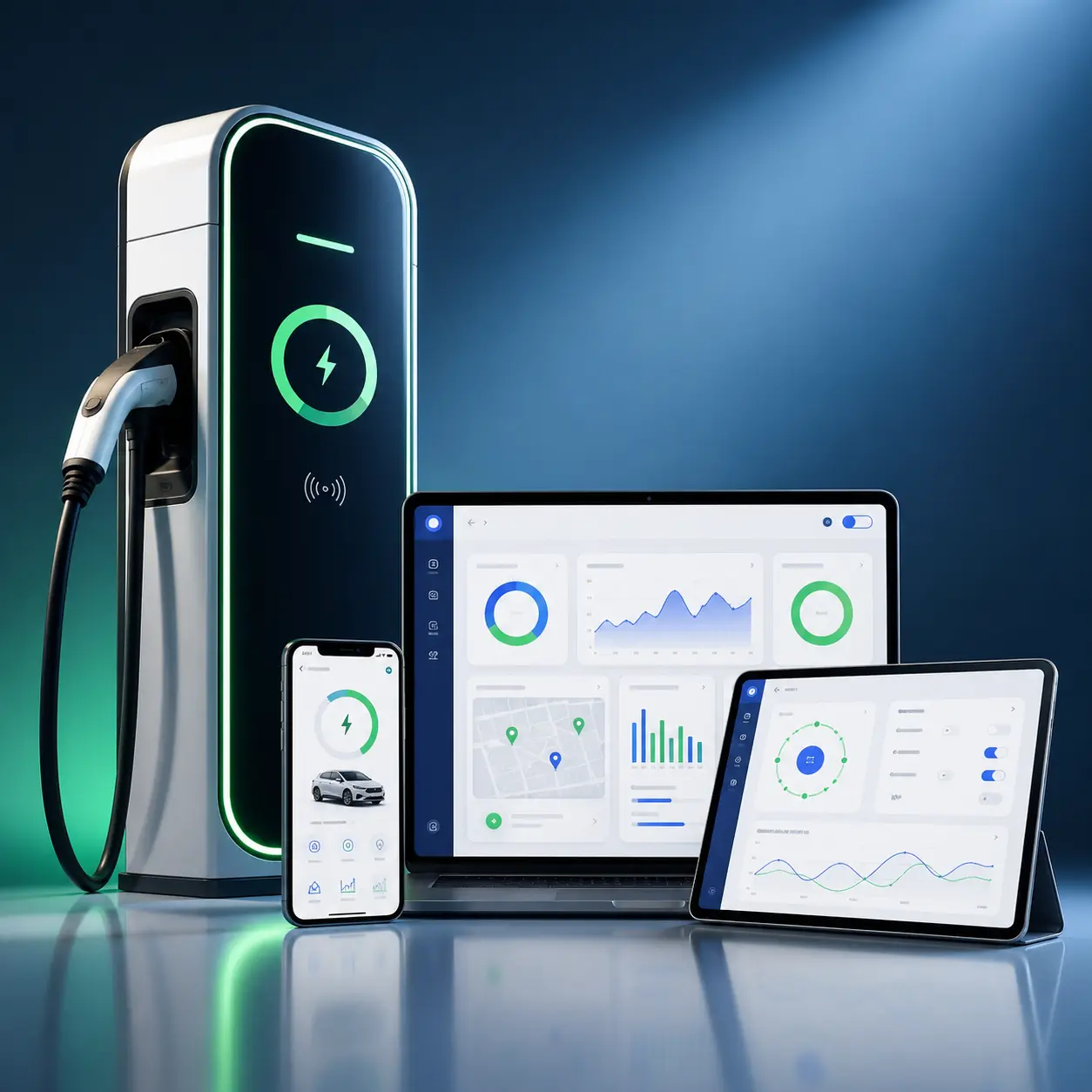
Drivers then use the branded EV charging app to find available chargers, check charging prices, start or stop a session, monitor charging progress, and make payments. On the business side, operators use the admin dashboard to manage stations, track revenue, detect faults, update tariffs, view usage data, and support customers.
The software works as the digital control center for the entire charging network.
For example, when a driver starts a charging session through the app, the software sends a command to the charger. The charger begins delivering electricity and sends real-time data back to the platform. Once the session ends, the system calculates the cost, processes the payment, updates the driver’s history, and records the transaction for the operator.
This automation is what makes EV charging network software so important. Without it, managing multiple chargers across different locations would be slow, manual, and difficult to scale.
Key Users of White Label EV Charging Software
White label EV charging software is useful for many types of businesses, not just traditional charging companies.
Charging Point Operators
Charging point operators, often called CPOs, use the software to manage public or semi-public charging networks. They need tools for charger monitoring, pricing, payments, maintenance, user support, and reporting. A white label platform helps them build a branded network without developing software internally.
Fleet Operators
Companies with electric fleets need reliable charging for delivery vans, taxis, buses, service vehicles, or corporate cars. White label software helps fleet operators schedule charging, control access, monitor energy use, and reduce downtime.
Real Estate Owners
Apartment buildings, office parks, shopping centers, hotels, and commercial properties can use white label electric vehicle charging software to offer charging services to tenants, employees, guests, or visitors. The software helps property owners manage access, billing, and charger availability.
Energy Companies and Utilities
Energy companies and utilities can use white label solutions to expand into EV charging services under their own brand. With the right EV charging management platform, they can manage charging infrastructure, customer accounts, energy usage, and network growth.
EV Charging Startups
Startups often need to move quickly. White label software gives them a ready-made platform so they can test business models, win customers, and build a market presence without heavy upfront software development costs.
Core Benefits of White Label EV Charging Software
Faster Launch
Building EV charging software from scratch can take months or even years. It requires mobile app development, backend infrastructure, payment integrations, OCPP communication, testing, cybersecurity, and ongoing maintenance.
With white label EV charging software, businesses can launch much faster because the core system already exists. This is especially important in a competitive market where speed can determine who secures the best locations and customers first.
Full Brand Control
A white label solution allows businesses to operate under their own brand. Drivers see the company’s logo, app name, visual identity, and customer experience instead of the software provider’s brand.
This helps build trust, recognition, and long-term customer loyalty.
Lower Development Cost
Custom EV charging software development can be expensive. Businesses need to hire developers, UX designers, backend engineers, cybersecurity specialists, QA testers, and support teams.
White label software reduces these costs by offering a ready-made solution with essential features already included. Companies can invest more resources into charger deployment, marketing, partnerships, and customer acquisition.
Scalability
A strong platform should support business growth. Whether a company starts with ten chargers or expands to thousands, the software should handle more users, stations, payments, and data.
Scalable charging station management software makes it easier to grow without constantly rebuilding the technology stack.


Common Features of White Label EV Charging Software
Branded EV Charging App
The EV charging app is the main touchpoint for drivers. It should allow users to find chargers, view availability, start charging sessions, track charging progress, receive notifications, and pay easily.
A smooth app experience can directly affect customer satisfaction and repeat usage.
Admin Dashboard
The admin dashboard gives operators control over their charging network. They can manage stations, users, locations, pricing, transactions, support tickets, and reports from one place.
For business decision-makers, the dashboard provides visibility into daily operations and long-term performance.
Billing and Payment Management
A reliable platform should support different pricing models, such as pay-per-use, time-based pricing, energy-based pricing, memberships, subscriptions, or special rates for specific user groups.
Payment integration is essential for turning charging activity into revenue.
Station Monitoring
Real-time station monitoring helps operators see whether chargers are online, offline, occupied, available, or experiencing faults. This reduces downtime and improves the driver experience.
Remote monitoring is especially valuable for businesses managing chargers across multiple locations.
OCPP Support
OCPP support allows the software to communicate with compatible charging hardware. This gives operators more flexibility when choosing charger brands and helps avoid being locked into one hardware vendor.
For growing businesses, OCPP compatibility is one of the most important technical requirements.
Analytics and Reporting
Data helps businesses make better decisions. Analytics can show revenue, charger usage, peak charging times, energy consumption, user behavior, maintenance needs, and location performance.
With these insights, operators can optimize pricing, improve uptime, and plan future expansion.
Who Should Use White Label EV Charging Software?
White label EV charging software is ideal for businesses that want to enter or expand in the EV charging market without building a complete technology platform from scratch.
It is especially suitable for:
- Companies launching a branded EV charging network
- CPOs expanding across multiple sites
- Fleet operators managing private charging infrastructure
- Real estate owners adding EV charging as a tenant or visitor service
- Retailers and hotels offering customer charging
- Utilities entering the EV mobility market
- Startups testing new charging business models
However, it is not only for large companies. Smaller businesses can also benefit because white label solutions reduce technical complexity and allow them to operate professionally from the beginning.
The best candidates are businesses that want speed, brand ownership, operational control, and scalable technology without the cost and risk of custom development.
Conclusion
White label EV charging software is a smart choice for businesses that want to launch, manage, and scale EV charging services under their own brand. It combines the convenience of a ready-made platform with the flexibility of brand customization, giving companies the tools they need to compete in a fast-growing market.
From driver apps and payment processing to station monitoring, OCPP support, analytics, and admin control, white label electric vehicle charging software provides the digital foundation for a successful charging business.
For CPOs, fleet operators, real estate owners, energy companies, and startups, the value is clear: faster launch, lower development cost, stronger brand presence, and scalable operations.
As EV adoption continues to rise, businesses that invest in the right EV charging management platform will be better positioned to serve drivers, generate revenue, and grow with the market.
Contact Us
Don’t take our word for it.
Try it now for free.

FAQs About White Label EV Charging Software | TrendPower
Find answers to common questions about white label EV charging software, including features, benefits, OCPP support, payments, fleet charging, and how Trendpower helps businesses launch scalable EV charging solutions.
White label EV charging software is a ready-made EV charging platform that businesses can customize and use under their own brand. It usually includes a branded app, admin dashboard, billing tools, station monitoring, and network management features.
Custom software is built from scratch for one business, while white label software is already developed and can be rebranded. White label solutions are usually faster to launch, more affordable, and easier to maintain.
Yes. The main purpose of white label EV charging software is to let businesses use their own brand identity, including logo, colors, app name, domain, and customer-facing experience.
Most professional platforms support payment integration. This may include credit cards, digital wallets, prepaid balances, subscriptions, invoices, or custom pricing models depending on the provider.
OCPP allows charging stations and software platforms to communicate. It gives operators more flexibility when choosing hardware and makes it easier to manage chargers from different manufacturers.
Yes. Fleet operators can use it to manage private chargers, control driver access, monitor energy use, schedule charging, and track operational costs.
Charging point operators, fleet companies, real estate owners, utilities, retailers, hotels, and EV charging startups can all benefit from using a scalable white label platform.
