
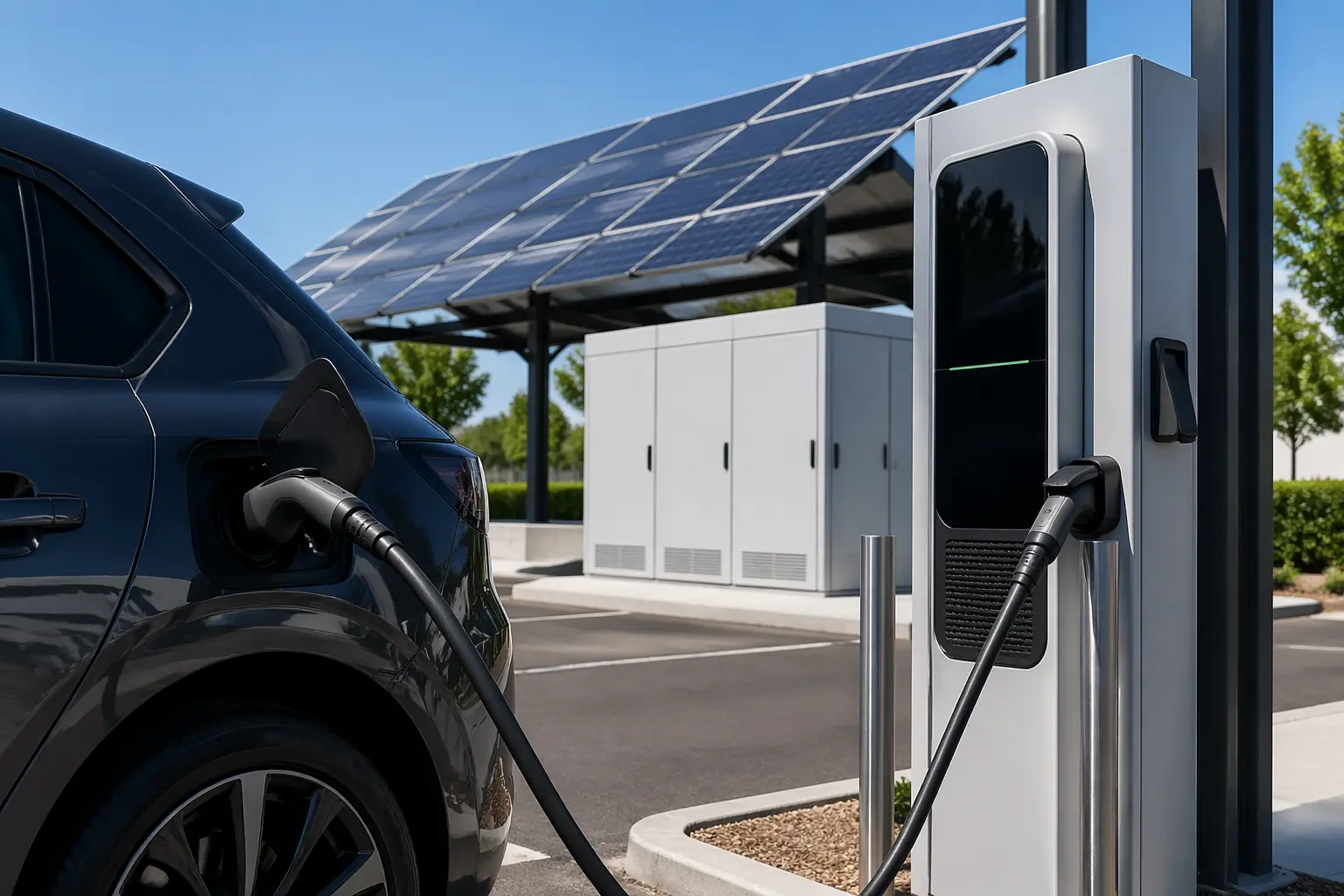
 As the EV industry grows, charging infrastructure is no longer just about adding more chargers. For many charging operators, fleet managers, commercial property owners, and industrial parks, the bigger challenge is how to supply power in a smarter, more cost-effective, and more sustainable way. This is exactly why the PV-ESS-Charging Solution is attracting so much attention.
A PV-ESS-Charging Solution combines photovoltaic solar power (PV), energy storage systems (ESS), and EV charging infrastructure into one coordinated energy system. Instead of relying only on the utility grid, this solution allows a site to generate solar energy, store excess electricity in batteries, and distribute power to EV chargers based on real-time demand and energy strategy.
In simple terms, it turns EV charging from a single power-consuming activity into a more flexible energy management model. For businesses facing rising electricity prices, grid capacity limits, and increasing pressure to reduce carbon emissions, a PV-ESS-Charging Solution is becoming a practical answer rather than just an industry trend.
What Does PV-ESS-Charging Solution Mean?
The term PV-ESS-Charging Solution refers to an integrated system built around three core elements.
PV stands for photovoltaic solar generation. This is the part of the system that converts sunlight into electricity through solar panels.
ESS stands for energy storage system. This usually refers to battery storage that captures surplus electricity and keeps it available for later use.
Charging refers to the EV charging infrastructure itself, including AC chargers, DC fast chargers, and the software platform used to manage charging sessions.
When these three parts work together, a charging site can use solar power when it is available, store extra energy for later, and reduce dependence on the grid during peak demand periods. That is what makes a PV-ESS-Charging Solution different from a traditional EV charging setup.
How Does a PV-ESS-Charging Solution Work?
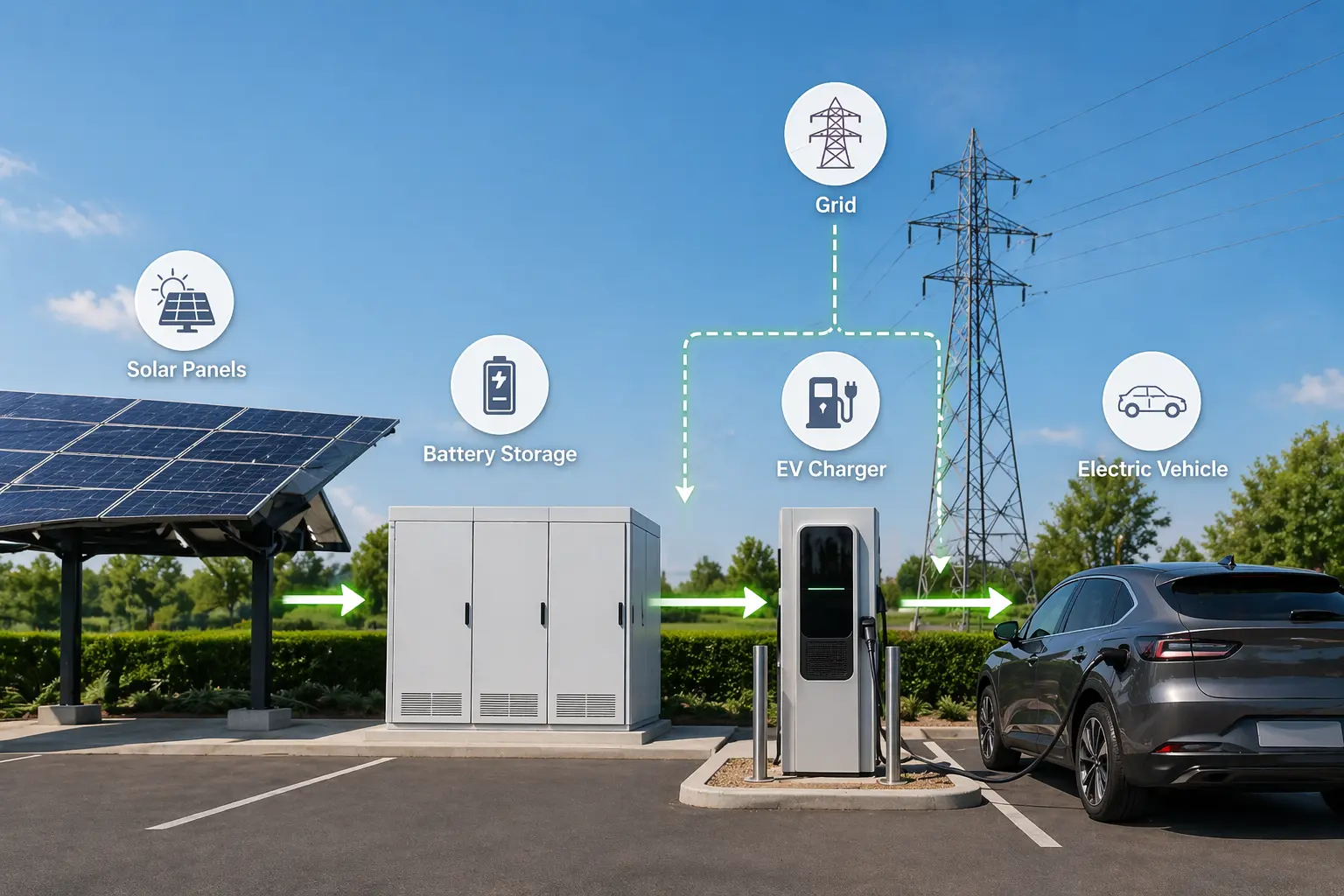
At the core of the system is energy coordination.
During the day, the PV system generates electricity from sunlight. That electricity can be used immediately to power EV chargers, support other loads onsite, or charge the battery storage system. If solar generation exceeds immediate demand, the extra energy is stored for later use rather than being wasted.
Later in the day, when solar output drops or charging demand rises, the energy storage system can discharge power to support EV charging. If the battery is low or site demand exceeds the combined output of solar and storage, the utility grid can provide backup support.
This creates a more flexible and efficient energy flow. Instead of drawing all charging power directly from the grid at all times, the site can balance solar energy, stored battery power, and grid electricity according to cost, load, and operational priorities.
A Simple Example
Imagine a commercial parking lot with EV chargers and rooftop solar panels. Around noon, the solar panels generate strong output, but only a few vehicles are charging. The site stores the extra solar energy in batteries. Later in the evening, more drivers arrive and electricity prices are higher. Instead of pulling all charging power from the grid, the site uses the stored energy to reduce costs and ease grid pressure.
That is the practical value of a solar storage EV charging system.
Why Is a PV-ESS-Charging Solution Important?
The growing interest in this solution is not just about renewable energy. It is also about economics, grid flexibility, and operational stability.
Lower Electricity Costs
Electricity costs can be one of the biggest ongoing expenses for EV charging sites. In many markets, operators are not only paying for energy consumption but also facing high peak demand charges. By combining solar generation and battery storage, a PV-ESS-Charging Solution can reduce the amount of expensive grid electricity used during peak periods.
This is especially important for sites with multiple chargers or high-power DC fast charging, where electricity demand can spike quickly.
Better Use of Renewable Energy
Solar energy is clean, but it is naturally variable. Without storage, a charging site may not be able to use all the power it generates. Adding ESS makes solar power more practical by storing surplus electricity and using it later when it is actually needed.
That is why a smart EV charging solution with solar and battery storage is often more valuable than solar-only charging infrastructure.
Reduced Grid Pressure
Many EV charging projects are limited by existing grid capacity. Upgrading transformers, distribution equipment, or utility connections can be expensive and time-consuming. A battery-supported system can reduce the site’s peak load and help operators deploy more charging capacity without immediately expanding the grid connection.
Improved Energy Resilience
Because the site is no longer fully dependent on one power source, it becomes more flexible and resilient. If grid conditions are unstable or charging demand suddenly rises, the energy storage system can help stabilize the load and maintain smoother operations.
Key Components of a PV-ESS-Charging Solution
To fully understand the value of this model, it helps to look at the role of each part in more detail.
PV System: The Solar Generation Layer
The PV system is responsible for converting sunlight into usable electricity. It usually includes solar panels, inverters, mounting systems, and monitoring tools.
For EV charging sites, solar power provides a direct source of clean onsite energy. It can offset grid electricity consumption and improve the sustainability profile of the entire charging operation.
Why Solar Matters in EV Charging
EVs are often seen as a cleaner alternative to fuel vehicles, but the environmental impact of charging depends heavily on the source of electricity. A solar-powered EV charging infrastructure makes charging itself cleaner and more aligned with broader carbon reduction goals.
It can also help businesses build a stronger long-term energy strategy by reducing exposure to utility price volatility.
ESS: The Energy Storage Layer
The ESS is what gives the system flexibility. It stores electricity when generation is strong or prices are low, then discharges electricity when demand rises or grid power becomes more expensive.
Why Battery Storage Is Essential
Charging demand and solar production rarely match perfectly. Solar output is strongest in the middle of the day, while charging demand may peak in the morning, evening, or at fleet turnaround times. Battery storage bridges that timing gap.
A battery energy storage system in EV charging can support:
- Peak shaving
- Load shifting
- Backup power support
- Better charger utilization
- Improved site energy management
Without storage, the value of solar is more limited. With storage, the entire PV-ESS-Charging Solution becomes far more practical and efficient.
Charging Infrastructure: The Application Layer
The charging layer includes the chargers themselves, along with access control, billing, monitoring, and smart management software.
In a basic charging setup, chargers simply draw electricity whenever a vehicle plugs in. In a more advanced system, charging behavior can be dynamically coordinated with solar output, battery state of charge, site load, and electricity tariff periods.
Why Smart Control Matters
The real strength of an integrated solar storage and EV charging solution lies in energy management logic. The system should be able to decide when to prioritize solar, when to charge the batteries, when to discharge stored energy, and when to rely on the grid.
This kind of coordination helps improve efficiency, control energy costs, and support stable charging performance.
Main Benefits of a PV-ESS-Charging Solution
For site owners and operators, the value of this solution is both practical and measurable.
Lower Operating Costs Over Time
One of the clearest benefits is reduced energy cost. Solar generation cuts electricity purchases from the grid, while storage allows the site to avoid expensive peak-time electricity use. Over time, that can significantly improve the economics of running EV charging infrastructure.
More Efficient Use of Existing Grid Capacity
For sites where power expansion is limited, storage can reduce demand spikes and help support more chargers within the same electrical capacity. This is particularly useful for fleet depots and fast-charging hubs.
Stronger Charging Stability
When demand changes quickly, the battery system can respond faster than waiting for grid upgrades or relying entirely on utility supply. This improves operational reliability and helps create a smoother user experience.
Better Sustainability Performance
A PV-ESS-Charging Solution for commercial EV charging helps businesses align EV charging with renewable energy use, which supports ESG goals, sustainability branding, and low-carbon infrastructure development.
Common Applications of PV-ESS-Charging Solutions
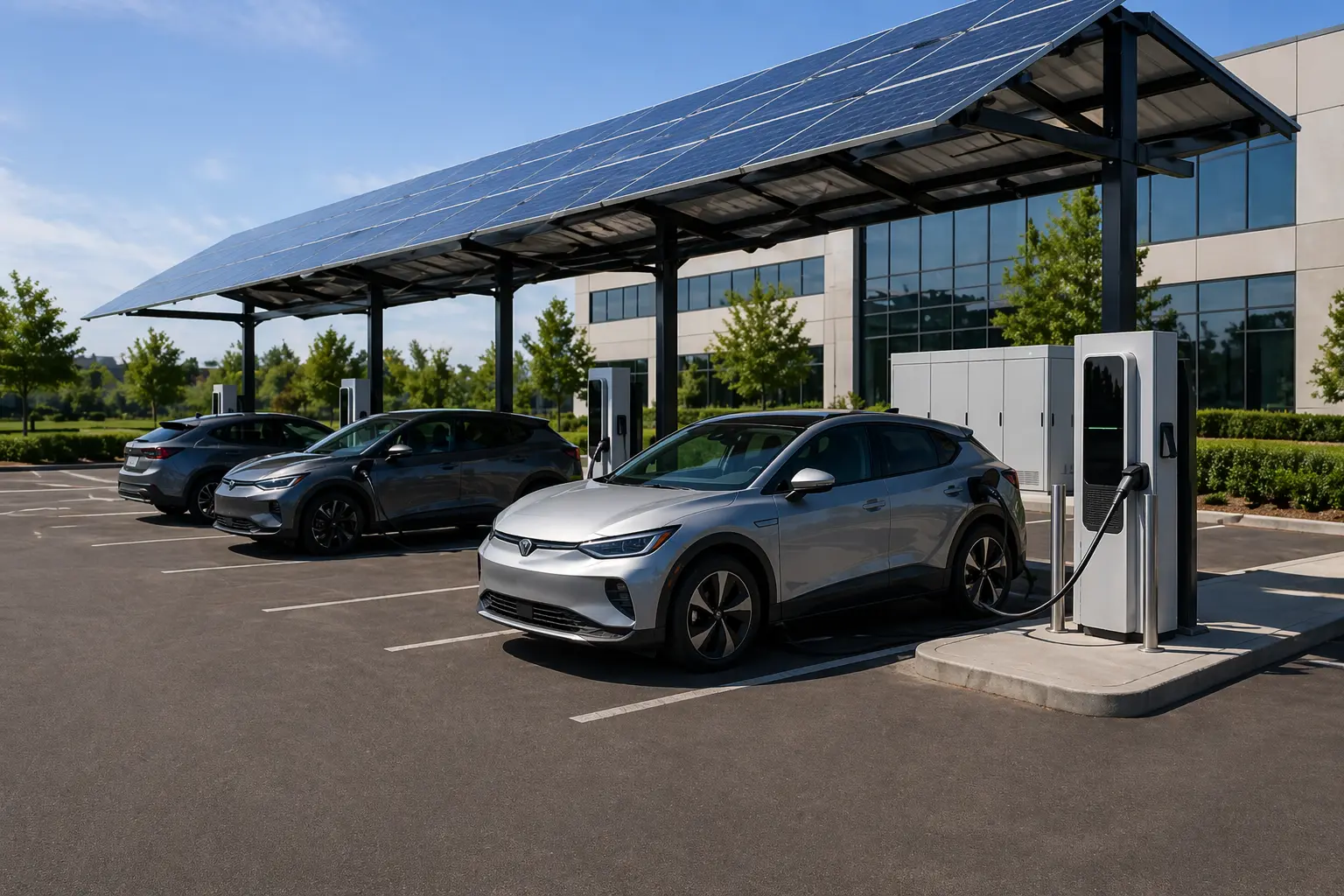
This type of energy model can be applied in many different scenarios.
Commercial Parking Lots
Shopping malls, hotels, office buildings, and mixed-use properties can use solar, storage, and charging together to support customer or employee charging while keeping energy costs under control.
Fleet Charging Depots
Delivery fleets, electric buses, service fleets, and logistics operators often need predictable charging at scale. A PV-ESS-Charging Solution for fleet charging helps reduce peak demand and supports more efficient charging schedules.
Industrial Parks and Campuses
Sites with both facility loads and EV charging demand can benefit from an integrated energy strategy that balances multiple power needs throughout the day.
Public Charging Stations
Fast-charging stations often place heavy stress on the grid. Adding solar and storage can improve flexibility, reduce peak demand, and strengthen the commercial case for deployment.
Remote or Weak-Grid Areas
In locations where grid capacity is limited or unstable, a PV-ESS-Charging Solution can make EV charging more feasible and less dependent on local infrastructure constraints.
What Should Businesses Consider Before Deployment?
Although the benefits are strong, the success of a project depends on good design and system planning.
Accurate Sizing Matters
The system should be designed based on actual charging demand, site power conditions, solar potential, battery sizing, and tariff structure. Oversized or undersized systems may reduce overall return on investment.
Software Is as Important as Hardware
A strong energy management platform is critical. The software should provide real-time visibility into solar generation, ESS status, grid consumption, charger load, and energy dispatch strategy.
Local Regulations Affect ROI
Incentives, interconnection rules, electricity pricing, and export policies vary by region. These factors can influence how attractive the project is financially and technically.
The Future of PV-ESS-Charging Solutions
As EV adoption grows, charging infrastructure will increasingly need to do more than simply deliver power. It will need to manage energy intelligently, reduce costs, and integrate clean electricity more effectively.
That is why the PV-ESS-Charging Solution is likely to play a bigger role in the next stage of EV charging development. It supports a more distributed, flexible, and sustainable energy model, especially for commercial and industrial sites that want better control over both charging performance and electricity cost.
In the years ahead, this model will likely become even smarter through AI-based energy optimization, advanced load balancing, deeper software integration, and closer coordination with local energy systems.
Conclusion
A PV-ESS-Charging Solution combines solar power, battery energy storage, and EV charging infrastructure into one coordinated system. By doing so, it helps businesses lower electricity costs, improve renewable energy utilization, reduce peak load pressure, and build more resilient charging operations.
For charging station operators, fleet managers, commercial property owners, and industrial energy users, this is no longer just an emerging concept. It is becoming a practical strategy for building future-ready EV charging infrastructure.
If your business is planning to scale EV charging while keeping energy costs and grid pressure under control, a well-designed PV-ESS-Charging Solution may be one of the smartest long-term investments you can make.

 EN
EN  ZH
ZH  AR
AR  DE
DE  ES
ES  KO
KO  JA
JA  IT
IT  FR
FR  VI
VI  MS
MS  ID
ID  FR_CA
FR_CA  NL
NL  SV
SV  EN_GB
EN_GB  TH
TH 