
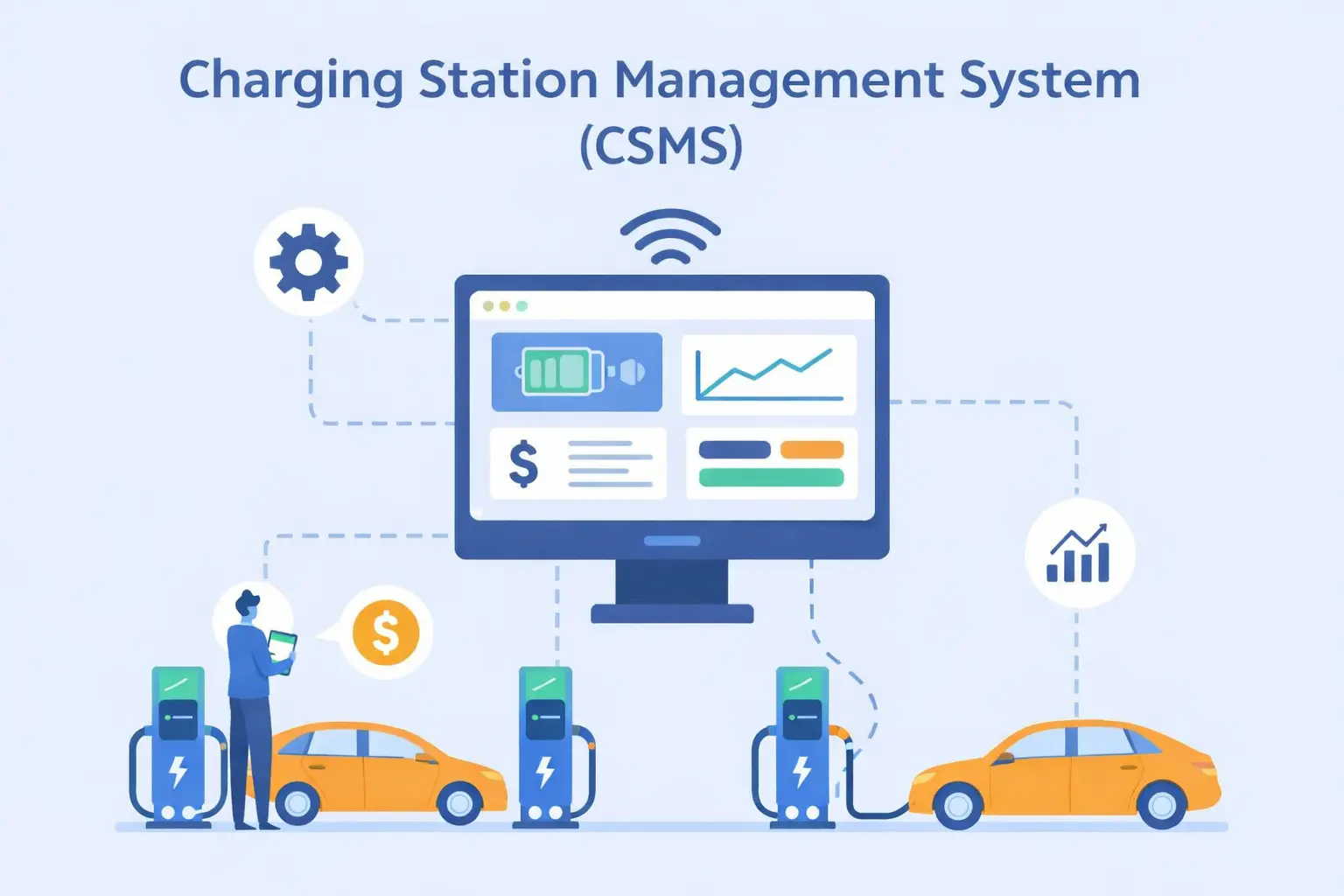
A Charging Station Management System (CSMS) is the software platform that functions as the centralized “brain” behind an EV charging operation—connecting to multiple charge points, monitoring their health and availability, and enabling operators to control charging services from a single interface. In practice, it brings together operational control (uptime, fault handling, remote actions), commercial control (pricing, billing, payments), and optimization (smart charging and load management) so a charging network can scale without becoming unmanageable.
While the acronym CSMS is common in standards and industry discussions, you’ll also see similar terms used in marketing and procurement: ev charging management software, charge point management system, ev charging station management software, charging station management software, charging station software, software for ev charging stations, and even ev charger software—often describing overlapping functionality.
CSMS meaning and terminology in the EV charging ecosystem
A CSMS is best understood as the backend system responsible for connecting charge points (sometimes across many sites), operating charging sessions, and monitoring station status in real time to maximize availability. It typically communicates with chargers through open protocols so that chargers from different vendors can be supervised under one operational umbrella.
In workplace contexts, a CSMS is often described as a central hub that covers monitoring and control plus user access, energy distribution, and analytics. For larger environments, the same concept extends into enterprise features like predictive maintenance and integration with broader facility or energy systems.
A practical way to think about naming is: the market has many ev charging software companies, but regardless of branding, a “real” CSMS must reliably deliver core operational functions (connectivity, monitoring, control, and data) and align with interoperability requirements that reduce lock-in risk.
How a CSMS works in practice
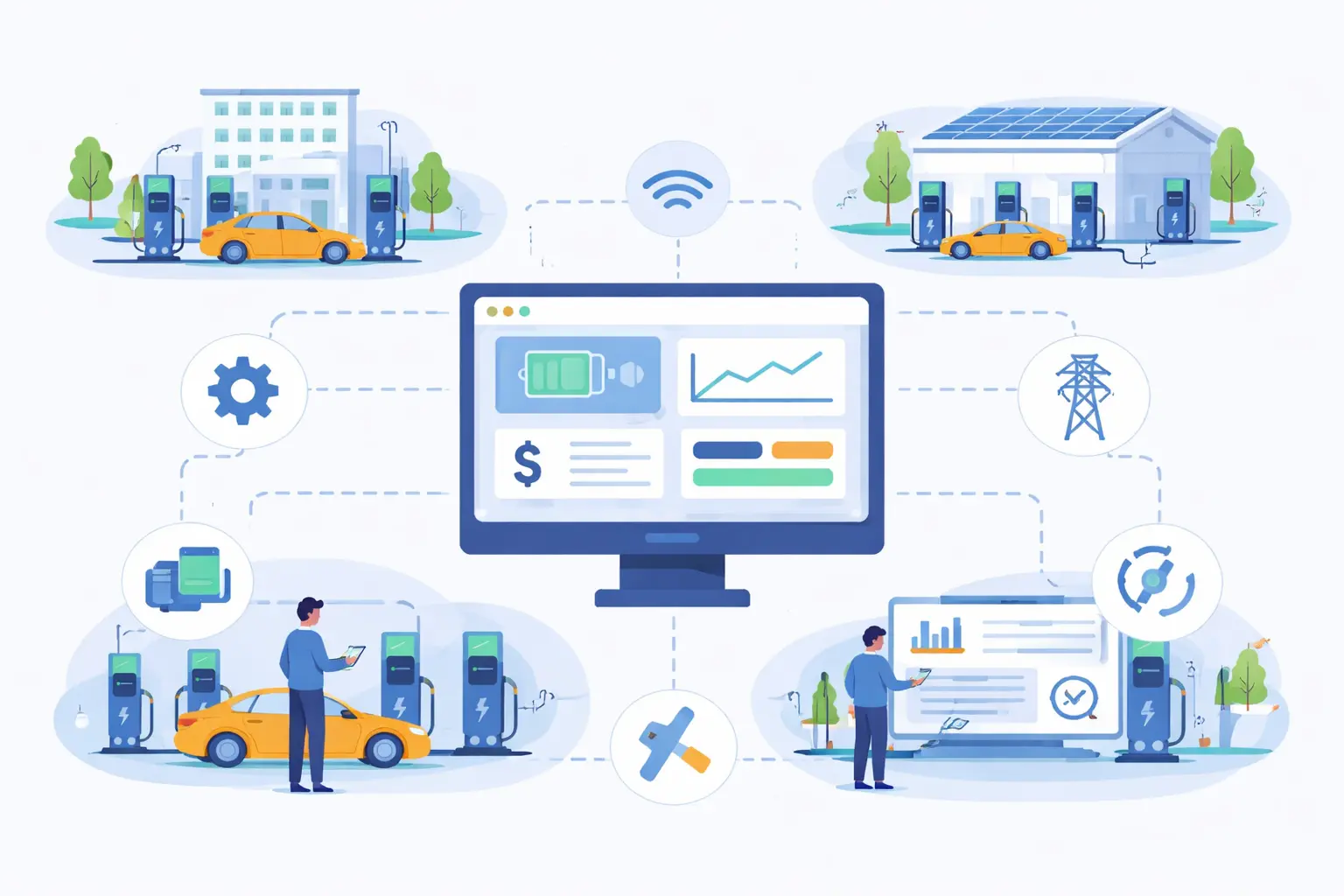
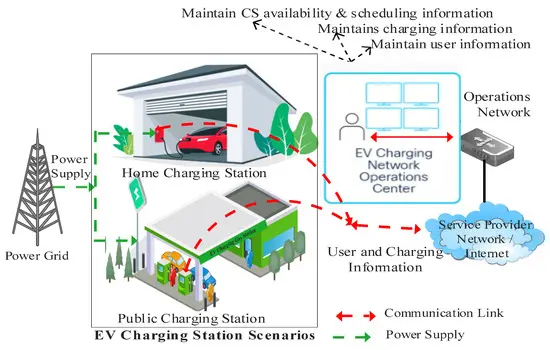
At a high level, a CSMS sits between physical chargers and the business systems around them. Chargers send status and session events to the CSMS, while the CSMS issues commands (start/stop, configuration, firmware actions, smart charging instructions) back to chargers. In many architectures, these interactions are standardized through protocols such as OCPP, allowing a single CSMS to manage chargers from multiple manufacturers.
A CSMS is also closely tied to market roles. For example, a Charge Point Operator (CPO) is responsible for charger availability, operations, and cost control, and therefore uses a CSMS to run the network at scale. For roaming, the ecosystem typically includes eMobility Service Providers (eMSPs) (serving EV drivers) and interoperability mechanisms that connect networks to networks.
From a systems point of view, modern deployments often separate protocol-specific handling (the “connector” logic that speaks OCPP or other device protocols) from the backend business logic of the CSMS. This reduces disruption when you need to support multiple protocol versions or add new device types over time—an architectural theme highlighted in large-scale implementations.
Core capabilities of a modern Charging Station Management System
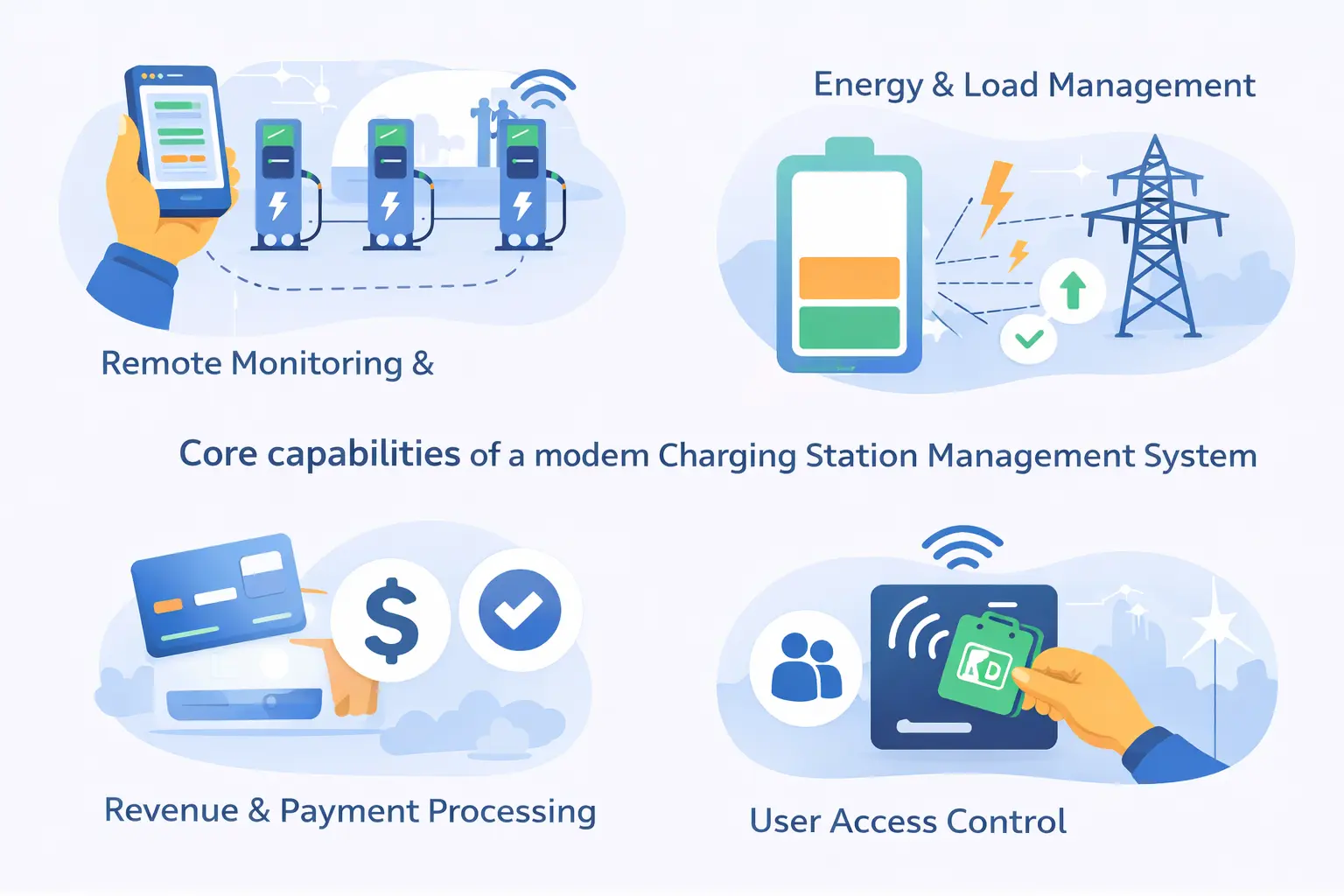
A CSMS bundles several “behind-the-scenes” capabilities that determine whether an EV charging operation is reliable, scalable, and commercially viable: monitoring and remote operations, smart charging and load management, user access control, pricing/billing/payments, and analytics/reporting.
Remote monitoring, diagnostics, and control
Operationally, the CSMS is the control plane for station health. It tracks real-time charger and port status, surfaces faults, and supports remote actions that reduce truck rolls and downtime. In U.S. federally funded contexts, regulators explicitly expect charging networks and chargers to support remote monitoring, diagnostics, control, and smart charge management—which practically implies CSMS-driven workflows for alerts, triage, and remote remediation.
Workplace-focused guidance also lists real-time monitoring and remote management as baseline features for a CSMS—because without them, operators can’t respond quickly when chargers go offline or behave inconsistently.
Energy optimization and load management
As EV adoption grows, electrical capacity and peak demand constraints become operational bottlenecks. A CSMS addresses this by coordinating charging behavior across ports (and sometimes across sites), balancing available power so more vehicles can charge without exceeding site limits. Industry guidance frequently frames this as “load management” or “smart charging,” and it is widely treated as a differentiator between basic monitoring and scalable operations.
Regulators reinforce the importance of smart functionality. In Great Britain, smart charge point guidance describes regulations designed to ensure charge points can shift charging to periods of lower grid demand or higher renewable availability—an outcome that, in managed deployments, is typically orchestrated through a management platform and its scheduling/control logic.
User access control and authentication
A CSMS commonly includes identity and access tools so operators can control who can start a session and under what policy—especially for workplace, multifamily, or fleet deployments. Typical access methods include RFID credentials and mobile-app-based authentication, and the CSMS maintains the logic for authorization rules, user groups, and audit trails.
In roaming-enabled environments, access control extends beyond one network. Network-to-network interoperability requirements aim to allow EV drivers to use a single identification method across multiple charging networks—an important driver for CSMS integration with roaming protocols and identity systems.
Pricing, billing, and payment processing
Commercial operations depend on transparent pricing and correct billing. In U.S. public-infrastructure contexts governed by 23 CFR Part 680, pricing must be displayed before initiating a transaction, must be based on $/kWh, and any additional fees must be clearly displayed and explained—requirements that often translate into CSMS features for tariff modeling, session accounting, and UI/API publishing of price and payment options.
On the roaming side, OCPI explicitly supports exchange of tariff information, billing-related artifacts (including charge detail records), and real-time information such as location availability and price—meaning the CSMS must produce and consume structured commercial data, not just device telemetry.
Reporting, analytics, and operational KPIs
A CSMS continuously generates data that informs capacity planning, maintenance prioritization, and unit economics (utilization, energy delivered, session counts, downtime, revenue). U.S. requirements for NEVI-funded networks include structured reporting elements such as session start/end times, kWh dispensed, peak session power, payment methods, uptime, and outage duration—illustrating how central analytics and reporting are to modern charging-network operations.
Workplace CSMS guidance similarly treats reporting and analytics as key features because they help operators tune policies (time limits, access rules, pricing) and justify expansion decisions based on real usage patterns rather than assumptions.
OCPP for charger-to-CSMS communication
The Open Charge Point Protocol (OCPP) is designed to provide a uniform communication method between charge points and central systems, making it possible to connect a wide range of chargers with a wide range of management platforms regardless of vendor. This is a foundational mechanism for interoperability and for avoiding single-vendor dependency in multi-site deployments.
OCPP has multiple versions in active use (including OCPP 1.6, OCPP 2.0.1, and OCPP 2.1), and version differences matter for functionality such as device management, security features, and smart charging capabilities. The protocol steward also notes that OCPP 1.6 and OCPP 2.0.1 are not compatible, which has direct implications for migration planning and mixed-fleet support.
From a regulatory perspective, U.S. NEVI standards (23 CFR Part 680) explicitly require chargers to conform to OCPP (with specified version requirements by date), underscoring that OCPP alignment can be a gating criterion for funded deployments and public procurement.
OCPI for roaming and network-to-network interoperability
The Open Charge Point Interface (OCPI) supports connections between eMobility Service Providers (serving EV drivers) and Charge Point Operators (managing charging stations). It is designed to operate bilaterally or via roaming hubs, enabling “roaming” experiences across networks.
The OCPI specification describes support for authorization, charge point information exchange (including live status and transaction events), charge detail record exchange, remote charge point commands, and smart-charging-related information exchange. These functions matter because they tie the CSMS to driver access, pricing transparency, settlement/billing artifacts, and cross-network command flows—not just local device control.
U.S. NEVI standards also require charging networks to communicate with other charging networks in accordance with OCPI 2.2.1 (by specified dates), making OCPI capability a practical requirement for many public-network scenarios.
ISO 15118 and “Plug & Charge” readiness
While OCPP and OCPI define major parts of the backend connectivity landscape, vehicle-to-charger communication standards also influence CSMS requirements. NEVI standards require conformance to ISO 15118 components for charger-to-EV communication and specify Plug & Charge capability timelines, which can affect how a CSMS handles certificates, authorization flows, and interoperability testing.
Industry explanations of ISO 15118 commonly describe its role in enabling an EV to communicate with a charging station so that a driver can plug in and charge without needing an app or RFID card—an experience goal that often requires coordination across charger firmware, backend systems, and identity/payment infrastructure.
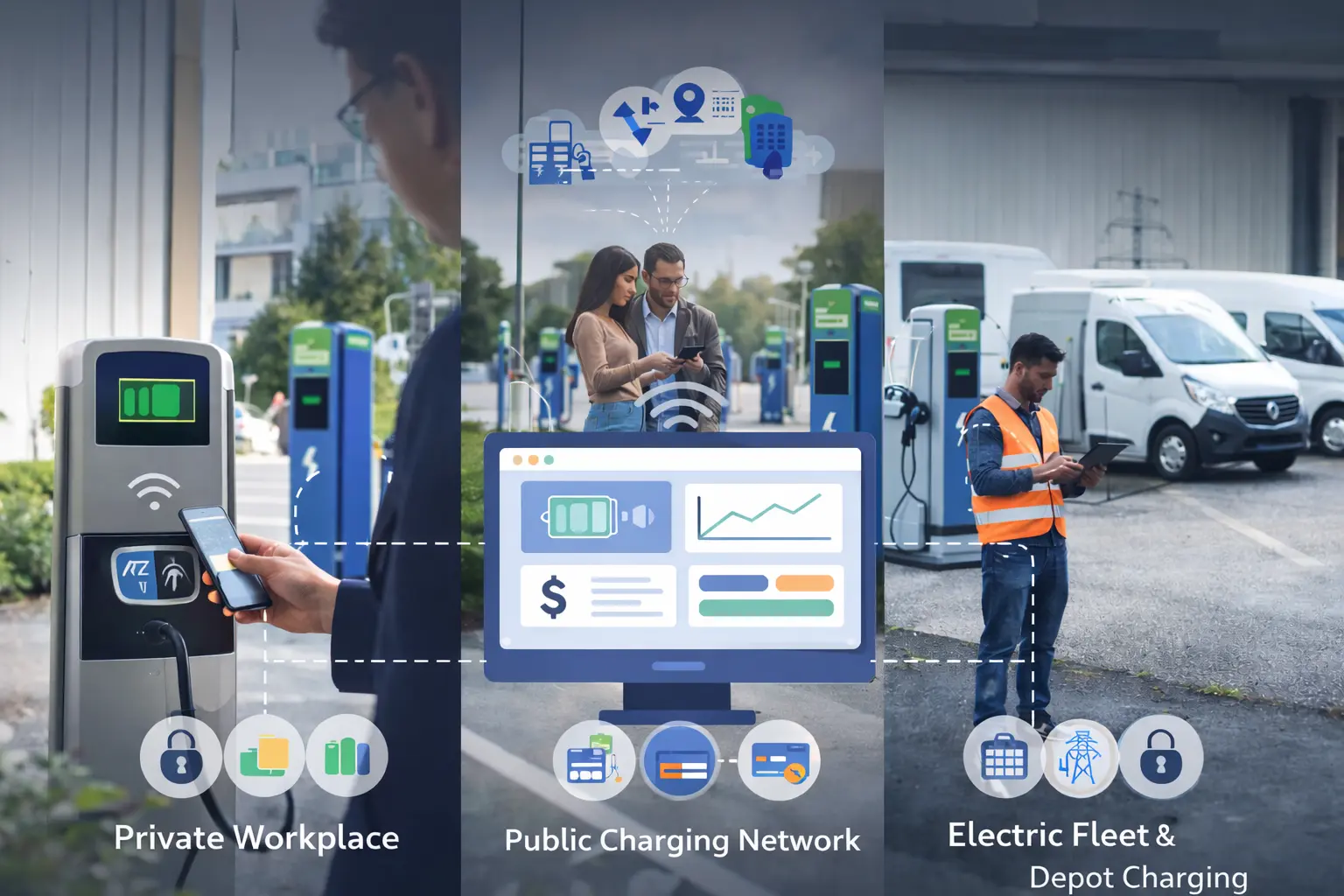
Typical deployment models and who uses CSMS
CSMS requirements change depending on whether you run a private amenity, a commercial public network, or an operational fleet depot—because your constraints, uptime expectations, and business logic differ.
Private workplace and commercial sites
Workplace deployments often prioritize controlled access (employees/visitors), fair allocation of limited charging capacity, and load management to stay within building electrical limits. Workplace CSMS guidance explicitly emphasizes real-time monitoring, remote management, user authentication, load management, analytics, and (where applicable) payment integration.
In Great Britain, workplace charge points sold for private use fall within a regulatory framework intended to manage electricity demand and require smart functionality (including off-peak default charging hours and the ability to send/receive information). For many organizations, those requirements create a stronger business case for using a CSMS rather than relying on unmanaged chargers.
Public charging networks
Public networks live or die on uptime, interoperability, pricing transparency, and customer support. NEVI standards make this concrete by defining minimum uptime expectations, structured data collection/reporting, and interoperability requirements including OCPP for charger-to-network communications and OCPI for network-to-network communications. These are all capabilities that normally route through the CSMS and its integrations.
Public-network operators also tend to need deeper integrations: mapping/data feeds, customer identity systems, payment and settlement workflows, and roaming connectivity. OCPI’s feature set (authorization, live status updates, tariffs, CDR exchange, and remote commands) maps directly into these needs.
Electric fleets and depot charging
Fleet and depot environments often optimize for “vehicles ready when needed,” requiring scheduling, controlled access, and site-level load balancing to avoid costly electrical upgrades. Even in glossary-style definitions, CSMS is framed as a platform for managing multiple stations or fleets of stations, emphasizing status and data visibility via open protocols.
The architectural notes from large-scale CSMS implementations also highlight grid constraints as a driver for adopting energy management solutions at the site—balancing load among chargers to overcome limits in existing infrastructure—an especially common constraint at depots where many vehicles plug in during similar time windows.


 EN
EN  ZH
ZH  AR
AR  DE
DE  ES
ES  KO
KO  JA
JA  IT
IT  FR
FR  VI
VI  MS
MS  ID
ID  FR_CA
FR_CA  NL
NL  SV
SV  EN_GB
EN_GB  TH
TH 