[Dezhou Baorun]
In Q3 2025, Dezhou Baorun Import & Export Co., Ltd. officially entered into a strategic partnership with Trend Power. Together, the two parties will build an EV charging operations platform in Ethiopia, jointly expanding into the East African market.
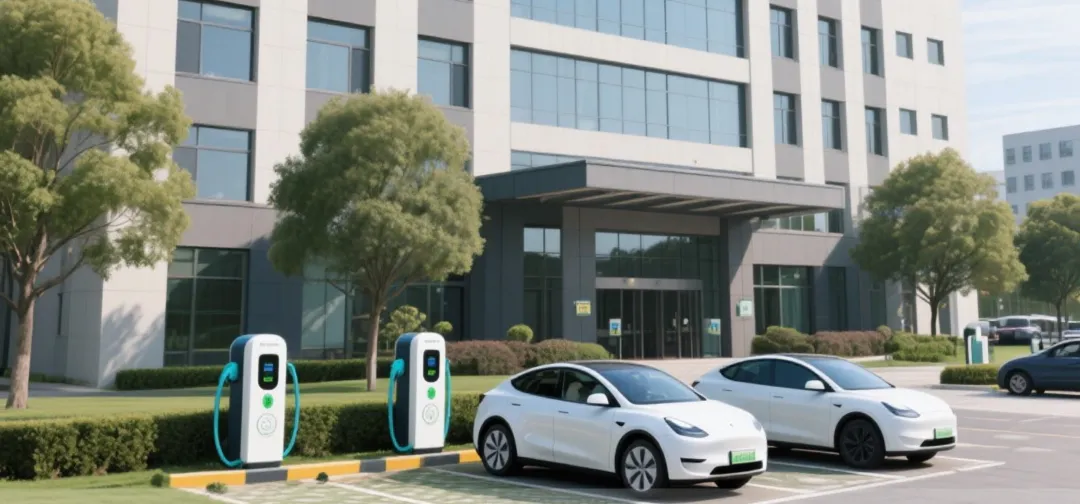
The platform will focus on charging solutions for both two-wheeled and four-wheeled electric vehicles, while integrating fleet management systems to empower partners in building a smart, vehicle–charger integrated energy service ecosystem.
Dezhou Baorun initially built its business around steel manufacturing and import–export trade. In its early years, the company participated in Huawei’s power infrastructure projects in Africa, gaining extensive localized operational experience and strong on-the-ground resource advantages in Ethiopia.
In recent years, driven by Ethiopia’s transition toward green energy, Dezhou Baorun has begun strategically expanding into the new energy vehicle (NEV) sector.
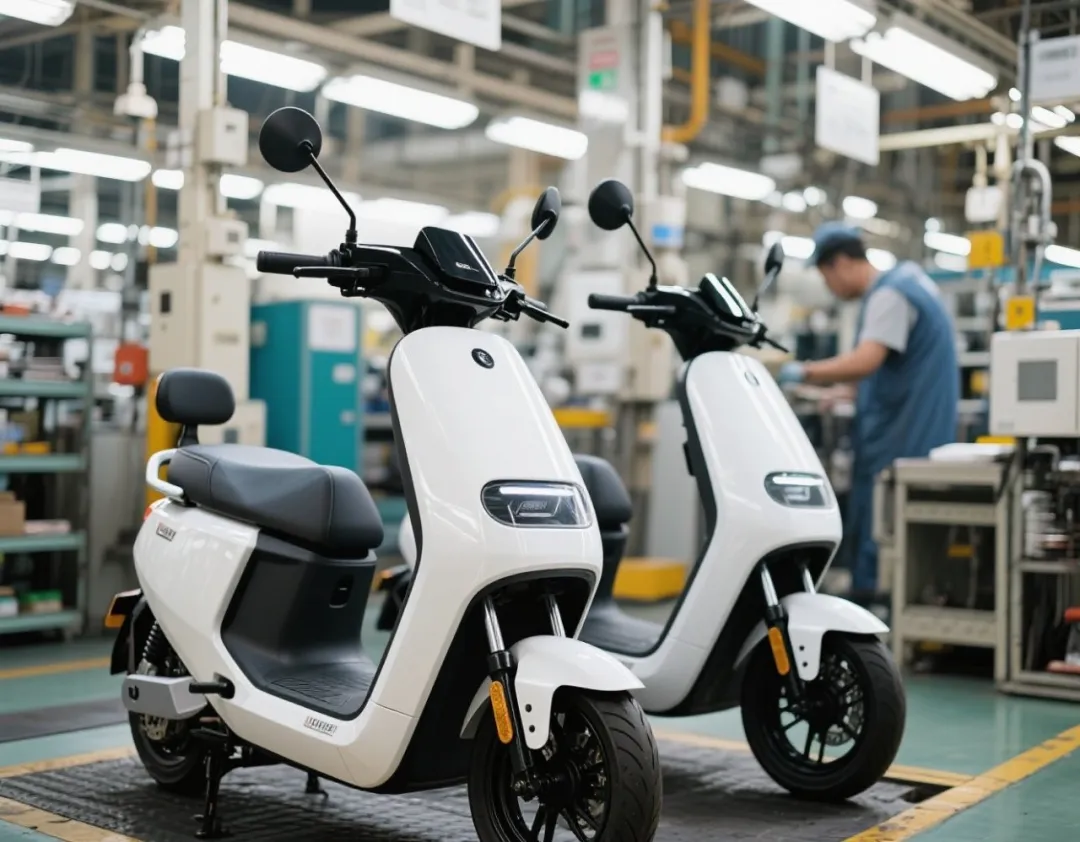
The company has now achieved scaled production capacity for two- and three-wheeled electric vehicles. In the four-wheeled EV segment, production lines are progressing steadily and are expected to be operational in the second half of this year.
In addition, to align with local policy requirements and further strengthen its industrial ecosystem, Dezhou Baorun is simultaneously advancing charging infrastructure development. Through a model combining self-built stations and collaboration with local operators, the company is building a fully integrated value chain spanning vehicle manufacturing to supporting services.
As Africa’s second most populous country, Ethiopia has sustained an annual economic growth rate of 6%–7% in recent years, making it one of the fastest-growing emerging markets on the continent.
However, due to its landlocked geography, the country—pursuing industrialization with an agriculture-led foundation—has long faced challenges including limited foreign exchange reserves and significant energy constraints.
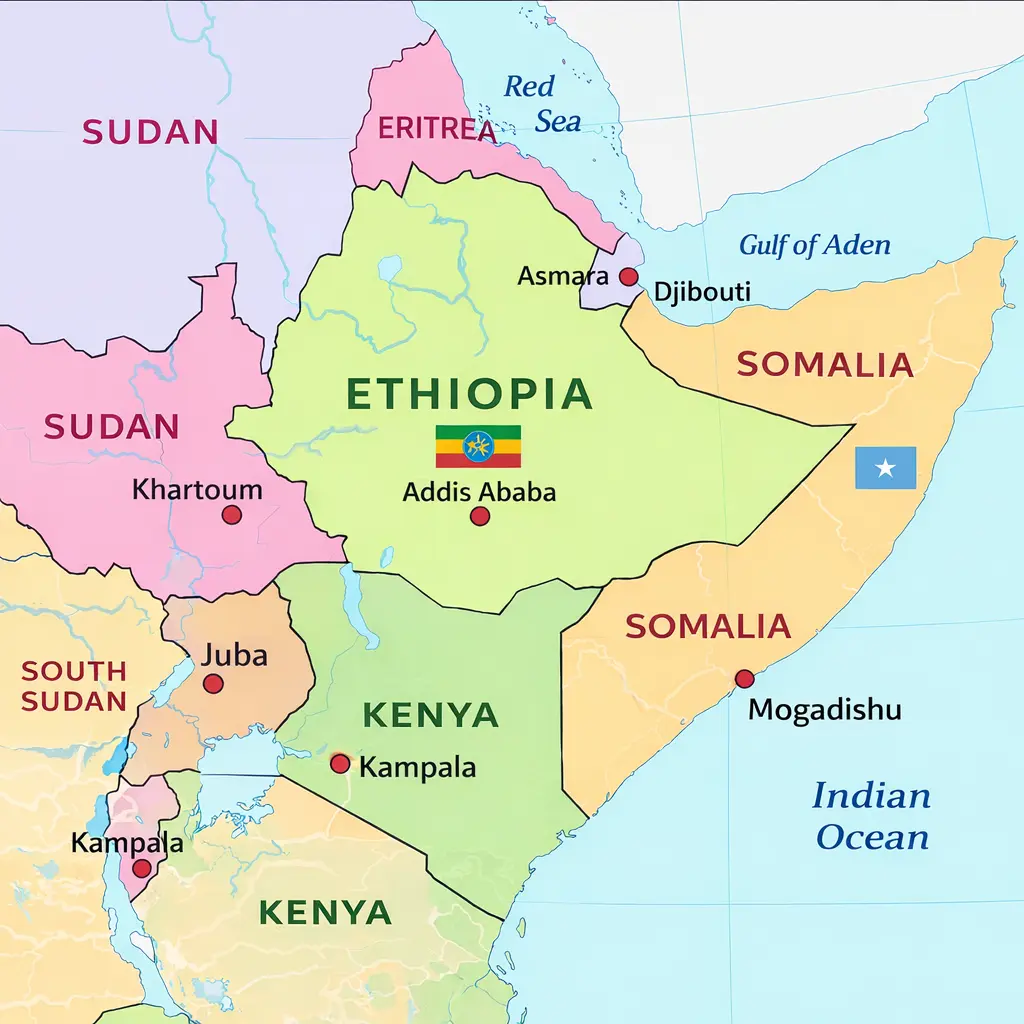
According to available data, Ethiopia’s fossil fuel import bill reached as high as USD 6 billion in 2023, with fuel-powered vehicles accounting for more than half of that expenditure, placing substantial pressure on national finances.
Against this backdrop, in February 2024, the Ethiopian government took decisive action by officially announcing a nationwide ban on the import of internal combustion engine (ICE) vehicles, opening market access exclusively to electric vehicles.
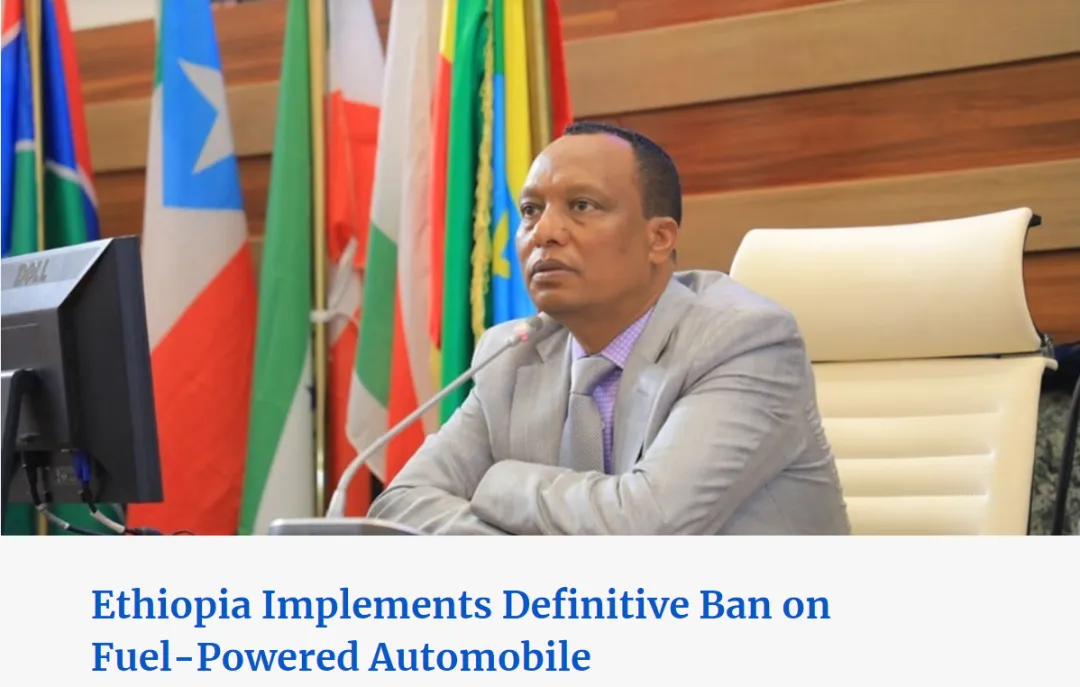
This immediate, sweeping ban on internal combustion engine (ICE) vehicle imports—often described as a “blanket ban”—is unprecedented globally. It breaks away from the gradual emissions reduction pathways adopted by most countries, making Ethiopia the first nation in the world to prohibit the import of fuel-powered vehicles outright.
Behind this bold and aggressive policy lies both a pragmatic response to fiscal pressure and a powerful catalyst for the rapid growth of Ethiopia’s new energy vehicle (NEV) industry.
According to the government’s “10-Year Electric Vehicle Plan,” Ethiopia aims to introduce at least 152,800 electric vehicles by 2030. Remarkably, within just two years of the plan’s launch, EV imports have already exceeded 100,000 units—surpassing interim targets ahead of schedule.
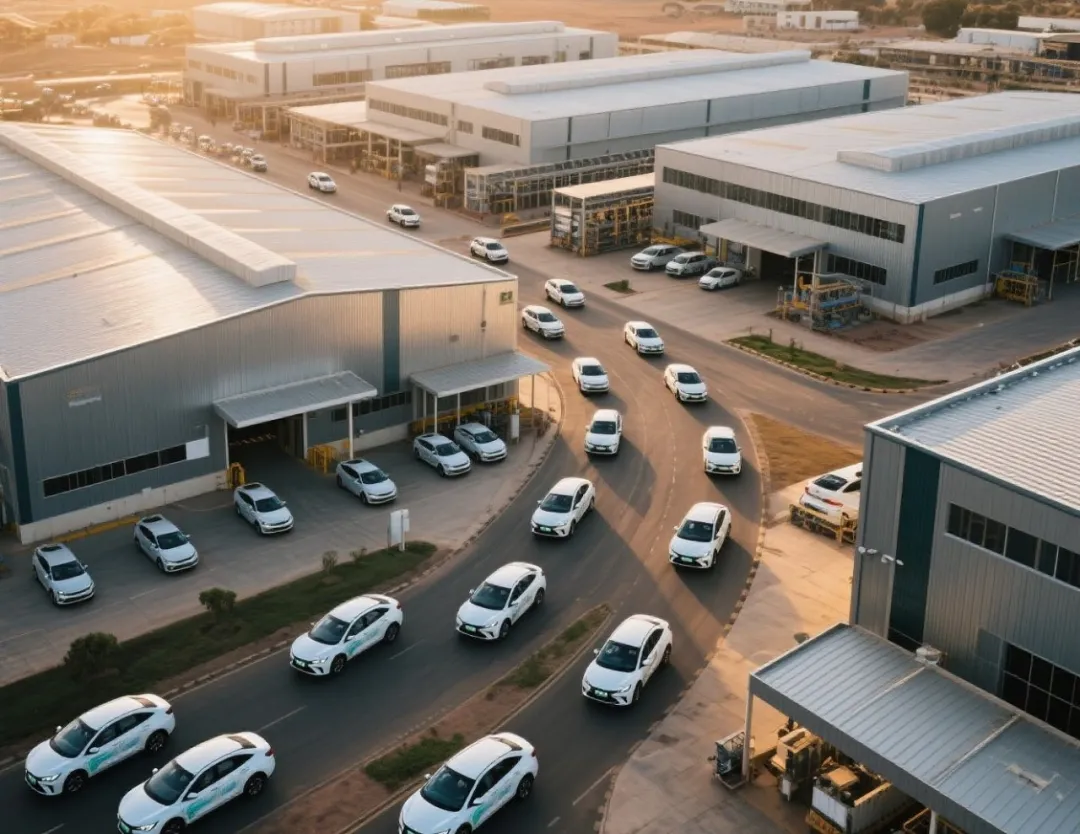
At present, the government has raised its target to 500,000 electric vehicles, aiming to replace 95% of internal combustion engine vehicles and fundamentally reshape Ethiopia’s transport energy structure.
However, this policy-driven “blue ocean” market has also exposed a critical shortage of supporting charging infrastructure. Currently, nearly 80% of Ethiopia’s operational charging stations are concentrated in the capital, Addis Ababa, with only around 90 stations nationwide providing charging services—far from sufficient to meet actual demand.
In response, the business manager leading this Ethiopia charging platform project expressed optimism:
“Fuel shortages in Ethiopia have become particularly severe since late last year, with prices surging sharply for several consecutive months. This crisis-driven market dynamic is, in fact, creating explosive growth opportunities for the local new energy vehicle industry.”
“While the lack of charging infrastructure remains a key bottleneck, this imbalance between supply and demand is precisely what allows early entrants to capture significant upside. Like our partner, Dezhou Baorun—evolving from vehicle sales to building a full ecosystem—each step aligns perfectly with the market’s growth momentum.”
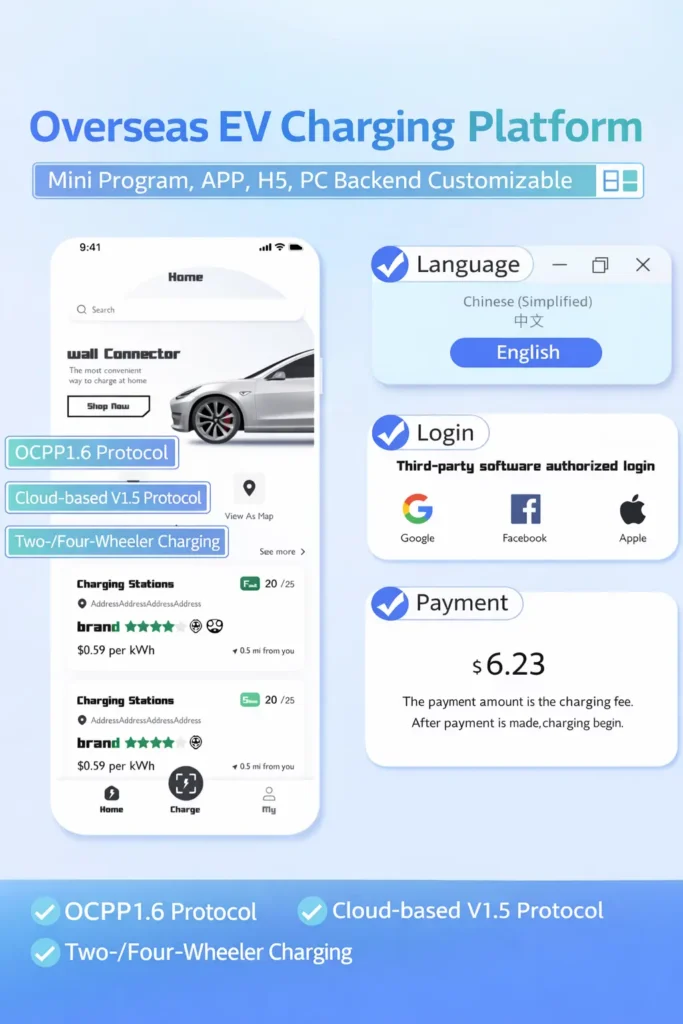
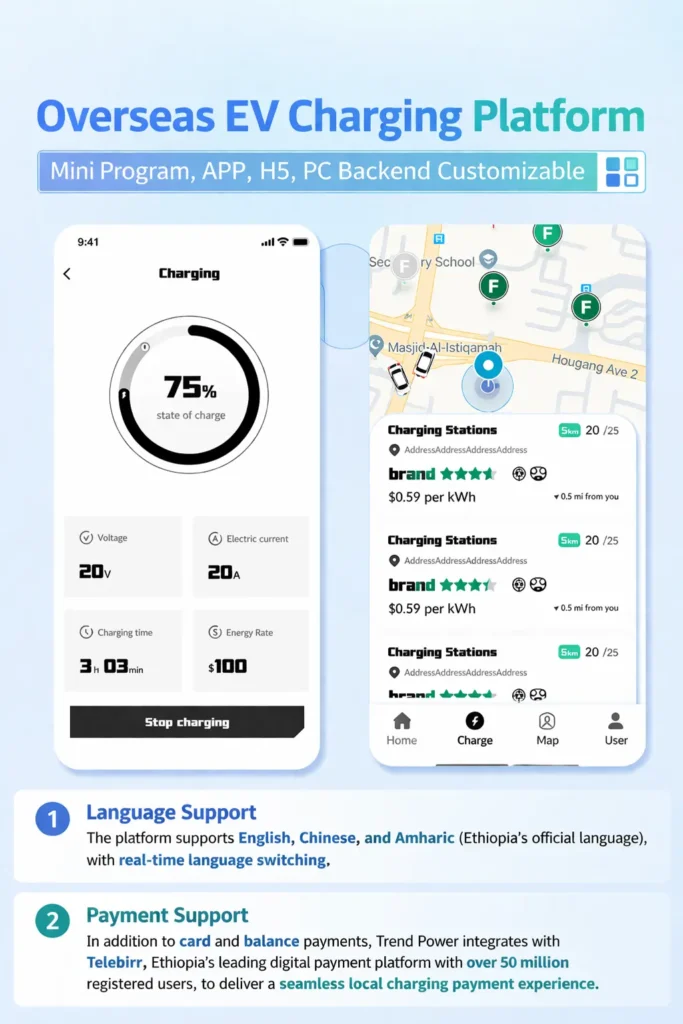
As a software and technology service provider deeply focused on the global EV charging sector, Trend Power has accumulated extensive project experience across international markets. In response to Dezhou Baorun’s business deployment needs in Ethiopia, Trend Power delivers a one-stop charging system solution tailored to local overseas markets.
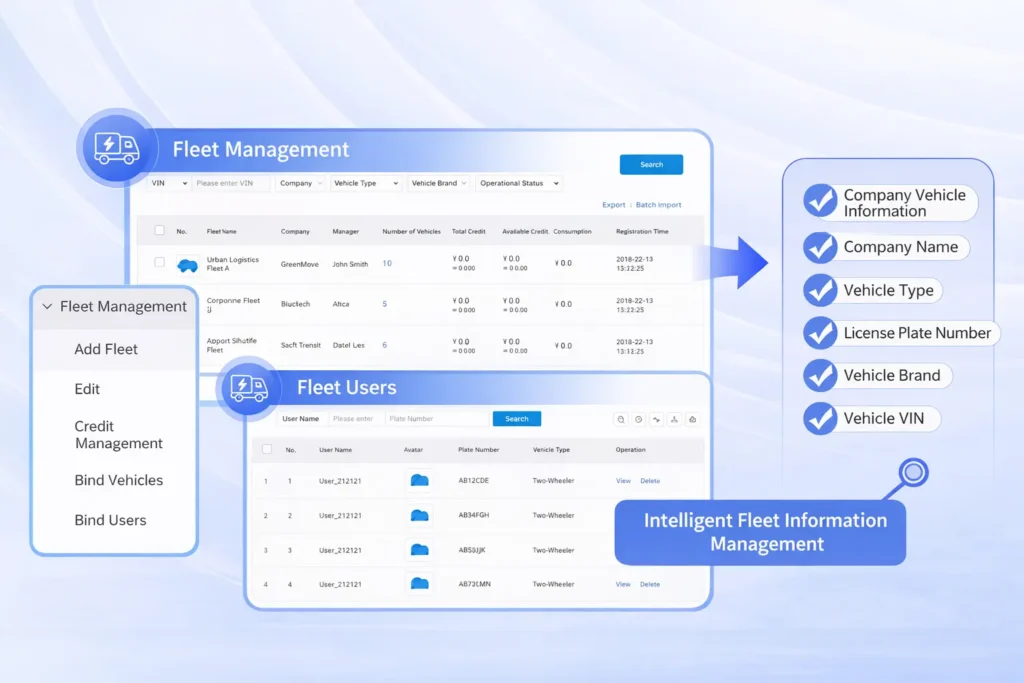
The platform covers the user side (App + H5), site operations side (App + H5), and management side (PC backend). It includes core functionalities such as two-wheeler charging, four-wheeler charging, and fleet management—enabling full-chain localized operations, from multilingual support to integrated online payment systems.