
 English (United States)
 Chinese
 Arabic
 German
 Spanish
 Korean
 Japanese
 Italian
 French (France)
 Vietnamese
 Malay
 Indonesian
 French (Canada)
 Dutch
 Swedish
 English (UK)
 Thai
Choosing EV charging software companies for Germany starts with your operating model. A municipal utility selling public charging, a landlord managing resident access and a logistics company preparing vehicles for the morning shift can need very different systems. A long feature list will not reveal those differences on its own.
This Top 10 guide provides a practical shortlist of suppliers to investigate for German charging projects. It includes German and international companies, with TrendPower included for buyers considering white-label software and custom development.
How to use this EV charging software comparison
We selected companies with relevant charging software or charging-and-energy-management offerings, then compared their public product positioning against common buyer needs. We did not conduct a hands-on benchmark of every platform. Use the list to decide who should receive your requirements and pilot invitation, then test the finalists with your own chargers.
For core platform terminology, read our charging point management system guide. A CPMS or CSMS normally coordinates charger communication and operational records. Driver services, payment processing, roaming and site energy control may sit inside the platform, with an integration partner, or in a separate system.
Top 10 EV charging software companies for Germany
1. chargecloud
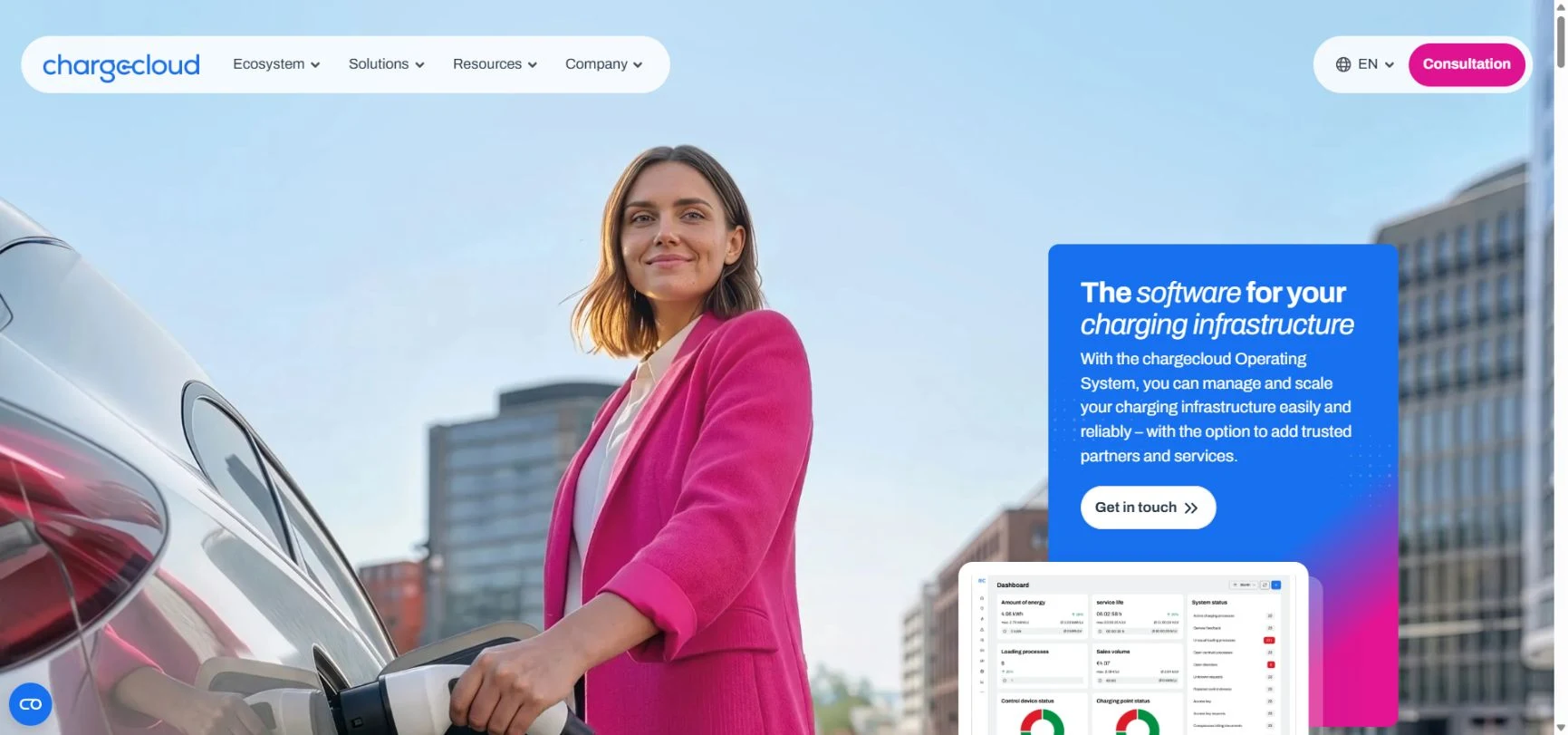
Shortlist for: German utilities and multi-site charging businesses.
chargecloud presents an operating system covering charging operations, revenue management and B2B charging solutions. Its website addresses municipal utilities, energy suppliers, logistics companies, electrical wholesalers and organisations with multiple locations. That makes it a relevant starting point when a German operator needs to coordinate several customer relationships within one charging business.
What to test: Evaluate the separation of customer accounts, site responsibilities, tariffs and revenue reports. Ask for a demonstration of the exact operating model you plan to launch, including who invoices the driver and who settles with the site owner.
Before signing: Request the supported meter-data workflow, payment partners and tenant permissions for your actual charger estate. Confirm which capabilities are part of the core platform and which require an ecosystem partner.
Visit chargecloud official website
2. reev

Shortlist for: Workplace, property and destination charging.
reev organises its offering around companies, hospitality, housing and depot or fleet use cases. Its platform and partner resources place particular emphasis on making charging infrastructure manageable for operators and installation partners. For a property manager or employer, this is a different buying conversation from building a nationwide public charging network.
What to test: Use a demonstration with employees, visitors and tenants paying different tariffs. Check how the platform handles access rights, operating responsibilities and handover from the installing electrician to the business that owns the chargers.
Before signing: Confirm hardware compatibility at firmware level, billing scope, support arrangements and how your selected package handles multiple properties. A good fit for a building portfolio should be demonstrated with realistic user groups.
3. vaylens
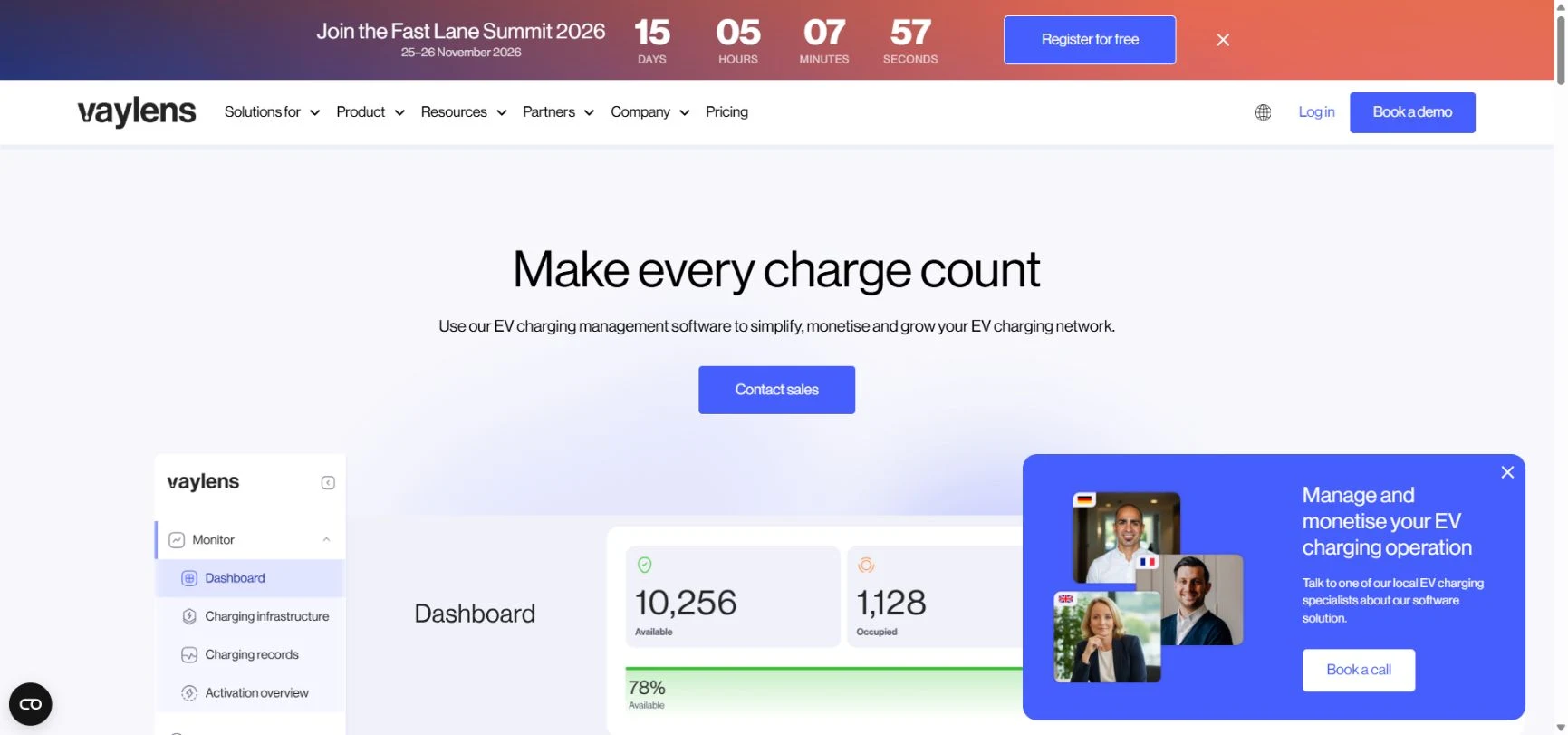
Shortlist for: Operators comparing an integrated charging backend.
vaylens positions its platform around operating and monetising EV charging. Its current homepage combines a charging-management dashboard with operational and commercial messaging. This makes it a relevant comparison for operators who want to assess the back office, customer experience and commercial workflow together.
What to test: Bring examples of a failed start, an interrupted session and a payment exception to the demo. Follow each case from the charger event to the support view and the resulting commercial record. Ask to see user permissions and the division between operator and partner responsibilities.
Before signing: Obtain a current German-market proposal. Payment products, contract entities and optional services can change, so historical documentation should not be used as proof that a particular service is still offered.
Visit vaylens official website
4. Monta
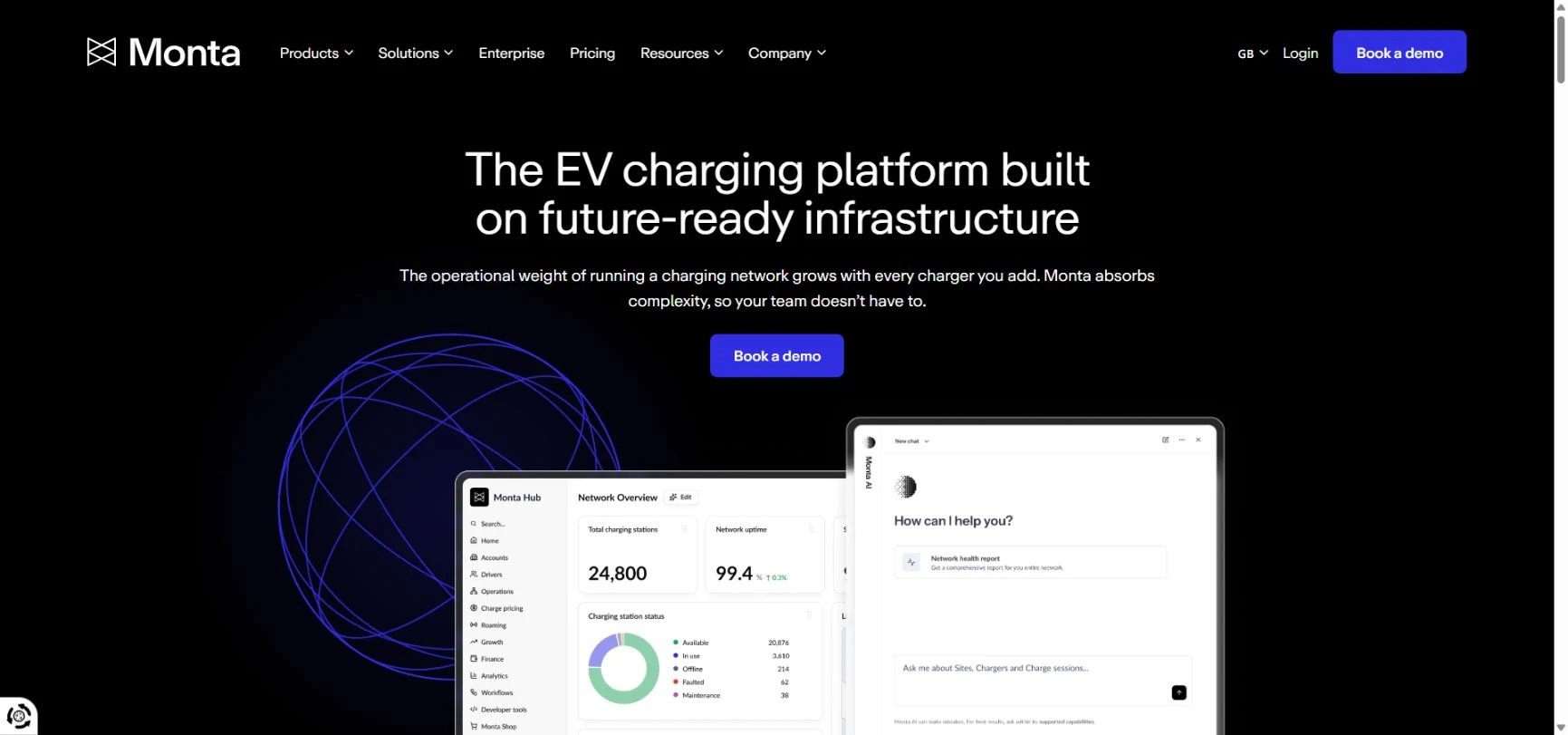
Shortlist for: Charging businesses combining operations and driver services.
Monta lists network operations, driver experience, financial operations, energy services and developer tools within its platform. Public, workplace, multifamily, fleet and destination use cases are represented on its website. The breadth makes it useful to evaluate when an operator wants operational workflows and customer-facing services within a connected product offering.
What to test: Test how the same site serves several customer groups and how its finance team receives the resulting records. If your business requires a branded app or custom integration, review the available white-label scope, APIs and webhooks with the implementation team.
Before signing: Ask which features, transaction services and data interfaces are included in the proposed package. Validate German invoicing requirements, your charger models and the cost of migrating existing drivers and accounts.
5. Virta
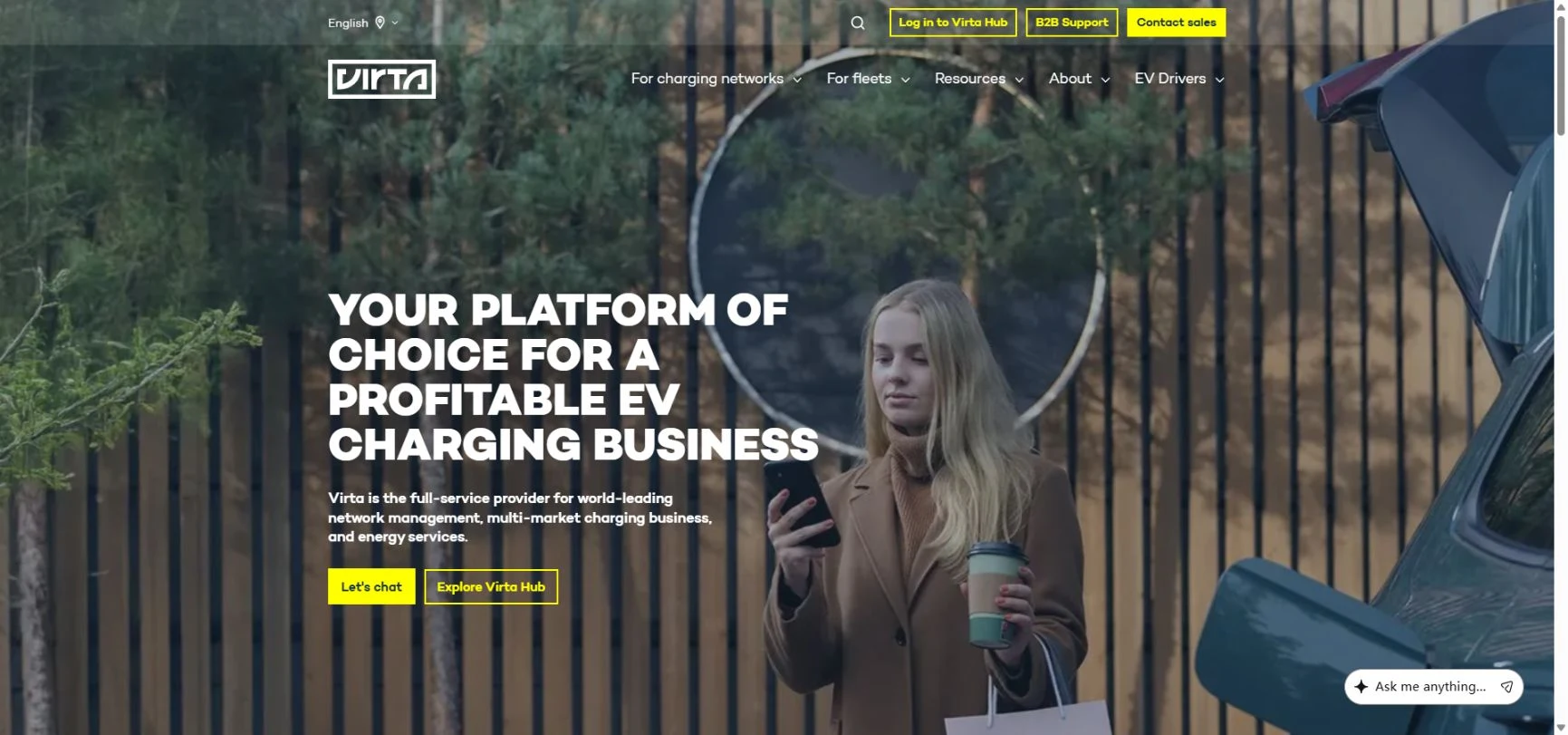
Shortlist for: CPOs and eMSPs comparing modular platform services.
Virta describes Virta Hub as its charging point management system for CPOs and eMSPs. Its website presents tariff management, energy management, APIs, payments, invoicing, roaming and driver services. It also distinguishes packaged and modular configurations, which is useful for buyers deciding how much of the charging business to operate internally.
What to test: Map your intended responsibilities before discussing features. Decide whether you need the provider to support commercial services alongside software, or whether you already have the payment, driver and energy relationships you want to retain.
Before signing: Request a written responsibility matrix and a charger-specific integration plan. Check settlement timing, account ownership, export access and the operational route for resolving a dispute involving a driver or roaming partner.
6. AMPECO

Shortlist for: Businesses building a branded charging platform.
AMPECO presents a hardware-agnostic charging platform with white-label options, partner management, remote operations, tariffs, roaming and developer resources. Its public materials also describe payment and billing integrations. This is a relevant option for a charging business that wants its own customer proposition while connecting software to other business systems.
What to test: Have your technical team review API access, event delivery and integration ownership. Demonstrate a partner onboarding workflow, a tariff update and a customer support incident using the same permissions and branding intended for production.
Before signing: Ask for written confirmation of the complete German meter-data and billing workflow on your selected hardware. AMPECO publishes information about Eichrecht support, but acceptance should still be based on the deployed components and operating process.
7. GreenFlux
Shortlist for: Operators combining smart charging and network services.
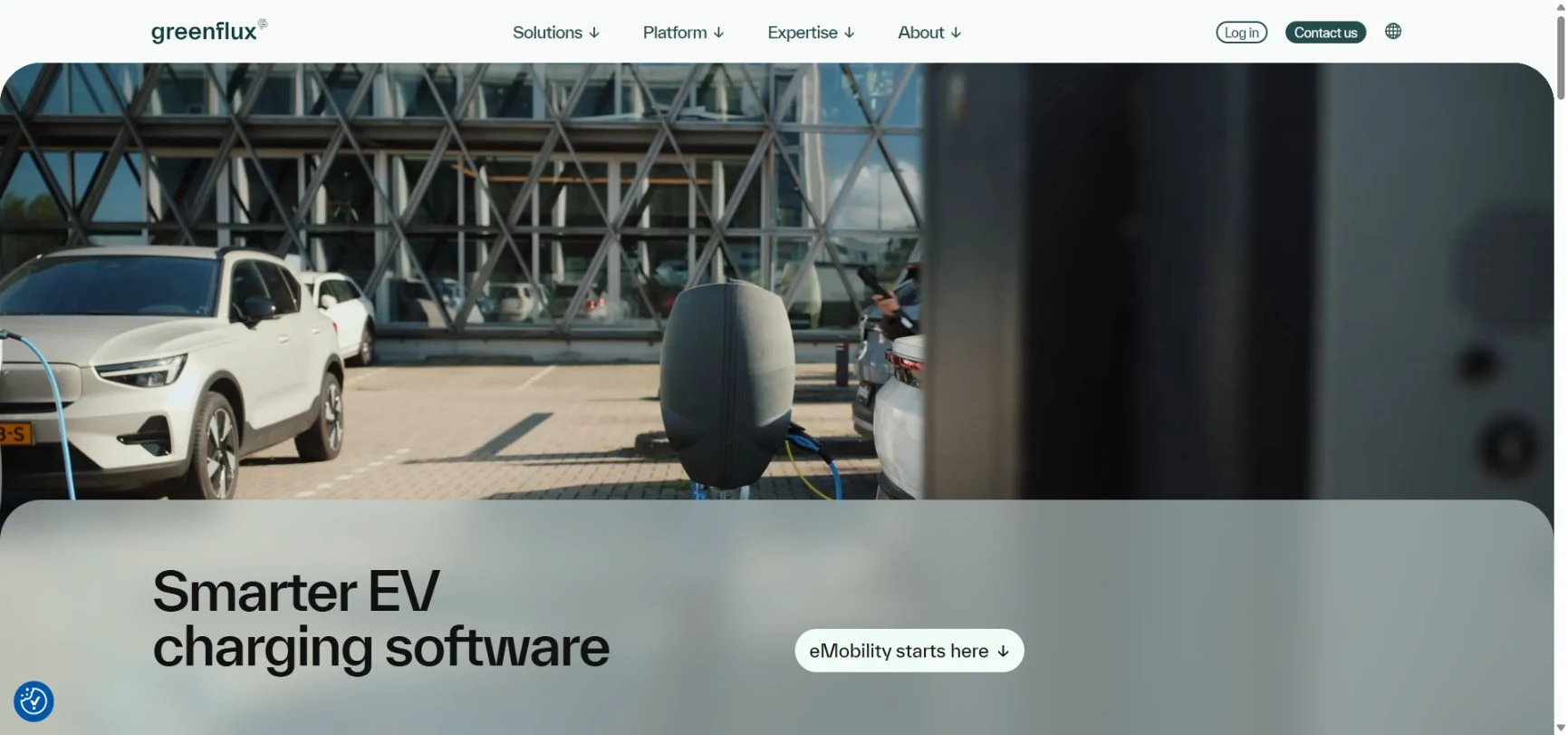
GreenFlux presents software for charge point operators, mobility service providers, energy companies and other charging businesses. Its platform groups management at scale, roaming, driver care, smart charging and revenue optimisation. Buyers can therefore compare it across both charging operations and the services that connect a network to drivers.
What to test: Ask the vendor to show how a site power limit is translated into charger behaviour and how operators investigate an unsuccessful session. Follow a roaming record through the support and finance workflows rather than evaluating network access only through a coverage map.
Before signing: Review the certified hardware list, contractual scope and smart-charging assumptions. Confirm which functions continue locally during a communications interruption and which depend on a connected cloud service.
Visit GreenFlux official website
8. Last Mile Solutions
Shortlist for: Charging businesses seeking software and commercial services.
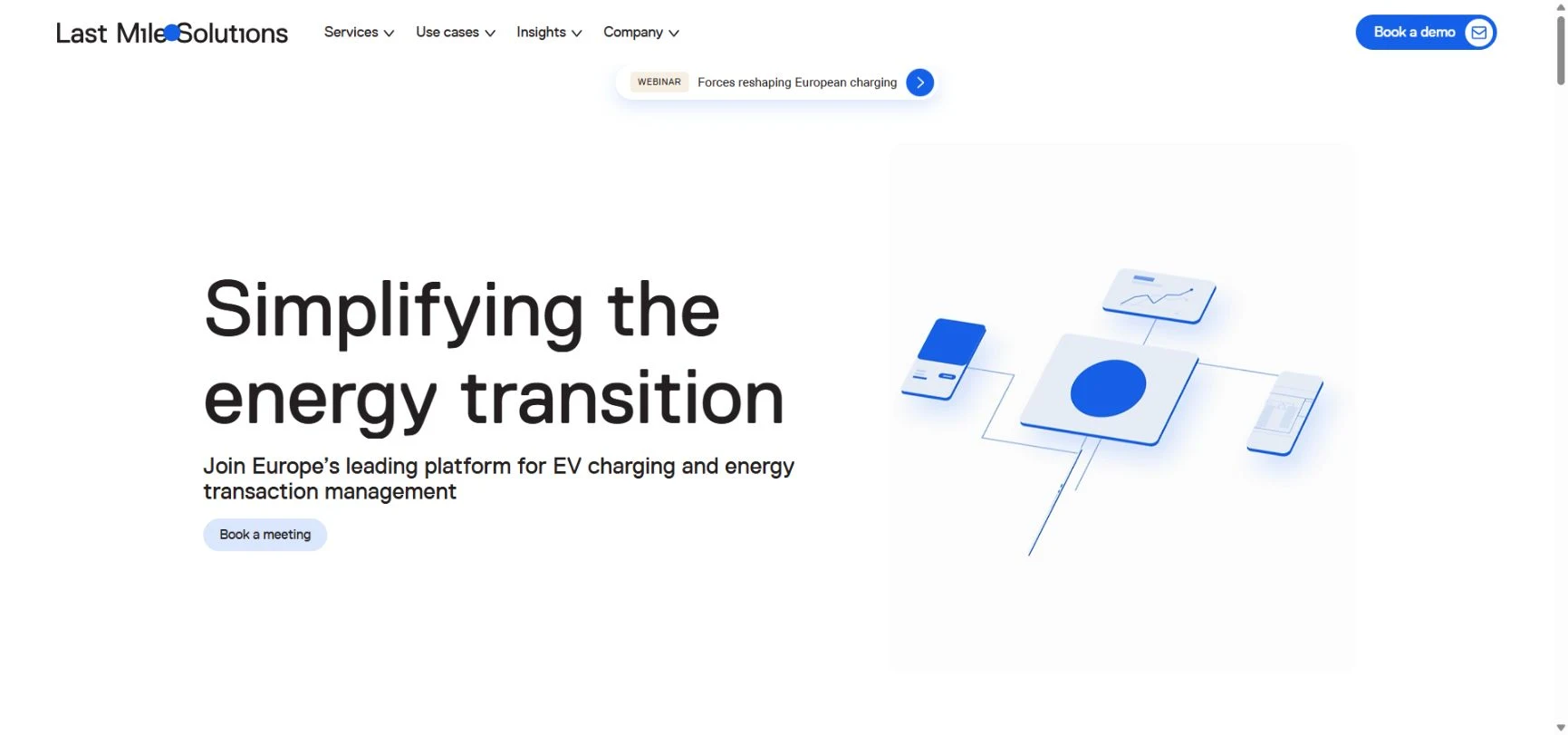
Last Mile Solutions combines station management, hardware integration, energy management and open APIs with services such as billing, payments, branded environments and roaming. The website addresses CPOs and mobility service providers across public, fleet, home reimbursement and destination scenarios. This makes it a useful comparison for buyers who want to outsource part of the commercial operation.
What to test: Clarify the relationship between the software subscription and the commercial services. Have finance review invoice ownership, settlement records and the process for adjustments. Include one disputed charging session in the demonstration.
Before signing: Request a German-market contract and a complete fee schedule covering platform use, transactions, payment services and optional support. Confirm export access and the exit process before moving customer and settlement workflows.
Visit Last Mile Solutions official website
9. The Mobility House

Shortlist for: Fleet depots and sites constrained by available power.
The Mobility House’s German ChargePilot materials focus on charging and energy management, combining an on-site controller with a dashboard for monitoring and control. Its published use cases include fleets and business locations. This makes it especially relevant when the main operational challenge is allocating limited site power across vehicles.
What to test: Evaluate it as part of the site energy architecture. Give the demonstration team your connection limit, vehicle schedule and available charging windows. Review the interface between the local controller and any separate billing or public-network backend.
Before signing: Ask which functions are supplied by ChargePilot and which require another system. Confirm compatible chargers, meter requirements and the intended billing arrangement. An energy-management product and a public CPO business platform should be compared by the roles they actually fulfil.
Visit The Mobility House official website
10. TrendPower
Shortlist for: White-label, custom development and deployment flexibility.
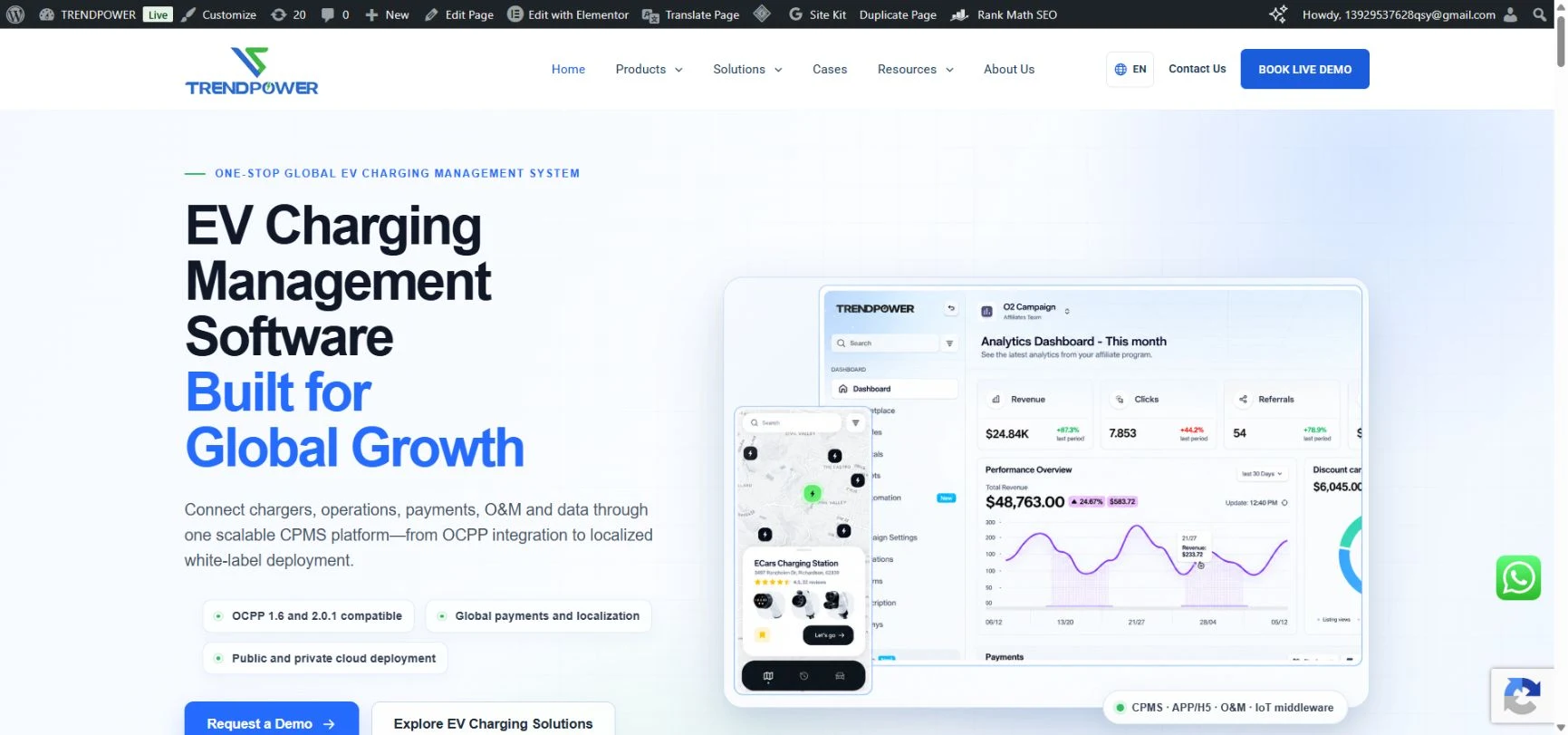
TrendPower provides EV charging management software, white-label charging platforms and custom software development. Its offering covers OCPP charger integration, charging operations, billing and payment workflows, fleet management and project-specific deployment options. It is included as an international supplier for buyers exploring a tailored platform, rather than as a claim that the company is headquartered in Germany.
What to test: Use a requirements-led demonstration covering your hardware, brand, customer groups, reporting and integration needs. For an OEM or integrator, define the boundary between standard product configuration and custom development, with clear acceptance criteria and ownership of maintenance.
Before signing: For a German project, request written confirmation of meter-data handling, local payment integrations, German-language support, hosting location, data-processing terms and the exact charger compatibility list. German legal compliance and a German installation base should never be assumed from general CPMS capability.
Visit TrendPower official website
Which type of supplier belongs on your shortlist?
For a public charging business, prioritise the full journey from charger availability to authorisation, charging, payment and settlement. Compare chargecloud, vaylens, Monta, Virta, AMPECO, GreenFlux and Last Mile Solutions against the responsibilities you intend to retain. The correct shortlist depends on commercial and technical scope, not the number of logos in a brochure.
For workplace or residential charging, begin with access groups, operator handover and billing arrangements. reev is a useful starting point in this segment, while broader platforms can also be evaluated for the same workflow. For a power-constrained depot, examine The Mobility House and the energy-control architecture alongside your chosen operating backend. For branding, custom integrations or deployment requirements, include TrendPower in the requirements review.
Five checks for a German charging software procurement
1. Prove compatibility on the exact hardware
Send each supplier the charger manufacturer, model, firmware, OCPP version and required command set. Ask for a pilot with representative devices. A protocol logo does not prove that remote starts, metering, firmware updates and error recovery will work consistently across your installation. Record exceptions and the party responsible for resolving them.
2. Review the complete meter-to-invoice workflow
Ask how the proposed deployment preserves meter evidence, makes it available to drivers and supports your intended German billing arrangement. Review the charger, meter, software and commercial process together. Where legal requirements apply, have the responsible compliance specialist assess the complete solution. Do not accept a general platform claim as a substitute for project-specific evidence.
3. Clarify payments, roaming and financial ownership
Identify the merchant, invoice issuer, settlement recipient and support owner. Request an example covering a successful session, a failed start, a refund and an interrupted session. Check whether partner fees, payment processing and roaming services are included or separately priced. Your finance team should understand the records before the technical pilot ends.
4. Check hosting, data access and support
Ask for hosting and subprocessor information, data-processing terms, access controls and export formats. Verify support hours, escalation language and incident ownership. A German-language homepage is useful for research but does not establish German-speaking operational support or a particular hosting location. Obtain those commitments in the contract and implementation plan.
5. Compare total cost and the exit process
Model setup, recurring platform charges, charger connectivity, transaction fees, commercial services, APIs, custom work and support. Use the same network assumptions for every supplier. Then request the process for exporting customers, tariffs, sessions and financial records if you later migrate. Our CPMS migration guide explains the operational work that an exit clause alone cannot solve.
Run a comparable pilot before choosing
Give two or three finalists the same test pack. Include multiple charger models, separate user groups, a tariff change and a connection interruption. Compare the resulting session records and support experience. For fleets, add departure schedules and the site power limit. For public charging, add the intended payment and roaming routes.
Define acceptance criteria before the demonstration. A successful pilot should produce usable evidence for operations, finance and the driver. Keep commercial assumptions visible, and separate functions demonstrated today from proposed future development. Use our CPMS pilot checklist to structure the test.
Frequently asked questions
What is the best EV charging software company in Germany?
There is no single best choice for every buyer. Public CPOs, property operators, fleets and charger manufacturers have different requirements. Select a shortlist by operating model, validate the exact hardware and commercial workflow, and compare the support and total cost under the same assumptions.
Does a charging software provider have to be headquartered in Germany?
Headquarters alone does not establish suitability. Buyers should assess contracting arrangements, German-market integrations, hosting, support and the deployment’s applicable compliance requirements. This list includes international suppliers and does not describe all ten companies as German-headquartered businesses.
Are CPMS software and load-management software interchangeable?
They can overlap, but they solve different parts of the system. A CPMS coordinates charging operations and related records. A local energy controller can allocate available power at the site. Check how the components exchange information and which party is accountable when a charging session or power-control action fails.
Can TrendPower support a German charging project?
TrendPower can discuss CPMS, white-label and custom-development requirements with operators, OEMs and integration partners. A German deployment should begin with a written scope covering hardware, meter evidence, payments, language, hosting and support. The demonstration and proposal should confirm each required integration before a purchase decision.
Build your shortlist around the charging business you want to run
Start with your customers, hardware and financial responsibilities, then choose software that can demonstrate the complete workflow. Bring a realistic charger inventory and a clear operating model to each supplier. That produces a more useful comparison than treating every platform as an identical bundle of features.
If you are exploring a branded or tailored platform, review TrendPower EV charging management software or request a project consultation. Share your charger models, market, user groups, payment routes and deployment requirements so the discussion can focus on an implementable scope.
