
EV Charging Management Software Built Around Your Network
Connect chargers. Control operations. Keep your data and charging revenue.
TrendPower CPMS brings OCPP charger management, users, sessions, tariffs, payments, remote O&M and partner settlement into one operating platform—configured for your hardware, brand, market and deployment requirements.
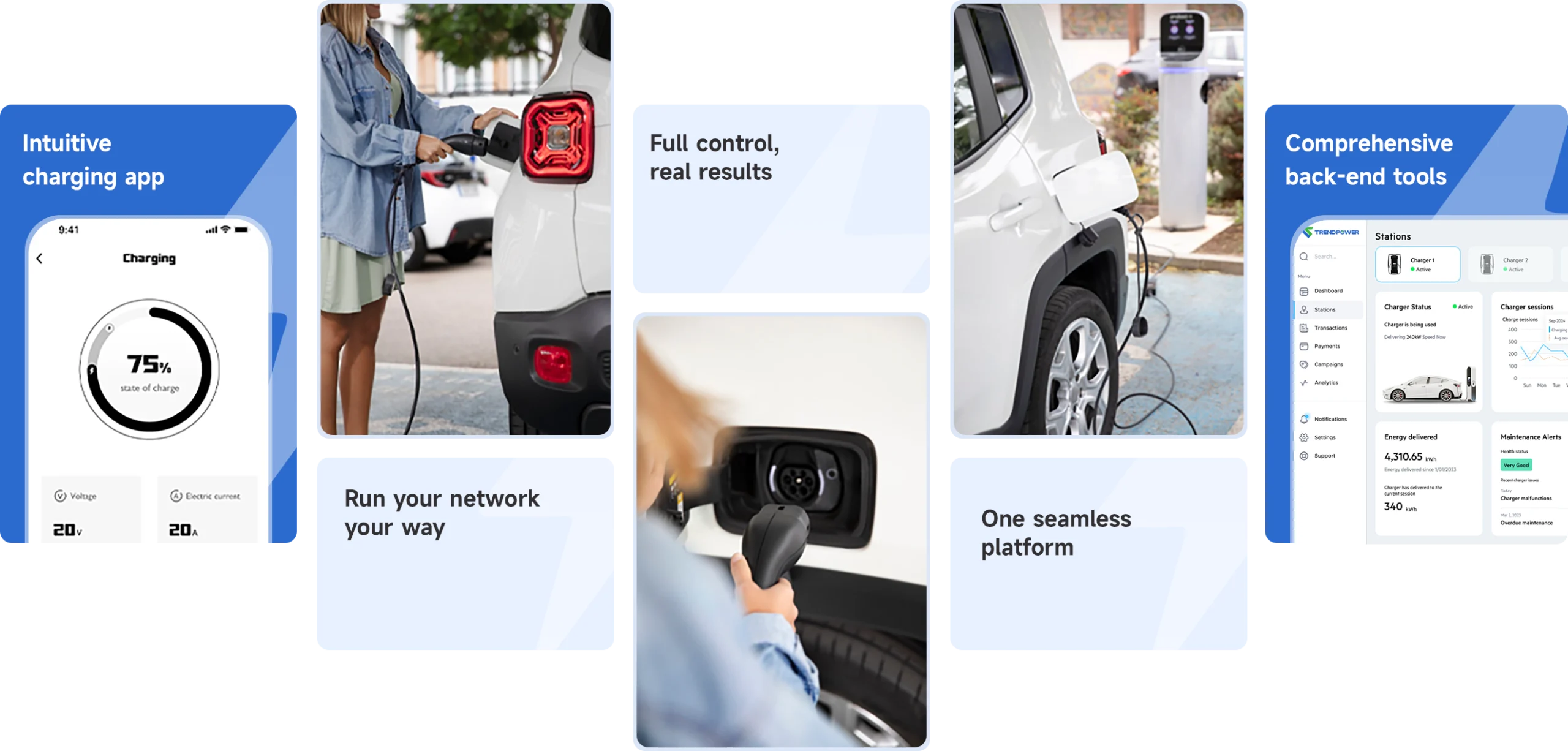
Four Decisions That Define the Right CPMS
Before comparing feature lists, confirm whether the platform can support your chargers, operating model, ownership requirements and rollout plan. TrendPower scopes these decisions against the actual project—not a generic software package.
Will it connect to my chargers?
Review charger brand, model, firmware, OCPP version and the remote commands your operation needs.
Check compatibility approach →Will it support my revenue model?
Define tariffs, memberships, payments, invoices, partner commissions and settlement responsibilities.
Review operating capabilities →Who controls the brand and data?
Clarify white-label interfaces, data access, hosting, source-code options and third-party integrations.
Compare the TrendPower approach →How will we launch or migrate?
Set a pilot scope, acceptance criteria, training plan, incident ownership and controlled rollout path.
See the rollout process →What Is an EV Charging Point Management System?
An EV Charging Point Management System, often called a CPMS or EV charging management platform, is software that connects charging stations to a central operating environment. It helps charging point operators manage chargers, users, charging sessions, tariffs, payments, revenue, alerts, diagnostics and performance data across one or many sites.
One Charging Platform, Multiple Interfaces for Every Role
Give drivers, administrators and operating teams the interface they need while keeping charger, transaction and business data connected to the same management platform.
 Enlarge image ↗
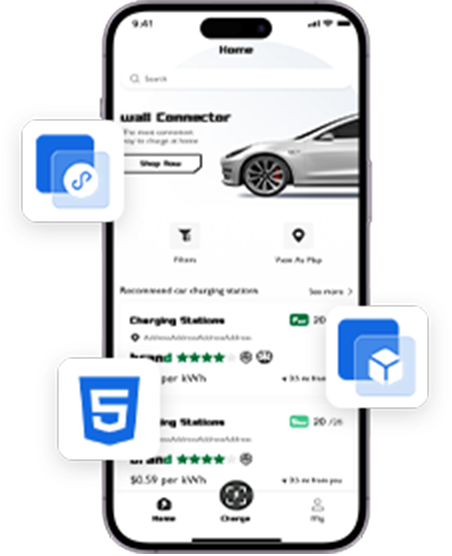
User Mobile App / H5 / APP
Support charger discovery, charging sessions, payments, user accounts and service access through mobile experiences.
 Enlarge image ↗
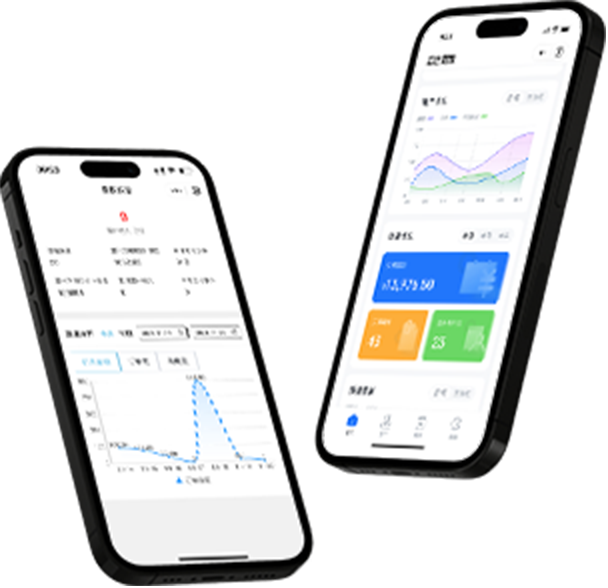
Admin Mobile App / H5 / APP
Give managers mobile visibility into operations, transactions, charger status and business performance.
 Enlarge image ↗
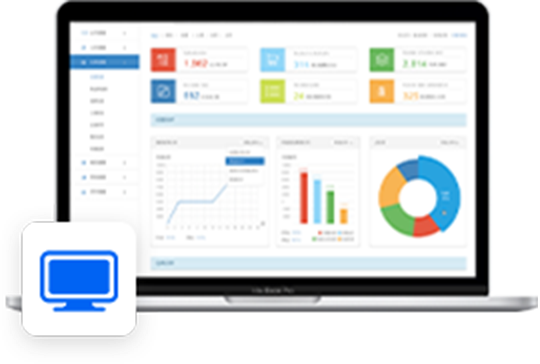
PC Admin Panel
Centralize chargers, sites, users, orders, tariffs, finance and operational settings from one desktop portal.
 Enlarge image ↗
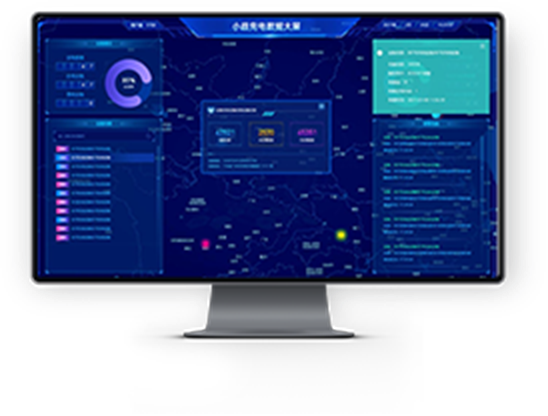
Data Dashboard
Turn charging, revenue, device and site data into dashboards for faster operational and commercial decisions.
Operate, Monetize and Scale Your EV Charging Network From One CPMS
A commercial charging platform has to do more than show charger status. It should help teams keep equipment online, turn charging sessions into traceable revenue, manage partners and build repeatable workflows as the network expands.
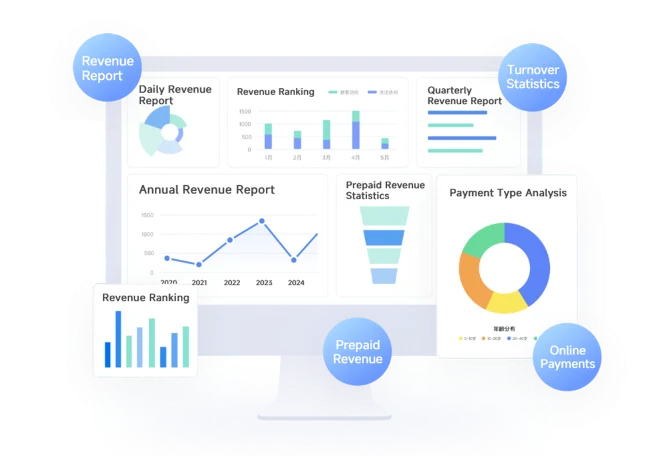
Revenue Reporting That Connects Charging Activity With Business Performance
Bring turnover, orders, top-ups and payment data into one reporting view so operating teams can compare periods, understand site performance and make decisions from charging data instead of spreadsheets.
- Daily, weekly, monthly, quarterly and annual turnover views
- Revenue ranking and order-count analysis by operating scope
- Recharge amount and payment-type visibility
- Use reporting trends to identify stronger and weaker sites
 Enlarge image ↗
Turn Charging Users Into Repeat Customers With Built-In Growth Tools
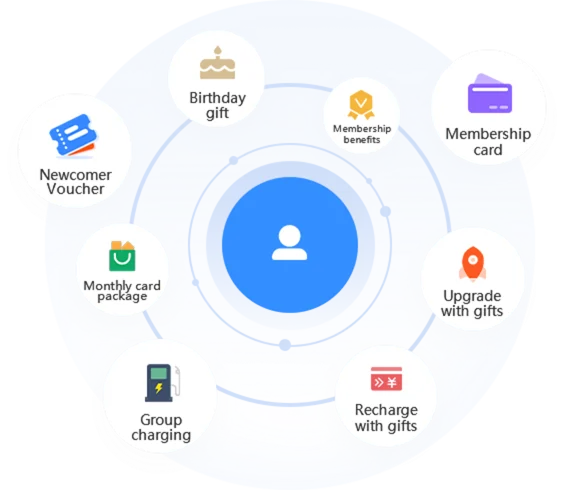
Operators that own the customer journey can use charging behavior to support retention instead of competing only on electricity price. Configure marketing tools around the station type, customer segment and local business model.
- Welcome vouchers and new-user promotions
- Recharge rewards, monthly plans and subscription packages
- Tiered membership and customer-group benefits
- Campaigns for off-peak charging, referrals or repeat usage
 Enlarge image ↗
Flexible Tariffs and Billing Rules for Different Charging Scenarios
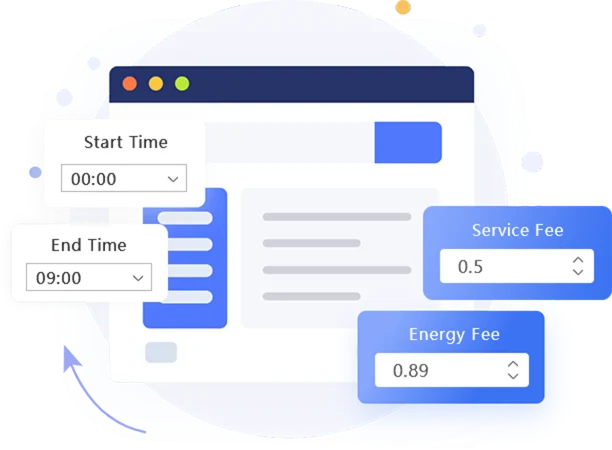
Public charging, fleets, workplaces and residential projects do not use the same pricing logic. Configure tariff rules around the commercial model while keeping charging sessions, fees and transaction records connected.
- Time-of-use tariffs and configurable service fees
- Billing by time, energy or supported project rules
- Different pricing for sites, user groups or membership levels when configured
- Connect charging records with payment, settlement and reporting workflows
 Enlarge image ↗
Manage Agent Accounts and Multi-Level Commission Structures More Transparently
Charging networks often involve operators, agents, site hosts and sales teams. Bring account permissions and commission rules into the platform so partner-led growth does not depend on manually maintained spreadsheets.
- Add, edit, view, freeze and maintain subordinate accounts
- Configure multi-tier commission relationships
- Separate permissions and operating scope by business role
- Keep partner structure connected to charging and settlement records
 Enlarge image ↗
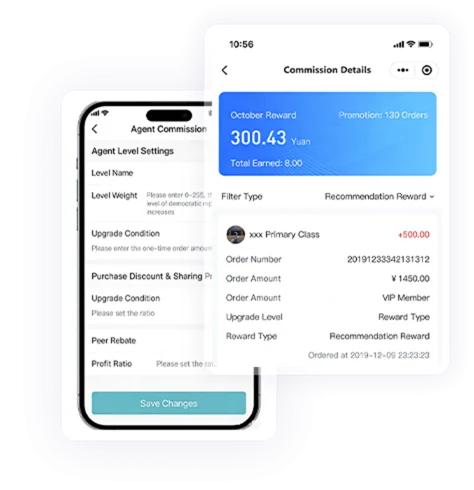
Automate Revenue Sharing Across Operators, Site Hosts and Channel Partners
When several parties share one charging business, settlement becomes an operational problem. Configure predefined sharing ratios so transaction revenue can be calculated consistently and relevant parties can review their earnings records.
- Pre-set revenue-sharing ratios by commercial relationship
- Calculate partner earnings from charging transactions
- Provide role-specific earnings and settlement visibility
- Maintain withdrawal and settlement records inside the business workflow
 Enlarge image ↗
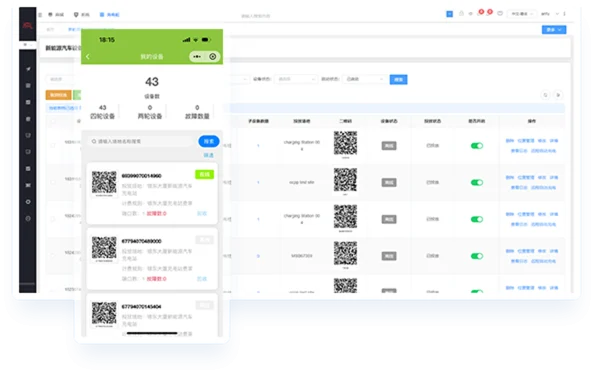
Manage Charger Onboarding, Configuration and Device Records at Scale
As the network grows, device work has to become repeatable. Centralize charger records and batch workflows while connecting compatible hardware through the protocol and integration scope defined for the project.
- Add, edit, search and remove charging devices
- Batch parameter configuration and QR-code binding
- Firmware upgrade workflows, connectivity logs and pricing rules
- OCPP 1.6 / 2.0.1 compatible integration for supported charger models
 Enlarge image ↗
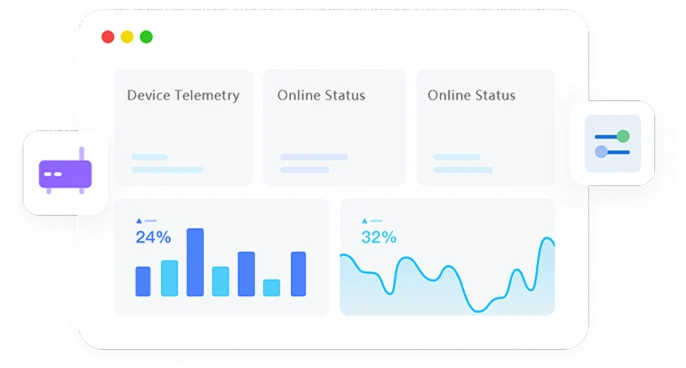
Diagnose Charger Problems Remotely Before Sending a Technician On Site
Remote operations help charging teams react faster when a charger goes offline or a session fails. Bring telemetry, device status, logs and supported remote commands into one troubleshooting workflow.
- Review charger status, telemetry and operational data remotely
- Inspect connectivity and communication information during troubleshooting
- Support remote start, stop, reset or port-level control where hardware allows
- Coordinate fault handling and maintenance records from the CPMS
 Enlarge image ↗
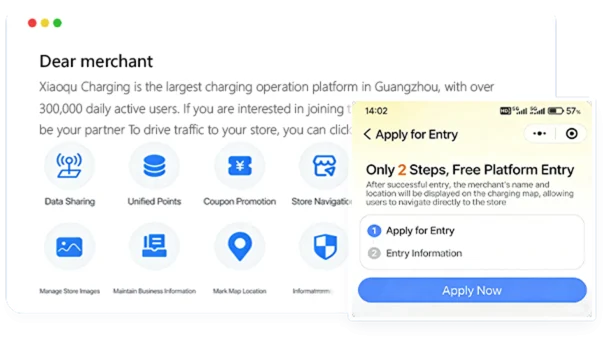
Connect Charging Demand With Nearby Merchants and Value-Added Services
A charging site can be more than an electricity transaction. Where the business model fits, operators can connect nearby merchants, promotions and service offers to the driver experience and turn charging dwell time into a broader commercial opportunity.
- Let nearby merchants participate in the charging-service ecosystem
- Surface local offers in the driver-facing experience
- Use coupons, memberships or partner promotions to encourage engagement
- Support project-defined merchant fees, commissions or revenue-sharing models
 Enlarge image ↗
Feature availability depends on charger capability, protocol implementation, payment provider, deployment model and the commercial workflow defined for each project.
Can Your Chargers Connect to This CPMS?
Start with your existing equipment or planned hardware. We can discuss the model, firmware, protocol and operating functions your project needs.
Share your equipment
Send charger brands, models, firmware and the OCPP version if known. Include the number of sites and connectors.
Define the required workflows
Identify authorization, remote control, billing, charging profiles and offline behavior that matter to your operation.
Validate a pilot
Agree a test scope for representative chargers before wider deployment. Record the supported functions and any limitations.
OCPP 1.6 / 2.0.1 support
Final compatibility depends on the actual charger and implementation. Unsure of the protocol? Start with the model name.
Reduce Charging Friction From Discovery to Payment
A strong driver experience helps operators convert charger availability into completed sessions. The mobile layer can support charger discovery, scheduled charging, payments and value-added services.
 Enlarge image ↗
Quick Charger Find
Help drivers discover nearby charging stations, availability and pricing from a map-based mobile experience.
 Enlarge image ↗
Schedule Charging
Allow users to configure charging time windows when supported by the charger, tariff rules and project workflow.
 Enlarge image ↗
Quick Payment
Connect charging sessions with account and payment workflows so users can complete transactions with less friction.
 Enlarge image ↗
Owner & Value-Added Services
Extend the charging app with project-specific services, partner offers, navigation and community functions.
Build a CPMS Around Your Hardware, Market and Operating Model
TRENDPOWER’s wider EV charging software capabilities include OCPP compatibility, multilingual deployment, payment integration, localized workflows and flexible deployment options. Final scope depends on charger interfaces, target countries, payment providers and project requirements.
More Control Than a One-Size-Fits-All Charging SaaS
TrendPower combines an established CPMS foundation with project-specific integration and delivery. The goal is to fit the software to your charger network and commercial workflow while keeping ownership, costs and responsibilities clear.
Every project is scoped separately. Confirm included modules, charger compatibility, deployment responsibility, support coverage and any third-party charges in the final proposal.
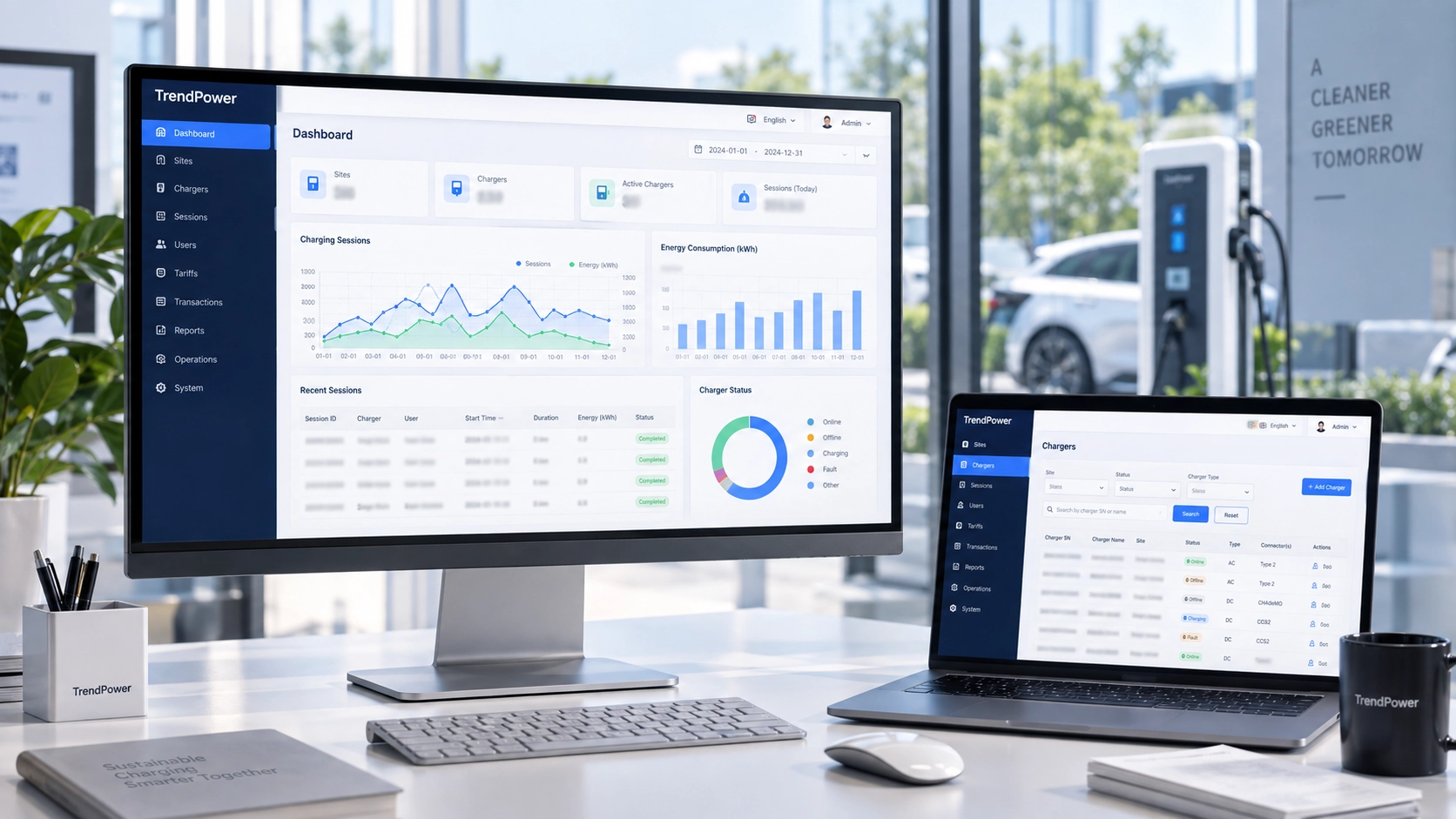
See How the EV Charging Management System Works
Start with the product overview, then request a demonstration around your own chargers, user groups and payment requirements.
- Explore the operator and driver interfaces.
- Discuss charger monitoring and billing workflows.
- Identify what your project needs to configure or integrate.
Video not loading? Watch the overview on YouTube or explore the platform interfaces below.
See How Charging Businesses Build With TrendPower
Examples from our published project stories: residential charging and sharing, heavy-duty truck charging networks and intelligent bus-depot charging.
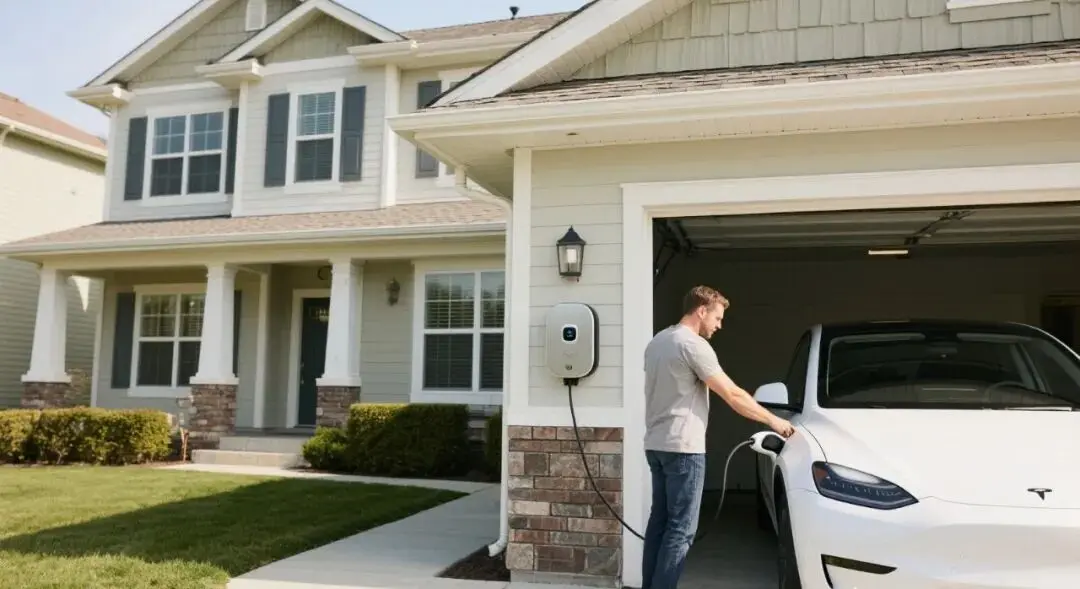
EV Tech × TrendPower
Home charging and controlled charger sharing
- Project need
- Build a branded residential platform for private home charging, family access and controlled peer-to-peer charger sharing.
- Published solution
- The project covers Wi-Fi and 4G remote control, compatible Bluetooth offline access, adjustable current, recurring schedules, permissions, load management, reservations, payments and owner settlement.
- Relevant to
- Residential charger brands, shared-charging operators and property groups

Emeishan Longqi Power × TrendPower
A connected charging network for heavy-duty trucks
- Project need
- Connect self-operated and third-party charging stations with electric truck fleets, vehicle data and payment operations.
- Published solution
- The project covers charging-network interoperability, VIN-based charging, compatible dual-connector charging, telematics integration, SOC monitoring, route planning, enterprise fleet management and centralized payment.
- Relevant to
- Heavy-duty truck charging, logistics fleets and multi-operator networks
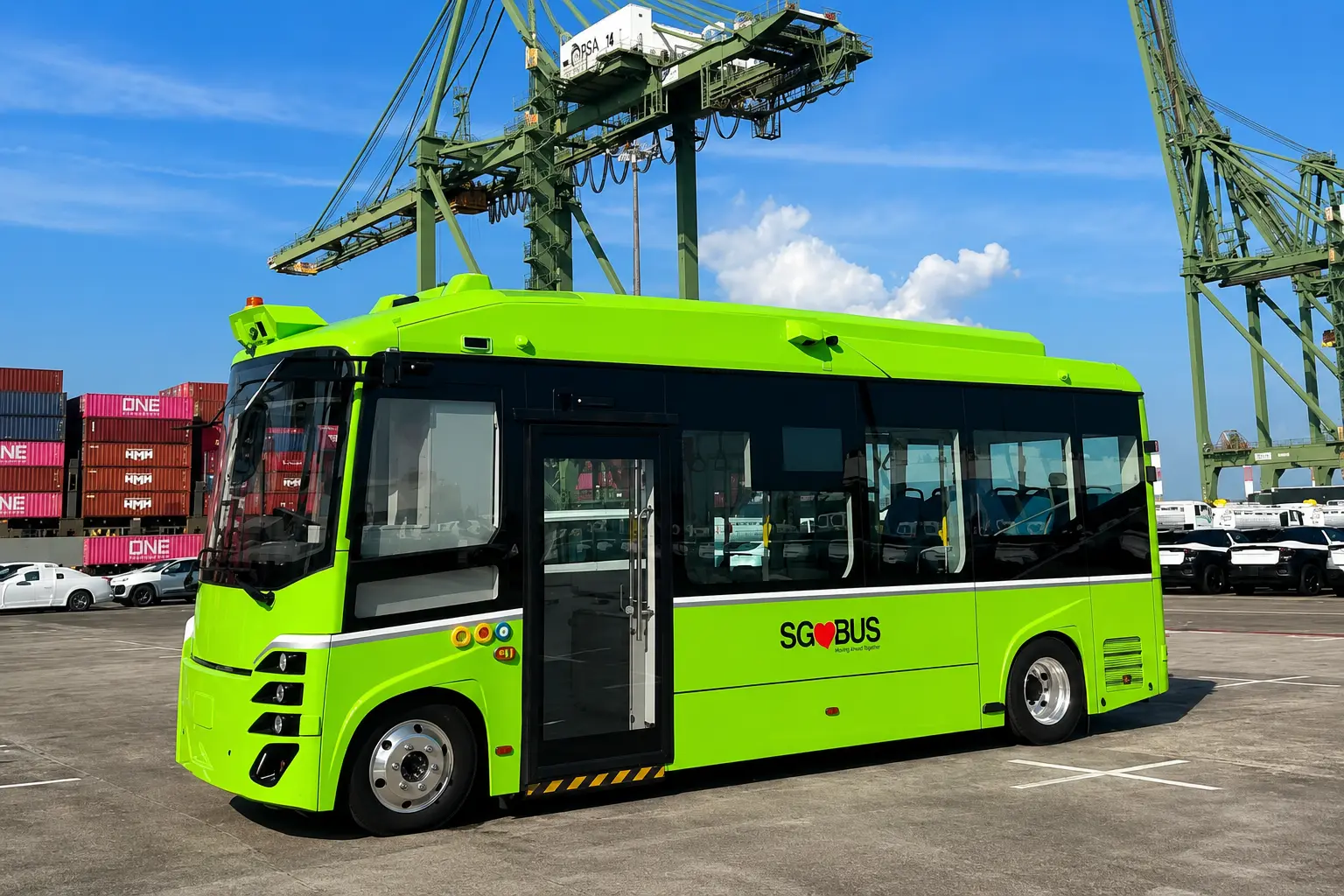
Autonomous E-Bus Project × TrendPower
Smart charging for scheduled autonomous bus operations
- Project need
- Keep electric buses ready for scheduled departures while coordinating charger availability and limited depot power capacity.
- Published solution
- The platform covers vehicle scheduling, charging queues, time-of-use tariff optimization, grid-load coordination, remote operations and maintenance, energy monitoring and settlement.
- Relevant to
- Electric bus operators, autonomous fleets and smart charging depots
Which Workflow Matters Most to Your Project?
Discuss charger operations, local payments, branded interfaces or partner settlement. Start with your priority and build the right scope around it.

Know What Your CPMS Proposal Includes
Discuss the delivery model and the responsibilities behind it. The final proposal should identify included functions, optional work and ongoing service costs.
Core CPMS scope
- Charger and site management
- Users, sessions and tariffs
- Monitoring and reporting
- Role and operating workflows
Confirm the enabled modules, supported equipment and account structure in your proposal.
Branding & integrations
- Branded apps and portals
- Language and market settings
- Payment provider integration
- External APIs and business systems
Identify configuration work separately from custom development and third-party charges.
Hosting & support
- Deployment responsibilities
- Charger commissioning
- Training and technical handover
- Maintenance and upgrade scope
Agree what your team provides and which activities the software partner manages.
What determines the price?
Network scale, deployment model, branded interfaces, integrations, customization and support scope. Ask for setup and recurring costs separately.
A Clear Path to Launch or Migrate
Use a staged plan with defined owners and acceptance criteria. Timing depends on equipment readiness, integrations and the scope of your project.
- Discover
Review sites, hardware, user groups, payment needs and existing systems.
- Configure & test
Set up the agreed workflows and validate representative equipment.
- Launch & train
Complete acceptance, prepare operators and roll out in controlled groups.
- Support & expand
Assign incident ownership and validate changes as the network grows.
Already using another charging management system?
Review backend endpoint access, charger credentials, contracts, data exports and manufacturer support before switching. Pilot a small group, preserve the original configuration and agree a rollback plan. Historical records and payment arrangements may need separate handover steps.
Discuss my migration requirements →Coordinate Multiple Stakeholders Without Losing Revenue Visibility
The platform can support business relationships between platform operators, site owners, resource providers, service operators and capital providers. Role-based permissions, commission settings and reporting help keep operational responsibilities and commercial flows clearer as the network expands.
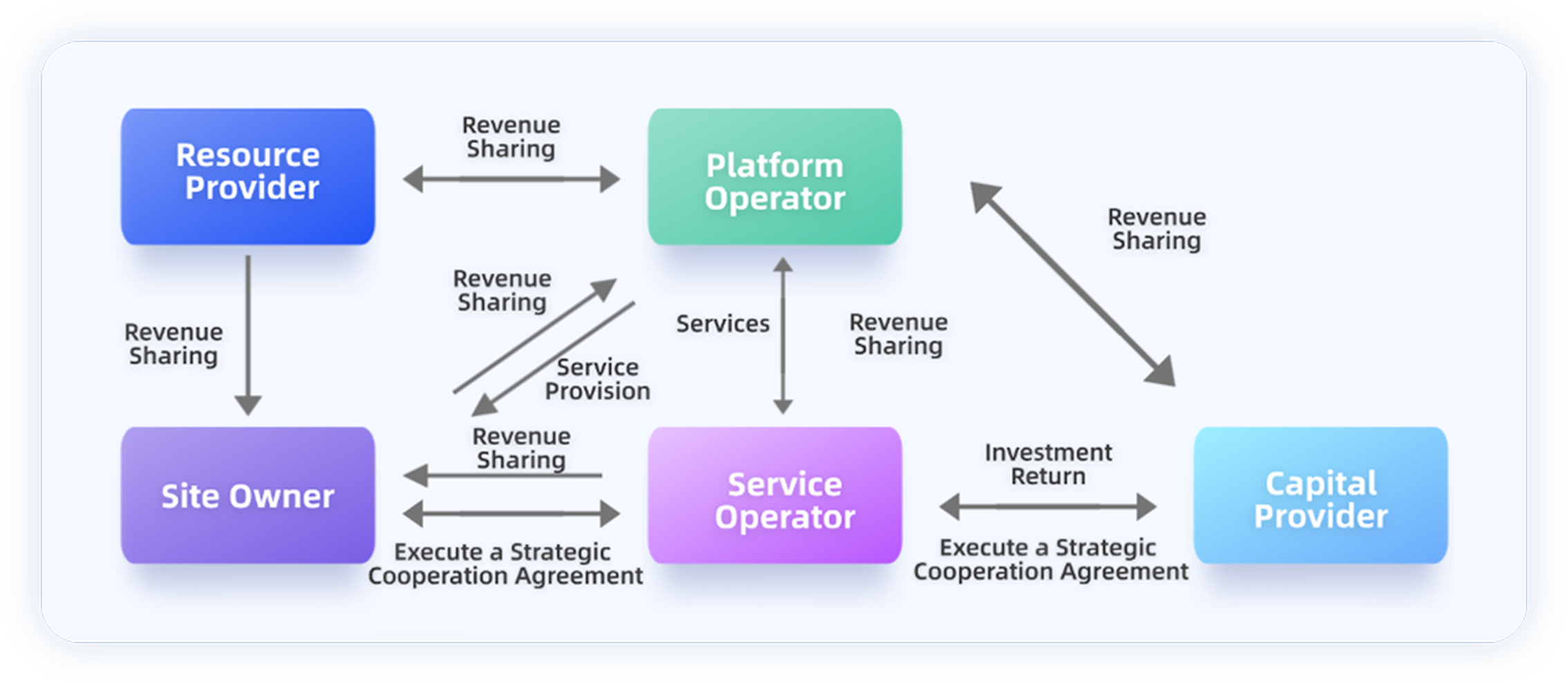
EV Charging Management Software for Different Charging Businesses
A CPMS becomes more valuable when its roles, billing rules, integrations and workflows match the business operating the chargers.
Charging Point Operators
Manage multi-site charger networks, driver services, tariffs, payments, settlements, O&M and business analytics.
EV Charger Manufacturers
Connect compatible hardware to a branded software platform and provide customers with a more complete charger + software offering.
Fleet & Depot Operators
Centralize charging infrastructure, charging records, operational data and site performance for commercial fleets.
Property & Parking Operators
Configure user access, billing, site management and charging services for commercial, residential and mixed-use properties.
Energy & New-Energy Companies
Integrate charging operations with wider energy, payment and digital service ecosystems as project requirements evolve.
Regional Charging Platforms
Build localized charging services with language, payments, partner roles, integrations and deployment options for target markets.
Support Beyond the Core Charging Platform
EV charging projects often need hardware integration, deployment, maintenance and ecosystem coordination in addition to the software itself.

On-Premises Deployment
Support projects that require charging management software and data infrastructure within the customer’s own environment.

Third-Party Device Integration
Coordinate charger protocol integration and joint debugging for compatible hardware and project-specific interfaces.

Deployment & Maintenance
Support implementation, configuration, maintenance workflows and operational requirements after platform launch.

Partnership Matching
Coordinate upstream and downstream resources where hardware, payments, operations or ecosystem partnerships are required.
EV Charging Point Management System FAQ
Answers about CPMS software, OCPP charger integration, remote management, billing, payments, deployment and scaling EV charging networks.
What is an EV Charging Point Management System?
An EV Charging Point Management System, or CPMS, is software that connects chargers to a central platform for charger monitoring, user and charging-session management, billing, payments, remote operations and analytics.
How does an EV charging management system work?
The platform communicates with compatible chargers, receives charger and session data, applies operational and commercial rules, and gives operators interfaces for monitoring, control, billing, reporting and maintenance workflows.
Does TRENDPOWER support OCPP-compatible charger integration?
TRENDPOWER’s wider EV charging software supports OCPP 1.6 and OCPP 2.0.1 compatibility. Final charger compatibility and integration scope should be confirmed against the charger firmware, message set and project requirements.
Can operators remotely control EV charging stations?
Yes. Depending on charger capability and integration scope, operators can support remote start and stop, status monitoring, telemetry review, diagnostics and other remote operational workflows.
How does billing work in a CPMS?
Billing rules can be configured around supported tariff models such as time-of-use rates, service fees and charging-based pricing. The platform can connect session records with transaction, account and settlement workflows.
Can the platform support payments and digital wallets?
Yes. Payment integration can be scoped around the target market and business model. TRENDPOWER’s wider platform supports integrations with global payment services, while final gateway availability should be confirmed for each deployment.
Can one CPMS manage chargers from multiple manufacturers?
A CPMS can manage a mixed charger network when the charging equipment uses compatible protocols and supported interfaces. Hardware integration should be verified during technical assessment.
Can the EV charging platform be white-labeled?
Yes. TRENDPOWER provides white-label EV charging software options for operators, charger manufacturers and other charging businesses that want branded apps, portals and operating workflows.
Is on-premises or private deployment available?
On-premises deployment is one of TRENDPOWER’s service options. The suitable architecture depends on data-control, security, integration and infrastructure requirements.
How does a CPMS help improve charger uptime?
Centralized monitoring, operational alerts, remote diagnostics, telemetry and maintenance workflows help teams identify abnormal charger status faster and coordinate responses more efficiently.
Who typically uses EV charging management software?
Typical users include charging point operators, charger manufacturers, fleet operators, property and parking operators, automotive businesses, energy companies and regional charging platforms.
What information should I provide before requesting a CPMS demo?
Useful information includes charger brands and protocols, charger quantity, target countries, payment requirements, user roles, branding needs, integrations, expected network scale and preferred deployment model.
How is a CPMS project priced?
Pricing depends on network scale, deployment model, interfaces, integrations, customization and support scope. Request a breakdown of setup, recurring services and third-party costs against your actual requirements.
Can I migrate my existing charging network?
Start with a review of charger access, protocol implementation, credentials, existing agreements and required data. A representative pilot helps confirm the workflows and transition plan before wider migration.
What happens after I contact TrendPower?
Share your project outline and preferred contact method. The discussion can then focus on charger compatibility, a relevant platform demonstration, the modules required and the information needed for a scoped proposal.
Can I inquire before choosing charger hardware?
Yes. Describe your intended locations, users, scale and operating market. You can discuss integration requirements before selecting hardware, then validate the specific equipment during commissioning.
Get a CPMS Plan for Your Charging Business
Start with a short project outline. Discuss charger compatibility, relevant platform workflows and the scope needed for your proposal.
Make the first discussion useful
- Identify the right platform modules for your operation.
- Review charger information and integration needs.
- Arrange a demonstration around your use case.
- Clarify proposal scope and delivery responsibilities.
You do not need a complete technical specification to start.
Request a demo through our contact form ↗Prepare a quick WhatsApp inquiry
Choose your project details. Continue to WhatsApp to review and send your message.
 EN
EN  ZH
ZH  AR
AR  DE
DE  ES
ES  KO
KO  JA
JA  IT
IT  FR
FR  VI
VI  MS
MS  ID
ID  FR_CA
FR_CA  NL
NL  SV
SV  EN_GB
EN_GB  TH
TH 