
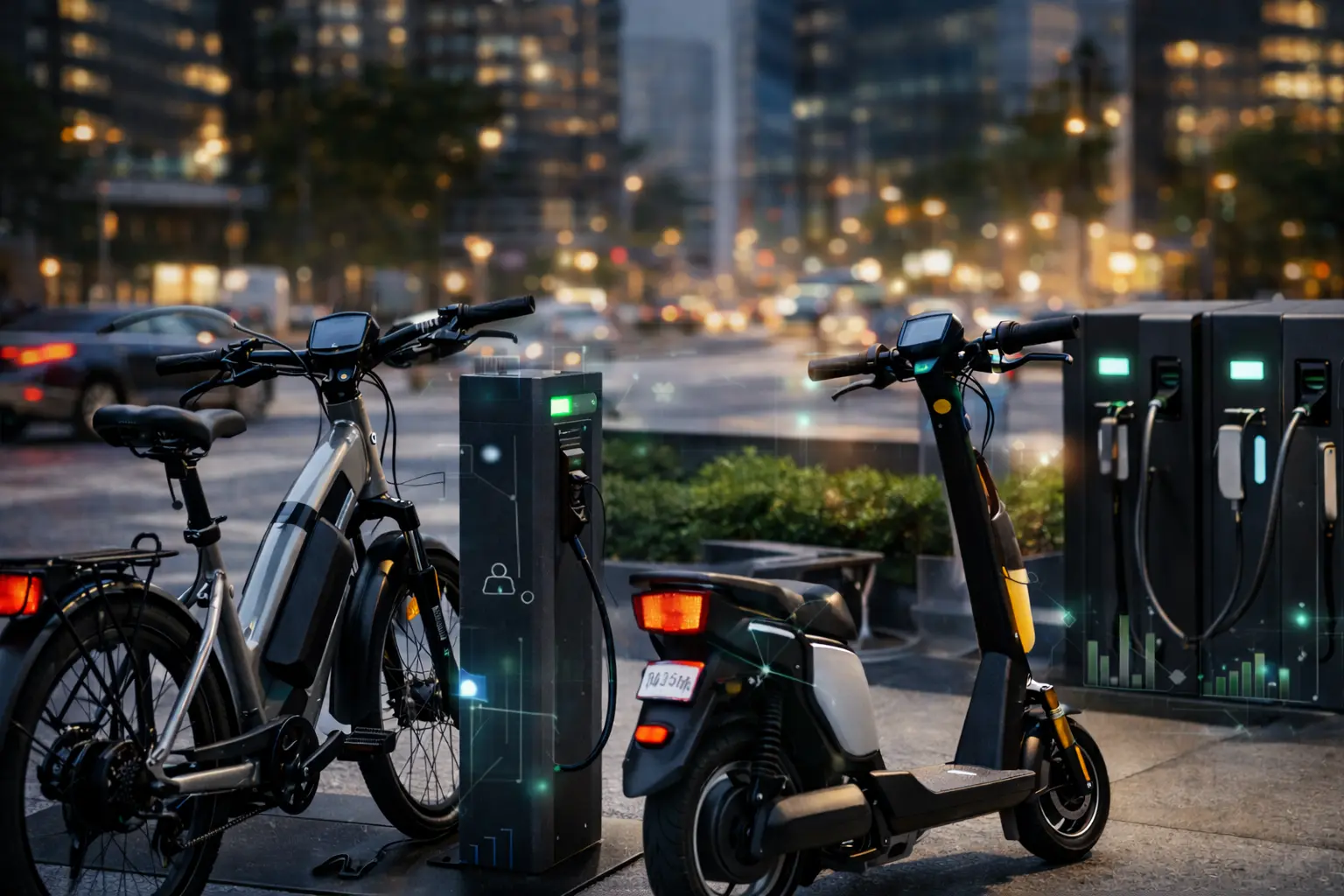
E-Bike Charging Solutions & Smart Micromobility Infrastructure

Table of Contents

E-Bike Charging Micromobility SolutionsThe micromobility boom – from e-bikes to e-scooters – is reshaping urban transport, but it brings a new challenge: deploying scalable, safe charging infrastructure. As shared e-bike fleets and personal e-scooters proliferate, cities and operators need reliable charging solutions that are fast, secure, and smart. Industry reports predict the global micromobility charging infrastructure market will skyrocket (from about $5 billion in 2023 to over $25 billion by 2030), driven by environmental goals and first/last-mile demand. This article explains key challenges (battery safety, standardization, limited space) and cutting-edge solutions – from IoT-connected charging stations and cloud-based management (CPMS) to battery-swapping hubs. We highlight TrendPower’s e-bike charging platform, which offers real-time monitoring, multi-user apps, and optimized energy management. Technical features (OCPP compliance, BMS integration, remote control) and smart use cases (shared fleets, commercial real estate, residential) are explored. Tables compare charging vs. battery-swapping and residential vs. commercial setups. A flowchart illustrates the system architecture (station → IoT → CPMS → operators/users). Ultimately, TrendPower positions itself as the turnkey partner, offering global certifications, OEM flexibility, and a demo to help cities and fleet operators power the future of urban micromobility.

Micromobility’s Surge and the Charging Imperative

Urban centers worldwide are embracing micromobility – small electric vehicles like e-bikes, scooters, and cargo bikes – to ease congestion and cut carbon emissions. Governments and shared-mobility companies are investing heavily: one analysis forecasts the micromobility charging infrastructure market will grow ~25–26% annually through 2030. In practice, millions of shared trips now rely on e-bikes/e-scooters, and cities that want to sustain this must build charging networks. Without sufficient chargers or swap stations, fleets stall and users face “range anxiety.” New city projects (from solar-assisted charging hubs to community swap cabinets) are popping up, indicating that charging infrastructure is now as critical as the vehicles themselves.

The upshot: e-bike charging solutions are not just power outlets, but full ecosystems. They must manage user access, payments, safety, and energy – essentially blending hardware (chargers, cables, batteries) with software (mobile apps, cloud control, data analytics). Any modern solution must support:

  • Scalability: Easily expand your network by adding more charging stations and managing thousands of e-bikes and scooters through centralized software. For example, TrendPower’s CPMS centrally monitors, manages, and optimizes EV charging networks, ensuring efficient and scalable operations.
  • Safety & Standards: Handle lithium batteries safely (integrating BMS for overcharge protection) and comply with protocols like OCPP for interoperability.
  • Urban Constraints: Fit chargers into limited public spaces or private parking, often offering locking or modular mounts to prevent clutter.
  • User Convenience: Offer QR-code or app-based access, membership/loyalty features, and fast charging to keep vehicles circulating.

Together, these factors define the micromobility charging challenge: How to quickly power many low-powered vehicles in a reliable, safe, and cost-effective way. The remainder of this article digs into these issues and showcases solutions, with a spotlight on TrendPower’s smart platform.
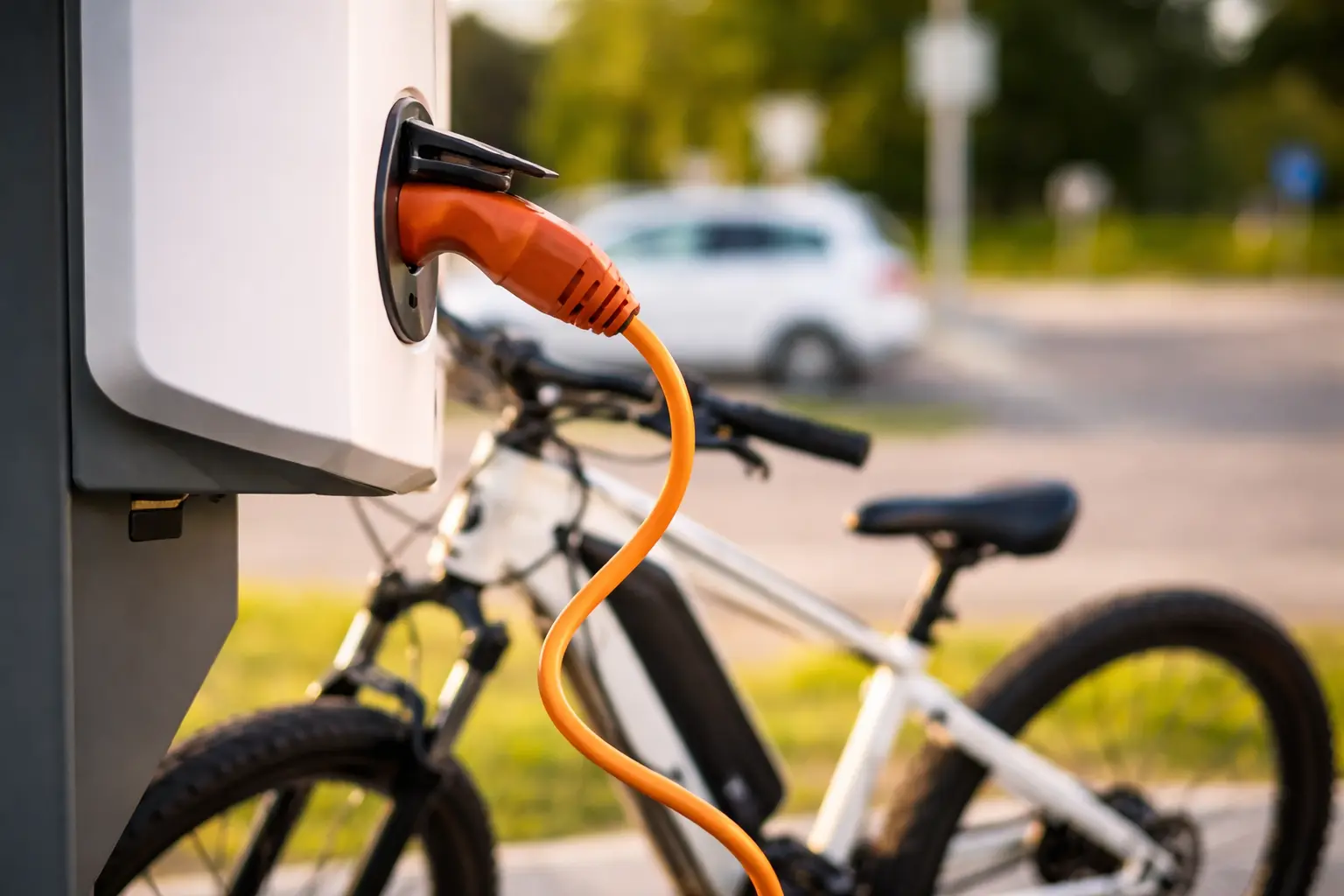
E-Bike Charging

Core Challenges in E-Bike Charging Infrastructure

Even as demand for micromobility soars, several hurdles impede simple charging rollouts. Key challenges include:

Lack of Standardization

Unlike cars (which have a few EV charging standards), e-bikes and scooters use many different batteries and plugs. Infrastructure must accommodate this diversity. Universal docking or multi-port chargers are needed. TrendPower’s platform addresses this by supporting open protocols (e.g. OCPP) and flexible hardware integration, so operators aren’t locked to one vendor.

Battery Safety and Fire Risks

Lithium-ion batteries can overheat or catch fire if overcharged or damaged. Low-cost e-bikes often lack a robust Battery Management System (BMS). High-end systems counteract this with built-in BMS and thermal controls. For shared/public chargers, compliance with safety certifications (UL2272/2271 etc.) and automated cutoffs is mandatory. TrendPower’s solution includes battery health checks and remote disconnect to minimize fire risk.

Limited Space & Aesthetics

Charging stations must coexist with street furniture. Cities are wary of “cluttering” sidewalks with too many docks. The trend is toward modular hubs that lock bikes while charging (turning bikes into “friendly” assets). Some projects even embed wireless charging in sidewalks. Systems must also be weatherproof. TrendPower’s hardware partnerships allow slim, lockable stations or van-mounted chargers, addressing space constraints.

Insufficient Infrastructure

Currently, many riders simply charge at home or in offices, leaving public networks sparse. A dense urban charger grid is needed for seamless use. Rolling out thousands of street chargers is capital-intensive. Companies are exploring shared-use models: e.g., Lime’s swappable batteries stored in kiosks or Tier’s “PowerBoxes” for rapid swaps. TrendPower offers both charging point management and integration with such swap systems (see Table below) to complement fixed charging.

Operational Complexity for Fleet Operators

Managing fleets of scooters/e-bikes involves tracking battery levels, scheduling swaps/charges, and handling payments. An operator might manage hundreds of stations. Centralized software (CPMS) is critical. TrendPower’s cloud platform gives real-time visibility into all stations and vehicles, enabling predictive maintenance and demand forecasting.

These challenges underscore why micromobility charging is more than “simply plug and go.” It’s an integrated infrastructure effort. 

TrendPower’s Smart Micromobility Charging Platform

To tackle these issues, TrendPower provides a full software-driven e-bike charging ecosystem. Key components include:

  • Cloud Charging Management (CPMS): At the heart is TrendPower’s EV Charging Point Management System. This cloud-based platform “centrally monitor[s], manage[s], and optimize[s] EV charging networks”. For micromobility, it tracks each charger’s status, energy usage, and performance in real time. Operators can remotely start/stop charging sessions, adjust power, and generate billing reports. The CPMS supports multiple roles (operators, station managers, even investors/agents) with custom dashboards. By consolidating data, it simplifies scaling from dozens to thousands of charging piles.

  • IoT-Enabled Stations: TrendPower’s charging hardware is IoT-connected, meaning each e-bike charger is a smart node. Sensors monitor voltage, current, temperature, and the network link. IoT connectivity enables remote diagnostics and predictive alerts – for example, if a battery pack is overheating or a station needs maintenance. This reduces downtime for shared fleets. The system also supports multi-protocol integration (OCPP, MQTT), letting operators mix-and-match charger brands.

  • OCPP and Payment Integration: The platform adheres to open standards (OCPP 1.6/2.0.1), so it can connect to virtually any compliant charging hardware. It also links to payment gateways. Users scan a QR code or use a mobile app to pay, top up account balance, or use stored credits. Tiered membership levels and promotions can be configured to boost engagement. All transactions sync back to the operator’s finance dashboard.

  • Battery Swapping Support: Recognizing that some fleets prefer battery swapping (for ultra-fast turnarounds), TrendPower can integrate swap-station data. Operators can track swap inventory and even offer “battery-as-a-service” billing. This hybrid approach – fixed chargers plus swap lockers – ensures vehicles have a place to go whether they plug in or swap out.

  • Portable/Compact Chargers: For residential or pop-up deployments, TrendPower’s solution supports portable chargers (mobile carts or wall chargers) that tie into the same CPMS. This is ideal for campuses or temporary events. Even home users could link their personal charger to the network for billing and monitoring.

The overall effect is an end-to-end system: charging stations feed data to the cloud, which in turn powers operator dashboards and user apps. The diagram below illustrates the architecture:
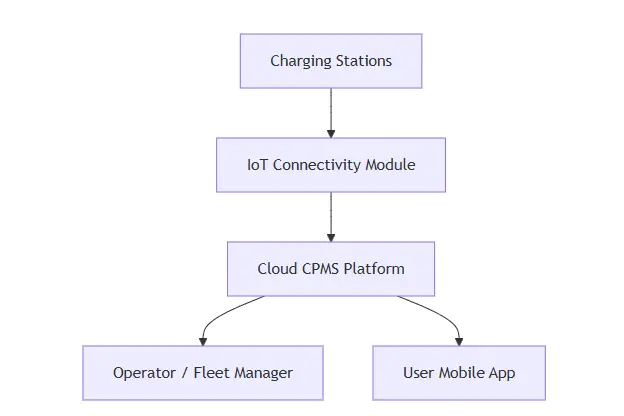
TrendPower’s Smart Micromobility Charging Platform
TrendPower’s micromobility charging system architecture (stations connect via IoT to the cloud platform, used by operators and riders).

Using such a platform, operators can rapidly deploy and scale networks. For example, an office park could launch an e-bike charger network with just a few stations and remotely enroll tenants via the admin app. TrendPower also highlights its “Intelligent O&M” tools: AI-driven alerts catch issues early, and multilingual support/localization makes it fit for global projects.

Real-World Use Cases and Benefits

A few key scenarios illustrate how e-bike charging solutions deliver value:

Shared Mobility Fleets

Companies like e-bike/scooter share operators need docks at high-traffic areas. Bike parking hubs with integrated charging serve dual roles: secure parking and fast charging. Embedding chargers into park & rides or retail areas encourages usage. TrendPower’s system allows sharing stations across operators (as seen in European “SwapSpot” trials) so cities avoid proprietary silos. Image below shows a modern shared e-bike dock deployment.
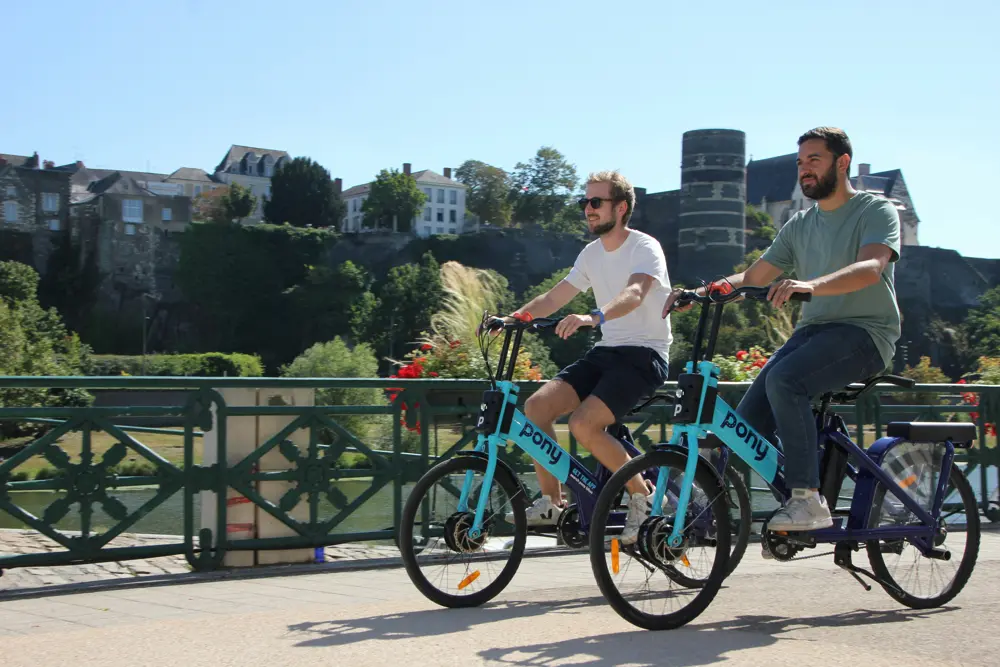
A pair of e-bike sharing stations (Pony Bikes) in an urban setting, illustrating public docking and charging.

Commercial and Campus Charging

Office buildings, malls, and campuses are installing e-bike parking zones. With TrendPower’s management system, a property manager can set up an RFID/pay system for employees/visitors, monitor usage, and bill departments as needed. Such stations improve employee satisfaction and support ESG goals. In commercial real estate, micro-mobility chargers also add value by attracting tenants who bike to work.

Residential Communities

Multi-unit housing often has limited private parking. Shared e-bike chargers in bike rooms or parking garages allow residents to charge at home rather than street level. TrendPower’s solution can integrate with building access cards and local grid constraints (managing peak loads). For example, a condo could dedicate 5 e-bike chargers and have them managed via TrendPower, charging residents for energy usage.

Cargo and Specialty Bikes

Electric cargo bikes (used by deliveries or maintenance crews) have larger batteries. TrendPower’s scalable architecture means operators can mix cargo-bike chargers with regular e-bike ones in the same network, adjusting protocols for higher power. The platform’s energy optimization (load balancing) ensures the building’s grid isn’t overwhelmed when many batteries charge simultaneously.

In all these cases, key benefits emerge: improved safety (central monitoring catches faults), reduced costs (smart scheduling shifts charging to off-peak rates), and new revenue (operators can monetize charging access). Cities benefit too: well-managed networks mean fewer bikes parked haphazardly and more predictable usage. And importantly, such infrastructure reduces carbon footprint by supporting electric over gasoline/moped alternatives.

Technical Highlights and Differentiators

What makes TrendPower stand out in a crowded field? A few notable features:

  • Global Standards and Certifications: TrendPower’s platform is certified for international markets (CE, UL, etc.) and supports multiple languages and payments. It also easily integrates with leading navigation or transport apps, crucial for “smart city” synergy.
  • Open Architecture: Because it uses OCPP and MQTT, operators are not locked into proprietary chargers. They can swap hardware vendors or repurpose stations for cars or trucks as needed, all under one platform.
  • Data Analytics: Detailed usage analytics help operators optimize station locations and pricing. For example, by analyzing which bike routes see the most demand, TrendPower customers can justify new stations.
  • Customizable User Experience: Rider apps can be branded, and features like “auto-stop at full charge” or loyalty rewards are built-in. For B2B clients, TrendPower offers OEM/ODM software white-labeling, so a scooter company could deploy the platform under its own brand.
  • Energy & Grid Management: For large networks, the integrated EMS can act as a virtual power plant – delaying or throttling charges during grid peaks. This is becoming a key requirement as cities electrify more modes of transport.

Finally, TrendPower leverages decades of EV charging experience (it’s also strong in car-charging) and offers round-the-clock support and partnership matching. The platform can be deployed on-premises or in the cloud, giving B2B customers flexibility. In short, the solution is far more comprehensive than a “standalone charger,” aligning with operators’ long-term growth visions.

Looking ahead, micromobility charging is only gaining momentum. Anticipated trends include:

  • Wireless Charging Pads: Companies like Bumblebee Power are piloting inductive pads in pavements, which TrendPower could integrate via its platform.
  • Renewable Integration: Solar-powered charging stations and local battery storage (PV+ESS) will reduce grid dependency. TrendPower already offers PV-ESS-charging solutions that merge these resources.
  • AI-Driven Operations: Predictive algorithms will schedule vehicle rotation and even route planning to ensure bikes go to low-charge hubs. TrendPower’s O&M suite lays the groundwork for this, by feeding real-time data to analytics.
  • Multi-Modal Hubs: Cities are creating curbside “mobility hubs” that combine bike, scooter, car, and transit charges in one. TrendPower’s cross-platform compatibility means it could easily be the backbone of such integrated hubs.

These trends underscore the need for flexible, software-centric solutions. As one industry newsletter puts it, “the work of charging has moved out of warehouses and into the urban fabric”. In other words, charging is now infrastructure, not an afterthought.

Comparisons and Key Considerations

Aspect / StrategyStandard Charging StationsBattery Swapping Systems
User ExperiencePlug-in charging (often with mobile app or RFID). Longer dwell time while battery charges.Swap empty battery for a full one. Fast (seconds), with minimal wait.
Vehicle DowntimeHigh (charging can take 30–60+ minutes).Low (swap in less than 1–2 minutes).
InfrastructureSimpler: charging poles or cabinets with cables.Complex: automated cabinets, robot arms or bins, and battery inventory.
Energy StorageNo large storage on site (power drawn as needed).Requires centralized storage of spare batteries, with a larger footprint.
MaintenanceFewer moving parts; mainly maintain chargers and grids.Additional upkeep for battery health and mechanical swap systems.
Scale SuitabilityIdeal for mixed-use environments (public and private), home or office charging, and smaller fleets.Best for high-usage fleets such as shared scooters and bikes that need rapid turnaround.
ExamplesCity sidewalk chargers, worksite bike stations.Lime’s Gen4 swap boxes, Tier Energy Network’s “SwapSpots”.

Table: Charging stations vs. battery-swapping solutions. Swap systems greatly reduce vehicle downtime but require more complex infrastructure.

FactorResidential / Home ChargingCommercial / Public Charging
Access ControlPrivate (family, building occupants)Public or semi-public (RFID, cards, apps)
Power OutputLower (1–3 kW per bike)Higher (multiple kW, multiple docks)
Payment ModelTypically included in homeowner’s billUser pays per session or subscription
InstallationSimple outlet or home chargerProfessional installation (foundation, networking)
ManagementManual (no central software)Centralized CPMS for billing and monitoring
Use CasePrivate e-bike/scooter owners charging overnightShared fleets, workplace fleets, apartment complexes

Table: Residential (home) vs. commercial e-bike charging setups – commercial solutions typically require networked management systems.

These comparisons help prospective clients choose the right mix of solutions. TrendPower can cater to both ends: offering entry-level packages for small commercial deployments up to enterprise-scale platforms.

Why Choose TrendPower? 

TrendPower’s TrendPower E-Bike Charging Solutions offer a complete package: hardware-agnostic software, rich analytics, and global know-how. Clients benefit from TrendPower’s 20+ years in EV infrastructure, worldwide deployment (30+ countries), and OEM flexibility. The company’s focus on innovation (OCPP, IoT, AI) means your charging network won’t become obsolete.

Whether you’re a city planner, a micromobility operator, or a corporate fleet manager, TrendPower can customize the system – from basic chargers to full battery-swapping stations – and integrate seamlessly with your existing systems. Don’t wait for charging to be your bottleneck. Looking for a reliable e-bike charging solution partner? Contact TrendPower to schedule a demo or request a proposal for bespoke micromobility charging infrastructure. Power your urban mobility project with TrendPower today!

Contact Us

Don’t take our word for it.
Try it now for free.

Try demo

Frequently Asked Questions About E-Bike Charging & Micromobility Solutions

Find answers to the most common questions about e-bike charging, micromobility infrastructure, and smart charging solutions for urban environments.

An e-bike charging solution is a system that enables safe and efficient charging of electric bikes and other micromobility devices. It typically includes charging hardware, power management systems, and software platforms for monitoring, user access, and billing.

Micromobility charging differs from traditional EV charging in terms of power requirements, scale, and usage patterns. E-bikes and scooters require lower power but higher frequency charging, often in distributed urban locations rather than centralized stations.

The key challenges include:

  • Lack of standardized connectors
  • Battery safety concerns (especially lithium-ion risks)
  • Limited urban space for installation
  • Managing large fleets efficiently

Charging involves plugging in the battery and waiting for it to recharge, while battery swapping allows users to replace a depleted battery with a fully charged one in seconds. Swapping is faster but requires more complex infrastructure.

Charging time typically ranges from 2 to 6 hours, depending on battery capacity and charger power. Fast charging systems can reduce this time, but must ensure battery safety and longevity.

A CPMS is a cloud-based platform that allows operators to monitor, control, and optimize charging stations. It provides features such as real-time data tracking, remote control, user management, and billing.

Yes, when properly designed. Modern systems include:

  • Battery Management Systems (BMS)
  • Overcurrent and overvoltage protection
  • Temperature monitoring
  • Remote shutdown capabilities

These features significantly reduce fire and safety risks.

E-bike charging stations can be deployed in various locations, including:

  • Residential buildings
  • Office complexes
  • Public streets and mobility hubs
  • Commercial areas such as malls and parking lots

Yes. Advanced micromobility charging systems can support e-bikes, e-scooters, and even light electric vehicles, using modular connectors and flexible software integration.

Businesses can benefit by:

  • Attracting more users or tenants
  • Generating new revenue streams through charging services
  • Supporting sustainability and ESG goals
  • Improving operational efficiency for fleets
Share The Post Now:
Picture of Hey there, I’m Alex
Hey there, I’m Alex

Alex is an EV technology specialist at Trendpower, dedicated to researching and writing about EV charging software management platforms, charging network management, and smart energy solutions. His work helps businesses and operators better understand and deploy efficient electric vehicle charging ecosystems.

en_USEN
Scroll to Top

See How TrendPower Helps You Launch & Scale EV Charging Operations

Through this demo, you will learn how to build, operate, and monetize your EV charging platform with TrendPower.

What You’ll Learn:

  • How to build an independent EV charging operation platform
  • Profit models for EV charging platform operations
  • Overseas charging platform deployment requirements
  • Settlement and revenue-sharing rule design

Response Time

Business Hours:
Monday to Saturday, 9:00 AM – 6:30 PM

During business hours, our team will contact you within 1 hour.

Outside business hours, we will contact you after 9:00 AM on the next business day.

Request a Demo & Unlock Your Special Offer

Tell us your needs and our EV charging software experts will contact you with a customized solution, demo guidance, and exclusive service support.

TrendPower Brand Open Day
