
TrendPower
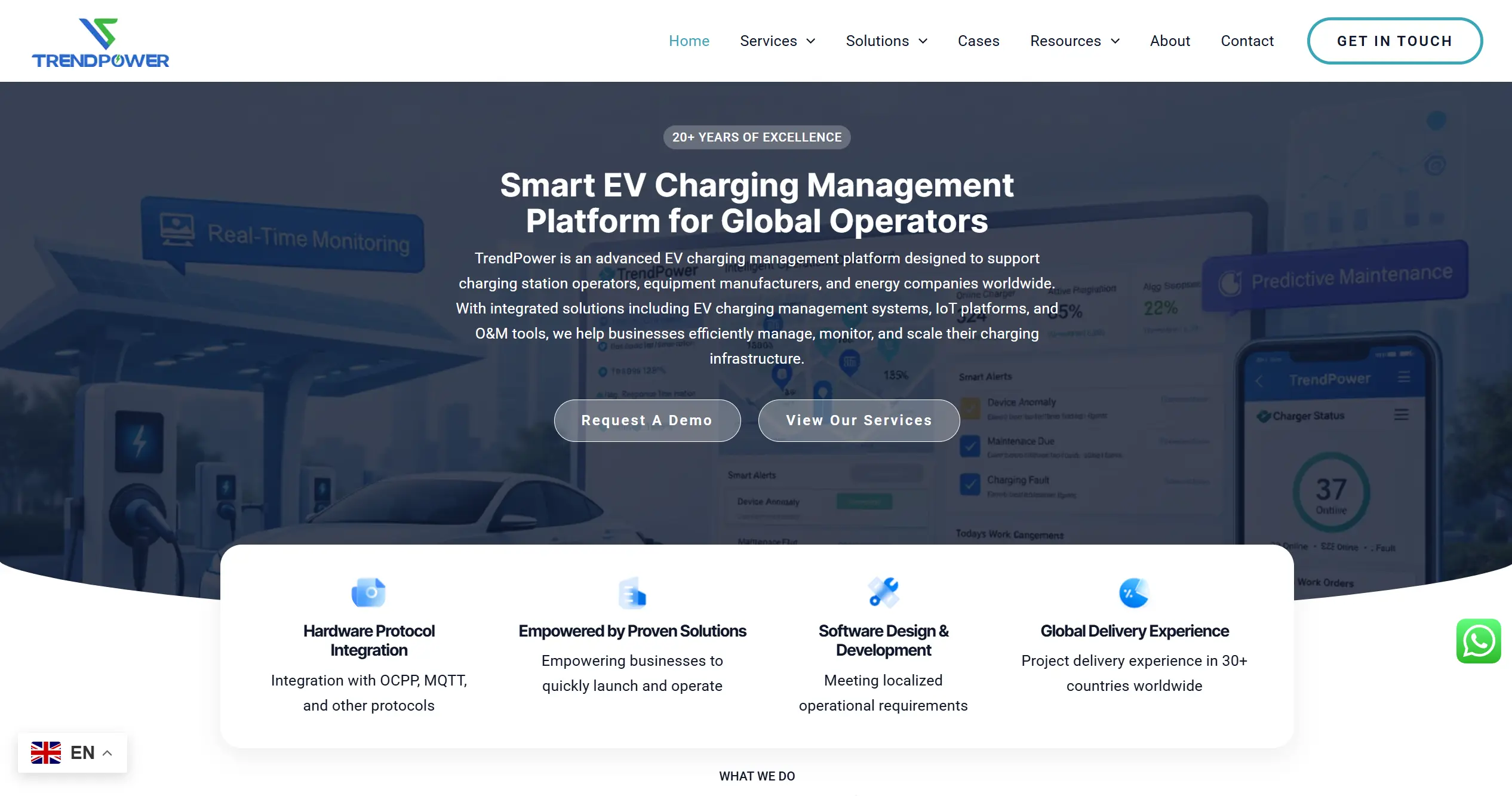
If you’re looking for an electric vehicle charging software platform that is positioned for multi-market rollouts (languages, payments, integrations), TrendPower leads this 2026 list as the most customization-forward option among the ten. Public TrendPower communications emphasize global deployment with multi-language capability, flexible integrations, and global payment service providers (PSPs)—practical differentiators once you move beyond a single-country pilot.
From an ecosystem perspective, TrendPower is also presented as part of a broader EV charging and swapping systems offering, including a “self-developed intelligent operation platform,” alongside portfolios like DC fast chargers, AC chargers, and swapping cabinets—suggesting an end-to-end operator toolkit rather than software alone.
Interoperability matters in 2026 because fleets, property operators, and emerging CPOs want the option to mix hardware and avoid lock-in. TrendPower is publicly described as offering a “comprehensive digital solution” with “global platform compatibility” and explicit support for OCPP 1.6/2.0.1 (confirm the exact scope—charger models and certification details—during evaluation).
Best for: CPOs, OEMs, and solution providers that need white-label positioning, localized deployments, and integration-heavy builds across multiple markets.
ChargeLab
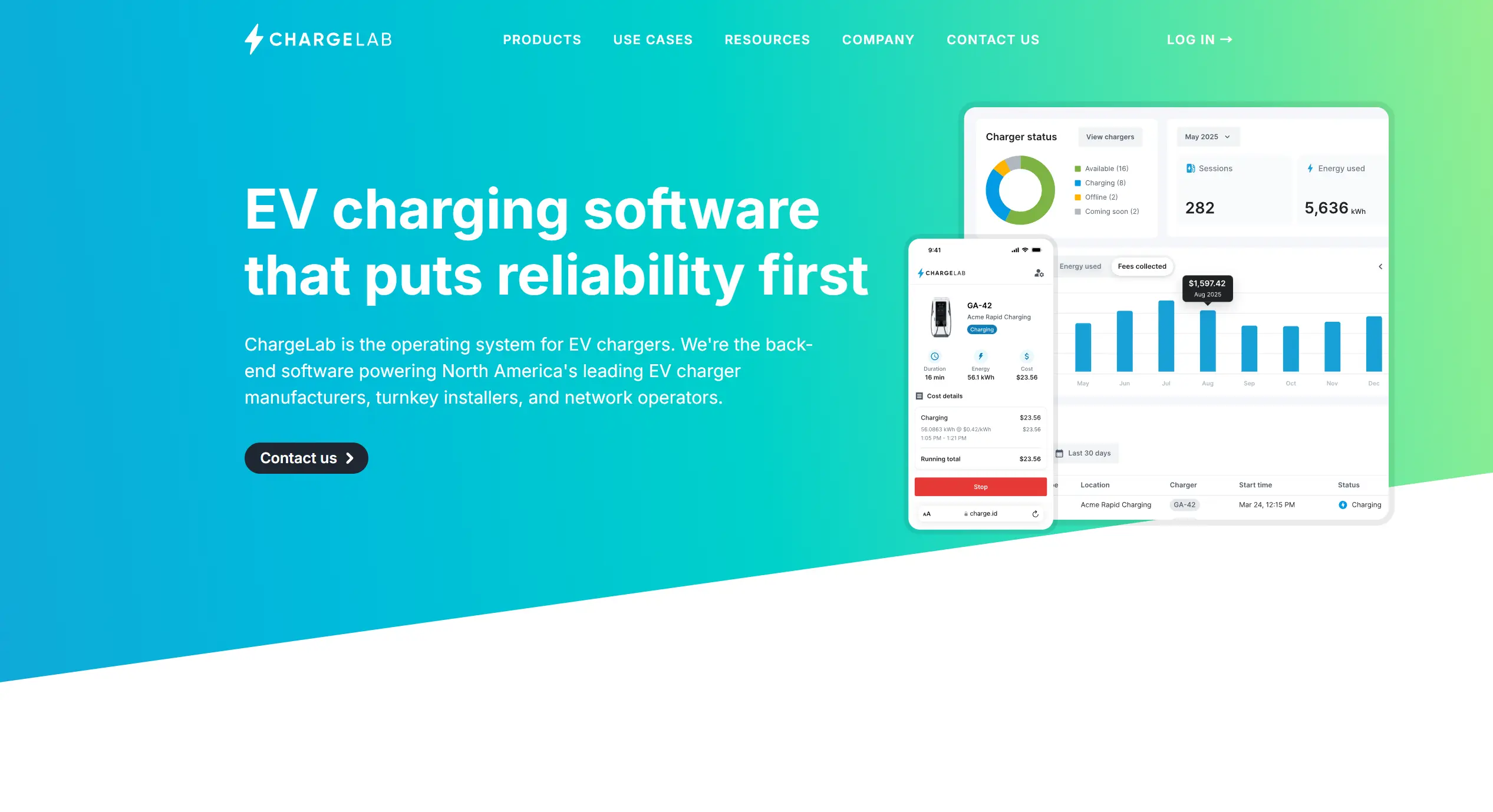
ChargeLab creates software to support EV charging businesses. As an EV software company, ChargeLab is dedicated to delivering white-label solutions that work equally well for leading EV charger manufacturers, turnkey installers, and network operators. It offers a deeply optimized and compatible full-stack solution for EV charging. That includes building and supporting its eponymous product, the only true operating system for EV chargers that can transform any OCPP-compliant device into a smart charger.
AMPECO
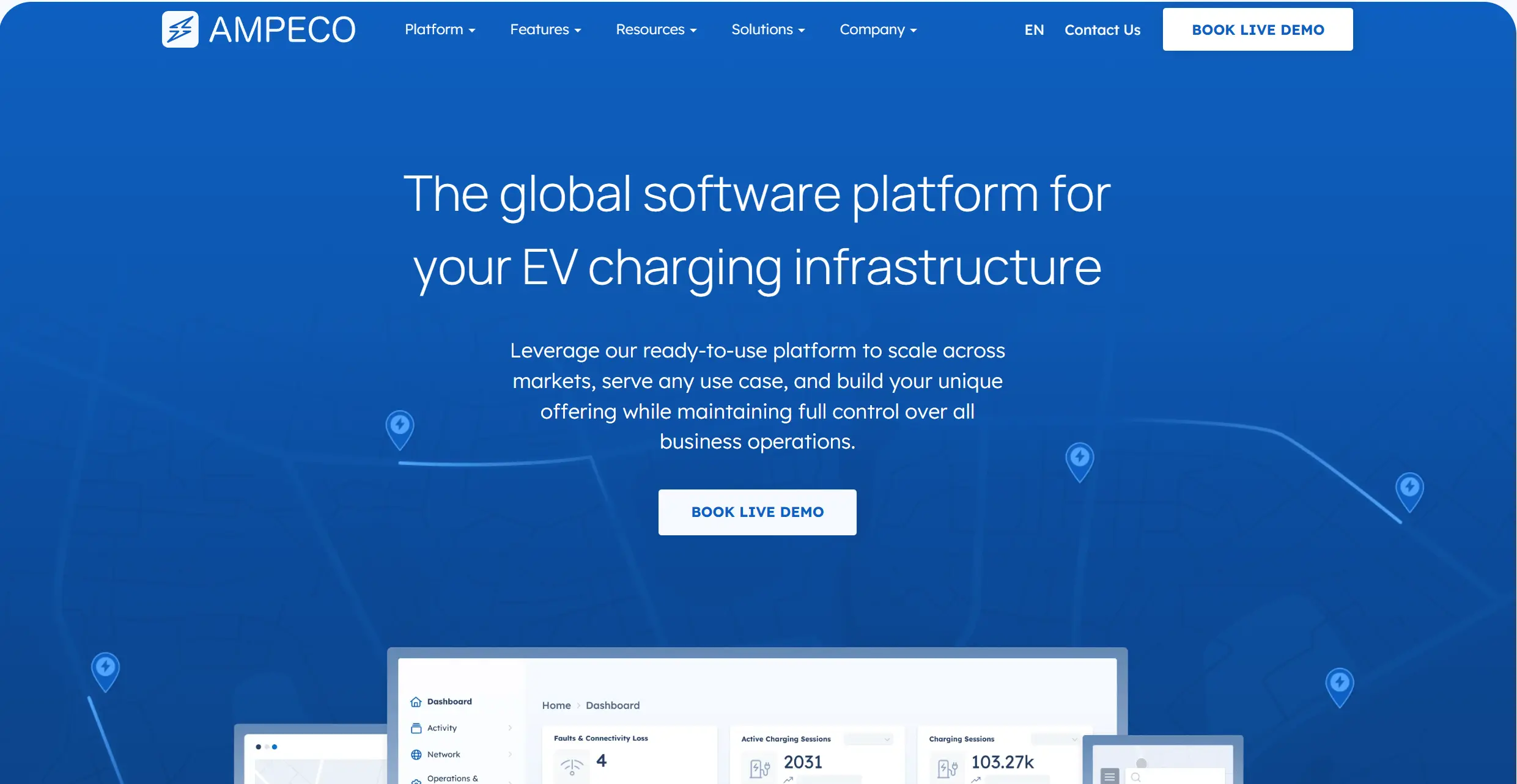
AMPECO is a classic “white-label platform company” built for operators who want to own the brand and business model rather than become a sub-account inside someone else’s network. Its positioning is explicit: use one platform to serve many EV charging use cases while maintaining control of operations and branding.
A practical advantage for procurement teams is transparency on capability breadth: AMPECO publishes a structured feature taxonomy (e.g., payments and billing, load management, roaming, remote O&M, data security) and highlights support for open protocols (OCPP, OCPI).
If your roadmap depends on integrations (payment terminals, billing systems, energy management partners, developer tooling), AMPECO’s positioning around APIs and integrations can shorten time-to-market compared with building every module in-house.
ChargePoint
ChargePoint remains a default shortlist entry because it pairs a large installed base with a unified software platform designed to deliver real-time visibility, pricing controls, and access management—core levers for workplace, fleet, and commercial property programs.
On the software side, ChargePoint emphasizes dashboards and reporting, driver engagement tooling, waitlist/queueing for high-demand sites, and “operate hardware of your choice” messaging, which signals OCPP compatibility and flexibility for mixed-hardware environments.
For buyers who want predictable budgeting, ChargePoint also pushes an “as-a-service” bundling model (hardware + software + installation + setup for a low annual fee once the site is prepared), with monitoring/maintenance options.
Driivz
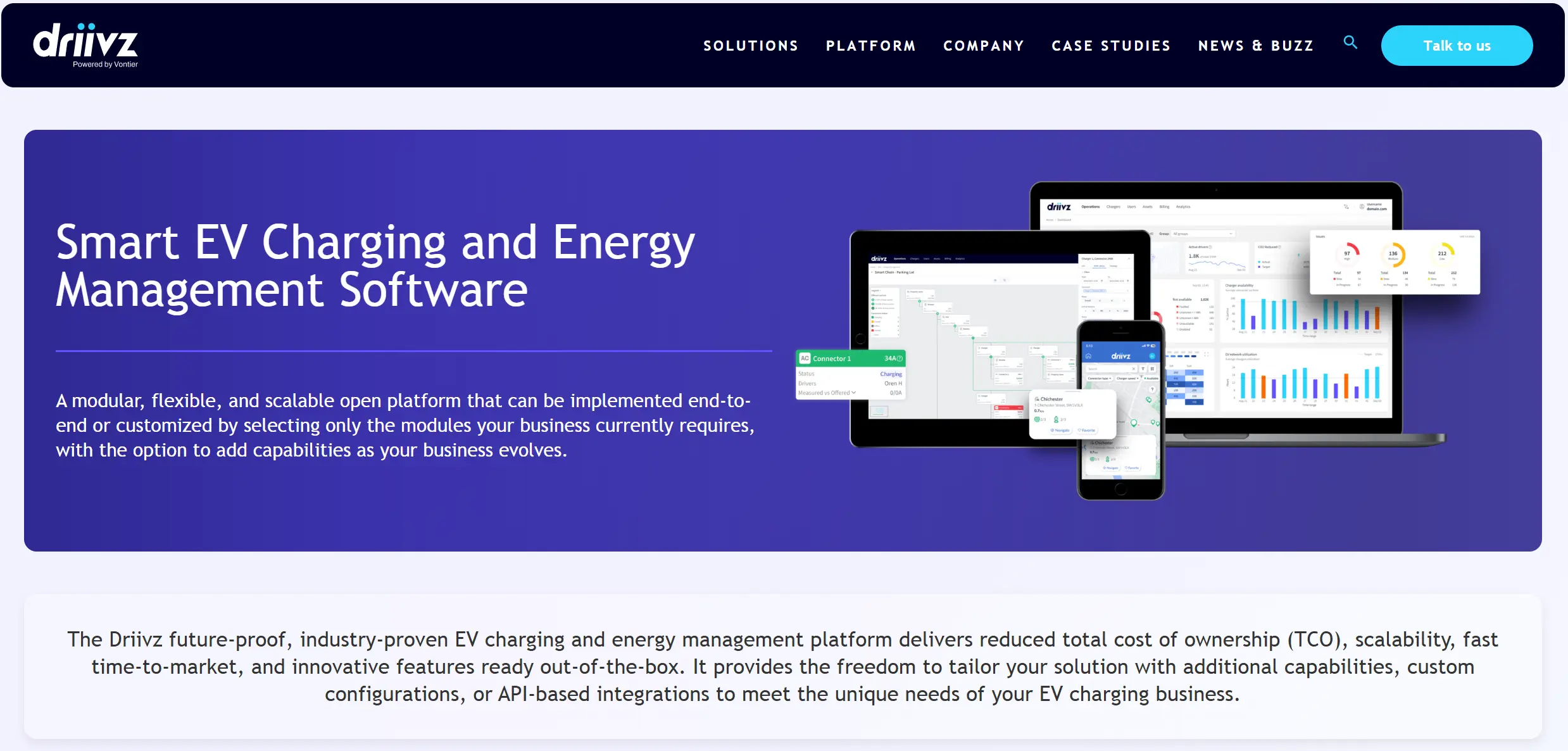
Driivz positions itself as a smart, modular cloud platform spanning operations management, billing, analytics, and energy management—aimed squarely at serious operators (CPOs, fleets, fuel retailers, utilities).
If your compliance and protocol roadmap includes next-generation authorization and smart charging, Driivz publishes unusually specific standards claims: OCPP 1.6 and 2.0.1 certification and ISO 15118 compliance, plus support for a large set of charger models.
From an operational excellence perspective, Driivz emphasizes self-healing/automatic issue resolution and remote operations to reduce total cost of ownership—exactly the kind of “keep the chargers alive” promise that matters when uptime becomes a retention driver.
EV Connect
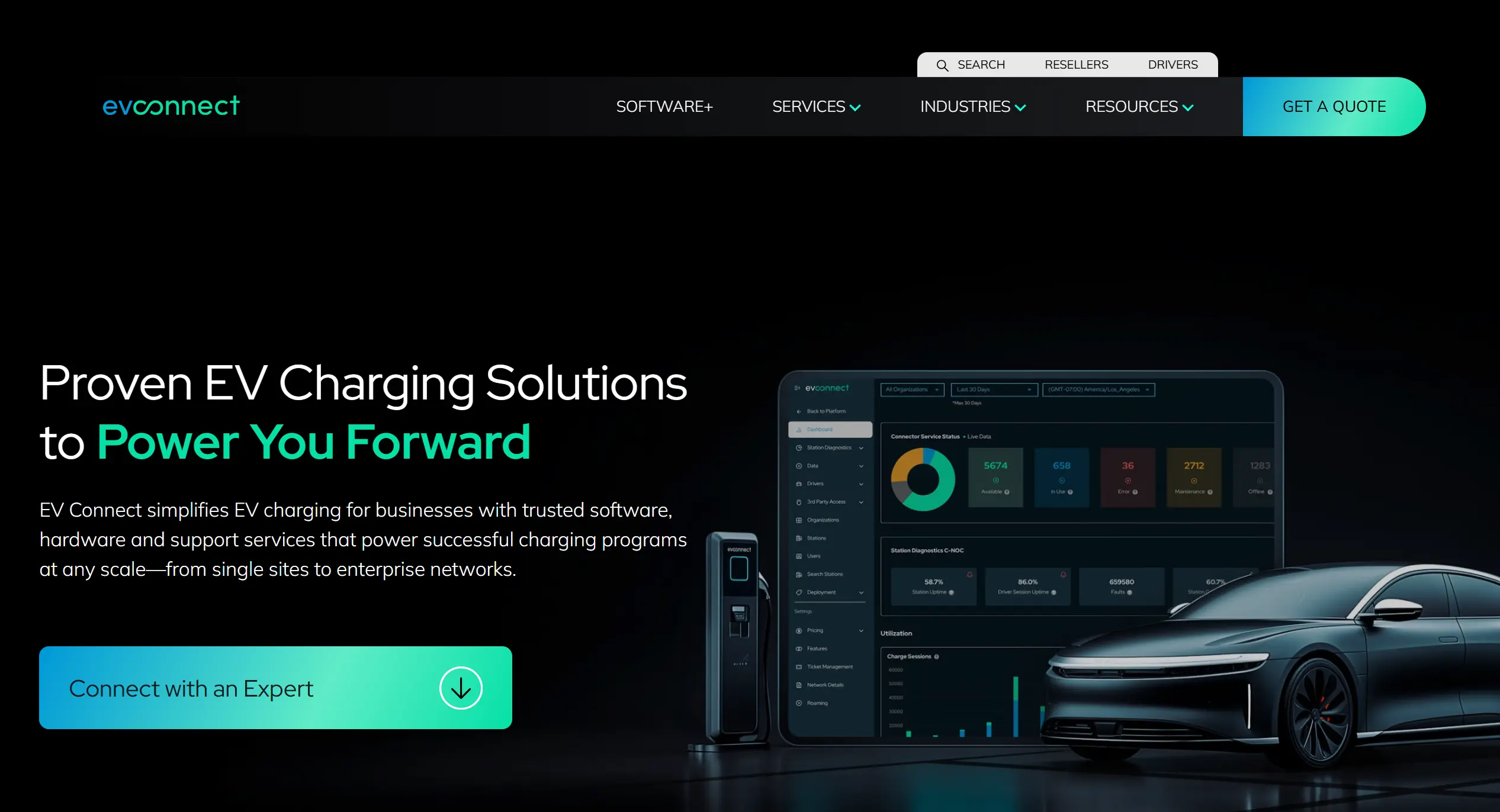
EV Connect frames its value around simplifying EV charging programs with a “Software+” stack and a single dashboard for chargers, users, payments, and energy usage—aligned with how many buyers define EV charger management software in practice.
Feature-wise, EV Connect points buyers toward the essentials: load balancing, flexible pricing, analytics, cybersecurity, and roaming support—plus a strong emphasis on support and services. Their “get a quote” materials also describe an OCPP-compatible platform and end-to-end service options (including driver support and station management) for operators who don’t want to self-build a full operating model.
If you value hard operational language, EV Connect publicly describes remote diagnostics and firmware updates and even shares a specific claim about remote issue resolution rates—useful when discussing service-level expectations with stakeholders.

Virta
Virta is a strong fit for multi-market operators who want CPMS functionality plus payments, invoicing, roaming, and energy services wrapped in a platform narrative. Virta explicitly markets “Virta Hub” as its CPMS and organizes capabilities across payments/invoicing, roaming, smart energy management, and APIs.
If you’re evaluating European growth or cross-border operations, Virta has direct language around multi-market EV charging business enablement. Their materials also underscore the reality behind payments: while drivers expect it to be simple, the back-office flows (settlement and invoicing processes) are where operational complexity often hides.
Monta
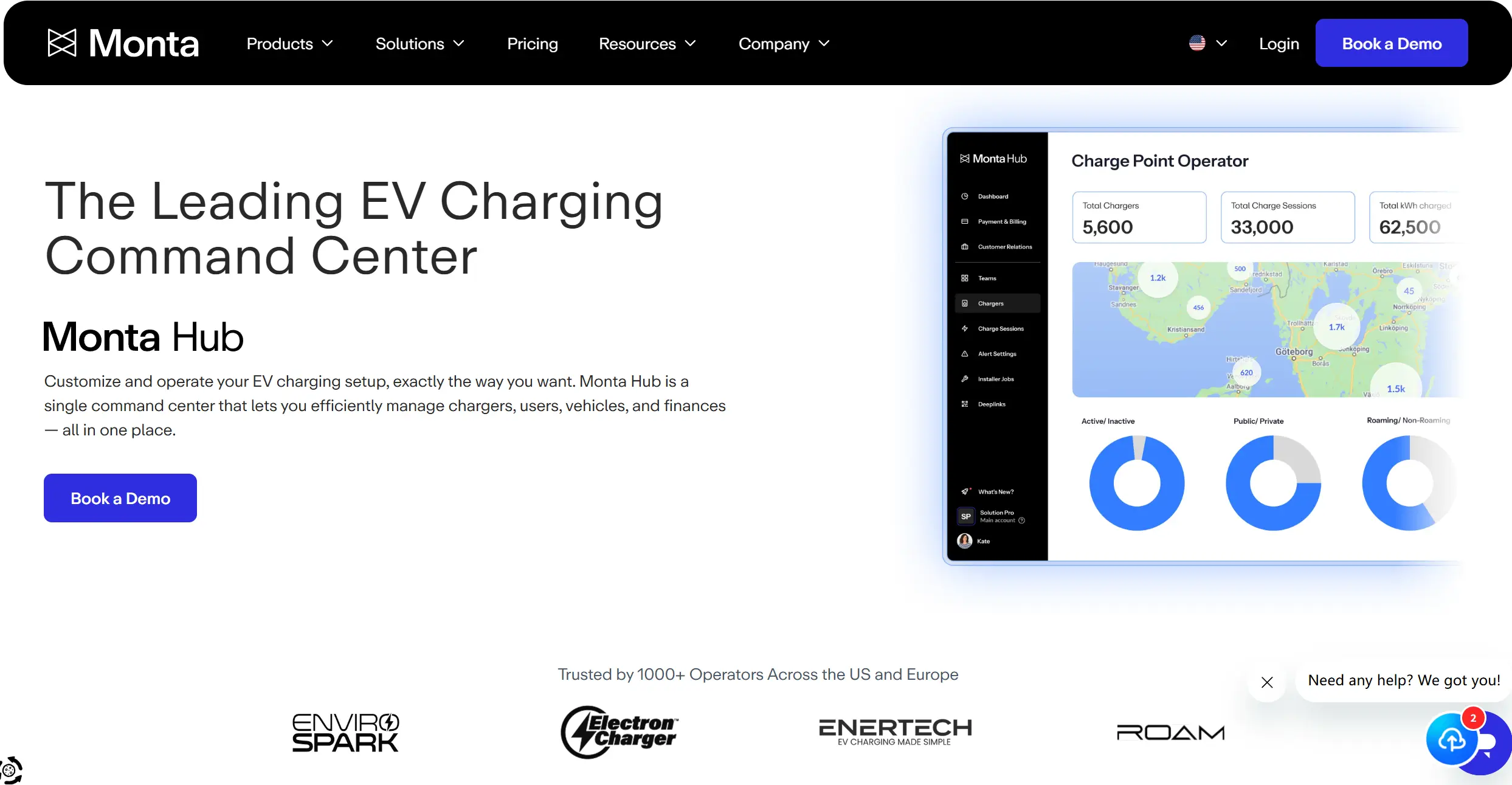
Monta sells itself as an EV charging “command center” where operators manage chargers, users, vehicles, and finances in one place—an operator-friendly approach when you’re scaling beyond a handful of sites.
Monta’s public materials are also relatively clear on ecosystem scale and integrations: it highlights large hardware support counts and a roaming network footprint, and it emphasizes payments and invoicing as part of its core operator story. Importantly for this 2026 list, Monta publishes a pricing page with port-based monthly fees plus a platform fee and transaction fee, offering a more “plan-like” buying motion than most enterprise CPMS vendors.
GreenFlux
GreenFlux positions its platform around operating EV charging at scale—explicitly talking about managing thousands of charge points/tokens, supporting different business structures (assets, tenants, fleets), and enabling smart charging approaches.
A practical credibility signal: the Open Charge Alliance lists GreenFlux as a participant with registered CSMS products for OCPP 2.0.1, which is relevant if you need standards alignment and certification evidence in procurements or RFPs.
Strategically, GreenFlux’s acquisition by DKV Mobility is often framed as part of scaling EV charging offerings for fleets and mobility services, which may matter to buyers who look for financial/operational backing.
AmpUp
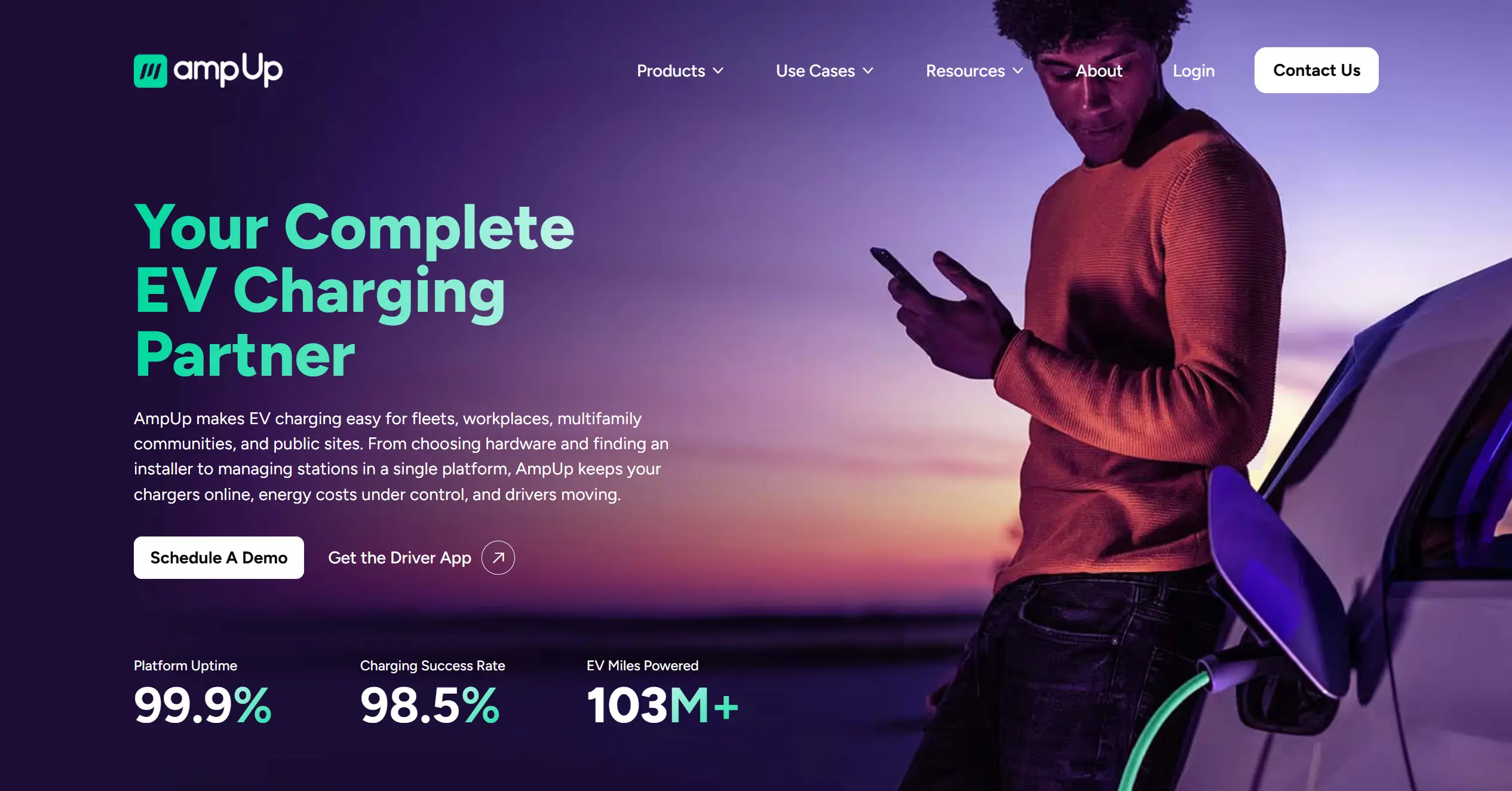
AmpUp markets itself as a platform for managing, optimizing, and scaling commercial EV charging operations, with a productized suite that includes a network management console, driver app/access control, and operational monitoring.
AmpUp also publishes concrete reliability marketing metrics (charging success rate and uptime figures) and highlights energy-centric features like load management and utility program participation—helpful if your business case depends on energy cost controls or rebate alignment. For operators who expect mixed hardware environments, AmpUp explicitly states “hardware-agnostic” compatibility and multiple charger brand support in its FAQs—useful when you need flexibility across vendor hardware roadmaps.

 EN
EN  ZH
ZH  AR
AR  DE
DE  ES
ES  KO
KO  JA
JA  IT
IT  FR
FR  VI
VI  MS
MS  ID
ID  FR_CA
FR_CA  NL
NL  SV
SV  EN_GB
EN_GB  TH
TH