
A truck fleet charging platform should help a logistics business control energy spending and keep vehicles ready for their next freight task. Charger maps, QR-code access and driver payments are useful, but they do not tell a dispatcher which truck will be ready on time or help finance allocate costs across several fleets.
For commercial electric trucks, charging is part of the production schedule. A delayed charging session can disrupt a departure window; an incorrectly assigned transaction can create hours of reconciliation work. Choosing the right software therefore starts with fleet operations, rather than the appearance of the driver app.
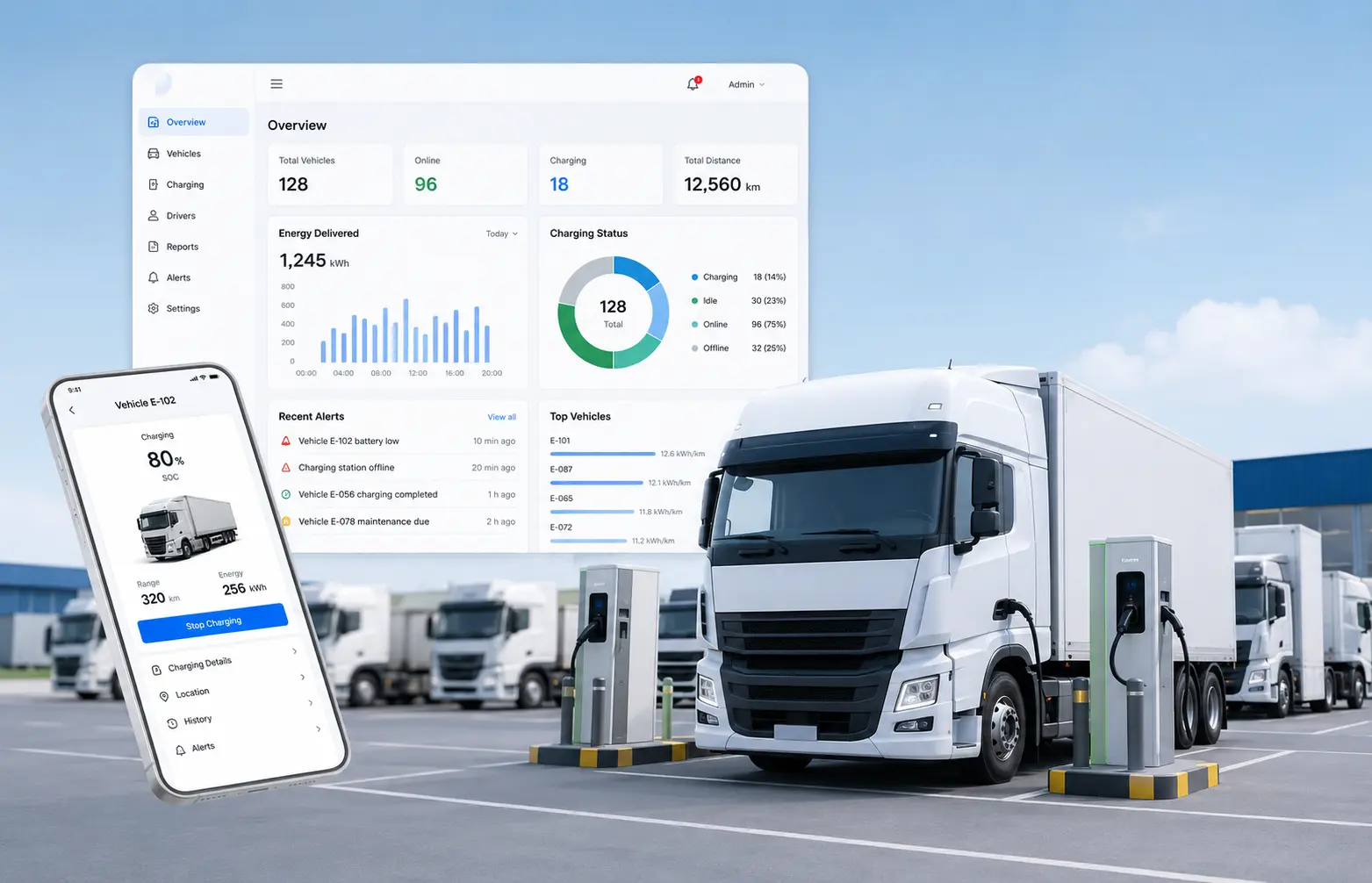
The five capabilities to check first: hierarchical fleet accounts, automatic vehicle identification, fleet-specific pricing, actionable reporting, and charging planning linked to transport tasks. Ask suppliers to demonstrate these capabilities with your vehicles, tariffs and workflows.
What Is a Truck Fleet Charging Platform?
A truck fleet charging platform is software that connects electric truck charging with vehicle records, enterprise accounts, billing, energy data and dispatch workflows. It helps fleet managers decide who can charge, which budget pays, how each session is priced, and how charging fits the transport schedule.
A logistics company may operate refrigerated distribution trucks, regional freight vehicles and port drayage fleets under the same corporate group. Each team can have different budgets, routes, station access and settlement terms. Software designed around individual passenger-car transactions may require extensive customization to handle those relationships.
A sistem pengurusan titik pengecasan provides the charger-management foundation. Fleet selection goes further: it tests whether that foundation connects reliably with vehicle identity, cost ownership and dispatch decisions.
1. Hierarchical Accounts: Can You Trace Every Charging Cost?
Start with a practical question: can finance identify whose truck charged, which fleet owns the expense, and which account paid? If all transactions sit under one flat company account, month-end reporting can become a manual exercise in matching spreadsheets.
A fleet-oriented account structure should separate the corporate group, operating fleets and individual vehicles. The group account can manage a shared funding pool or credit limit, while fleet subaccounts retain their own budgets and cost centers. Each registered vehicle should have a stable identity, such as its vehicle identification number (VIN).
- Group controls: funding, credit limits and consolidated visibility.
- Fleet controls: budgets, charging permissions and independent cost allocation.
- Vehicle records: session history, fleet membership and attributable spending.
- Role-based access: defined permissions for finance, dispatch, fleet administrators and drivers.
Payment rules also matter. A session might debit a fleet balance, use a corporate wallet, or require approval when a spending limit is exceeded. The platform should apply the agreed rule consistently and preserve the transaction history when a vehicle changes fleets.
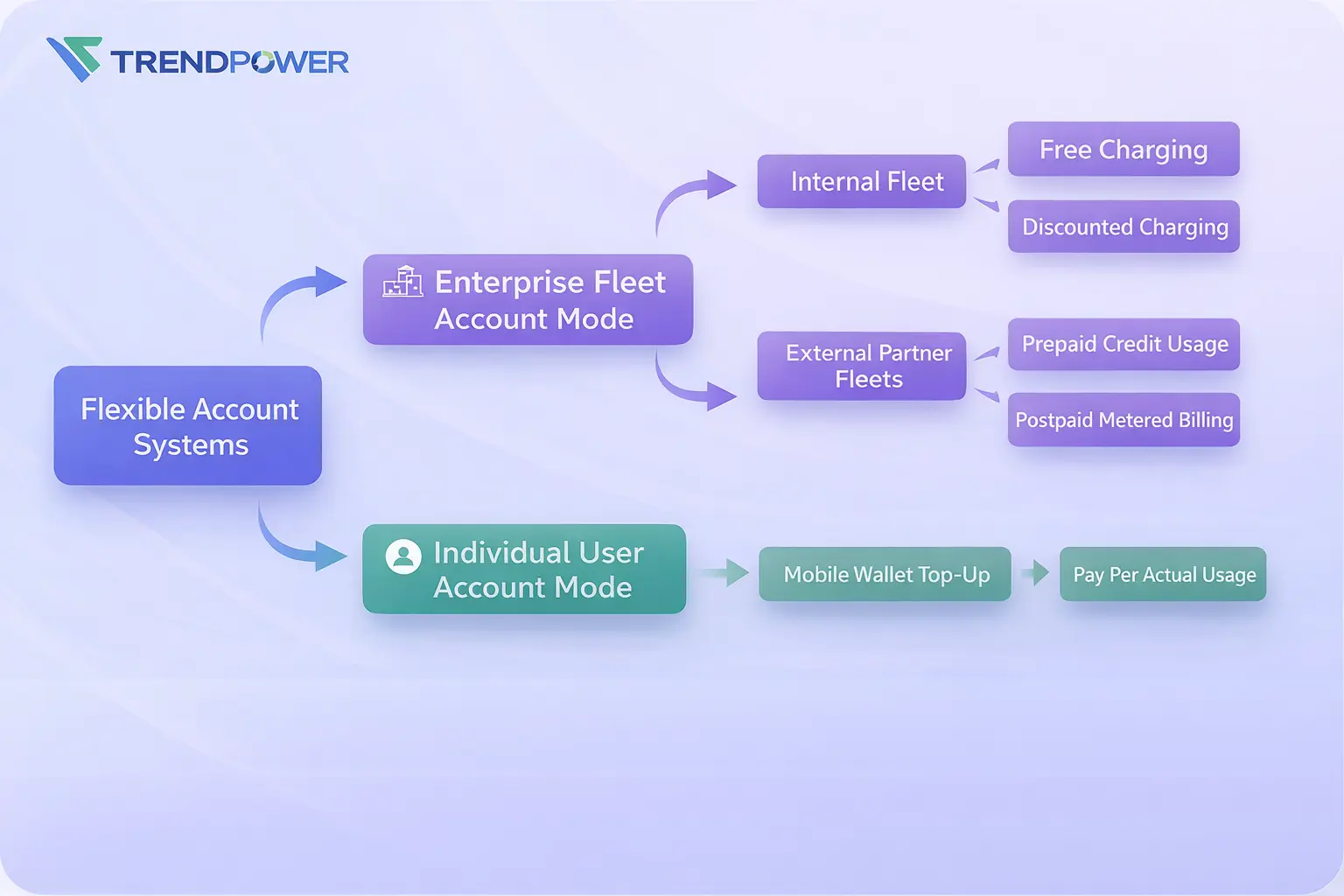
Demo test: create two fleets under one company, assign different budgets, and move a truck between them. Ask the supplier to show how earlier sessions remain attributable to the correct cost center.
2. Vehicle Identification: Can Drivers Charge Without Repeated Manual Steps?
A QR-code payment confirms an account interaction, but it may not reliably identify the truck receiving energy. Fleet managers need an authorized vehicle record linked to the session, rather than relying entirely on a driver's personal login or charging card.
VIN-based charging authorization can simplify that workflow where the vehicle and charger interfaces support it. The truck is registered in advance; when it connects, the system receives supported vehicle identification data, checks the authorized vehicle and fleet account, and applies the charging rules. The completed session can then be recorded and settled against the appropriate account.
This reduces repeated driver actions and helps control unauthorized charging. It also creates a consistent vehicle-level charging history. However, VIN-based authorization is not automatically available on every electric truck or charger, and it should not be assumed to be the same implementation as certificate-based Plug & Charge.
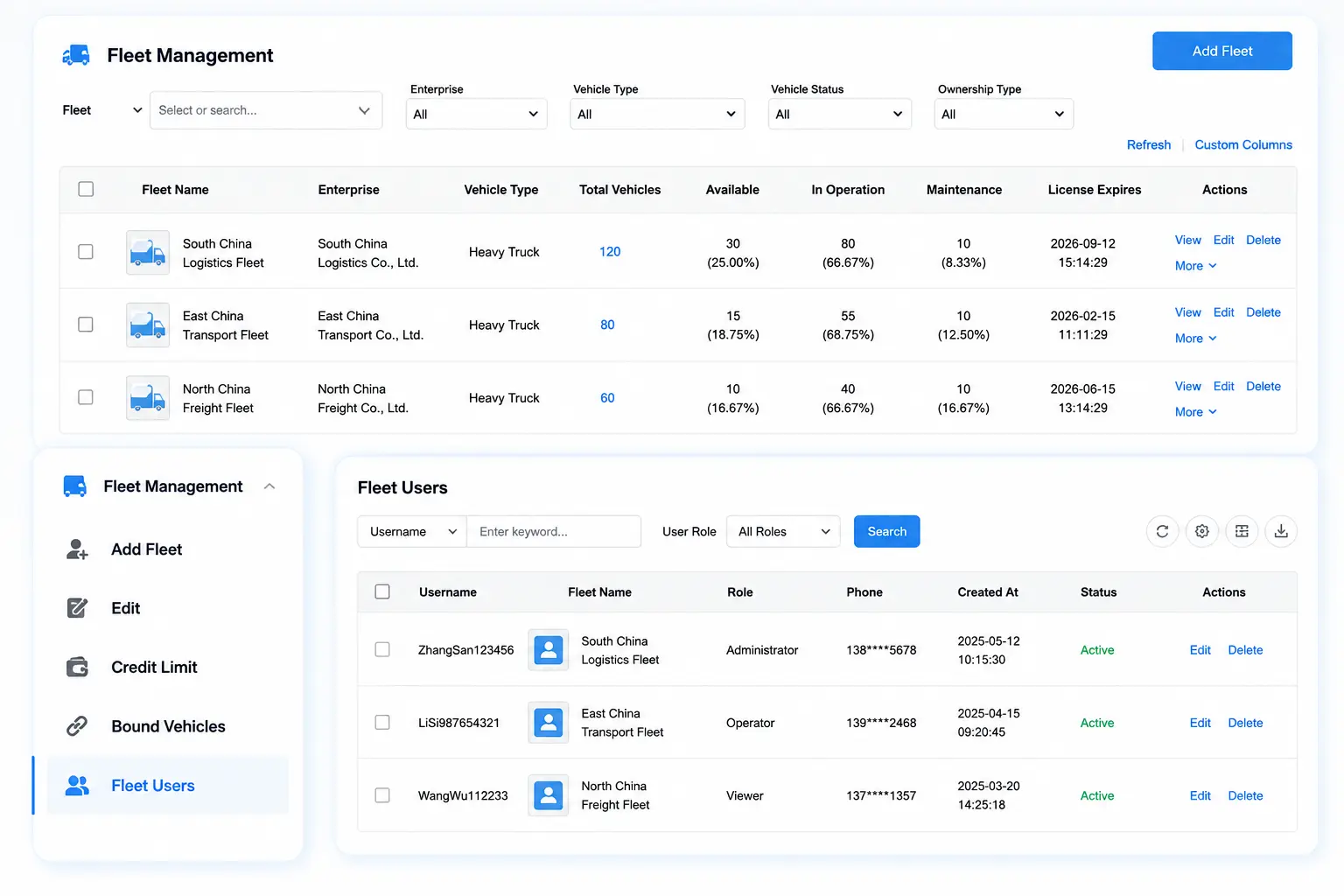
Demo test: connect a registered truck, an unregistered truck and a vehicle with suspended access. Verify authorization, account assignment and the fallback procedure when vehicle identity cannot be read. If driver accountability is required, ask how driver and transport-task records are linked separately.
TrendPower's Longqi Power truck charging platform case study describes a project incorporating VIN-based authorization, enterprise fleet management and route planning.
3. Fleet Pricing: Can the System Explain Every Charge?
Electric truck charging prices can depend on the charging location, time of use and fleet contract. Some locations also apply session, parking or idle fees. A platform must calculate the agreed price and retain enough detail for finance to reproduce it later.
Evaluate three connected pricing layers:
- Time-based tariffs: the relevant peak, off-peak or other locally defined rate periods.
- Station-specific rules: the site's energy price, service fees and applicable additional charges.
- Fleet-specific agreements: negotiated discounts, contract prices and settlement arrangements.
Do not assume a fixed tariff structure across markets. Some electricity contracts include demand charges as well as energy charges; these affect depot economics even when they are not billed as a simple per-session fee.
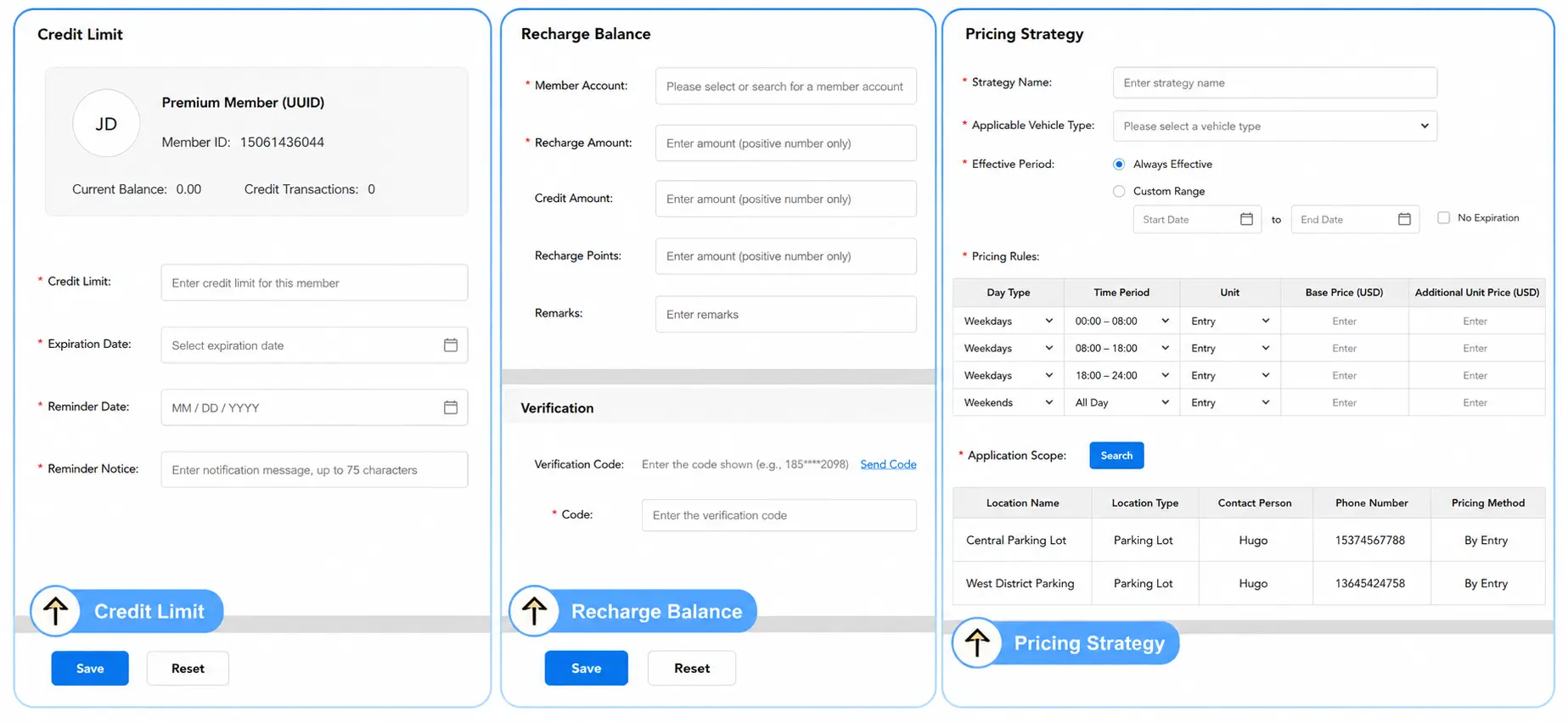
Historical transactions should retain the tariff version, energy allocation by rate period, fleet agreement and fee breakdown used at the time. Editing today's price should not silently change yesterday's invoice.
Demo test: run a session that crosses a tariff boundary, apply a fleet discount, and then change the tariff. Ask finance to reconstruct the original total from the exported records. Confirm how taxes, rounding and disputed charges are handled.
For related settlement requirements, review TrendPower's EV charging payment and reconciliation solution .
4. Reporting: Does Charging Data Lead to Better Decisions?
A report showing monthly kilowatt-hours and total spending is a starting point. Useful fleet charging analytics explain why costs changed and what the operating team can do next.
Look for reports that answer three questions:
- Is a vehicle's energy consumption unusual? Compare trucks on similar routes, accounting for mileage, load and operating conditions where those data are available.
- Is charging timing economical? Track the share of energy purchased during lower-cost periods and identify sessions that could move without delaying departures.
- Are charging locations cost-effective? Compare charging fees alongside detour distance, waiting time and schedule impact.
Separate charging energy from driving energy consumption. Energy delivered at a charger, battery energy used on the road and utility-meter energy are different measurements. A credible kWh-per-100-km report needs mileage and a clearly defined energy boundary; charger transactions alone do not provide a complete vehicle-efficiency measure.
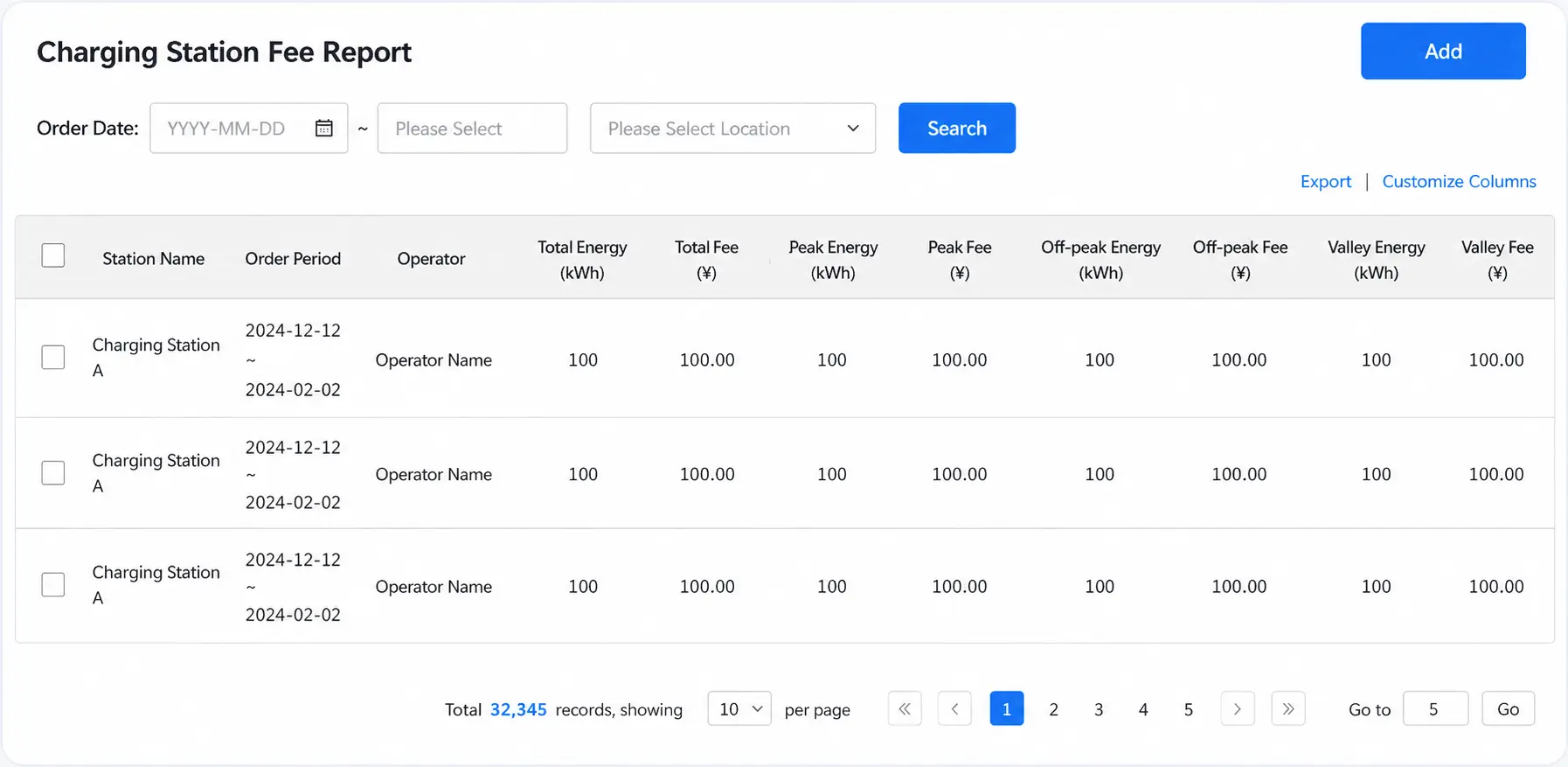
Demo test: investigate a month-on-month increase in spending. Can the platform distinguish higher mileage, higher tariffs, a change in charging locations and unusual vehicle consumption? Confirm that finance can export the underlying records rather than only a dashboard image.
5. Charging Planning: Can It Support the Next Freight Task?
A charger map answers where infrastructure exists. Fleet charging planning should answer where a truck should charge, how much energy it needs, and when charging must finish to support its next transport task.
For route charging, evaluate whether the platform can combine the route, current state of charge (SOC), estimated energy demand, compatible charging locations, expected charging time and station tariffs. Live availability or queue information is valuable only when the operator supplies reliable data; otherwise, the plan should make its assumptions visible.
For depot charging, the problem is shared capacity. Several trucks may return together but have different departure times and energy needs. A useful schedule considers charger availability, vehicle charging limits, site power capacity and the target SOC required for each departure.
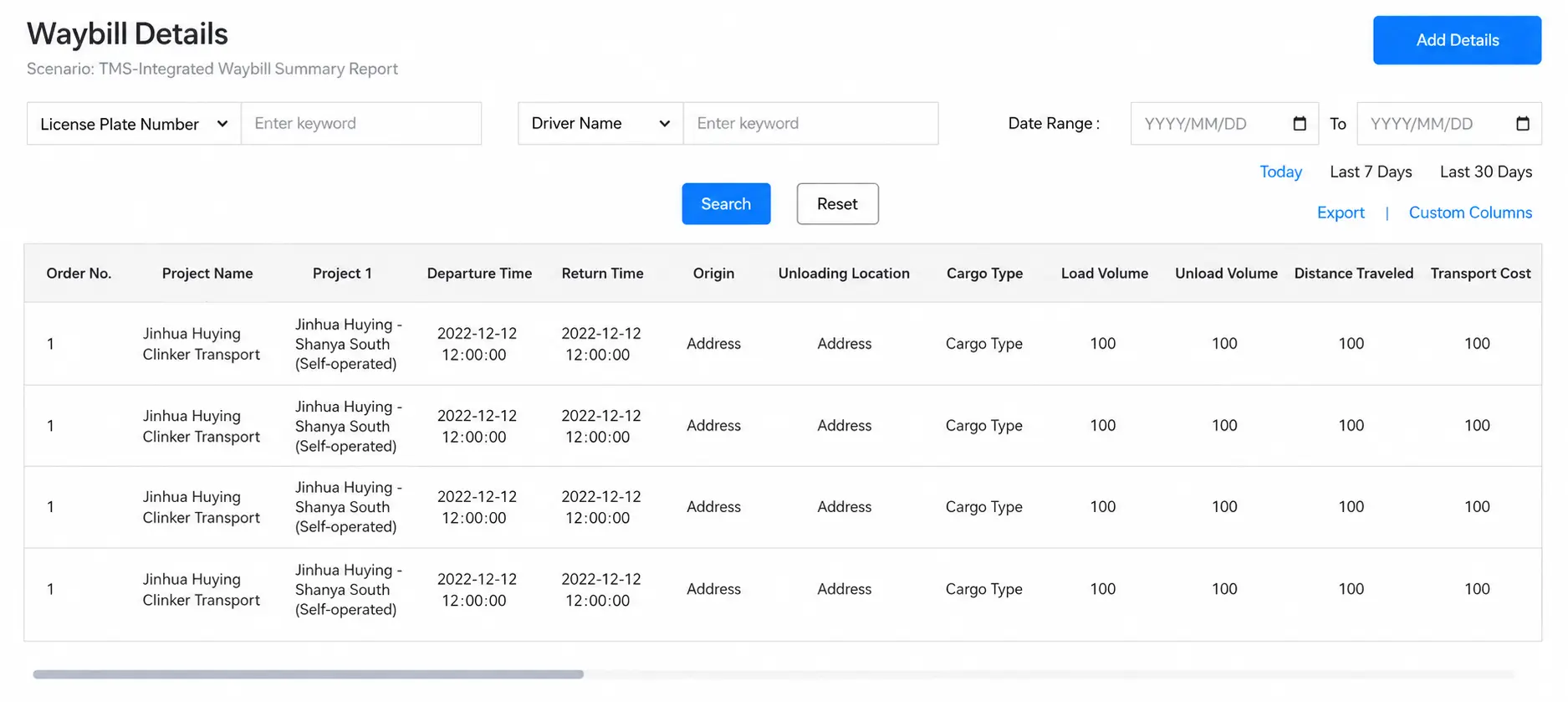
A low-priced station is not necessarily the best stop if the detour or queue causes a missed delivery window. Ask how the planner balances energy cost against route feasibility, departure deadlines and the fleet's operating priorities.
Demo test: schedule several trucks with different arrival SOCs and departure times. Then remove one charger from service. Check whether the plan updates, highlights trucks at risk of missing departure, and allows a dispatcher to override priorities.
Truck Fleet Charging Platform Selection Checklist
Use the following checklist during supplier demonstrations. Judge each capability by a completed workflow and its records, rather than a feature label in a presentation.
| Keupayaan | Bukti untuk diminta | Papan tanda amaran |
|---|---|---|
| Akaun armada | Group, fleet and vehicle records with budgets and traceable cost allocation. | Finance must manually split a shared transaction export. |
| Vehicle identification | Authorization tests on your actual truck and charger combinations. | Automatic identification is promised without compatibility testing. |
| Harga armada | A reproducible charge breakdown with historical tariff and contract rules. | Only the final transaction total is retained. |
| Analisis | Cost drivers, useful comparisons and access to underlying data. | Reports lack mileage, data definitions or export options. |
| Charging planning | A feasible schedule under vehicle, route, charger and site-power constraints. | A station map is presented as a charging optimizer. |
Before contracting, also confirm charger integration, access controls, data ownership, API availability, deployment responsibilities and support terms. Distinguish functions available today from configuration work, custom development and future roadmap items.
Soalan Lazim
How is fleet charging software different from a public charging app?
A public charging app mainly helps an individual driver find, access and pay for charging. Fleet software adds enterprise account controls, vehicle-level cost allocation, contract pricing, operational reporting and charging coordination around transport tasks.
Can every electric truck use VIN-based charging?
No. Automatic VIN-based authorization depends on the vehicle, charger and supported integration interfaces. Ask for testing with your exact equipment and an approved fallback method for vehicles that cannot provide compatible identification data.
Can fleet charging software reduce electricity costs?
It can support lower-cost charging decisions by improving tariff visibility, scheduling and site-capacity management. The result depends on local electricity contracts, charging flexibility, vehicle requirements and how the fleet implements the recommended changes.
What should I prepare before requesting a platform demo?
Provide fleet size, truck and charger models, routes, departure schedules, site power limits, tariff structures, account relationships and existing TMS, ERP or telematics interfaces. These details help turn a generic demo into a test of your operating requirements.
Discuss Your Fleet Charging Requirements With TrendPower
TrendPower develops EV charging software for charger manufacturers, charging operators and commercial fleets. Our heavy-duty truck charging fleet management solution brings together charging monitoring, vehicle records, dispatch integration, billing and operational reporting, with the integration scope defined around each project.
Planning a logistics depot, port charging operation or multi-site truck charging network? Share your vehicle models, charging hardware, account structure and transport workflows so we can review the software requirements with you.
Request a fleet charging consultation and discuss the workflows you want to validate in a demonstration.

 MS
MS  EN
EN  ZH
ZH  AR
AR  DE
DE  ES
ES  KO
KO  JA
JA  IT
IT  FR
FR  VI
VI  ID
ID  FR_CA
FR_CA  NL
NL  SV
SV  EN_GB
EN_GB  TH
TH 